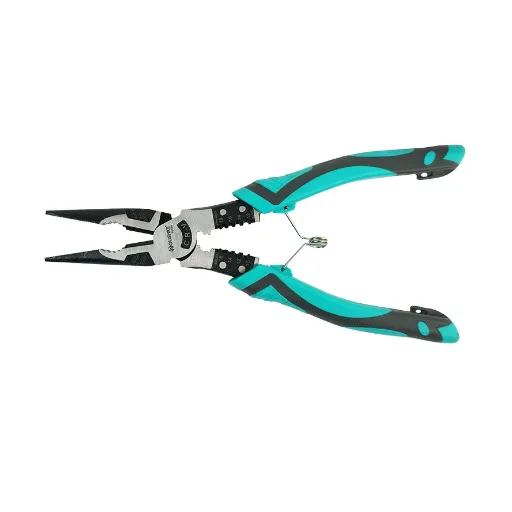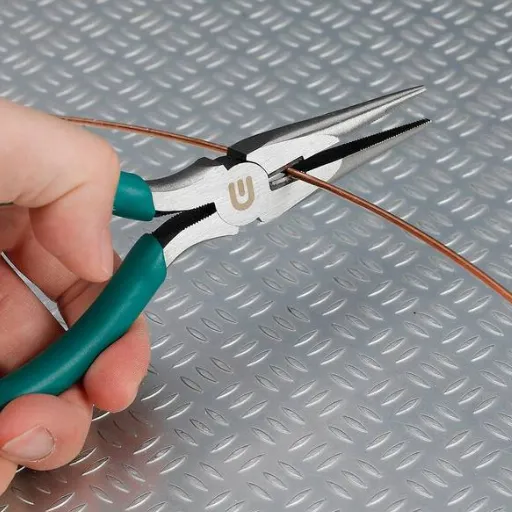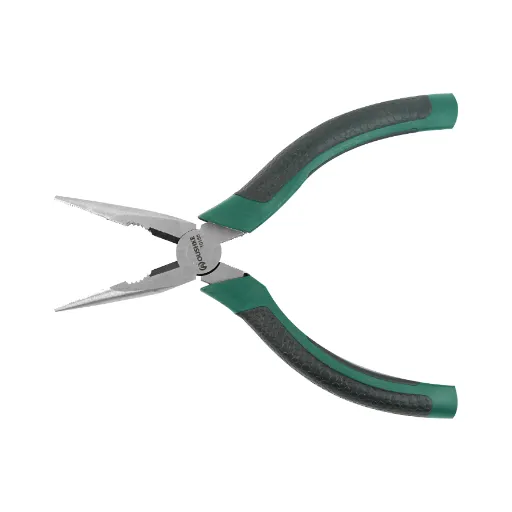

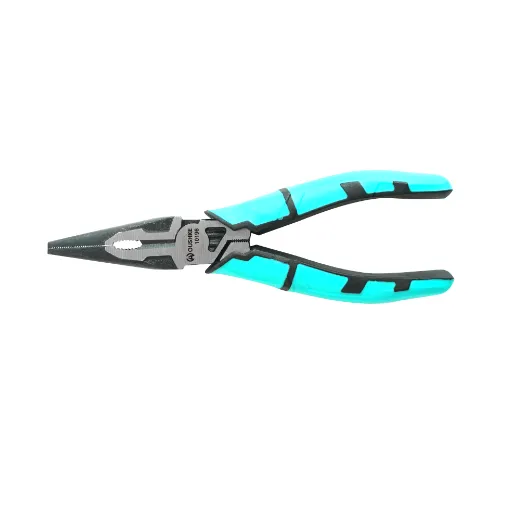
Needle Nose Pliers Manufacturer: How To Source Quality Pliers From China
The right needle nose pliers manufacturer is a direct factory with in-house drop forging, heat treatment, and multi-stage quality control, not a trading company renting a showroom. Finding and verifying that factory is the difference between a reliable product line and a stream of returns.
Sourcing from China is how most distributors and tool brands stay competitive, yet the market is full of thin listings and middlemen. This guide gives you a practical framework to evaluate a needle nose pliers manufacturer, with the exact questions to ask, the documents to request, and the red flags to walk away from. You’ll learn what quality pliers are made of, how they should be built, and how to check a supplier before you commit a single dollar.
Key Takeaways
- Verify the supplier is a real factory, not a trading company, by requesting in-house heat treatment, dated QC records, and unrestricted audit access.
- Specify chrome-vanadium steel (HRC 52-60) for professional pliers; reserve cheaper carbon steel for budget lines.
- Ask for ISO 9001, ANSI, and IEC 60900/VDE certificates where insulated models are involved, and request material test reports with samples.
- Expect MOQs around 1,000 pieces for custom branding, with pilot runs of 10-500 pieces from flexible suppliers, and 15-40 day production lead times.
- Start with samples and a small test order before scaling, and never skip a pre-shipment inspection.
What Makes a Good Needle Nose Pliers Manufacturer
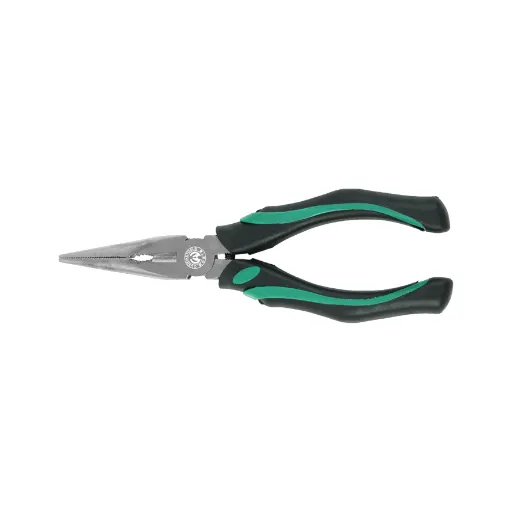
Buyers often compare a handful of names and pick the cheapest quote. That approach fails more often than it works, because the lowest price usually hides the lowest process control.
A good needle nose pliers manufacturer should give you four things you can verify. First, direct factory ownership, meaning you can audit the production floor and see real equipment. Second, in-house core processes like heat treatment, which is where most of the quality is created or lost.
Third, a documented quality system with records you can review. Fourth, enough export experience to handle your shipping, paperwork, and lead times without surprises.
Elena runs a hardware importing business in Texas. In 2024 she switched from a marketplace supplier to a factory that let her walk the heat-treatment line during a video call. Her return rate on needle nose pliers dropped from 6% to under 1% in two orders.
That kind of change doesn’t come from a cheaper price. It comes from controlling the process, and only a real factory can do that.
Want to see what this looks like in practice? Explore our manufacturing capabilities and then come back to learn how to audit any supplier.
How Needle Nose Pliers Are Manufactured
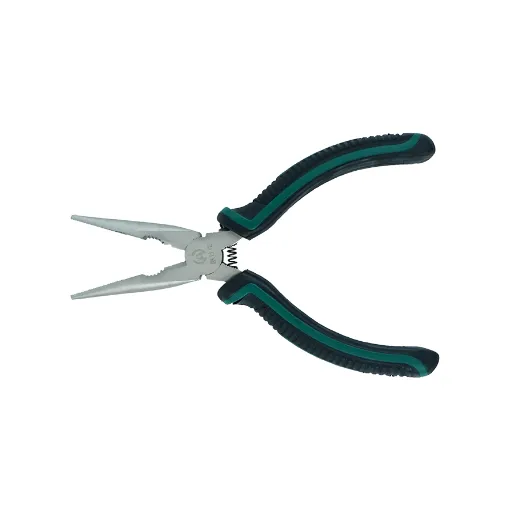
Quality pliers start as steel, not as finished products. Understanding the process lets you ask better questions and spot weaker factories fast.
Drop Forging
Most professional pliers are drop forged. The steel is heated until malleable, placed into a die, and hammered or pressed into shape. Forging aligns the grain structure of the metal, which makes the plier far stronger than a cast or machined part of the same size.
Klein Tools, a brand known for tough tools, controls its entire forging process in-house, heating steel bars to working temperature in seconds and holding tolerances to five-thousandths of an inch. That level of control is the standard to look for.
Heat Treatment and Hardening
After forging, pliers are hardened and tempered. This is where the tool earns its durability. The process involves heating, quenching in oil, and tempering to remove brittleness, and it takes several hours for a full batch.
If a factory outsources heat treatment, ask why. Factories that do it in-house have far more consistent hardness across every piece.
Grinding, Assembly, and Finish
The forged and hardened halves are ground, assembled at the box joint, and fitted for smooth, play-free action. Cutting edges get a local induction hardening to stay sharp under heavy use. Finally the pliers are finished, plated or polished, and fitted with handles. Each step adds a point where quality can be inspected, which is why multi-stage QC matters.
The process is worth understanding because it explains why two pliers that look identical can perform very differently. A drop-forged, properly heat-treated plier holds its jaws and edges for years. A cheap substitute can bend on the third heavy squeeze.
Materials and Hardness: What to Specify
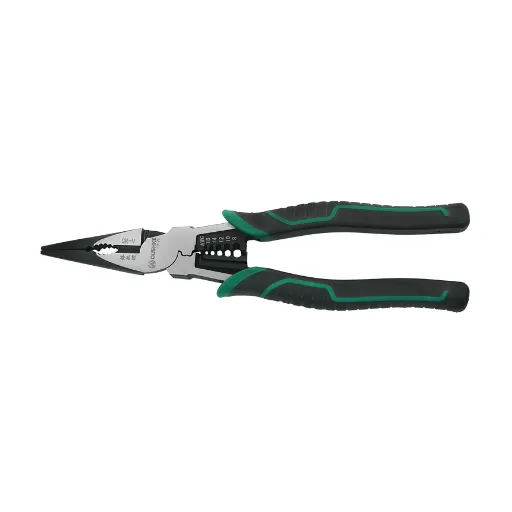
The material decision drives both performance and price, and it should be a conscious choice, not whatever the supplier offers by default.
Chrome-vanadium (Cr-V) steel is the standard choice for professional needle nose pliers. Chromium adds hardenability and corrosion resistance, while vanadium refines the grain for toughness. Treated Cr-V pliers typically reach HRC 52-60, and they hold their shape under repeated heavy loads. This is the material to specify for pliers aimed at electricians, technicians, and industrial buyers.
Carbon steel is cheaper and softer, usually landing around HRC 40-52. It works for budget and DIY lines, but it deforms more easily and rusts faster. Many factories use 45# medium carbon steel for economy pliers. If a quote looks too good to be true, it is probably carbon steel with a cosmetic coating.
For cutting edges, look for induction-hardened jaws at or above HRC 60, which keep the cutting surfaces sharp over thousands of cycles. Ask for the hardness report with your sample order so you know what you’re actually buying.
Here is a quick reference:
| Material | Typical Hardness | Best For | Cost Impact |
|---|---|---|---|
| Chrome-vanadium steel | HRC 52-60 | Professional, industrial, electrical | +20-30% vs carbon steel |
| High-carbon steel | HRC 46-52 | Mid-range general use | Moderate |
| Carbon steel (45#) | HRC 40-50 | Budget and DIY lines | Lowest |
Quality Control and Certifications to Ask For
A manufacturer can promise quality, but only evidence proves it. Here is what to request and why.
QC Evidence to Request
- Mill Test Certificates for raw steel, proving the material matches the spec.
- Hardness test reports showing HRC values for bodies and cutting edges.
- Salt-spray corrosion test results if you plan to sell plated or polished finishes.
- First-article inspection sheets from the production run you will actually receive.
- Pre-shipment inspection (PSI) by a third party such as SGS, TUV, or Bureau Veritas, using an AQL 2.5 sampling plan.
Certifications Worth Knowing
- ISO 9001 is the baseline for a serious manufacturer. It signals a documented quality management system.
- ANSI and DIN ISO 5746 cover dimensional accuracy and mechanical performance for pliers in North American and European markets.
- IEC 60900 / VDE applies to insulated pliers rated for live electrical work, tested to 10,000V at the factory for a 1,000V working rating. If you stock pliers for electricians, verify the certificate, not the red handle. A full explanation of these ratings lives in our insulated pliers guide.
- RoHS and REACH confirm environmental compliance for markets like the EU.
For electrical distributors, certification is not a nice-to-have; it’s a liability issue. One bad batch of “insulated” pliers that fails a 10,000V test can end a business relationship overnight. Verify the standard, request the certificate, and keep the documentation on file.
OEM, Private Label, and MOQ Benchmarks
Many buyers do not want a stock product at all. They want their logo on the handle, their colors on the grip, and their name on the packaging. That is where OEM and private label manufacturing come in.
What a Good Manufacturer Customizes
A capable needle nose pliers manufacturer can handle logo marking (laser engraving or stamping), handle colors and materials (TPR, PVC, or VDE-insulated), surface finish (polished, nickel, or chrome), and packaging (blister cards, color boxes, poly bags). The deeper the customization, the more you differentiate from the shelf. If you’re building your own tool line, this is covered in our guide to custom hand tools.
MOQ Benchmarks
Minimum order quantities vary with customization depth, and flexible suppliers make room for pilot runs:
| Customization Level | Typical MOQ | Lead Time |
|---|---|---|
| Stock product | 500-1,000 pcs | 15-20 days |
| Custom logo and packaging | 1,000 pcs | 20-30 days |
| Deep customization (design, materials) | 2,000-3,000+ pcs | 30-40 days |
| Pilot run (flexible suppliers) | 10-500 pcs | 7-21 days for samples |
Production lead times run 15-40 days after design approval, with custom branding adding 10-15 days. Samples usually arrive in 7-21 days and are often credited toward the bulk order.
Marcus launched a private label tool brand in 2023 with a 300-piece pilot order of needle nose pliers. His supplier let him test the market before committing to a container, which is the kind of flexible MOQ that keeps a small brand alive in year one. Two years later his repeat orders are in the tens of thousands. He started small, verified the product, then scaled.
For distributors planning a full assortment, pairing a wholesale pliers strategy with a verified manufacturer gives you the range and margin to compete.
How to Verify a Needle Nose Pliers Manufacturer Before You Order
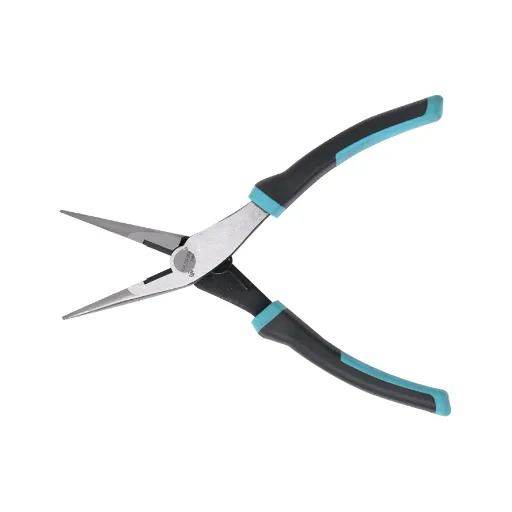
Verification does not require a plane ticket, though a factory visit is ideal. You can do most of it from your desk.
Direct Factory or Trading Company
Trading companies are a real part of the Chinese export landscape, and estimates suggest a large share of suppliers marketing to foreign buyers are not direct manufacturers. A trading company can still deliver decent products, but it adds a layer of margin, has less control over quality, and often quotes longer, less predictable lead times. Ask three questions to separate the two:
- Can you walk the production floor unannounced, or do you need 72 hours’ notice and a showroom visit?
- Can you show in-house heat treatment and forging equipment on the floor?
- Can you provide dated QC records signed by plant staff from your last three production runs?
A direct factory answers yes to all three. A trading company struggles with at least one.
Documents to Request
- Business license and manufacturing permits proving facility ownership
- Export documents tied to the manufacturing entity, not a separate trading arm
- Material test reports and hardness data on samples
- Third-party audit reports or references from current buyers
- Line-item pricing that shows material and process costs
Red Flags to Walk Away From
- A downtown office address with no industrial base
- Refusal to share material test reports or hardness data
- No in-house heat treatment and no explanation
- “Too good to be true” pricing with no cost breakdown
- Unwillingness to accept a third-party inspection
- An MOQ or lead time that keeps moving after the first call
When you have shortlisted one or two candidates, order samples, run them hard, and place a small test order before scaling. That is the entire playbook, and it protects you from the worst outcomes.
Frequently Asked Questions
How do I find a reliable needle nose pliers manufacturer?
Look for a direct factory with in-house forging and heat treatment, ISO 9001 certification, export experience, and references you can check. Verify with samples, material test reports, and ideally a factory audit before committing to a large order.
What is the difference between a factory and a trading company?
A factory owns the production equipment and controls quality in-house. A trading company sources from multiple factories and adds a margin. Factories generally offer better pricing, tighter QC, and more flexibility for customization.
What MOQ should I expect for custom pliers?
Expect around 1,000 pieces for custom logo and packaging, 2,000-3,000 or more for deep customization, and 10-500 pieces for pilot runs from flexible suppliers.
What steel is best for needle nose pliers?
Chrome-vanadium steel is best for professional use. It reaches HRC 52-60, resists corrosion, and holds its shape under heavy loads. Carbon steel is cheaper but softer and better suited to budget lines.
What hardness should pliers be?
Professional pliers are typically HRC 50-60 across the body, with induction-hardened cutting edges at or above HRC 60 for long edge life.
How do I verify a Chinese manufacturer before ordering?
Request a business license, material test reports, hardness data, and dated QC records. Ask for unrestricted audit access, order samples, and use a third-party pre-shipment inspection on the first batch.
Conclusion
Finding the right needle nose pliers manufacturer is a process, not a lottery. Verify the factory, understand the manufacturing process, specify the right material, demand real QC evidence, and negotiate an MOQ that matches your stage of growth. Every one of those steps protects your margins and your reputation.
Shanghai Oushike Hardware Tools is a factory-direct manufacturer of professional hand tools, and we build needle nose pliers the way this guide says good pliers should be built. We handle OEM and private label, offer flexible MOQs, run multi-stage quality control, and export to 30+ countries. If you are evaluating suppliers, start with the full needle nose pliers guide to understand the product, then request samples and get a bulk quote.
The market rewards buyers who check the details. Check them once, and you build a product line your customers trust for years.