
Wholesale Pliers: A Buyer’s Guide For Distributors And Retailers
Wholesale pliers are one of the most reliable product lines a distributor can carry: the global tool pliers market is projected to grow from US$1.01 billion in 2024 to US$1.36 billion by 2031, and pliers make up the single largest product segment in the hand tools market. This guide walks you through building a profitable wholesale pliers line, from assortment planning and margin math to sourcing from a factory-direct supplier and calculating landed cost.
Key Takeaways
- Pliers are the dominant hand-tool segment at roughly 18.9% of the market, with universal demand across electrical, plumbing, automotive, and construction trades.
- A balanced wholesale assortment starts with combination pliers as the core, then adds long nose, diagonal cutting, and water pump pliers, plus plier sets to lift order value.
- Wholesale pricing ranges from $0.49-$0.88 per piece at volume for budget lines to $2-$4 for professional models; keystone pricing at a 20-30% gross margin target is a realistic benchmark.
- Landed cost, not unit price, is where most resellers lose money: freight, duties, warehousing, and defects can add 10-20% on top of the factory price.
- Sourcing factory-direct with OEM and private label options turns a commodity plier into a differentiated, higher-margin product.
Why Pliers Belong in Your Wholesale Product Line
Pliers are universal. Every mechanic, electrician, plumber, carpenter, and DIY homeowner reaches for a pair at least a few times a week. That constant demand makes pliers a steady, low-risk category to stock and resell.
The numbers back it up. The global tool pliers market was valued at roughly US$1.01 billion in 2024 and is forecast to reach US$1.36 billion by 2031, a compound annual growth rate of 4.4% (QYResearch). Within the broader hand tools market, pliers and gripping tools hold the largest product share at about 18.9% (Market.us). And in the electrician hand tools market specifically, pliers were the largest segment in 2025 and are expected to grow the fastest through 2034.
For a distributor, pliers are also a gateway product. Start with a solid pliers line and you have a natural reason to expand into the rest of the hand tools catalog your customers already buy. One-stop sourcing lowers your freight cost per carton and strengthens the relationship with every account you serve.
Consider this: when Elena started her hardware distribution business in 2023, she opened with a single category, combination pliers, and seven SKUs. Within nine months, those seven SKUs accounted for 31% of her order volume, and her wholesale pliers line was the reason three hardware retailers switched their full hand-tool purchasing to her. Pliers opened the door; the rest of the catalog followed.
What Counts as Wholesale Pliers?
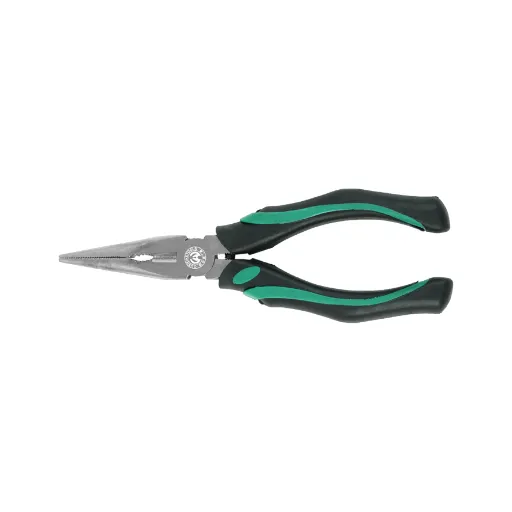
Wholesale pliers simply means buying pliers in bulk quantities for resale, typically from a manufacturer or distributor rather than a retail channel. Buyers range from regional distributors and hardware retailers to e-commerce sellers and tool-rental businesses.
The category includes more than a dozen distinct types. The ones you’ll stock most often are:
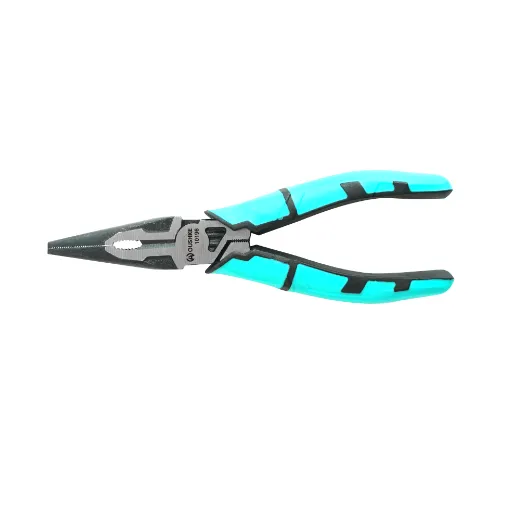
- Combination pliers: The most popular type, with a gripping jaw and an integrated wire cutter. Used across every trade.
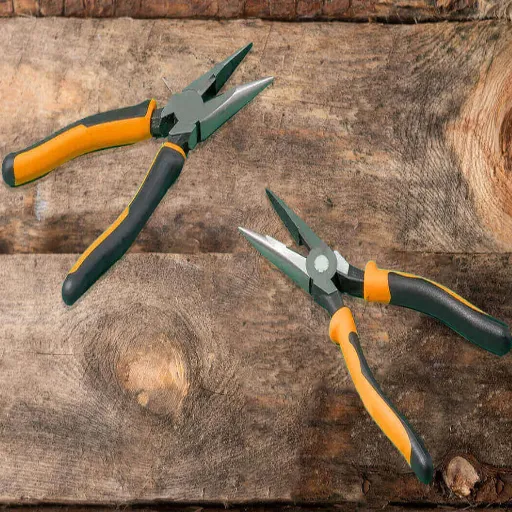
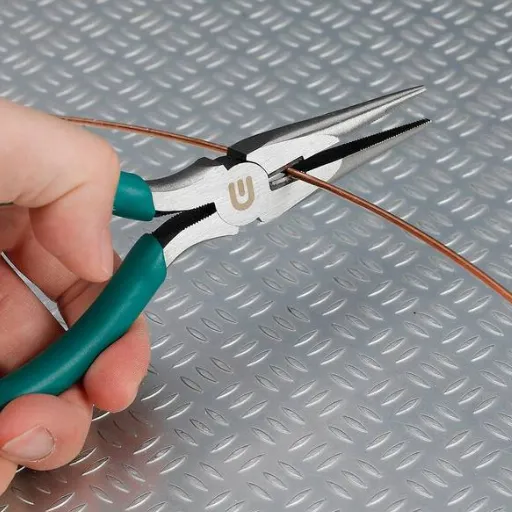
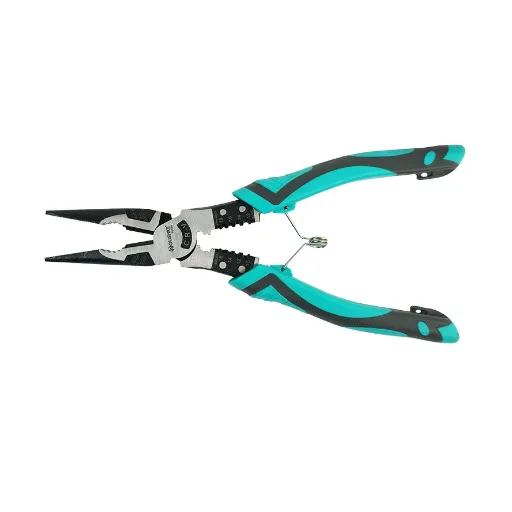
- Long nose (needle nose) pliers: Precision gripping and bending, essential for electricians and electronics work.
- Diagonal cutting pliers: Clean wire and cable cuts, a staple in electrical and automotive kits.
- Water pump pliers: Adjustable jaws for plumbing, HVAC, and automotive work.
- Slip joint pliers: Simple, low-cost general-purpose gripping.
- Locking pliers: Clamp-and-hold tasks where a fixed grip is needed.
- Circlip pliers: Internal and external retaining rings, common in mechanical repair.
Standard sizes run from 6″ to 10″, with water pump pliers available from 125 mm to 300 mm. If you want the full breakdown of the long nose family, our needle nose pliers guide explains every variant and its application.
Building Your Wholesale Pliers Assortment
The biggest mistake new distributors make is stocking too many types and too few sizes, or the reverse. A balanced assortment covers the trades you serve without tying up cash in slow movers.
Core Categories to Stock
Start with combination pliers as your anchor SKU. They sell to everyone, in every trade, year-round. Around that core, add the categories that match your customer base:
| Plier type | Target buyer | Typical wholesale price |
|---|---|---|
| Combination | All trades; best-selling | $0.70-$2.00 |
| Long nose | Electricians, electronics | $0.50-$1.50 |
| Diagonal cutting | Electricians, auto techs | $0.50-$1.80 |
| Water pump | Plumbers, HVAC techs | $1.50-$4.00 |
| Slip joint | General purpose, DIY | $0.60-$1.80 |
| Locking | Mechanics, welders | $1.20-$3.50 |
Sets vs. Individual SKUs
Both belong in the line. Individual SKUs capture replacement and single-tool demand. Plier sets, such as a combination plier plus side cutters, long nose, and water pump pliers in a display box, lift average order value and are easy to sell to retailers and contractors starting a kit. A well-priced set also moves at higher margin than the sum of its parts bought separately.
Materials and Hardness to Specify
Buyers in professional trades care about the steel. Two material families dominate:
- Chrome-vanadium (Cr-V) steel: Hardened to about HRC 52-60, tougher and more corrosion-resistant, and the standard for professional use. It costs roughly 20-30% more than carbon steel.
- Carbon steel (45# or C45-C60): Hardness around HRC 40-52, cheaper, but more brittle and quicker to lose an edge.
For cutting pliers, ask about induction-hardened cutting edges at HRC 58-62. That edge retention is what separates a tool that cuts cleanly for years from one your customers return within months. Also confirm the pivot: precision rivets or bearings give the smooth, wobble-free action professionals expect.
Packaging and Private Label
A commodity plier is a price battle. A branded one is a margin story. Ask your supplier about laser-marked or stamped logos, handle colors in PVC or TPR, and blister-card or hanging-card packaging. Private label lets you sell “your” pliers instead of someone else’s, and it protects your pricing. That’s covered in more depth in our custom hand tools guide.
Wholesale Pliers Pricing and Margin Math
Pliers wholesale pricing varies widely by type, material, and volume. Current marketplace data shows:
- Budget lines: $0.49-$0.88 per piece at volume (3,000+ units)
- Mid-range professional: $1.38-$4.00 per piece
- Premium or specialized: up to $9 per piece
Volume pricing is real. One supplier lists a 5-inch mini plier at HK$8.85 for 100-999 pieces, HK$8.06 for 1,000-5,000, and HK$7.27 above 5,000, roughly an 18% drop from low to high volume.
A practical margin framework is keystone pricing: set your wholesale resale price at about half the retail price, and target a 20-30% gross margin. Here is a worked example for a combination plier:
| Cost item | Amount |
|---|---|
| Unit cost (factory, volume) | $1.50 |
| Freight + duties per unit | $0.25 |
| Warehousing + fees per unit | $0.10 |
| Landed cost per unit | $1.85 |
| Your wholesale price | $3.20 |
| Retail price (keystone) | $6.40 |
| Gross margin | ~42% |
For e-commerce sellers, the math is tighter. After platform fees, advertising, and shipping, aim for an average selling price of at least $19.99; below $15, retail plier economics often fail once the fees are deducted. Shopify’s wholesale pricing guide walks through these formulas in detail.
Factory-Direct vs. Distributor vs. Marketplace
You have three main channels for buying wholesale pliers. Each fits a different stage of business.
- B2B marketplaces (Alibaba, Made-in-China): Best for comparing many suppliers quickly, but you’re buying from whoever you land on, and quality varies widely. Many listings are trading companies, not factories.
- Regional distributors: Fast, low MOQ, local support, but you pay for the middle layer and customization is limited.
- Factory-direct: Lower unit cost, full OEM and private label flexibility, direct control over quality, and a relationship that scales with you.
For most distributors building a real pliers line, factory-direct wins at volume. You cut out the middleman, negotiate your own MOQ and lead time, and can brand the product as your own. The trade-off is that you must verify the factory yourself. Our guide to choosing a needle nose pliers manufacturer covers exactly how to vet a supplier, request samples, and confirm quality before you commit.
How to Source Wholesale Pliers from a Factory
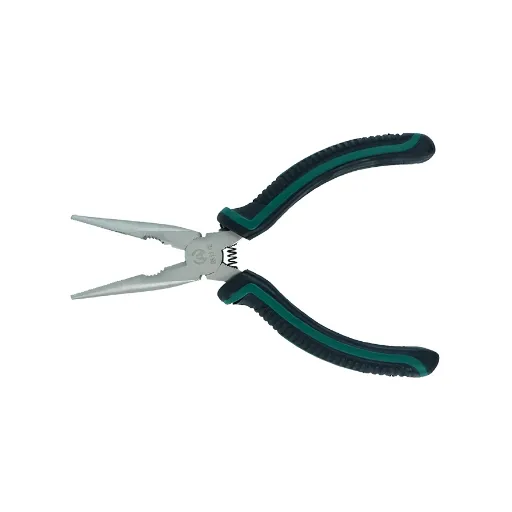
Sourcing factory-direct sounds simple, but the details decide whether your margin survives. Follow these steps.
Know the Manufacturing Hubs
China remains the global center of plier production. The main hubs:
- Jiangsu (Zhangjiagang, Suzhou): The heart of plier manufacturing, with audited factories and strong ISO compliance.
- Zhejiang (Ningbo, Yongkang): Export-focused near the Port of Ningbo, strong for volume and cost.
- Guangdong (Foshan, Yangjiang): Precision fabrication and fast export.
- Shandong (Linyi): Large-scale capacity for high-volume bulk orders.
Define Your Spec Sheet Before You Contact Anyone
Send suppliers a clear specification: plier type, size range, steel grade (Cr-V vs. carbon steel), hardness target, handle material, finish, packaging, and target unit price. A precise spec sheet separates serious suppliers from price-only responses and prevents costly misunderstandings later.
Verify the Supplier
Ask for a business license, confirm the factory address is an industrial site rather than an office, and request samples with material test reports. For larger orders, use a third-party pre-shipment inspection (SGS, TÜV, Bureau Veritas) at AQL 2.5. Look for ISO 9001 certification, on-time delivery rates above 90%, and a response time under a few hours. A real factory welcomes audit; a trading company usually hesitates.
MOQ, Lead Time, and Payment
Typical MOQs run 200-1,200 pieces for standard models, 3,000-5,000 on marketplace listings, and roughly 1,000+ for custom logo work. Lead times are about 15-30 days for stock models, plus 10-15 days for custom branding. Standard payment terms are a 30% deposit with the balance before shipment.
Landed Cost: The Number Everyone Underestimates
Unit price is not your cost. Add freight, import duties, warehousing, handling labor, platform fees, and an allowance for defects. Together these can add 10-20% to the factory price, and that gap is where distributors quietly lose money.
Run the full landed cost before you commit to a price or an order size. For the complete import picture, including Incoterms and documentation, see our hand tool import guide.
When Tomas imported his first container of pliers in April 2025, he priced them off the factory quote alone, about $1.40 per combination plier. Freight, customs clearance, warehousing, and a 3% defect rate pushed the real landed cost to $1.72, a 23% gap that wiped out most of his planned margin. On his second order he built the full landed-cost number into the price from day one, and the line turned profitable. The lesson stuck: price from landed cost, not unit cost.
Import Considerations for Wholesale Pliers
Bringing pliers across a border involves a few standard steps. Choose an Incoterm that matches your experience: EXW (lowest price, you arrange everything), FOB (the factory loads it at the port, you handle shipping), or DDP (the supplier delivers to your door, simplest but pricier). You’ll need an invoice, packing list, certificate of origin, and bill of lading.
Confirm product standards for your market, such as ANSI or DIN, and for insulated pliers, IEC 60900 certification for up to 1,000V work. Duties vary by destination, so check your country’s tariff schedule before pricing.
Wholesale Pliers FAQs
What is the MOQ for wholesale pliers?
Most factories require 200-1,200 pieces for standard models, around 1,000 pieces for custom logos, and 3,000-5,000 pieces on some marketplace listings. Flexible suppliers may accept smaller pilot orders to test quality first.
How much do wholesale pliers cost per unit?
Budget pliers run $0.49-$0.88 per piece at volume, mid-range professional models run $1.38-$4.00, and premium or specialized pliers can reach $9 per piece. Volume tiering can cut unit cost by roughly 18%.
What types of pliers should a distributor stock?
Start with combination pliers as the core, then add long nose, diagonal cutting, and water pump pliers. Plier sets are a strong add-on to lift order value.
Can I get private label pliers with my own logo?
Yes. Most factories offer laser-marked or stamped logos, custom handle colors, and branded packaging. Custom logo work typically requires a higher MOQ, often around 1,000 pieces.
How long does a bulk pliers order take?
Stock models ship in about 15-30 days. Custom branding adds 10-15 days, and samples typically arrive within 3-21 days.
Is it profitable to resell pliers?
Yes, with disciplined pricing. Pliers are a high-demand category, and keystone pricing with a 20-30% gross margin target is realistic when you source factory-direct and price from landed cost.
Sourcing Wholesale Pliers from Oushke
Shanghai Oushike Hardware Tools Co., Ltd. is a direct manufacturer of professional hand tools, including a full range of pliers for wholesale buyers. Because we’re the factory, you get factory-direct pricing, flexible MOQs to test and scale, and full OEM and ODM support: your logo, your handle colors, your packaging, and your specifications.
Our multi-stage quality control covers incoming steel, heat treatment, and final inspection, so batch-to-batch consistency protects your reputation as well as ours. We serve clients in 30+ countries and handle export documentation and logistics from Shanghai and Ningbo.
Conclusion
Wholesale pliers are a dependable, high-demand category that every distributor can build around. Plan your assortment with combination pliers at the core, add the types your customers actually use, price for margin from landed cost rather than unit cost, and source from a verified factory-direct supplier.
Add private label and plier sets to turn a commodity into a differentiated line, and you have a steady revenue stream that opens the door to the rest of the hand tools catalog. The demand is there, the margins are real, and the sourcing path is clear. Start with a small, well-planned order, verify quality, then scale with confidence. Contact us to discuss your first wholesale pliers order.