
Understanding Torque: How to Use Ratchets and Sockets Correctly
01
Introduction to Ratchets and Sockets
Fasteners that terminate engagement between one mechanical component and another are tightened or loosened with special tools. Among these tools is a ratchet, an invention that makes it possible to loosen or tighten screws without removing the screwdriver or turning it around at every turn. Sockets, on the other hand, are typically tubular attachments that are fitted over the fasteners, and they are used for amplifying torque. Ratchets and sockets are popular tools in different industries for this reason because they facilitate work and provide for more focused outcomes; they are a must-have for every mechanic, engineer and home handyman.
What are Ratchets and Sockets?
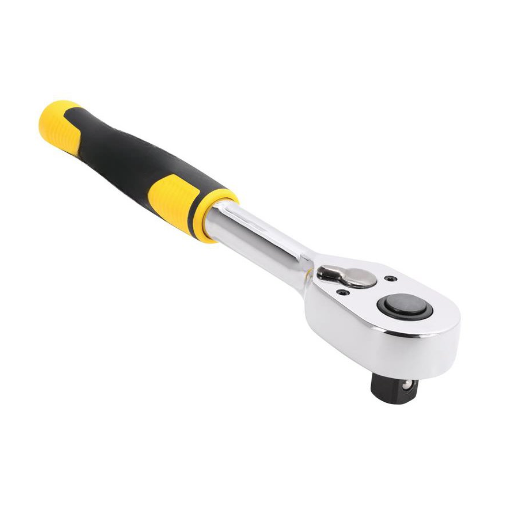
When we speak of ratchets and sockets, we always consider the ideas of mechanical advantage and fine attention to construction. A common ratchet includes a handle, a drive of any kind, and a peculiar pawl that sinks into the gear teeth and doesn’t allow movement in the opposite direction. This design means the user doesn’t waste time and energy in order to return the instrument back to its initial position and therefore makes the job faster in confined places. The sockets connect to the ratchet via a square drive where common sizes such as 1/4″ to 1″ are employed in professional tasks. Such sockets are usually made of strong materials like chrome-vanadium steel which guarantees high durability and repellance to destruction care.
It is a system that is easy for a ratchet and a socket to be used to support a different variety of fasteners and their respective sizes. The fragment also suggests that smooth force is applied to the fastener by the socket to ensure there is no damage to the fastener and to make sure them tightens and loosens properly. If necessary, there may be some additional elements, which might introduce quick-action devices, flexible controls, for instance, a plurality of tooth geared ratchet for increased accuracy of controls, and the like of universal joints for corrugating directions of actions. This particular tool also does not require any intricate mechanism and can be used in various repair work, construction and industrial routine practices.
Importance of Understanding Torque
Torque in mechanics is a concept and measurement. It explains how hard that link goes to an object. Being capable of the force dynamics which are due to the rotation of the objects of having the torsion, its importance is well in defines the efficiency of the work as well as the input for the forces bondage thing of rotation. Therefore, it is inevitable to have the correct way applied the torque of any of the two materials especially in the flywheel in regards to the automotive industry and also in the aerospace industry which requires a tight fit to ensure safety and performance.
For instance, working on a case from above or over tightening a bolt will result in stressed material or the other end being broken and if the relationship is not tight enough then it will fail. This is very important from a future perspective. In any field of engineering, when professionals understand how and why forces is working, they can utilize certain values to maximize and maintain the performance of objects.
Overview of Common Uses
Torque management is an essential part of different industrial applications, thanks to its commitment in the assembly discipline. This sort of activity is mainly conducted in the motor vehicle scope, for instance, adjusting appropriate torque to fasten engine, transmission and other mechanical parts used in the car. This makes sure the parts are not loosened by vibration and also improves the safety and performance of the vehicle in general. In addition to the above, in the defense industry, particularly in the aerospace sector, the implementation of torque ensures that the load-carrying capacity of the aircraft structure is maintained as well as guaranteeing that all aircraft undergo strict operational admission indices.
Furthermore, torque application is crucial in the energy sector when it comes to the turbine assembly and maintenance works, and in particular for the wind turbines, in cases where improper fastening can cause wearing out or lead to immediate collapse of the turbine structure. Torque control is essential in industrial manufacturing and involves tightening and loosening fasteners in assembly lines, making it a practice to ensure control over the performance characteristics of the product and at every place of work to minimize defects occurrence. Companies in these areas are now adjusting to newfound technologies, including tightening tools with built-in sensors, in order to access more precision, the ability to account for any losses, and retain reasonable expenditures while working.
02
Types of Ratchets and Sockets
- 01
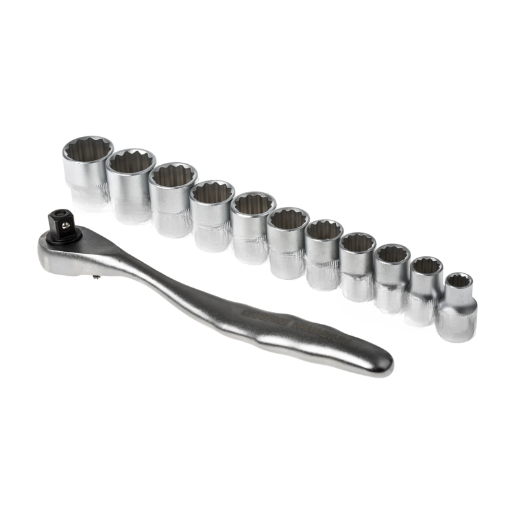
Standard Ratchets and Sockets
The tools stripped of frills and those that more general use have a very simple construction. A variety of these tools may be used in applications for the automotive trade because they feature drive sizes that include 1/4, 3/8 and 1/2. - 02
Flex-Head Ratchets
The flex-head design takes the flexibility of the unit to a higher level as the head of the ratchet can easily pivot. This ability is, in most cases applied when a ratchet with a conventional rigid head cannot operate due to tight locations or limited movement. - 03
Torque Ratchets and Sockets
Made for the work that requires exactness in force there are torque ratchets. These are extremely valuable in situations where a definite level of torque has to be maintained, like in cases of mechanical assemblies or auto-fixing. - 04
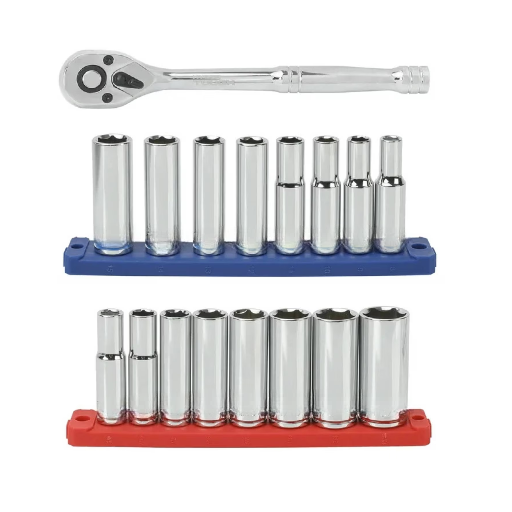
Deep Sockets
Whereas, deep sockets are designed to be longer in comparison to standard sockets making it possible to reach bolts or nuts present on long bolts. Deep sockets are mainly used in construction or automotive-related tasks where accessible distances are increased. - 05
Impact Sockets
Made from impeccable high-quality and steady materials, these power tool designed impact sockets are equipped with power tool impact wrench. The dimensional and fitting configuration of these impact socket wrenches is such that these can easily resist fractures upon application of large torsional force.
Different Types of Ratchet Wrenches
| Type | Key Features | Primary Use | Advantages |
|---|---|---|---|
| Standard Ratchet Wrench | Compact, simple mechanism | General-purpose tasks | Lightweight and easy to use |
| Flex-Head Ratchet Wrench | Adjustable head for tight angles | Hard-to-reach areas | Increased flexibility |
| Stubby Ratchet Wrench | Short handle for confined spaces | Tight spaces | Enhanced maneuverability |
| Digital Ratchet Wrench | Offers torque measurement | Precision tightening tasks | High accuracy |
| Offset Ratchet Wrench | Angled head for awkward positions | Specialty engineering or plumbing | Better leverage in narrow spaces |
| Reversible Ratchet Wrench | Direction switch for loosening or tightening | Multi-directional fastening | Enhanced efficiency |
| Quick-Release Ratchet Wrench | Rapid socket changes with safety lock | Heavy-duty projects | Faster and secure operations |
| Pass-Through Ratchet Wrench | Hollow design for long bolts | Extended bolt tightening | Access to long-threaded connections |
Varieties of Sockets Available
| Socket Type | Key Features | Applications | Advantages |
|---|---|---|---|
| Standard Socket | Designed for general fastening tasks | Automotive, construction | Versatile and widely used |
| Deep Socket | Extended length for deeper bolt access | Automotive, machinery | Access hard-to-reach fasteners |
| Impact Socket | Withstands high torque applications | Heavy-duty tools, impact wrenches | Increased durability |
| Universal Joint Socket | Rotates at multiple angles | Odd-angled fasteners | Increased flexibility |
| Spark Plug Socket | Specifically for spark plugs | Automotive engines | Secure grip, avoids damage |
| Torx Socket | Matches star-shaped fasteners | Electronics, vehicles | Precise fit and reliability |
| Hex Socket | Works with hexagonal bolts | Engineering, construction | Commonly used, secure grip |
| Metric Socket | Compatible with metric systems | International machinery | Standard for global applications |
| SAE Socket | Matches SAE fasteners | U.S.-based equipment | Precision for standard sizing |
| Swivel Socket | Combines angle capability and torque | Tight or confined spaces | Multi-angle tightening options |
Choosing the Right Ratchet and Socket Combination
A significant component in making sure the mechanics you engage in are perfect is selecting the most appropriate ratchet and sockets. Several variables determine the selection of these tools, e.g., the various fasteners, the mechanics being applied, and the amount of torques required by the work to be performed. Consequently, there are metrics fittings which are indispensable during use of equipment that is based on international norms most especially in motor vehicle and industrial settings. On the other hand, if the equipment is being used in a US environment, then working with SAE sockets ensures that the imperial measurement fasteners are well-fitted in their places.
Swivel sockets are very important components for those that are working in cramped areas or at angles because they are designed to resist torque which is achieved because of their articulating capabilities. In cases of high shock load or interference of a high magnitude, much importance is given to the ratchet and socket construction and the materials utilized in their construction. High-quality steel alloy material used to make sockets enhances their wearable and serviceable characteristics. Moreover, the socket drive—traditionally set at 1/4″- 1/2″ or 3/8″ inch in size should match the specified torque range and abability so as to deliver the best-accommodated strength and prevent the wrappons possibility.
03
Step-by-Step Guide to Using a Ratchet
-
1
Select the Appropriate Socket
Select a socket that corresponds to the fastener size that you are about to untighten. Ensure that it is firmly fitted to the ratchet drive.
-
2
Position the Ratchet and Socket
Place the socket on the fastener in such a way as to provide a tight fit. It is important to note that Displacement may harm both the nut/bolt and the tool itself.
-
3
Adjust the Directional Switch
Locate the main switch of the ratchet, if it has the feature, and position it securely whether for applying or releasing of the lower stroke maintenance of the clearances of the fastener.
-
4
Engage the Ratchet Mechanism
One of the most important instructions to remember is to hold the ratchet handle firmly and apply pressure slowly after force hold the ratchet in place. Alternate the motion in a back and forth direction to turn the fastener, to engage ratchet gear properly.
-
5
Complete the Task
Proceed to turn the fastener until the desired fixing pressure is achieved or the fastener loosens adequately. Over tightening can cause damage to the fastener or the surrounding equipment.
-
6
Remove and Store the Tools
Once the fastener is turned to its intended location, remove the socket from the ratchet grasp, obviously remove any trash, and put the equipment away safely in a clean area in order for it to last long.
Step-by-Step Guide for Socket Wrenches
-
1
Choose the Appropriate Socket Size
If there is any doubt about the fit between the fastener and the socket, measure both. There is a higher probability of injuring the bolt if the connection is not tight, whether it is drifting or more torque is used, diminishing the chances of efficiency.
-
2
Consider Drive Size Matching
Be sure that the grip of the appropriate style size of said socket fits on the grip handle of the corresponding ratchet device (i.e., 1/4″, 3/8″, 1/2″). Using different styles might require the inclusion of adaptors in the retention system which can impair the control levels also the working factors.
-
3
Inspect the Torque Requirements
If possible apply the manufacturer’s standard operating procedure for tightening, particularly on important parts. With regards to areas where more power or force is required a torque wrench is suitable. It is important not give more force above that required since this can cause veins or fastening elements to break.
-
4
Apply Lubrication if Necessary
It is important to note that particularly where bolts have sustained easibility due to usage of rusted or due to being very tightly snug fastening, it is important to use some form of a lb. This serves the purpose of making the equipment user-friendly without damaging the launching equipment.
-
5
Attach the Required Extension Bars
If the fastening is located in the interior or otherwise not easily accessible, think of using extension bars or a universal joint extension to this side. Such components ensure easy maneuvering irrespective of their application.
-
6
Select the Ratchet Mode
Before using the ratchet, change the switch lever’s position so that the suitable ratchet direction is chosen. This step ensures that the ratchet is not put under any unnecessary stress and eliminates any slippage that may occur during its use.
-
7
Maintain Consistent Pressure and Angle
With respect to the process of introducing the superior intensity levels, it is always advised to exert uniform and systematic intensity mechanisms and at the same time those that are in the appropriate direction of the forces application.
-
8
Finalize with a Manual Check
Upon loosening or tightening the fastener with the socket wrench, make sure the adjustment is firm and that the rotations or order put in above are still the same. Its main role helps in preventing mistakes in relation to low-torque application uses.
-
9
Clean and Store Properly
The sockets should be regularly washed and the ratchet mechanism needs to be degreased during their cleanup after usage. Rest the two tools in their compartments to minimize excessive wear and tear and to enable their ease of access when they are next needed.
Tips for Maximizing Torque
Tip 01
Use the Correct Socket and Tool Size
Always ensure the perfect match of the socket size and the tool with the nut or bolt. Avoid slippage that could be caused due to different tools and lead to a loss of dullness of the system or damage of its parts. Use the precisely made dimensions contained in product manual.
Tip 02
Apply Even Pressure
When using a torque wrench along with the tightening tools, greater attention should be paid to applying a smooth force with effort without any knocks. This is because sudden or jerking movements may displace the torque making it distribute unevenly along the assembly.
Tip 03
Lubricate Threads When Required
Enhancement of proper threading lubrication reduces tension in threads. This is beneficial because more torque can be generated under these conditions. Excessive protection however must be shunned because it can lead to a change of the values of the torque and end up causing overtightening.
Tip 04
Calibrate Tools Regularly
There are calibrations that need to be done on torque wrenches and such instruments from time to time for accuracy purposes. When the calibration is not as usual one should expect, it will cause either under- or over-tightening which translates to some mechanical failure as well as reduced lifespan in some equipment.
Tip 05
Account for Torque Loss in Extensions
In any situation, any torque lost due to flexibility or other extra extension length should not be accounted for in the tool wrench. Where possible, such extensions should be minimised and, if possible, use the charts, which provide correction factors towards such losses.
Tip 06
Work in Appropriate Environmental Conditions
Extreme weather conditions, in some instances, can not only affect the tools but also items experiencing the tightening process. For example, freezing temperatures can make the materials encapsulated in the fasteners to snap.
04
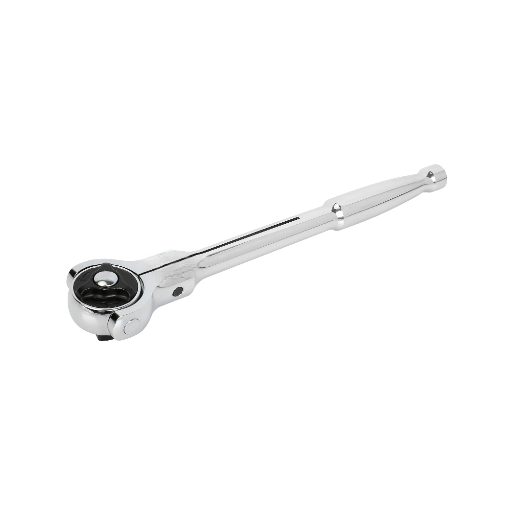
Safety Precautions When Using Ratchets and Sockets
- ◆
Inspect Tools Before Use — It is essential to check the ratchets and sockets for any visible damage, inconsistencies or excessive wear, such as cracks or deformations, as damaged tools can easily fall apart when used under high pressure and can pose a great threat to safety.
- ◆
Use Properly Fitted Sockets — Make sure that the socket fits the size of the fastener so that hence no slipping or damage on the edges of the fastener occurs, which can eventually cause failure of the tool or serious injury to a person.
- ◆
Apply Force Correctly — Do not put excessive force while functioning ratchet. If it is necessary to load highly required torque, rather than heavy load a ratchet, use a breaker bar.
- ◆
Wear Safety Gear — Wear proper safety attire and protective gear such as work gloves or protective goggles to help in reduction of or prevent damage which could be caused by a simple slip of the tool.
- ◆
Secure Your Workspace — Keep the area in a clean and unobstructed state so that there will be a balance while working with the tools and try preventing accidents.
- ◆
Avoid Improper Modifications — It is not recommended to use pipes or any other tools to extend the handle to facilitate the operation of the ratchet as this is likely to cause it to fold up and then separate.
Essential Safety Gear
Safety comes first when using any hand tools or performing any hazardous activities, hence proper safety wear or ensamble is critical. For instance, a good pair of safety work gloves helps to protect hand from sharp objects, chipped elements or harmful substances. They help to provide a strong grip. Proper eye protection in the form of safety spectacles or goggles has to be worn in order to prevent the ingress of foreign bodies into the eyes as a result of unintended ejection, contact with dust and vapors or splashing of liquids.
Moreso, different sorts of footwear like those of steel capped curriculum boots can protect the toes from being pressed by unbalanced objects or even from being pierced. There might be situations in which there could be a likelihood of a head injury, and so a hard hat should be worn that is either standard or reinforced depending on the type of work. When carrying out tasks that may have respiratory hazards, it is recommended that a mask or respirator be worn. These safety standards are followed psychologically so that some fear is evoked about going back to a wrong things or how efficiency in the task can be improved in safe environments.
Best Practices to Avoid Injury
Ensuring the safety of the workplace requires a holistic approach driven by current industrial safety and preventive health care principles. Every time a need to update working practices arises, regular training and induction sessions should be conducted to all workers. The self-awareness and positioning checks really narrow down the aspect of physical movements that contribute to stress-related musculoskeletal disorders, especially for activities involving handwork or heavy tools. In addition, practices that involve the development and establishment of notes in business may also help avoid incidents prone to health and safety risks.
In addition, the introduction of such devices as electronic fitness bands or any other wearable technology including body motion and form and even environmental technologies in everyday/most common activities in emergencies is an action encouraging efficient risk management. For example, good interdepartmental conflicts within the organization help in reduction of the rates while also increasing productivity.
Common Hazards to Watch Out For
One frequently discussed health and safety concern is the danger of slipping, tripping and falling which is often facilitated by irregular flooring, slippery surfaces, or misplaced equipment in workplaces. These accidents account for some of the top sources of workplace health and thus there is a need to perform regular checks with early interventions to ensure environmental safety. Another important exposure Hong is to substances that create ill health such as those present in the air, contractor spilled chemicals and posing and touching hazardous chemicals.
Excessive bioaerosol levels recorded at the filter suggest the necessity of introducing adequate storage, frequent control of indoor air quality, and the enforcement of the use of personal protective equipment (PPE). Also, ergonomic risks must be reckoned with such as bending over injuries or even muscle offset due to bad working conditions, which are most disturbing especially in areas with much repetitive movement or sitting. Workstation adaptation is essential, together with the coaching of employees and short breaks. Recognizing these dangers before they occur and dealing with the matter is crucial to maintaining the safety of workers and smooth production operations.
05
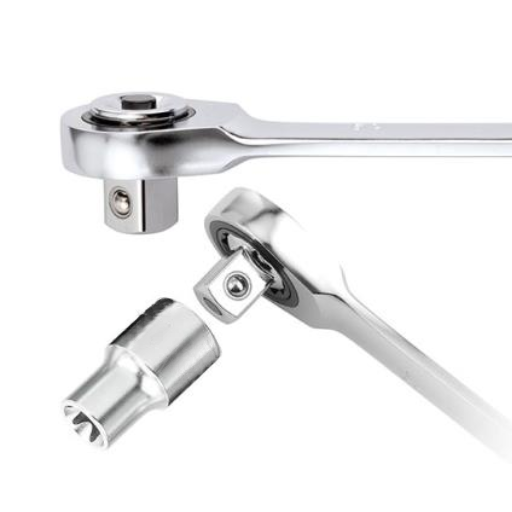
Common Mistakes to Avoid
- ✗ 01
Using the Wrong Size Socket
A mismatch of their sizes could even ruin the fastener. It is advisable to use the correct sizes of the sockets on the fasteners all the time to give a firm grip on the fasteners and provide accurate torque on them.
- ✗ 02
Over-Tightening Fasteners
Do not apply too much force as this solution may cause the tearing out of the threads or breaking of the fasteners. When accuracy so desired, such precision is best done with a torque wrench to avoid over-tightening.
- ✗ 03
Improper Storage of Tools
Damage of ratchets and sockets due to wear and tear, dirt, and rust is aggravated if they are not organized, prepped, and well maintained. Portable instruments shall be kept in a clean, cool place and proper standards of inspection shall be adhered onto project.
- ✗ 04
Lack of Lubrication
Ratchets require routine application of oil to their gears to ensure that their parts run smoothly. Without periodic lubrication, ratchets wear out as a result of adhering or working incorrectly when turned on or off.
- ✗ 05
Forcing a Ratchet Beyond Its Limit
Using ratchet for delivering thrust as an improvised method of increasing the force application increases the risk that ratchet wrench components might crash. So handing torque over to other tools is better.
Incorrect Socket Usage
A common cause of damage or injuring in hand tools usage is utilization of incoherent sockets with unsurpassed hardware groups. A misplaced socket over a fastener is a risk of dropping fastener, ruining the bolt heads and in the worst case scenario even the thread infections. In particular, this is experienced in attempting to use metric sockets on imperial bolts and vice versa. Also using sockets made from such materials that are unable to resist high-torque loads can lead to breaking up or blowing out under load. Finally, always avoid wrench machine with ill-fitting sockets, and if necessary, the socket set should be turned down more than one level or incorporate the correct size of fasteners to ensure effectiveness and safety.
Over-Torquing and Its Consequences
The excessive application of hard power exerted on connector yielding danger is what hard torque refers to. This regular practice always sees connectors such as bolts skinny out or deflect open or even snap, which reduces the mechanical performance of the body and prevents it from being bypassed. In some cases, the material which has been overly tightened may have some form of cracks (micro-cracks), rendering it unsafe over time since it has reduced the load capacity. Apart from the point where the loads are applied, the threats of the bolts and the bolts themselves can be plied out, thus postponing or failing the proper fastening of the assembly.
According to evidence, it has been found out that when bolts are screwed in more than their yield point, exhaustion occurs in the material of which the bolt is made and the metallic bolt components become stressed and stiff and finally undergo failure due to the stress they are subjected to. The only way to minimize the possible damage problems posed by these oversights is to accurately calculate and apply true amount of torque by utilizing calibrated devices like torque meters and in accordance with the design let alone standard torque values for the installation in hand.
Neglecting Maintenance of Tools
Failure in maintaining tools in good working condition can have severe effects on all tools, reduced efficiency, durability and even the safety of tools at work. Additionally, as time passes, tools will wear out, get corroded and lose quality, which is worsened by applying in rugged environments. Actually, if the torque instrument is not serviced correctly, it wears out and gives inaccurate readings, possibly leading to a chance of failure and a potential for over-torquing.
Likewise, using tools with blunt or damaged cutting edges will surely result into cutting defects that will escalate the possibility of injury and damage. Performing regular service checks which include: cleaning, lubrication, calibrating and checking tools for wear and tear or damages, are crucial in lengthening the life of lesions as well as maintenance of the appropriate condition in line with the preventative measures. The service checks that entail cleaning, lubrication, recalibration, checking for signs of wear or damage seldom takes place. In so doing, only will lead to diminished productivity and misusing resources but also to high expenditure in maintenance and replacement of tools that wear and tear.
Reference Sources
- Adjustable-Volume Prosthetic Sockets: Market Overview and Value Propositions
Read more here - Combined Experimental and Computational Failure and Fatigue Analysis of a Socket Drive Adapter
Read more here
06
Frequently Asked Questions
How do you use a ratchet wrench to loosen the nut or bolt head?
Q 01
First, take the correct socket and use it to attach the drive square, then push the socket onto the square until it positively fits, and adjust the lever of the ratchet so that when turning counterclockwise, it releases the fastener. It is also worthwhile to use short ratcheting ascents when space is tight, as the handle is located near the head. If it is not convenient to turn or back out the fastener with a standard approach, then lightly twitch the wrist to take advantage of the ratcheting features of the wrench. In case the fastener absorbs completely, it might be necessary to change the position of the wrench or use an adapter and a socket or even an extension for more leverage.
Can I use a ratchet wrench in a step-by-step guide for tight spaces?
Q 02
Sure – a ratchet spanner might be very useful in narrow spaces, since the handle can go back and forth thanks to the ratcheting system. Apply appropriate low-profile sockets or use extension and make sure the socket fits snugly into the drive square. The lever in the head controls turning in one direction and assures that the ratchet rotates when turned in the indicated direction – to tighten or loosen, respectively. It helps to use several short strokes and to keep moving the wrench handle in and out when trying to remove nuts or bolts with restricted space.
What is the correct way to use a ratchet to tighten a fastener clockwise?
Q 03
Attach the socket to the wrench, the important thing here will be to ensure it does not move when the drive square is engaged. Turn the handle in the manner of the clock and take steps while doing this. Overdoing it only serves to make the situation worse, to avoid doing this there is a specific amount of torque to be applied. If the angle is too sharp or the bolt is at a recessed depth, more assistance such as an extension or an adapter can happily be used. If a higher amount of torque is needed, either shift the wrench or get a longer handle and use it, while still maintaining the lower torque applied commas for control purposes.
How should I use a ratchet wrench and sockets for DIY projects?
Q 04
If you wish to execute any kind of repair or improvement easily, in this case you’d better opt for the proper standard/metric wrench socket size and fix the socket on the drive square in such a way that it fits the nut or bolt head perfectly. In this case, the use of a ratchet makes things quicker than a standard spanner would do, if only because it facilitates continuous work without the need to release the fastening point and change the position of the socket head. Grasp the hammer in your hand, if unscrewing heavy-duty nuts, as it has better leverage.