
Sledgehammer Buying Guide: Sizes, Weights & Best Uses
From the simplest ones, like pulling down buildings to driving stakes into the ground, the sledgehammer is one of the most versatile and necessary tools that come to mind. On the contrary, proper sledgehammer selection is not an easy task such that just walking up to the first one and picking it up. Rather, it necessitates having a clear concept of what the sizes, weights, and intended uses are in order to be efficient and safe at the same time. No matter whether you are a professional or a weekend warrior, this guide is set out to help you in making your decision. By unraveling the main factors to put into consideration when purchasing a sledgehammer, we will provide you with the most needed insight into the process and easier choices starting from weight selection and your strength to size and the type of job.
Understanding Sledgehammers

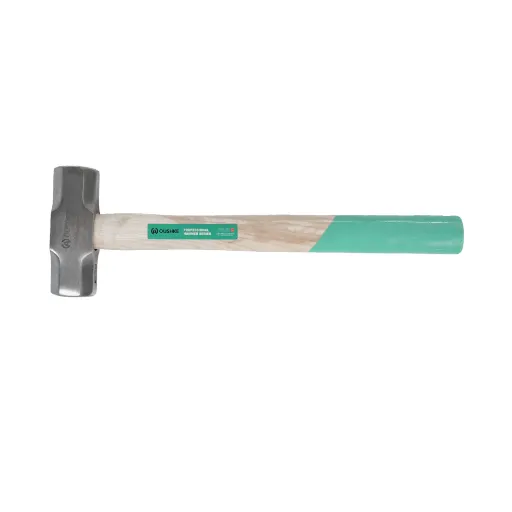
The exact composition of a sledgehammer is based on two key elements: the head and the handle. The head, generally made of steel, is made especially for administering forceful blows and its variety ranges from as low as 2 pounds to 20 pounds and more. Lighter heads are mainly used for works involving choosing the perfect heads for works requiring cut, while the heavier ones are usually used for demolitions or working on very hard materials. The handle, which is also made of wood, fiberglass, or steel, greatly influences the grip, the lifetime of the sledgehammer as well as the degree of shock that can be absorbed. As an example, fiberglass handles are great for sledgehammer users since they are light and weather-resistant, while wood handles are liked by most users for the traditional feel but they need more care for this reason to keep them from deteriorating. The utility of these components together ought to be well understood if one is looking for the right sledgehammer that will meet his/her needs.
What is a Sledgehammer?
The sledgehammer belongs to the category of hand tools, which are very sturdy and versatile, and it has a large, heavy head to which it owes the most part of its striking power. Its most typical application is in places that are large-scale, robotics, or where a huge force of destruction is needed to disintegrate such materials as rocks, concrete, or stones. Present-day sledgehammers are, as a rule, not only made of the best possible material but also have the best and safest designs ready for use. The weight of the head, which can range from 2 to over 20 pounds, determines the energy transferred on hitting, but the length of the handle—ranging from short versions, which are easy to be held in hand, up to long ones with a view of being used by two people—affects the difficulty in weight or the accuracy of hitting. In many cases, and at the same time essential in the world of industry and engineering, are the haulage and transfer through a punch that are done on this industrial site, with hardly any sign of any mechanical power to speed up the work.
Types of Sledgehammers
| Type | Weight (lbs) | Handle Material | Best For | Key Feature |
|---|---|---|---|---|
| Lightweight | 2-6 | Fiberglass/Wood | Precision tasks | Easy to control |
| Standard | 6-10 | Fiberglass/Wood/Steel | General construction | Versatile and balanced |
| Heavy-Duty | 10-20+ | Steel/Wood | Demolition tasks | High impact force |
| Dead-Blow | Variable | Polyurethane/Steel | Reduced rebound | Minimizes vibration |
| Mini Sledgehammer | 2-4 | Fiberglass/Wood | Tight spaces | Compact and portable |
| Soft-Face | Variable | Rubber/Polyurethane | Delicate surfaces | Non-damaging impact |
| Split-Head | Variable | Replaceable components | Adaptable maintenance tasks | Interchangeable head inserts |
| Electric-Powered | Lightweight to heavy-duty | Composite materials | Professional demolition | Powered for efficiency |
Key Components of a Sledgehammer
| Component | Material Options | Impact on Performance |
|---|---|---|
| Head Material | Metal (steel), rubber, or polyurethane | Determines durability and impact force |
| Handle Material | Wood, fiberglass, or composite | Affects strength, flexibility, and grip |
| Handle Length | Varies (short to long) | Influences control and force generation |
| Weight Range | Light to heavy | Defines suitability for specific tasks |
| Grip Design | Textured or smooth | Enhances hold and reduces slipping |
| Shock Absorption | Rubber or specialized coatings | Reduces vibration and user fatigue |
| Replaceable Parts | Heads or components | Extends tool lifespan and adaptability |
| Specialty Variants | Soft-face, mini, or electric types | Suited for unique or niche applications |
Choosing the Right Sledgehammer

In making a decision to go for a sledgehammer, bear in mind the following main reasons to ensure that it makes the needs of your own:
- Weight – The first step where you would choose the targeted task suited matching light tools is weight. The sledgehammers which happen to be lighter (4-6 lbs) are perfect for lighter forms of demolition or precision works, and the more massive alternatives (8-20 lbs) are better for breaking concrete or driving in posts.
- Handle Material – Feel free to go for the fiberglass or steel handles if the priority is durability. The wooden handles may seem softer and lighter in weight, but they are not as impact-resistant.
- Grip Design – The high-quality grips should be distinguished by their textures or special shapes so that they can eliminate sliding hence usage becomes more comfortable and also there is less strain on the fingers.
- Application – You should clearly be focused on the purpose tool is going to serve. For instance, soft-face sledgehammers are great for situations where you might want to avoid surface damage, while the traditional hammer models are the heavy-handed tools of demolition.
With these factors in mind and having done your task analysis, the sledgehammer that the user gets will be highly capable in terms of performance, longevity, and user comfort aspects, as well.
Choosing the Right Sledgehammer Weight
Deciding on the right weight of a sledgehammer is one of the most important things to do in order to get the work done 100% and, also, to be safe. They have that different sizes available, starting from 2 pounds and ending with 20, and each of the weight categories is assigned to a certain type of work. For little jobs that are not so common and need the hammer only for the precise hit, the 2-6 pounds category is the most preferred one. Hammers in this category are light enough to be used for a long time, but at the same time tough enough.
For moderate work tasks, the masses that range from 8 to 12 pounds are appropriately divided between their impact and user-friendliness, and the latter is one of the most crucial factors to consider if you have similar tasks as in breaking small concrete structures or installing heavy posts. In the case of larger-scale demolitions like the breaking of thick concrete or steel-reinforced structures, the ideal weights for sledgehammers are 14 to 20 pounds as they produce stronger impacts and this naturally results in higher force output. However, heavy tools are physical strength-demanding and are not for beginners.
In the end, the appropriate weight selection relies on the operator’s power, the hardness of the material being worked on, and the duration of use of a sledgehammer. Effective utilization of these factors, in turn, results in better productivity and a healthier working environment, where the probability of work-related injuries is largely reduced and the quality of the work is at its best.
Choosing the Right Handle Material
Materials used for the handle greatly affect the quality, life, and safety of hand tools. Materials like wood, fiberglass, and steel are commonly used and each of them comes with its own set of pros and cons. Wooden handles, generally made from hard materials like ash and hickory, are the best in the sense that they are lightweight, they absorb shock well, and they feel just like an old-time handle in your hand. Still, there is a continuous requirement for maintenance in order to avoid the handle splitting or cracking. The name of the handle is very often made of fiberglass because the handle has weathering resistance that is superior to that of steel and is able to resist chemicals and impacts. Besides, fiberglass is lighter than steel and, hence, the operator will experience less fatigue when using it for long hours.
Steel handles, despite being particularly strong and almost unbreakable, are usually heavier and, thus, tremble more, transmitting more vibration to the user, which in turn increases weariness and tenseness during tedious tasks. Present-day progress in materials science has made it possible for the brass blade or nylon-spiked handles to become the new standard for composite material manufacturing. The tool handle borne of the union of fiber glass and stainless steel has prevailed over other handles. The quality of the handle you are to go for depends heavily on what the tool will be used for, the kind of setting the tool will work in, and the operator’s physical endurance.
Sledgehammer Sizes and Weights

Different kinds of sledgehammers match various tasks and user needs through the various sizes and weights they come with. The most usual head weights are 4, 6, 8, 10, and 20 pounds which are required for heavy tasks only can be considered too. For more precise or longer use tasks the lighter sledgehammers in the range of 4 to 6 pounds will offer better control and they are ideal to be used. The handle lengths vary from 12 inches for the small models to 36 inches for the maximum levers and they are the same different lengths. The right selection of the size and the weight factor again depends on the purpose of- and the user’s ability to work, in order to secure a doing that is both safe and effective.
Overview of Sledgehammer Sizes
Each of the sizes in which sledgehammers are made is a solution for specific applications and needs of the user. The smaller sledgehammers which typically weigh between 2 and 6 pounds are the best for the projects where precision and control are needed such as breaking the small masonry, working on metal adjustment, or doing demolition work in narrow spaces. Very often these tools are equipped with shorter handles designed approximately at 12 to 16 inches to ease the way in restricted areas.
The sledgehammers of moderate weight, being in the 6 to 12-pound range, are the ones between power and control. They are to be found everywhere and their main purpose is the breaking of relatively thicker concrete, driving stakes, etc. These types come in handle lengths of up to 24 inches, which is the reason for the possibility of a great exertion, while the hammer can still be handy for an average user.
The heaviest sledgehammers on the market can weigh over 12 pounds and have a handle length of 36 inches and are specifically made for heavy-duty jobs that need a lot of power. They are mostly used for breaking big pieces of concrete, taking apart main parts of a structure, and putting heavy posts into the ground. Even though they are the most powerful, their use still requires much body and perfect handling to avoid accidents and to operate in the best possible way. Choosing the right size of sledgehammer makes the performance of the task most efficient, thereby decreasing the user’s tiredness and the potential injury to a minimum.
Weight Breakdown: 2 lbs to 20+ lbs
There is a variety of sledgehammers in different weights, and each one is for a specific task application. The lightest ones are usually around 2 to 4 pounds, and they are great for jobs where precision and not power are the most important, like light demolition or driving of small stakes. The middle ground for sledgehammers is the 6 to 10 lb range and they are the ones that come with the best power to control ratio, the general-purpose of those ones would be the demolition that is a bit more intense or the splitting of smaller concrete pieces. Then there are the heavy sledgehammers that are more than 10 pounds and can even be as much as 20 pounds, that are made for one thing, power and the most challenging jobs, like breaking through thick slabs of concrete, etc. The most suited and chosen weight by the user should be backed up by the fact of the participation of the user’s physical abilities and how hard the task is, so that the user can work both safely and effectively.
Choosing the Right Sledgehammer Size for Your Task
Accurate sledgehammer size selection is based on the evaluation of various factors, such as efficiency, precision, and safety during the process. It is recommended to evaluate the material type and project size first. The size of a sledgehammer that has a head weight of 2 to 6 lbs will be sufficient for light tasks such as small fixture removal or breaking apart drywall, and at the same time will be very easy to handle. For medium to large-scale applications, the 8 to 10 pound sledgehammers will have a good mix of power and control. The biggest sledgehammers, which can go up to 20 lbs or more can fulfill the most demanding tasks in the industry like breaking reinforced concrete or taking down the building structures where the highest possible impact is the only way.
Ergonomics is a crucial factor in the tool selection. The handle length should be such that it balances the head weight, an extended handle increases leverage but it might be hard to handle in the tight spaces. The handles come in various materials like wood, fiberglass, and steel, wood being the cheapest and most pleasant to work with. Besides, the choice of the material affects the life of the handle, the user’s comfort, and the severity of the vibration problem apart from the above-mentioned characteristics. Furthermore, the feel of the tool has a great influence on the user. The frequency and duration of use should be kept in mind; lighter tools are almost always the choice when it comes to using the tools for a prolonged period, on the other hand, the heavier are used for a short time when the work is very demanding and intensive.
Best Uses for Sledgehammers

Sledgehammers are the right tools for the job and they have been primarily designed for tough jobs. Usually, they are employed for:
- •
Demolition Work: Perfect for cutting concrete, brick, or drywall when renovating or building projects. - •
Driving Stakes: Outstanding for driving wooden or metal stakes inside the ground, usually in gardening or building the way you want. - •
Metalwork: A tool that’s commonly used in blacksmithing or industrial for changing the shape or flatness of a metal piece. - •
Breaking Hard Materials: The tool that does the job of cracking the big stones or remove the beaten and hardened surfaces such as asphalt.
Their durable construction and substantial weight are in conformity with the hard-impacting jobs’ requirements. One must always follow all safety measures while using the sledgehammer, including putting on protective clothing.
Light Demolition Tasks
Heavy-Duty Demolition Applications
When it comes to the most severe demolition works, the sledgehammer is the top priority tool especially if you are working with durable materials like reinforced concrete, masonry of heavy weight and brick walls. These various applications impose the usage of very tough tools to come up with a very high force to effectively break through the structural elements. The development in sledgehammer design has also brought forth the popularity of a reinforced fiberglass or steel handles which are tough and excellent shock absorbers in the case of prolonged use.
Moreover, it is crucial to choose a sledgehammer with the right size and weight of the head—usually between 8 to 20 pounds for tough use—to get the maximum energy transfer and at the same time considerably cut down the user fatigue. Besides, the best way to make the most of the sledgehammer is by utilizing it in the right manner, e.g., by constantly having a tight grip on it and swinging it at the full arc, which in turn results in higher efficiency especially in the case of large-scale demolition sites. A good knowledge of material properties and structural load points, on the other hand, is the key to accurate application of the force; hence one can work faster on the construction site without the fear of destroying expensive materials.
Driving Stakes and Other Practical Uses
Getting stakes driven into the ground by hammer calls for the need of correct force and repeatable effort so that the fixture would be strong and durable. Stakes are commonly applied to secure tents, fences, or to provide additional foundation support for larger structures. One possible reason for this is the use of very heavy sledgehammers that deliver enormous impact energy to the stake, the force being sufficient to penetrate into the denser or rocky soils even with minimal efforts provided the proper force and angle are applied respectively.
The use of advanced technologies in stake design, such as corrosion-resistant alloys and sculpted geometries, has been an additional reason for performance enhancement through the reduction of material deformation and the assurance of a more stable installation over time. Further, the tasks that can be done are not limited to taking out the buried objects. Even unearthing old stakes by means of striking and splitting of dense materials into smaller parts are also included in the list of the tool’s construction and outdoor uses which show how versatile it is in real-life situations. Knowing these methods, in particular, can turn a very tiring job into a pleasant and painless one as the implement with which a stake is removed is manually struck.
Maintenance of Your Sledgehammer

- Inspect Regularly
Inspect the hammerhead and handle for any cracks, play in the head or other damage. Replace the handle or secure the head if necessary. - Clean After Use
Dirt, debris, and moisture should be wiped off the head and handle after each use. Thereby, the process of corrosion and wear is slowed down. - Store Properly
Store the sledgehammer in a dry and clean place to preclude contact with moisture, which could result in the handle getting rusty or softening. - Sharpen and Protect
In case there are any rough places on the handle, they should be lightly sanded and, possibly, an appropriate finish like linseed oil for the wooden can be applied to make the tool more durable. - Lubricate Metal Parts
A light oil can be applied to the hammerhead for the metal to be protected from rust. Be careful that no excessive lubricant is left as slipping can occur during use.
Cleaning and Care Tips
- Regular Cleaning
After each use, the sledgehammer must be cleaned by just a dry cloth and no hard scraping, sand or treats should be applied. The harder the rust and grime may get the harder you should scrub. The hammer may be cleaned with a cloth moistened with water and a conjoint soap, while care should be taken to dry it out totally to avoid water-fed destruction of the sledgehammer. - Rust Prevention for Metal Parts
Check the hammerhead often for rust spots. For rust, use fine-grade steel wool or sandpaper to gently remove it. Use anti-corrosion oil to apply a very fine layer or to coat the hammer with a rust preventive covering for protection against rust. Different storage conditions will show their effects with time and all this will negatively impact hammers, thus they have to be taken care of. - Handle Maintenance
The wooden handle demands a regularized schedule of maintenance to put away cracks, splits and other various problems. Your first step should be sanding the handle gently for an even finish and then, by all means, use linseed oil to keep it strong and elastic. The handles made of fiberglass or a composite could be cleaned with a slightly abrasive cleaner and also looked at for big wear or fractures. - Inspection for Wear and Damage
Always, the handle, head and joint of the sledgehammer should be checked for the slightest sign of a crack, a slack joint, or heavy wear. If a sledgehammer head is loose it may lead to a high risk of safety issues and thus, it is recommended that it be promptly repaired or replaced if it is to be used further. - Storage Best Practices
As per the experts, put the sledgehammer away in a clean, safe place, such as a tool rack or a tool cabinet to shield that from where it might get wet, direct sunlight and weather extremities. These four factors usually tend to weaken the hammer through time. It also includes weakening of both the handle stocks and the metal parts if not properly stored. - Proper Use to Minimize Damage
The proper use of a sledgehammer helps to relieve stress on it and avoid breaking it altogether. Don’t hit it against very hard or rough surfaces, for it will wear out the hammerhead and the handle.
Inspecting for Damage
One must never ignore the regular inspection of a sledgehammer to escape the risk of an uncompleted job and its popping up seemingly out of nowhere. This is a two-step process, where the first step is to thoroughly check the hammerhead for any kind of wear that the eye can see- that is- cracks, chipping, deformity, etc. Structural harm to the head may decrease its efficiency and, on the other hand, put the user’s safety at stake. Beyond that, the point of connection between the hammerhead and the handle should be the place of the next and final observation, and the doubt should be put to the rest immediately there. If, for any reason, the fit is not as tight as it should be, the hammerhead is most likely to fall off unexpectedly.
Please pay attention to the sledgehammer shaft, no matter what it is made of. In the case of a handle made of wood, pay attention to splintering, decay, or twisting, all of which can bring about tool strength reduction. With the case of handles made of fiberglass or steel, look for cracks, rust, and wear that could also lead to the poor performance of the sledgehammer. In the case that there is damage, the sledgehammer must be quickly mended or changed to take the threat away. The manual checking of the sledgehammer should be done regularly that it is an advantage to have the tool for a longer time and always use it safely.
Storing Your Sledgehammer Properly
Properly storing a sledgehammer is pretty important if you want to keep its quality and make it last longer. You should start with the cleaning of the tool completely every after use, so as to remove all the dust, debris, or water that can cause corrosion or deterioration of the materials. The sledgehammer should be kept in a dry, and well-ventilated place to keep it away from the harsh humidity which can make wooden handles rot or even metal components to get rusted. It is also a good practice to store the sledgehammer in a wall-mounted rack hanged vertically or a special tool chest with the necessary padding for the sake of impact and wear. Furthermore, the tool must not be left outside the house under the sun for a long time since the UV radiation can harm some of the materials used in the tool is another reason it should be done. By following these ways, chances of the tool getting damaged are reduced, and the sledgehammer will remain completely available and of great quality for its next use.
Reference Sources
- Production Agriculture Safety Training for Youth
Purdue University - Builder Basic
U.S. Department of Defense
Frequently Asked Questions (FAQs)
How do I select the right sledgehammer for demolition projects?
When making decisions about demolition projects, the most important factor is the weight of the sledge and what type of work you will be doing; a 20-pound sledge is for tough work while the lighter sledge alternatives are good for minor demolition work. This one-stop-shop design divides the weight and handle length in such a way that the hammer will be balanced and the force will be directed properly according to the job. Also, make sure that the material of the head—steel head or specialty alloys—is what is required for carrying out the severe tasks like breaking concrete.
What handle length should I choose?
Handle length is very significant when it comes to both leverage and control; the longer handles are more suitable for heavier hammers as well as for driving fence posts or steel stakes, whereas a shorter handle is very convenient if the hammer has a small handle for use in narrow spaces. For such tasks as splitting wood or a sledgehammer workout, you should opt for a handle length that permits you to make safe swings without overreaching yourself. Fiberglass handles are very good at dampening the vibrations as opposed to the traditional wooden ones and are able to change the feel of the sledgehammer. When the weight of the sledgehammer matches your power, you are less likely to get tired, and it plays a big part in the exact placement of nails or stakes as well.
Is a heavier sledgehammer always better for breaking up concrete?
Using a heavier hammer in order to break up concrete can be a lot easier to do since it would deliver much more force, however, huge hammers when being in use and irresponsible can become very dangerous and exhausting at the same time. If the work you are trying to do is to break concrete or drive stakes, then you can opt for a 10-pound sledgehammer for work of medium difficulty or go for a 20-pound sledge if it is a heavy-duty job for sledgehammer. One key to success is the distribution of the weight and moreover, whether you are dealing with a demolition project or light work such as splitting wood. Always use safety gear when working with concrete and/or demolishing a structure.
How do I compare a regular hammer or a claw hammer to a sledgehammer?
A claw hammer is commonly used to drive nails and do light carpentry works, while a sledge is particularly made to cater heavy-duty tasks such as breaking concrete or driving fence posts and driving steel. A regular hammer is a milder version and is commonly used for precise works; a heavier sledge or lb sledge is for demolition works and driving steel stakes. The choice of a sledgehammer is actually the matter of whether to give the preference to a heavy-duty sledgehammer or a lighter one for a small demolition project. If the sledgehammer weight is being matched with the job, remember that heavier hammer heads can be attached to longer handles for better leverage.