
Tape Measure Buying Guide: Features and Sizes Explained
The selection of the correct tape measure can really surprise you by its count. Professional builders, Do-It-Yourself (DIY) lovers, or simply those with stuck-up tasks around the house, all would be needing a high-end tape measure as their basic tool, or rather the best of the quality. But, one might ask, among so many features, dimensions, and specifications, how to make sure that the best one is the one you are taking? This article considers every minute detail from the most general features people often look for to the different categories of sizes based on different uses. You will be in a position at the end of the article not only to take a wise decision but also to steer clear of the snares that are mostly set for the unsuspected buyer. Now, let us dive into the science of the measurement instrument that seems simple but is indeed fundamental.
Understanding the Tape Measure
What is a Tape Measure?
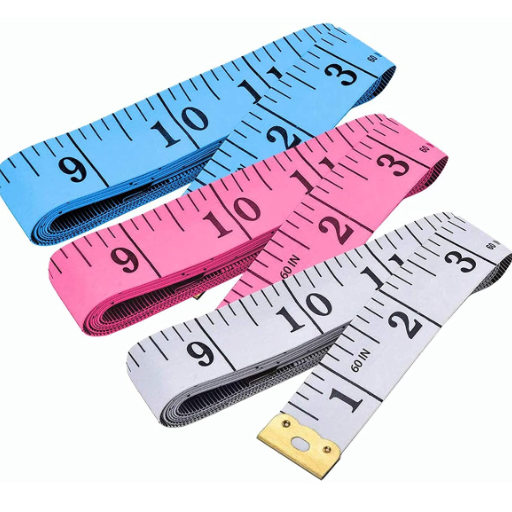
A tape measure is a flexible measuring tool that can assist in measuring length or area. It primarily consists of a slender and portable material strip i.e. either steel, plastic, or cloth, marked with precise measurement units, ordinarily in inches and centimeters. All these functionalities come in a retractable casing for easy transport which has a hook attached at the end to hold it during the measurement process. Tape measures are widely used in construction, sewing, and engineering, among other fields, due to the fact that they can provide accurate measurements in an easy and durable way.
Types of Measuring Tapes
Measuring tapes come in different shapes and sizes depending on the profession and task. Broadly, they can be classified into three categories based on their material, measuring system, and specific applications:
1
Retractable Steel Tape Measures
Steel blade tapes are the most common measuring tapes in use, retracting very safely into a hard outer casing. They are used for construction, carpentry, and engineering projects, where flexiblity is required to measure the full floor of a house, because their strength allows to hold them up to be measured without bending. Their usability is also enhanced by the presence of features like locking mechanisms and dual-unit markings in many models.
2
Fiberglass Measuring Tapes
Fiberglass tapes have been widely accepted for their softness and at the same time non-extension quality, so they are commonly found in many fields such as geology, agriculture, and construction areas where chemical or water exposure is a problem. Due both to their non-conductive and fire-proof characteristics, they are also used for areas with electrical hazards.
3
Cloth Measuring Tapes
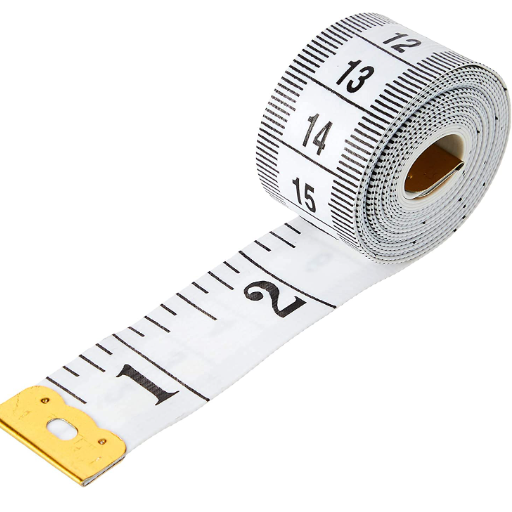
Most brands of these soft, flexible, and often extremely thin fabric or laminated polyester measuring tapes produce multiple identical models for the tailoring and fashion designing market. They are capable of very precise measurements of curves and body sizes and can be conveniently rolled into small shapes that fit into a pocket.
4
Surveyor’s Measuring Tapes
These tapes, which have been specifically designed for the extremely long distance measuring, can be extended to a range of several hundred feet or meters, according to the type of tape. Typically, made from tough materials like steel or fiberglass, they become a prerequisite for land surveying and construction experts working in big area projects.
5
Digital Measuring Tapes
The combination of electronic sensors and digital displays led to the development of digital measuring tapes which provide the highest precision measurements requiring hardly any effort at all. Apart from that, Bluetooth connectivity is an additional feature that a lot of models have, so that users can synchronize their data with mobile devices for accuracy and easier record keeping.
💡 Key Insight: Different types of measuring tape are designed to cater to different needs and the selection of the right one depends on the application and surrounding conditions.
Importance of Accuracy in Measurements
In various industries, precision in measurement is critically important because it directly influences the output quality, functionality, and even safety. In construction, manufacturing, and engineering, correct measurement ensures the right fit, proper positioning, and smooth operation of components. Not only do measurement mistakes result in waste of materials and money, but they also lead to delays in project completion. Besides, an accurate measurement in research and health care is absolutely necessary for data reliability, diagnostics precision, and overall decision making, thus highlighting the need for applying proper tools and techniques to each task.
Choosing the Best Tape Measure
✓ Features to Look for in a Measuring Tape
When it comes to measuring tapes, the features that enhance precision, durability and usability should always be put first. Here are the essential features to consider:
- Clear Markings: Look for markings that are clear and easy to read, preferably with both metric and imperial units, for greater flexibility.
- Durable Blade: A blade made of sturdy and corrosion-resistant material like steel or nylon-coated steel will last longer, especially in places where the environment is tough.
- Reliable Locking System: There should be a good locking system in the tape so that measurements will not be moved from their places.
- Ergonomic Design: Consider a comfortable grip, lightweight design and compact size for easy handling and storage.
- Useful Accessories: Features like a magnetic hook or the ability to stand out may be of great help in improving productivity, especially for single-person use or measurements over a long distance.
Best Brands: Stanley vs. Craftsman
Both brands are very strict with their quality control, thus making sure that their products perform well no matter the application range.
Size Matters: Choosing the Right Length
The length of a tool that is suitable for a specific job is mainly determined by the nature of the task and the location of the work. Long tools like rolls of tape to measure and big screwdrivers are very helpful when they are inside small places or when large distances are to be measured, thus providing more adaptability in complicated projects. On the other hand, the small tools have control and precision so they are more suitable for the delicate jobs where the slightest deviation is not allowed. Choosing the right length gives the user the possibility to perform the task in the most comfortable way thus minimizing user fatigue and boosting productivity, particularly when the working conditions are harsh or the use is frequent. It is very essential to understand the project scope and your workspace limitations in order to select the right tool.
Different Types of Tape Measures
Retractable Tape Measures
Retractable tape measures are undoubtedly the most utilized tools in the trade as well as in the household; they are liked by everyone for their portability, long life, and easy operation. The operation relies on a spring that allows the metal or fiberglass blade to be coiled and uncoiled smoothly. There is a variety of lengths available, being 6 to 35 feet the most common. Besides, a great number of them are double-sided with both imperial and metric marks; thus, various measurement needs can be satisfied.
🔧 Key Features & Maintenance Tips
- Can measure not only straight but also flat, rounded, and contoured surfaces
- Tape locks provide stability and precision in measurement
- Features like magnetic tips or fractional markings improve usability
- Retract the blade slowly to avoid damage
- Avoid exposing to extreme weather conditions for extended lifespan
Soft Measuring Tapes for Tailoring
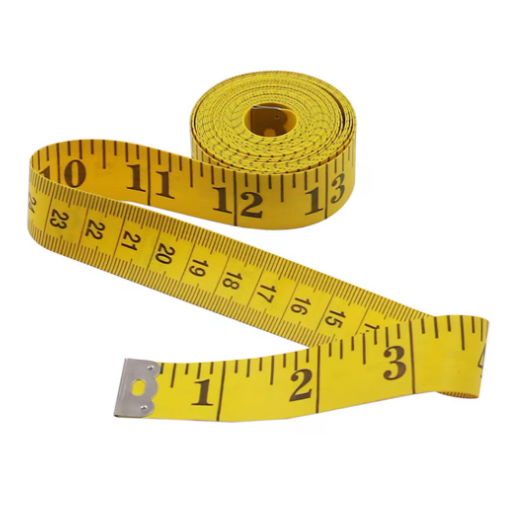
In tailoring, soft measuring tapes become essential tools since such instruments are solely made to be accurate and at the same time to offer flexibility in measuring curved and irregular areas typically found in body shapes or fabrics. Generally, soft materials like fiberglass or reinforced cloth are used to make these tapes, and they deliver accurate measurements in inches and centimeters. Moreover, they do not stretch, hence, their measurements will remain the same even after a long time.
What Makes a High-Quality Soft Measuring Tape?
Users value the following features most:
- Durability – Long-lasting construction that withstands regular use
- Clear Markings – Easy-to-read measurements that don’t fade
- Dual-Sided Systems – Both metric and imperial units for versatility
- Non-Slip Coating – Better grip for accurate measurements
- Lightweight Design – Convenient for extended use
- Reinforced Edges – Protection against fraying and wear
Digital and Laser Distance Measuring Tapes
Digital and laser distance measuring tapes are capable of covering almost all the areas that traditional measuring tools do while at the same time providing more advanced features that are suitable for modern applications. These tools give extremely accurate measurements and feature dual readings in units which are able to operate in metric and imperial at the same time, thus meeting the needs of the various users.
⚡ Advanced Features
- ✓ Backlit displays for low-light conditions
- ✓ Lightweight and ergonomic design for comfort
- ✓ Non-slip surfaces for reliability
- ✓ Memory storage capabilities
- ✓ Pythagorean calculations
- ✓ Bluetooth connectivity for data transfer
How to Use a Measuring Tape Effectively
Marking and Reading Measurements
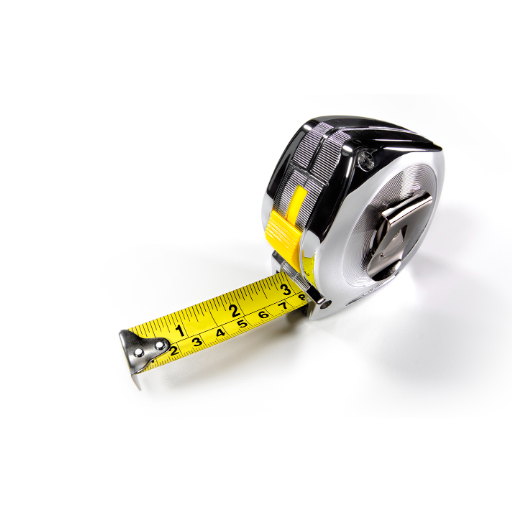
To use a measuring tape correctly it is necessary to mark and read the measurements accurately and this mainly requires extending and pulling taut the tape to a straight line. The whole process should be done in such a way that the starting point of the object is exactly at the zero reading on the tape. The measuring moment is when the object’s end is exactly on the smallest unit of the tape for maximum accuracy. Marking the area of the measurement with a pencil or a marker so that it exactly matches the reading on the tape is a good practice. Recheck the measure to be sure it is correct, especially for the critical works. Always retract the tape in a careful manner to prevent its life and accuracy from being affected.
📋 Tips for Accurate Measurements
In order to get the most accurate measurements, follow these best practices:
For this, take a high-quality measuring device that is in good condition and suitable for the job.
Before taking the measurement, make sure to position the tape measure or ruler straight with the object and secure it tight to avoid sagging or wrong reading.
Keep on checking the possible errors occasionally, such as tape bending or warping.
Do the measuring process several times and compare the results for discrepancies.
Make it a point to always work on a flat and stable surface if possible.
Do not ever guess halfway measurements- always measure the smallest unit of the tool.
Make sure to take care of the measuring tools so that they are not damaged or worn and also that there won’t be any loss of precision over time.
Common Mistakes to Avoid
❌ Failing to Calibrate Measuring Tools
One of the mistakes measurement professionals often make is that they do not calibrate measuring instruments regularly. Calibration brings the instrument’s readings in line with the so-called standard unit. The non-calibrated instruments, even if they have very small errors, will eventually lead to greater deviations, particularly in such areas as construction or engineering where precision is of utmost importance.
❌ Using Incorrect Tools
The selection of the wrong measuring instrument for that specific case is a common error. One of the instances where the mistake can lead to a measurement of considerable size is measuring curved surfaces with a straight ruler. there was a 43% increase in the number of search queries related to “how to measure curved surfaces accurately” thus indicating that many people are still puzzled about the selection of tools.
❌ Overlooking Environmental Conditions
Humidity and temperature are among the environmental factors which might not be immediately obvious but, nevertheless, can have a very slight influence on measuring instruments, particularly the ones consisting of materials that are easy to expand or shrink. The topic of interest “measurement precision in varying temperatures” as indicated by a trend searches seems to be the case that quite a number of users treat this problem as a recurring one.
❌ Rushing Through Measurements
Speed usually takes accuracy as the first victim. It is really crucial to spend the necessary time for the proper alignment of the tool and the precise measurement. The most frequent reason for users typing “tips to avoid measurement errors” into the search bar is their not number one following the correct procedure.
💡 Summary: Considering these typical errors, the user will be equipped to significantly enhance the trustworthiness and accuracy of the measuring procedure, thereby ensuring that the results obtained are reliable and consistent.
Specialized Measuring Tapes
Body Measuring Tape for Tailors
The tailor’s body measuring tape is a unique tool that provides the quality and flexibility of measurements desired in the tailoring and garment construction process. As a rule, these tapes are made with dual markings in inches and centimeters that make them suitable for different sizing systems. They can be bent in such a way that taking measurements for the waistline, chest, or hips can be done easily since those areas have contours and curves while a rigid measuring tool would cause difficulties in getting an accurate measurement.
🎯 Best Practices for Tailors
Of course, during the measurement the tape should be laid flat on the body
The measuring process, alongside the tape, should be done carefully and in such a way that there are no too high stretches of the tape
For obtaining accurate results keep the tape under just the right tension
Always keep the tape rolled up and put it away from heat sources
If regular maintenance is done, the accuracy will not only be preserved but also the lifespan will be extended hence it will be a win-win situation
Cloth Tape Measures for Crafts
Cloth tape measures are indispensable tools in the world of crafting due to their ability to be both flexible and accurate at the same time. The range of their applications is wide enough for tasks such as measuring the dimensions of a fabric, making patterns, or checking seam allowances to be done with them very easily. Their capacity to adapt to curves and irregular shapes is especially beneficial for quilting, sewing, and upholstery projects where precision is absolutely essential. The users need to pay attention to the way they use the tape: it should not be pulled too much, it should be kept flat during measurements, and it should be stored in a clean dry place so that it does not wear out or become distorted. The right care and maintenance will not only keep the tool working for a longer time but also keep its performance consistent across the different crafting applications that may come at hand.
Comparing Metric and Imperial Units
The juxtaposition of the metric and imperial systems reveals considerable discrepancies in their characteristics and uses. The metric system with its units of measure based on decimals provides an effortless way of converting a measurement to another by just shifting the decimal point to the left or right. For instance, a transition from millimeters to centimeters and subsequently to meters only requires shifting the decimal point three positions to the left. To the contrary, the imperial system uses different conversion rates like 12 inches equal 1 foot and 3 feet make 1 yard which can easily lead to wrong calculations. In addition, the metric system has become the world standard in the fields of technology and science because of its precision and easy application while the imperial measurement is still around in some places and sectors just because they are being used more and are more familiar. Both systems have their uses but it is very necessary to know their differences in order to avoid mistakes in measurements through different applications.
References
-
Digital Measuring Tape – A study discussing an accurate method of measuring distances using a digital measuring tape. Read more here.
-
Made to Measure: The Tape Measure and the Construction of the Ideal American, 1800-1939 – An academic exploration of the historical and cultural significance of tape measures. Read more here.
-
Comparing Remotely Sensed Pictometry® Web-Based Slope Distance Estimates with In Situ Total Station and Tape Slope Distance Estimates – A comparison of tape measure accuracy with other methods in forestry applications. Read more here.
Frequently Asked Questions (FAQ)
How to read fractional increments on a tape measure?
The process of reading fractional increments on a tape measure consists of finding the main inch marks first and then counting the subdivision lines up to the nearest fraction, which can be halves, quarters, eighths, or sixteenths. The fractional increments are very clearly displayed in most metal and double-sided blades; the pocket tape and 25-foot tape versions usually have these fractions alongside with each tick. For a carpenter, you will need either a craftsmen’s tape or one that is marked precise to ensure accuracy in cuts, and many stanley works tapes come with bold fraction markings. If you find it difficult, try using your thumb to lock the blade and align the end hook at the workpiece, and then read the nearest fraction on the scale. Suggested unused terms: centimeter, sew, soft tape measure, reverse measuring tape.
Is a 25-foot tape measure accurate enough for home construction?
Probably the case. A top-notch 25-foot tape measure would be the right one for home construction in most cases, like laying out studs and drawing a plan for the flooring, but only if the proper technique is used and the end hook play is considered. Self-retracting tapes with reliable locks and rigid blades are less prone to sagging on longer spans, while fiberglass or stiff reels are the best for open runs and outdoor work. In the case of critical work, such as cabinetry or finishing trims, verify the measurements with a dual or digital tape measure and check the increments carefully. Many professionals choose Hyper Tough or Stanley Works models because of their durability and consistent performance, which are the reasons why. Suggested unused terms: reel, diameter, virtual, pocket tape.
What features should a carpenter seek in a tape measure?
Getting a tape measure specially designed for carpentry with a heavy-duty metallic blade, bold inch and feet markings, and clear incremental fractions for speedy layout should be the main objective of a carpenter. A rigid blade with a long stand-out is very helpful when marking long lines by oneself, while a thumb-operated lock and a self-retracting mechanism offer one-handed convenience. A dual or double-sided blade can facilitate reverse measuring tasks and lessen the need for flipping the tape when measuring from different angles. Keep in mind features like a reinforced hook, case drop protection, and a compact pocket size for jobsite mobility. Suggested unused terms: fiberglass, easy to use, soft tape measure, measurement device.
How do digital tape measures and AR apps compare?
Digital tape measures give instant numeric readouts, store measurements and sometimes even calculate area or volume which makes them a must-have for complicated floor plans and speed site work. Augmented reality (AR) and virtual measuring apps depend on the camera of the device to measure distances and project them on the screen which is useful for rough estimates but not as precise as a calibrated digital or metallic tape. For precision-centered works, use AR for planning followed by a digital tape measure or traditional pocket tape for confirmation especially when diameter or interval precision is concerned. Some professionals use AR for initial layouts and then resort to a dual or self-retracting tape for final checks. Suggested unused terms: portion of a free trial, unused portion of a free, hyper tough, double-sided.
Can I use one tape for measuring both inside and outside dimensions?
One tape for measuring both inside and outside dimensions is perfect. There are still many tapes that are versatile for interior and exterior dimensions: for outdoor use, just use the end hook and take the thickness of it into consideration, whereas reverse measuring and self-centering hook are techniques that help in measuring indoor openings. The double-sided or dual-marked blades can help you read from the side of the tape without flipping it, and the digital models usually have a button to automatically switch the inside/outside deduction on and off. When you measure inside, pull the tape across the opening and then read at the lock carefully to maintain the right distance and prevent parallax errors. Suggested unused terms: thumb, compact, survey, flexible.