
Hacksaw Blade Selection Guide: TPI and Material Guide
The selection of the correct hacksaw blade is critical when it comes to cutting through materials smoothly and productively. The two main factors influencing the cut quality and tool life through blade selection are the Teeth Per Inch (TPI) and the material of the blade. The relationships among blade design, TPI, and the material of the workpiece come into play and you must have the knowledge to determine mixtures for different kinds of applications. So, this guide will be your only way to master the complexity of hacksaw blade selection, as you will not only be enlightened about the TPI and material properties but also guaranteed the best possible performance for your every project. Key considerations are going to be discussed in-depth and your expertise level will match the challenges in your cutting tasks.
Understanding Hacksaw Blades

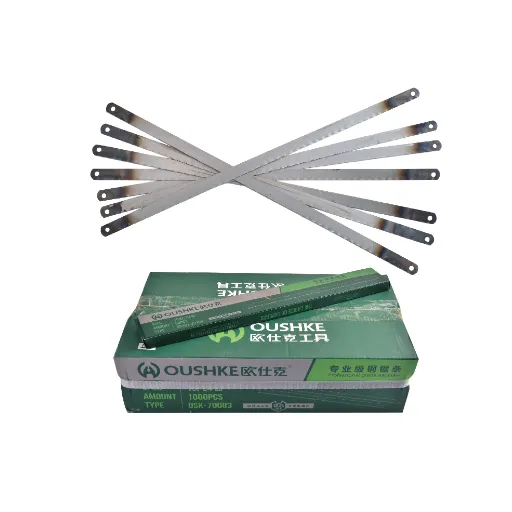
Hacksaw blades are manufactured from two primary materials — high-speed steel (HSS) and bi-metal construction. High-speed steel blades are very strong and specifically designed to cut harder materials like stainless steel or iron which makes them suitable for heavy-duty applications. On the other hand, bi-metal blades are those which have a flexible carbon steel back and a tough HSS cutting edge—such blades are not only rigid and tough but also capable of folding, thus decreasing the danger of a snapped edge. They can be applied for general-purpose cutting in a range of materials, among which even softer metals and plastics, due to their variable nature. By learning the traits of such materials, one can be sure to get a precise and right blade for his/her project needs.
What is a Hacksaw Blade?
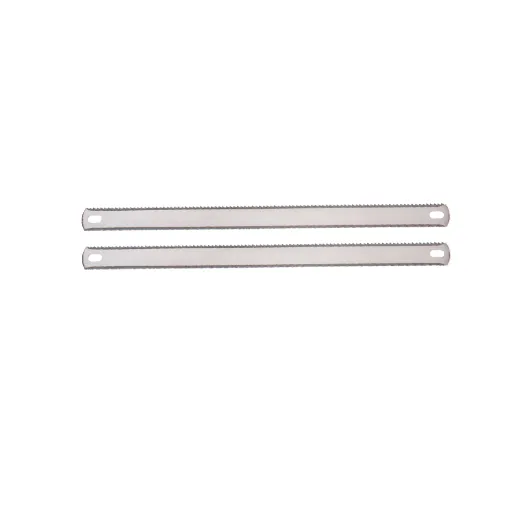
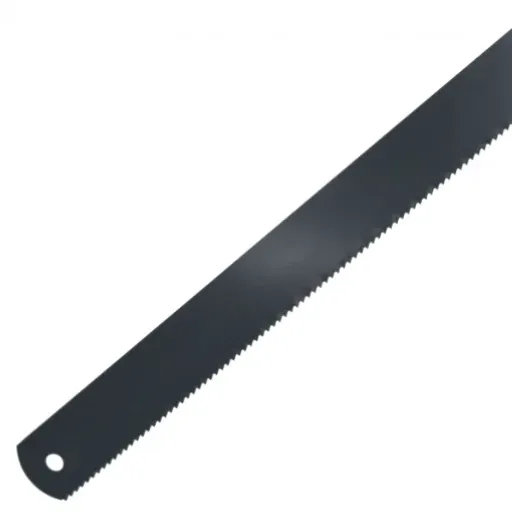
A hacksaw blade is intended to be a special cutting tool primarily housed in a hacksaw frame to slice through materials like metal, plastic, or wood. It is usually made up of high-strength steel alloys such as high-speed steel (HSS) or carbon steel for the sake of blade durability and precisions of the cuts. The hacksaw blade owes regular, neat teeth with uniformly spaced teeth due to the fine teeth, which are expressed relative to TPI i.e., teeth per inch.
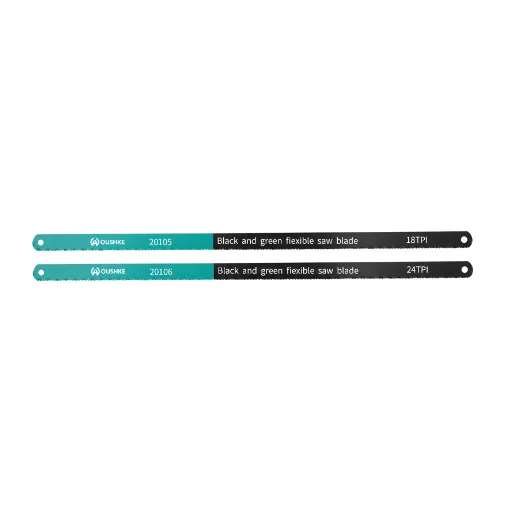
So, the higher TPI the higher it will render efficient cutting for hard and thin materials and a smooth finish, while lesser TPI is best for soft and thick materials which subjects blades to severe workload and cut rather quick and without neat finish. Hacksaw blades are normally subdivided into varying lengths ranging from 6 inches to about a maximum of 12 inches. But as was observed fewer times they cannot hold up to our requirements unless paired with bi-metal–an alloy harder and not so brittle than high-speed steel. When matched with the right type and TPI of hacksaw blade according to material and application, it is possible to achieve a neater and faster saw cut without causing damage to blade or workpiece.
Types of Hacksaw Blades
| Blade Type | Material | TPI Range | Best For | Durability |
|---|---|---|---|---|
| Carbon Steel Blades | High-carbon steel | 14-32 | General-purpose cutting | Moderate |
| Bi-metal Blades | High-speed steel and spring steel | 18-32 | Cutting hard and soft materials | High |
| High-Speed Steel Blades | Hardened steel alloy | 24-32 | Precision cutting of metals | Excellent |
| Tungsten Carbide Blades | Tungsten carbide particles | Variable TPI | Cutting abrasive or hard materials | Superior |
| Low TPI Blades | Various (depends on type) | 14-18 | Cutting softer or thicker materials | Moderate |
| High TPI Blades | Various (depends on type) | 24-32 | Cutting thin or hard materials | Enhanced for precision |
The Importance of Blade TPI
The blade’s TPI, or teeth per inch, is a highly important factor that directly affects the cutting operations’ efficiency and quality. The TPI of the blade denotes the number of teeth throughout a one-inch blade section, thus the aggressiveness of the cut and the surface finish achieved being determined. Low TPI blades stand out in removing material much faster, primarily in soft or thick materials, since their fewer teeth per inch enable deeper, more substantial cuts. On the other hand, high TPI blades, which usually have 24 to 32 teeth per inch, produce very accurate and smooth cuts, and are thus very helpful in the case of thinner or harder materials that require a high level of detail and accuracy.
The decision of which TPI to use is greatly influenced by the material and finish being cut. For a specific example, if one cut through hard materials like metals, then a higher TPI would be needed so that to reduce the wear on the blade and be able to have control over the cutting process all the time. However, if the work is on softer materials such as wood or plastic, then low TPI blades are the answer, as they destroy the material effectively without the teeth getting clogged. The right TPI matched with the right cutting speed and material characteristics will lead to a higher degree of durability and performance in a variety of cutting applications. Thus, TPI stands as a vital criterion in the selection of blades as it is directly relevant to the efficiency of industrial and precision machining processes and the quality of the latter.
Choosing the Right Hacksaw Blade

In selecting the perfect hacksaw blade, an utmost importance is the material to be cut and the desired precision level. For a material such as steel, hard materials, one will go for higher TPI blades as they make cleaner and neat cuts. Conversely, the so called low TPI blades are to be used in cutting different soft materials because they chew up lesser time for no clogs. Furthermore, it is a good idea to keep in kind a blade that is made from good-quality materials such as high-speed steel or bi-metal; it will ensure a longer life for the blade and better performance. In such a scenario it is good to have the blade performance specifications compared against the desired operation.
Factors to Consider When Selecting a Blade
- Material Composition
The blade’s material has a direct bearing on the blade’s life, retention of edge sharpness, and its suitability for the type of workpiece. The blades that are either tungsten carbide or bimetal are the best ones in terms of wear resistance and are exceptionally suitable for strenuous applications. On the other hand, carbon steel blades are economic ones but are only good for light chores on the soft materials. - Blade Teeth Design
Teeth patterns play a significant role in the cutting process because they determine the cutting performance. The standard teeth make the cut smooth and fast; while, the skip-tooth design reduces heat and clogging, which are recommended for the soft materials. Wavy-set and alternate teeth patterns are best for close work and intricate materials as they give a cleaner cut which is more likely to be the case with precision work. - Cutting Speed and Efficiency
The speed of cutting is subject to the tooth pitch of the blade, along with the operational parameters of the tool. Blades with high TPI allow maximum precision although at a much slower speed, a necessity for such detailed jobs, while low TPI blades are great at fast cutting speeds, thereby enhancing the productivity of the work if precision is not the priority. - Blade Length and Fitment
Selecting the right blade size and making sure it matches the tool is one way to keep the system safe and prevent damages from happening. It is, therefore, necessary to apply machines’ specifications on the blade length and mounting in order to be sure of the right one to buy and avoid any further problems. - Coatings and Surface Treatments
Blades of a high quality can have a coating of titanium nitride or diamond dust, giving them better wear resistance and making the best use of them on hard or abrasive materials. The blades that have had heat-resisting treatment do not lose their integrity during long usage period, thereby decreasing thermal deformation.
How TPI Affects Cutting Performance
The number of teeth per inch (TPI) is a major factor that determines the quality of cutting performance. It is the determinant of the balance between the velocity of cutting and the quality of the finish. The blades that have lesser TPI, generally from 2 to 6, are the ones that have been purposely made for fast material removal and they work best on the soft, thicker materials where the requirement for precision is less. On the other hand, the blades with high TPI, which are often as high as 18 TPI or more, provide the highest quality of cuts, with the best possible smoothness for hard or thin materials such as metal or plastic, where compatibility with the finish is crucial.
Firstly, the selection of suitable TPI would be considered based on the nature and thickness of materials to be cut. In the case of cutting hard or brittle materials like glass or marble, the TPI might have to be kept higher than the regular steel or wood cutting blade. This reduces the tooth load, thus cutting the possibility for chipping or charring. There are also a few blades with variable TPI designs introduced by blade-making technology, where one chunk of the blade has different tooth patterns so that the cutting operations of varying material densities may have a smooth ride. Hence, the new blade, taking center stage, is highly versatile and also works longer and performs a longer scope or better performances in tasks that require too much slicing.
Choosing the Best Hacksaw for Your Needs
Many essential factors ensure that the hacksaw of your choice gives the best performance and are cost-effective at the same time, so the saw’s opinion must be considered before making a final decision. The material that you are planning to cut the most often is the first consideration, which in its hardness and density may mean choosing the right blade specifications. For instance, the more hardware, harder-edge metal, high-speed steel (HSS) blades are the way to go, while carbon-steel blades will be instrumented for softer applications, which cover those materials from plastic to wood.
Hacksaw frame type is important for the accuracy and precision of a cut. Fixed frames record the best regarding stiffness and expectation precision, thus rendering it definite choice for those applications that require best precision in cutting. Additionally adjustable frames give flexibility, which means that different sizes of blades can be used, thus increasing versatility. The tension of the blade is also of additional importance; hack saws with tension of the blade adjustable are often highly precise and less prone to failure due to blade breakage with constant use.
Moreover, the user’s productivity and ergonomic design can also act as factors that better match comfort. Seek models that are made up of non-slipping rubberized handles, with padding, and must be made as light in weight possible to minimize operator fatigue as much as possible. Speedy changing and replacement of a blade by the operator in the hack saw could provide a major boost to work performance, particularly in an overly clogged and busy site.
On the other hand, for the hacksaw to be used in industries a bi-material hacksaw can either have superior bend strength or be more abrasion-resistant; special materials can be the factors for the hacksaw to be regarded as of high quality. With these and many other determinants taken into consideration, the makers can be certain the hacksaw they go for will meet their needs and thus achieve the twin goals of production and dependability.
Blade Materials Explained

Hacksaw blades, for the most part, are made out of three primary materials that each offer unique benefits:
High-Carbon Steel
A high carbon steel blade has the singular advantage of being cheap and able to resist wear; hence, such blades cut wood or plastic with great ease. But if a high carbon steel blade were to be pushed onto hard materials, it would break due to its propensity to be brittle and would get blunted quickly.
High-Speed Steel (HSS)
These are the blades that are extremely tough and heat resistant, and so on. These blades can be used in extreme conditions, such as cutting very strong metals, like steel or some alloy materials. They continue to be sharp, due to which the performance of cutting remains consistent, going through the toughest environments.
Bimetal Blades
By sticking teeth made of high-speed steel to a very different shape they connect, bimetal blades become not only multi-purpose but also very tough. These types of blades are also found very hard and tough both of that making it highly damage resistant tool to cut materials from a wide range of materials.
The selection of a blade material should be based on the type of material to be cut and how often the tool will be used. As this contributes to the efficiency and effectiveness of the tool.
Carbon Steel Blades
Carbon-steel blades are the most common type of blades because they are cheap and versatile at the same time they are fit for multiple applications. The main parts of these blades are iron and carbon and they are built to have an outstanding performance that is able to cut soft materials such as wood, plastic, and soft metals. The edge retention and sharpness of these blades can be easily restored through regular sharpening which will add more years of service life under correct conditions.
Carbon steel blades have one remarkable trait that is the hardness of the material which allows for very accurate cutting. But at the same time, this hardness also causes the blades to be not resistant to wear and rust in comparison to other blade materials such as high-speed steel or bimetal. The use of carbon steel blades is critical under specific experimental conditions in order to have the best performance, as high temperature and humidity, which may cause faster oxidation, are to be avoided. Thus, when carbon steel blades are properly taken advantage of, they turn out to be a very cheap and at the same time efficient general cutting tool.
High-Speed Steel Blades
High speed steel (HSS) blades are very well known for their outstandingly long lives and their capability of performing at high temperatures and still retaining their efficiency. The main reason for this toughness is the use of alloying elements like tungsten, molybdenum, chromium, and vanadium, which reinforce hardness, wear resistance, and heat resistance. HSS blades can keep their sharpness even through high-speed operations or intense friction, and hence, are the best choice for cutting harder materials including stainless steel and titanium. HSS blades are expected to exhibit a longer lifetime and significantly reduced tool wear when they are coated with new materials and among them are titanium nitride (TiN) which is recognized for its hard coating. This technology makes HSS a multi-faceted cutting tool for precision work, which results in equilibrium in tough industrial conditions and at the same time improves productivity.
Bi-Metal Blades
Bi-metal blades are formed using a combination of two clearly disparate steel types, with high-speed steel (HSS) for the cutting edge and a flexible alloy steel for backing or hub material being most common. The combination of these hybrid materials makes the blade ideal for quick and clean cutting due to the hardness, and at the same time, grants the blade flexibility to oppose stress and fatigue. In the production of the blazer, modern techniques and machinery like electron beam welding are used to get a firm bond between the two materials which make the blade handle high-pressure applications without any breaking.
It has recently been shown by research that the combination of two metals in the blade increases the longevity of the blade and its capability to cut better. These blades are usually suggested for industries where precision is important, such as metal production and pipe cutting. When it comes to the durability and the cutting ability of HSS tooth edges, the addition of cobalt and molybdenum to the heat-treated high-speed steel (HSS) is a significant help. Another good point is variable pitch design that can also be added to the tool making it more efficient for cutting. The major advantage of this step is that it results in less noise and better quality. Thus, these blades are not only cheaper but also more durable and hence they seem to be the best choice for places like factories where swift cuts and clean lines are the order of the day.
Practical Tips for Efficient Cutting

- Choose the Right Blade
It is obvious to choose a blade on the basis of the material. Metals should be the target for the dissolving of fine-toothed blades, while wood or plastic should resort coarse-toothed blades. - Optimize Cutting Speed
Depending on the material being worked upon, the cutting speed (in SFM) should be altered. Slowing down is needed when working on harder material so the blade does not overheat and wear off. - Secure the Workpiece
Be careful always to have the material firmly fixed or supported to stop it from shifting during the cutting, the latter being a factor that can influence the accuracy and safety of the procedure. - Use Proper Lubrication
One of the best solutions to this is to apply the cutting fluids in order to minimize the effect of friction and heat. Using cutting fluids will not only extend the blade life but will also leave a cleaner cut on the harder materials like steel or aluminum. - Inspect and Replace Worn Blades
At no time should our blade be allowed to become worn, chipped, or damaged. We should be replacing blades immediately to be able to continue with the same level of cutting efficiency and at the same time, to avoid uneven or ragged cuts. - Maintain Correct Blade Tension
Proper blade tension plays a significant role in cutting, as wrongly tied or loosely tied blades may well give inaccuracies in addition to wearing out too soon.
How to Use a Hacksaw Effectively
- Secure the Workpiece Properly
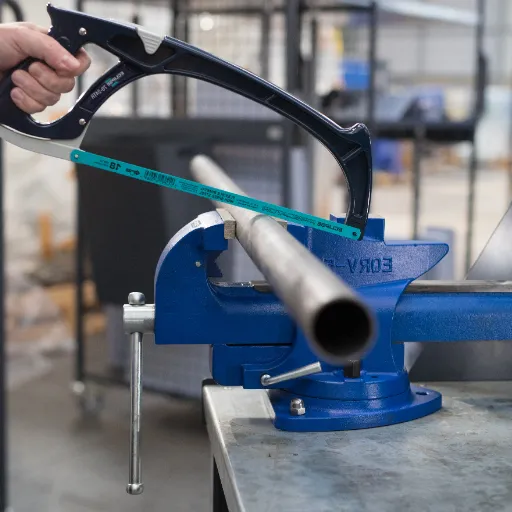
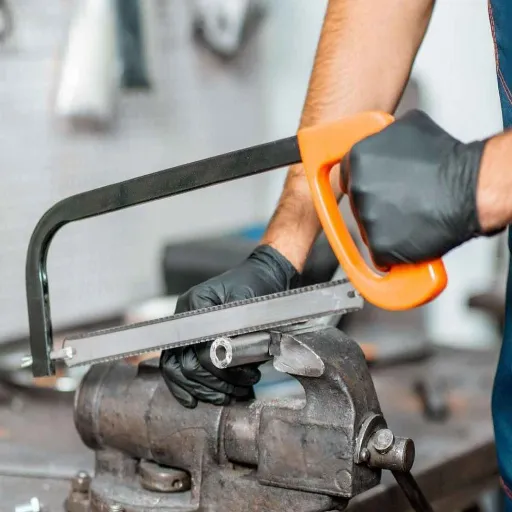
Always apply that the work-piece to be cut be firmly clamped onto the vise or similar means of securing. This is because material movement while the sawing process is happening, tremendously detracts from the accuracy of the cut and threatens to badly affect the blade. The high-stability rating happens to be the biggest single requirement for a clean cut. - Choose the Right Blade for the Material
When selecting blades according to the hardness and thickness of the materials under the saw, always consider the teeth-per-inch (TPI) blade count. HighTPI yielding high teeth count are suitable for materials with high hardness, lower TPI for materials with lower hardness. Adorn and strictly follow the specifics of the material so that you make a correlation between the saw blade and its work.
- Ensure Proper Cutting Angle
Position the hacksaw at an angle of about 30-45 degrees to the material for greater cutting efficiency. This angle reduces the possibility of blade deflection and at the same time enables smooth and more uniform movements. Revolve the angle a bit according to the material’s density in order to keep the blade from getting dull. - Apply Consistent, Controlled Pressure
Apply pressure steadily and uniformly only on the forward stroke, while the blade should be allowed to move back with minimum effort. To apply too much force in sawing can cause different cuts to occur unevenly and actually wear out the blade. The flames come on for a long time with precise cuts, and you also save the blade. - Lubricate When Necessary
In the case of harder metals like stainless steel, using a cutting lubricant on the blade does the trick in reducing friction and also thermal build-up. Thus it is lube that prolongs the life of the blade and also leads to cleaner cuts especially when the operation is continuous. - Monitor Cutting Speed and Technique
Always practice a rhythmic sawing that is steady in place of rushing because the latter may cause overheating or bouncing, which is the main reason for blade breakage. Try for the full-length blade long smooth strokes for the profound experience of sawing. - Clean up After Cutting
Smooth the cut ending, clean the workpiece well, and the hacksaw of the loosened and worn parts just after the operation. Choose a place for the clean and dry storage of the piece of equipment and this way you will prevent corrosion and be fully ready for your next operation.
Maintaining Blade Longevity
To keep the life of the blade at a premium for the longest possible time is a complicated process that requires maintenance of proper use and the consistent application of safe practices. One of the most important considerations is material compatibility; if a blade that is made for that material specifically, then wood, metal, or composite, will experience a significantly less amount of wear and tear. In addition, the most important thing to do is to have blades that are sharp and not dull, as dull blades generate excessive heat and friction, hence leading to faster destruction of blades.
Operational speed and pressure are also prime factors of concern. Adjusting blade speed and not overloading the motor shaft are two ways to prolong the life of a blade by reducing the stress imposed on it. Proper storage also has a role to play; blades must be stored in dry and cool places far from humidity and probable physical contacts. A combination of these practices in the maintenance routine will make the cutting tool work and last the way it should, hence the same precision and less in expenses due to periodic replacements.
Avoiding Common Mistakes

If you intend to avoid preventable errors in the handling of cutting blades, your best option is entering a set of guidelines:
- Use Appropriate Blades for the Material
It is essential that you choose the right blade which matches the subject material and does not inflict any harm upon it. - Maintain Proper Alignment
Misalignment of the blades results in uneven cuts and the machine takes more time to process which eventually increases wear. Check and adjust the alignment regularly. - Avoid Excessive Speeds or Force
One of the consequences of not following the cutting accuracy may be compromised, thereby giving a larger market to premature breakage of the blade. - Inspect Blades Regularly
So through periodic checking, one may identify any signs of wear there may be such as cracks or dull-edges, which can subsequently allow for timely replacement of the blades.
Consequently, if users follow these steps they can decrease time spent in the workshop, touch the precision level of their cut and also increase the life of their cutting tools.
Strategies for Selecting the Right Hacksaw Frame
It is vital to choose the right hacksaw frame to not only bring up the production and cutting efficiency of your shop but also to keep the shop safe and the users as well. Some of the factors given below should be among the first things you consider before making a decision:
- Frame Material and Durability
The frames of the hacksaws are made from materials such as steel and aluminum. Rigidity and strength are the benefits provided by steel frames, so these are suitable for heavy-duty applications, whereas aluminum frames are used as lighter-weight options for extended usage without giving up the stability of the frame structure. - Adjustability
A frame with blade-tensioning and different blade lengths options will be the best choice. The blade length and tension will be set in the way that the blade does not get deflected but at the same time, the cutting will be easier. The other factor that is important for blade breakage and cutting speed is the compatibility with size hence range of blades. - Ergonomic Design
A frame designed ergonomically which is equipped with a handle that is easy to hold will be quite a good comfort for the user. The user might experience hand fatigue if the task is taking too long but in that case, the non-slip spaces at the grips will assist in the correctness of the cutting while the balance feature will give more control to the user. - Compatibility with Blade Teeth Per Inch (TPI)
A number of frames are made with the aim of accepting different sorts of TPI, which follow the material being cut. So one shall make sure that the frame meets the requirements of the blade and the workpiece material for efficient results. - Resistance to Environmental Conditions
Protective coatings or corrosion-resistant characteristics of the frames are excellent options for the longevity and performance of the frames in the harsh surroundings in the long run.
In this assessment, the user can identify a specific hacksaw frame he or she needs to cater to their cuts, hence giving them the opportunity to increase productivity by making sure that his/her cuts are of the same high-quality all the time.
Best Practices for Cutting Metal with a Hacksaw
- Select the Appropriate Blade
Selecting the best blade will ensure you have that precision cut along with that ease. For softer materials you can choose less TPI, whereas for harder materials you have to get a blade with a higher TPI for that clean cutting while avoiding any material damage. - Secure the Workpiece Properly
An unstable workpiece can have an impact on the cut and the material, and, therefore, a good accuracy and a fine finish are lost. When cutting, use a strong vise or clamps to hold down the metal. - Align the Blade Correctly
Verify that the blade is stretched properly and that it is in the frame correctly. If the blade is not well-aligned, it will not only cut poorly but also inflict greater wear on the teeth. - Use Controlled, Steady Strokes
At the same time, be consistent with your power and keep the working heat to a minimum. Cutting metal slowly with 40-50 strokes per minute is typically the best speed. - Apply Consistent Pressure
By not using enough force, the blade will be worn out quickly and the cutting may result in cracking, breaking or other defects. It is better to put a light but steady force on the blade when cutting to avoid the early wearing out of the blade. - Lubricate When Necessary
Having in mind that lubricating oils or greases are used for lubrication of machine parts, the lubricated cutting action is always dry and clean, almost free of clogging dust, because the oil carries away most of the dirt, and overheating is further prevented by the oil itself.
Reference Sources
- Design of Automatic Cooling Power Hacksaw Machine for Multipurpose Applications
Access the paper here - Design and Fabrication of Pedal Operated Hack Saw
Access the paper here
Frequently Asked Questions (FAQs)
What is the best hacksaw blade for metal cutting?
Cutting metal calls for the consideration of a blade that is matched to the type and thickness of the metal being worked. In this instance, bimetal saw blades are the popular-edged cuts for metal; since they fulfill the demands for a sharpening bit and teeth which are temperable; in thin sheet metal, the TPI should be high-24 TPI or 32 TPI are potentially the ideal for an uninterrupted cut-and even less snagging, all the while lower TPI cutters, 14 TPI, are strongly recommendable, offering varieties that make fast cuts through soft steel and thicker stock. Blade length would be 300 mm, with a hand hacksaw blade of course.
How do I choose the right hacksaw for cutting different materials?
What blade length should I use for a standard hacksaw or hacksaw blade?
In the typical hacksaw, the blade length mostly available is 300 mm for the hard hacksaw blade installation setups where you have to decide the right length according to your hacksaw frame and workpiece. It’s recommended to always use the blade length that comes with your hacksaw frame to maintain proper tension and secure cutting, because the larger the frame the longer the blade and hence the more distance for cutting. A 300 mm blade with a suitable TPI for a usual hacksaw would be ideal for most metal cutting starting from mild steel to thin sheet metal. A longer blade and lower TPI setting are usually quite successful at speeding up the cutting process on thicker areas.
How do I select the right hacksaw blade for metal cutting jobs?
Make TPI, blade material, and tooth form match with the metal to select the proper hacksaw blade: 14 TPI or 24 TPI bi-metal blade is usually a good choice for mild steel, but the case is different with stainless steel, that may need bi-metal blades having both higher TPI and high resistance to wear. Pay attention to the cutting direction—most blades work on the push stroke—and if you want a smooth finish or not, for the higher TPI blades are used for that. The kind of metal being cut, a blade chosen, and finally the hacksaw tool all play a role in the selection of the perfect hacksaw blade for cutting.