
Best Hand Tool Sets for Professionals: Premium Toolkits
In the case of doing mechanical work, using the correct tools is not only a luxury but a necessity. A professional tool set would very much become the foundation of your craft whether you are an expert tradesman or just getting the hang of it in the industry. It would give you accuracy, speed, and trust in all the jobs you do. However, considering the numerous choices there are to make, it may be quite a task to hunt down the ideal tool set for mechanics. This write-up will be your companion as you navigate through the characteristics of a first-class tool set and the reasons to buy the right equipment for your work. It will be a comprehensive guide through the essentials of tools along with features that improve performance, and you will not miss anything from us.
Understanding the Importance of a Professional Tool Set
Defining a Professional Tool Set
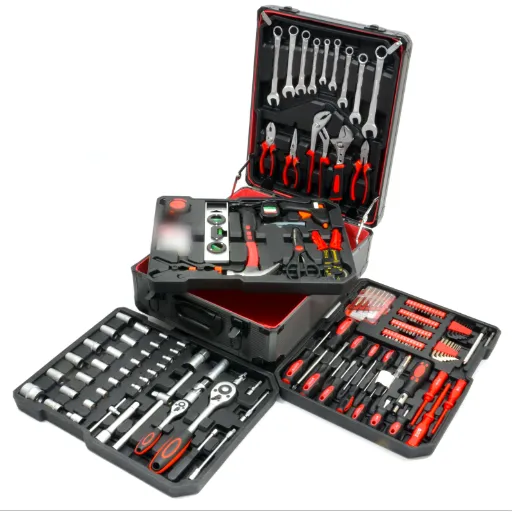
A professional tool set is a collection of high-quality, durable tools specifically designed to meet the needs of skilled tradesmen or serious hobbyists. The tools are made such that they can help the user to get professional results in their projects by being accurate, reliable, and efficient. Normally professional tool sets comprise the most important items like wrenches, sockets, screwdrivers, pliers, and other tools for the specific task at hand, thus granting flexibility and functionality.
What separates a professional tool set from a basic consumer-grade set is the quality of materials and construction. The professional tools are usually made from high-grade wear-resistant metals like chrome vanadium or stainless steel which gives them a long life even under heavy usage. They also feature ergonomic designs that add comfort during extended work which in turn reduces fatigue and boosts productivity in general. A lot of professional sets come with additional features such as torque specifications that are exact and quick-release mechanisms that enhance performance in detailed tasks.
When you buy a professional tool set, it’s not just for the convenience of having the right tools for the job—it’s about doing the work the right way. If you are an automotive mechanic, electrician, or DIY expert, the right tools will help you to work confidently and accurately. What is more, many professional-grade sets come with warranties which mean that you have one less thing to worry about and you get to enjoy the value over the long run. If users give priority to quality and functionality, then they will be able to streamline the work processes and produce results that are synonymous with professional craftsmanship.
Benefits of Investing in Quality Tools
Key Benefits at a Glance
✓ Maximize Pegboard Usage
A pegboard can be used along with your toolbox for larger tools or the ones that you use the most often. Plan your pegboard well so that the most used tools are placed where you can easily reach them.
✓ Create a Maintenance Schedule
First, regularly clean and check your tools for any damages. Then, after a couple of months, do the toolbox reorganizing to let the new additions in and keep clutter at bay.
With the above-mentioned tips, you can have a clean and efficient workspace while the tools last longer. A well-organized toolbox allows easy flow of work and less time looking for misplaced items.
Long-term Cost Savings
Enhanced Durability and Longevity
The longevity of good quality tools is often a hallmark of their construction and the high-quality materials used. According to Consumer Reports, the lifetime of high-quality tools is prolonged by up to 50% compared to low-quality ones, which means less money spent on tools over time.
Improved Performance and Precision
High-quality tools are made to be very precise and thus, are able to perform consistently in their results across the board. This is particularly important in areas such as woodworking or automotive applications where a small error could be very costly.
Time Efficiency
The use of good tools brings about fewer malfunctioning incidents which subsequently leads to a faster task completion. For instance, studies have revealed that the use of high-quality tools can reduce the time taken to complete a task by as much as 25%.
Safety and Reduced Risk of Injury
Safety is one of the main considerations that go into the manufacture of professional tools. These include ergonomic grips and high-strength materials which reduce the likelihood of injuries. Cheap tools are more prone to slipping or breaking, thus creating a risk of accidents.
Cost-Effectiveness
It is true that at first, the price of professional tools would be quite steep but then again, the fact that they require less frequent replacements and repairs makes them worth the expense in the long run. Over a period of five years, the continued use of quality tools may even lead to a total cost saving of 30% when compared with the use of lower-quality tools that are replaced often.
Long-term Cost Savings
The use of premium tools for long-term savings is a consequence of their strong resistance to wear and tear, and the fact that they do not need frequent maintenance. Priced at a higher point, they still result in a much lower cost per year if used for several years. Heavy-duty tools last long enough so that the intervals of replacements are far apart. Thus, the initial price tag of tools does not drastically increase the total expense over time.
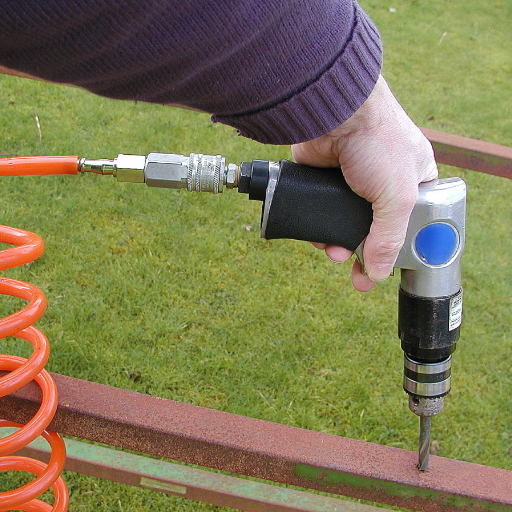
Moreover, high-grade tools do not just prevent prolonging the life of related parts and systems through their efficient performance, but also keep the time and cost of maintenance down. The example of a high-quality power drill illustrating the point perfectly: it not only has longer life due to good engineering but also give consistent results without putting much stress on the materials. So, performance like this minimizes waste and thus reduces the costs that come with rework or material damage.
Additionally, quality tools come with manufacturer warranties or support, which gives financial protection as an extra layer. The warranties do this by covering repair and replacement costs which might come as a surprise, thus allowing businesses and individuals to use their resources more efficiently. In the end, premium tools purchase price turns out to be a good investment due to the long-term financial advantages and stamina that come with them.
Key Components of a Mechanics Tool Set
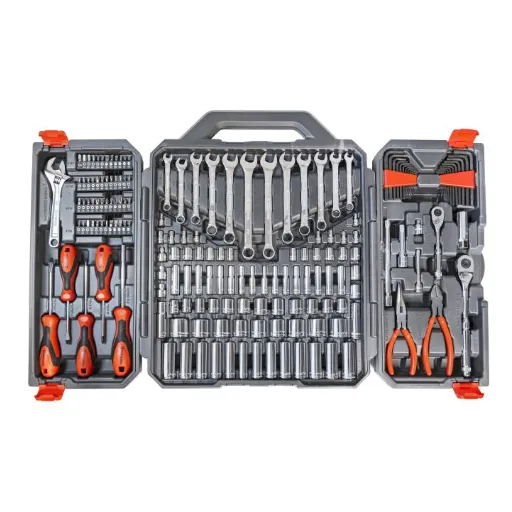
Essential Tools in a Mechanics Tool Kit
A basic mechanics tool kit comprises a complete set of items that cannot be disregarded while undertaking different repair and maintenance tasks. Sockets, ratchets, and wrenches in both metric and standard sizes are included and are the most common tools found in the kit to cover a huge number of vehicles and machines. Different screwdrivers with heads that are either Phillips or flathead are absolutely necessary for fastening and unfastening a variety of fasteners. Pliers of different types such as needle-nose and locking pliers are essential for securely gripping, bending, or holding objects.
Core Tool Categories
- Torque Wrenches: Imperative to make the tightening of bolts and screws to a precise specification, which in turn avoids the problem of under or over-tightening
- Hex Keys (Allen Wrenches): Provided for engaging with hexagonal screws which are usually found in automotive or equipment repairs
- Hammers, Mallets, and Pry Bars: Of critical importance for applying force or through the leverage effect in certain tasks
- Diagnostic Tools: Multimeters for electrical testing or OBD-II scanners for reading vehicle error codes provide support for complex system diagnosis
The more advanced mechanic tool sets may also comprise of the diagnostic tools, for instance, multimeters for electrical testing or OBD-II scanners for reading vehicle error codes, as the latter provide support for the former discussion. The modernistic elements introduced make the complex systems a lot easier to diagnose and repair. Thanks to the containing skills, mechanics can easily handle a large number of different grounds of repairs, be it regular maintenance or sudden breakdowns.
Exploring Ratchet Sets and Their Uses
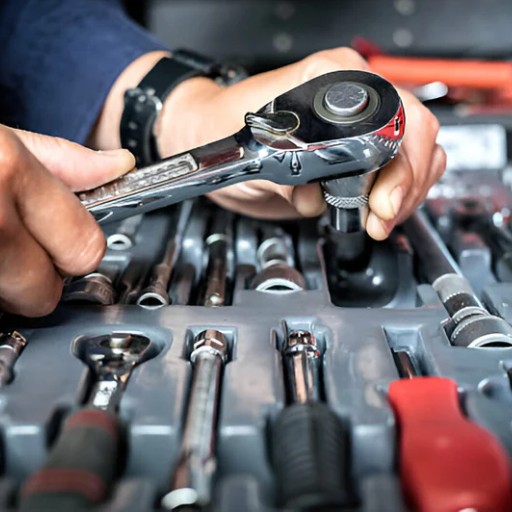
Of course, ratchet sets are always the go-to tools for the most skilled mechanics and the best DIYers, who appreciate their multipurpose use and efficiency in various domains. The usual components of such sets are ratchet handle, a variety of sockets in different sizes and in many cases, some other parts like extensions or adapters. The ratchet mechanism enables one to do continuous tightening or loosening of fasteners without having to remove and reposition the tool, thus saving time and effort when working in tight or hard-to-reach places.
Sets of superior quality are most of the time made of materials like chrome vanadium steel which are not only strong but also resistant to corrosion thus providing a long service life. Moreover, the progress in the ratchet manufacturing has come up with the designs that incorporate features such as higher tooth counts that offer smoother operation with almost no handle movement, which is a very important feature for the smallest working spaces. Quick-release mechanisms and ergonomic handles are also provided in some sets for better usability. Be it car repair, furniture assembling, or any other maintenance job, a good ratchet set is still the key part of the toolbox that contains all the tools that are needed.
Choosing the Right Tools for Your Trade
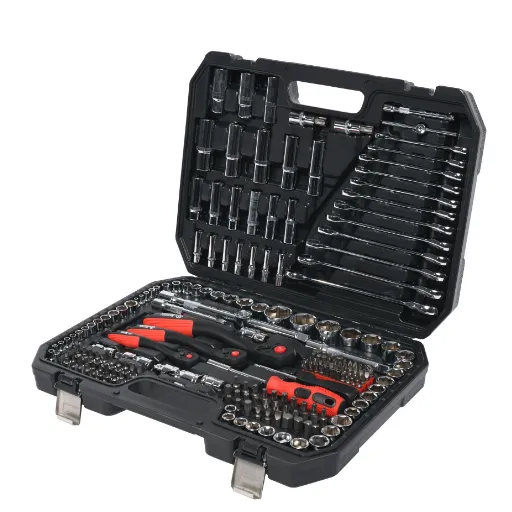
Considerations for Plier and Screwdriver Selection
If you’re trying to pick the right pliers, you should first of all consider the tool’s main function and design as these factors are the most vital ones. For instance, needle-nose pliers would be the best choice for precision work in cramped places, whereas slip-joint pliers are quite the opposite, being versatile due to their adjustable jaw settings. The handle’s shape is also a significant aspect of your area of concern when it comes to pliers since it provides comfort and minimizes the pain in your hands caused by prolonged use. If working on electrical components is something that you expect, then besides just looking for ergonomic grips, you should also check for insulated handles. It is also important to check the pliers’ durability and build quality. The use of materials like chrome-vanadium steel not only makes the pliers strong but also gives them a high resistance to wear and corrosion which, in turn, keeps them good for a long time.
💡 Selection Tips for Screwdrivers
- Screwdrivers have a wide range of types and sizes, and the correct choice is determined by the kind of screws that you will encounter most often
- Flathead and Phillips drivers are the two that are most commonly used but specialty ones like Torx or hex may also be needed for specific jobs
- Magnetic-tipped screwdrivers will ease your work by saving you time when doing work in tight places as they will securely hold the screws in place
- Don’t overlook the material used for the shaft; the shafts made of hardened or heat-treated steel are usually more durable while being resistant to bending or breaking under pressure
For both types of tools, you can get a combination of sets which will save you money and be a great convenience as they ensure that you are ready for any project. Furthermore, using the tools appropriately, like cleaning them after use and keeping them in a dry place, will not only prolong their life but also their performance will be at their best. Reading reviews of trusted brands and comparing specifications like torque capacity, material strength, and warranty can help you make the right choice, one that perfectly suits your special requirements.
Importance of Tool Material and Durability
In tool selection, the material and durability are very important factors the performance and lifetime of the tools are heavily dependent on. High-quality materials like stainless steel, chrome vanadium, or carbon steel are often the first choice on account of their wear and corrosion resistance. The strength of the tools made of these materials is also incredible reliability which is very much needed for high-pressure or frequent use tasks. For instance, a carbon steel hammer is far less likely to chip or crack than a similar item’s made with a lower-grade metal. Properly done just once the material of your tools being to keep you away from frequent replacements and contributing to the overall reduction of costs in the long run.
The handiness factor is for sure the key point factor as it has a direct immeasurable influence on a tool’s power to keep it together under most brutal working conditions. To give an example, outdoor or industrial tools could be facing the most unwelcoming environments, e.g., extreme temperatures or high humidity. Durable coatings, e.g., powder finishes or anti-corrosion layers, on the tools keep them as good as new through such situations. Composite materials and heat-treated metals have been recently developed which provide a perfect combination of strength and weight, thus making tools user friendly without compromising toughness. Buying costly tools is a better option than going for unanticipated failures which in turn will be sending you and your team home by cutting off in-turn project delays.
Thus, the fact that the brands have been striving more and more to present the engineering of their tools as goodwill to the user in terms of the performance of the tool over a long period is a positive sign. The tool’s durability and authenticity can be proven by such warranties and certified testing, e.g, the compliance with ISO or ANSI standards. The use of new technologies like impact-resistant plastics or designer ergonomics has not only enhanced the life of the tools but also brought about the users’ comfort in line with modern user’s needs. If you let the quality of the materials and durability issues dictate your tool purchases, you would not only have guaranteed performance but also saved yourself years of time in your work processes.
Organizing and Maintaining Your Tool Set
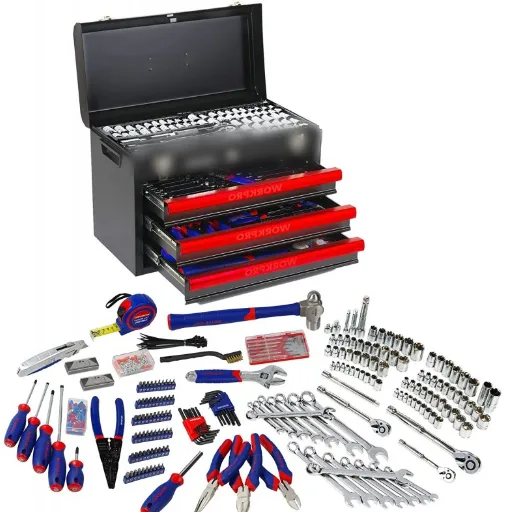
Choosing the Right Toolbox Storage Case
When it comes to selecting the appropriate toolbox storage case, I mainly start with my personal needs and the tools that I usually use. If my focus is more on minor projects then I would go for a smaller toolbox which contains separate sections for easy picking of smaller tools and accessories. In case of heavy or larger tools, a storage case which is durable, heavy-duty, and has reinforced corners and sturdy latches will keep my tools protected and secure even during transport.
The storage capacity and layout of the toolbox are also factors that I consider. Cases with adjustable dividers or removable trays are especially helpful since they provide flexibility and allow me to adapt the space to fit my collection. Furthermore, I look for features such as labeled compartments or clear lids which can be very helpful in finding a particular tool quickly rather than having to dig through everything during a project.
Portability is another crucial factor for me. In case I need to transport tools frequently to different worksites then I would go for a storage case that has a lightweight design, good handles or even wheels for added comfort. By giving priority to functionality, durability, and user-friendliness, I will be able to have a tool set that is organized and ready for any job that comes my way.
Routine Maintenance for Longevity
The proper care and maintenance of tools are very important practices for making sure that tools will last long and keep on working with great reliability throughout the years. One way to do so is through cleaning tools routinely after every use, which is the first step in fighting rust and corrosion, especially for metal tools. Wiping metal tools with a cloth will keep them dry and neat by taking away dirt, grease, or water and sometimes also a light coat of oil is applied on metal parts for extra protection. The same applies to power tools, which should be cleaned inside and out, and over dust that might have been collected during use, thus, not allowing the tools to get too hot or break down mechanically due to cleaning neglect.
🔧 Best Maintenance Practices
- Regular Sharpening: Tools like saws, chisels, or gardening shears perform best when sharpened properly
- Calibration and Inspection: Check for loose screws, frayed cords, or broken handles to prevent accidents
- Follow Manufacturer Guidelines: Adhere to care instructions to determine optimal tool lifespan
- Proper Storage: Use quality storage solutions like toolboxes or pegboards in dry, temperature-controlled areas
Equally significant is the right storing of tools when they are not in use. Proper storage consists of buying high-quality storage for tools such as a toolbox, a chest, or even a pegboard that would keep everything well-arranged and at the same time easy to reach. Also, you need to make sure that the area where tools are stored is not only dry but also temperature controlled so as to prevent them from being subjected to humidity and extreme temperature changes, which can ultimately lead to their deterioration. Hence, together, routine maintenance and good storage practice will not only ensure the performance but also save money in the long run as it will be less need for frequent replacements.
Effective Organization Tips for Your Tool Box
📋 Organization Checklist
✓ Categorize Your Tools
Start with the classification of your tools into different groups like hand tools, power tools, and accessories which will also help you easily locate the right tool and thus, no clutter would be created.
✓ Use Foam Inserts or Dividers
Foam inserts, drawer organizers, or dividers are all excellent options that you can consider to keep everything steady and prevent damage. They offer a very tight hold for your tools and less movement during transport.
✓ Label Drawers and Compartments
Every section of the toolbox that gets a label will help the whole organization process become easier. For example, if you make labels like “Wrenches”, “Screwdrivers”, or “Drill Bits”, then you can have the tools retrieved without any effort.
Comparing Professional Tool Sets with Cheaper Alternatives
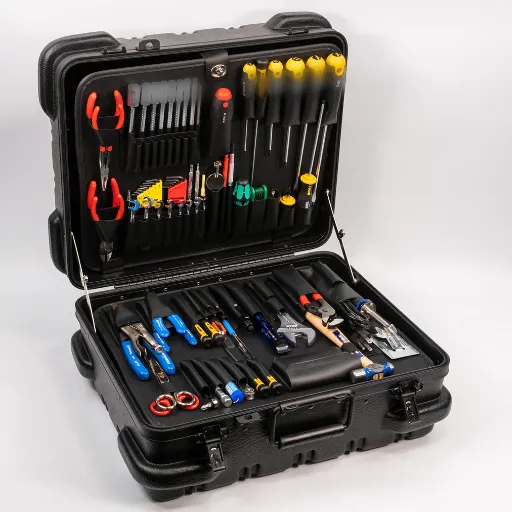
Pros and Cons of High-Grade Tools
✅ Advantages
Ultimate Durability
High-grade tools are usually made of very strong substances, for example, chrome-vanadium steel, which cannot be worn out quickly; this implies that fewer replacements will be required.
Greater Accuracy
Professional-grade tools are very often built to tighter tolerances thus yielding very accurate and good results particularly in detailed or technical work.
Friendly to User Design
A lot of top-quality tools come with user-friendly designs that lessen the strain on the user, thus bringing comfort and preventing fatigue by the end of the day.
Lifetime Warranties
Most high-end tool makers provide lifetime warranties, which, in turn, suggests that the higher initial price will be offset over time by the peace of mind and long-term savings.
Solidarity in Hard Conditions
High-grade tools keep up with the consistent performance in the harsh conditions such as extremely hot or cold weather, thus can be used for professional and heavy-duty tasks.
⚠️ Drawbacks
Very High Upfront Cost
The cost of the first professional tools can be a lot, which might be a problem for casual users or beginners.
Too Good for Simple Tasks
In the case of small or low-stress tasks the high-grade tools with their superior capabilities may only partially be used this thus that they are not necessary.
Heavy in Weight
High-quality materials used may have made some professional tools heavier, thus making them less portable or harder to use for a long time.
Less Availability
Usually premium tools can be found only at specialized retailers and thus their availability compared to cheaper ones is limited.
Higher Repair Costs
Though the tools are very long-lasting, in the event of repairs or replacements being needed, the costs would be higher because of the premium materials and specialized components used.
Understanding the Risks of Low-Quality Tools
Though low-quality tools are cheaper, they do not last long and, the risks caused by them, often outweigh the initial cost savings. One main issue is their lack of durability. The good quality materials and construction can suffer fast from wear and tear, making these tools easily breakable or unserviceable, even when used lightly. This not only shortens their lifetime but may also lead to constant replacements, which amounts to higher spending in the long run.
⚡ Safety Concerns with Low-Quality Tools
Then there is an additional danger in terms of safety which is usually sidelined. Tools of low quality can be harmful to the very people who use them. The handles can break down, the parts may loosen during use, or the sharp edges can become blunt too fast thus causing accidents or injuries. Trusting such tools in a critical task becomes very risky for both professional and amateur practitioners.
Moreover, in some cases, the low-quality power tools may not even meet the safety standards making it even more dangerous to the users. A single accident due to a faulty tool can have adverse effects both physically and financially.
Moreover, people have expectations of quality that are much lower when it comes to the use of tools that are of inferior quality. When tools are manufactured cheaply precision and efficiency are often neglected. Misaligned parts, lack of proper balance, or inconsistent output can all contribute to producing results that are less than ideal especially when the projects are precision and reliability requiring. For the professionals, the damage to reputation and trust of customer due to providing inferior work is a very serious risk. No matter if you are a handyman or a DIY enthusiast, friendly tools not only make the working process safer and faster but also save you time and stress in the end.
Making the Right Investment for Your Needs
It is crucial to match your investment to your specific needs when it comes to choosing the right tools or equipment. Begin with the scope and kind of your projects. For example, if you do heavy construction work very often, then the investment in professional-grade tools, which are built for durability and heavy use, is a must. However, for the casual DIYers, mid-range tools may be enough for occasional or less intensive work. It is the evaluation of your usual projects that guarantees a wise investment and saves you from spending money on unnecessary features or capacities.
🎯 Investment Decision Factors
- Quality and Brand Reputation: Reliable brands usually give long warranties, good product support, and a history of reliability
- Research and Reviews: Look for reviews, testimonials, and expert recommendations from several unbiased sources
- Flexibility and Compatibility: Tools with multiple functionalities or systems with changeable parts offer better value
- Battery Systems: Sharing a battery between different power tool brands reduces cost and increases convenience
By having a well-considered evaluation plus a research-based decision, you are going to have an investment that is not only practical and efficient but also going to last years. It is the time when you place the quality, functionality, and compatibility with the priorities that you get to have an even more enjoyable and fruitful project experience.
References
- Iowa Central Community College – Basic Tool List: This document provides a comprehensive list of tools required for students enrolled in the Automotive Technology program, offering insights into essential professional tool sets for mechanics.
- University of Northwestern Ohio – Tool Sets, Storage & More: This catalog highlights professional tool sets, including Snap-on tools, designed to support students in their education and future careers.
- Click here to read more.
Frequently Asked Questions (FAQ)
Q: What is a professional tool set and who should buy one?
A: A professional tool set is a very complete and extensive set of hand tools and sockets which is usually composed of ratchet wrench, bit socket set of both SAE and metric sockets and heavy-duty tools. It is suitable for use by car mechanics, people repairing their homes who also do car maintenance and those who want a complete hand tool set for motorcycle or auto repair.
Q: What should be included in a complete repair tool kit or hand tool set?
A: A complete repair tool kit generally includes a socket set (with both deep and standard), a ratchet wrench, 6 and other drives, combination wrenches, screwdriver bits, impact-rated sockets, 12 point and 6 point options, pliers, and occasionally specialty gearwrench tools. Kits are often labeled with pcs or piece counts, such as a 110 pc kit and socket set, to show the extent of their use for home and car, shop, or professional use.
Q: How do I choose between SAE and metric sockets in a professional tool set?
A: Choose according to the type of machinery you work on: SAE sizes are suitable for many old American cars and domestic items while metric is suitable for most new cars and motorcycles. A good mechanic’s toolbox will come with both SAE and metric sockets and a socket wrench for car repair selection to cover all auto repair tool combinations and general household tasks.
Q: Are impact sockets necessary in a professional tool set?
A: If you are using impact wrenches for heavy-duty jobs, then impact sockets are a must as they are made to take high torque. A repair tool kit with impact-rated sockets plus a strong ratchet or impact-compatible driver is a must-have for serious shop work, auto repair tools combinations, and professional mechanic’s tool sets.
Q: What is the difference between a bit socket set and a standard socket set?
A: A bit socket set is made up of driver bits that are built into sockets for screws, Torx, and special fasteners, while a regular socket set is only for hex and 12 point nuts and bolts. Both are advantages in a professional tool set: bit sockets strengthen the capacity for house tool and repair tool kit tasks, particularly in electronics, motorcycles, and specialized auto repair applications.
Q: How many pieces (pcs) should I expect in a professional tool set for shop or home use?
A: Sets come in sizes varying from small 20–40 piece household tool kits to large 110 pc or bigger mechanic’s tool sets. If you want a well-rounded professional tool set that can be used in the shop and for auto repairs, look for 70–110 pcs that have a ratchet wrench, deep sockets, combination wrenches, bit sockets, and accessories to cover home repair, car, and motorcycle work.
Q: Can a professional tool set be a good gift for a homeowner or mechanic?
A: Certainly. A high-end hand tool kit or repair tool set is a very useful gift for homeowners, new homeowners, motorcycle lovers, or professional mechanics.
Q: Is a kit and socket set enough for auto repair or do I need additional specialized tools?
A: A well-stocked kit and socket set with a socket wrench auto repair tool selection, ratchet wrench, and combination wrenches covers most routine auto repair jobs. Specialized jobs might sometimes call for torque wrenches, diagnostic tools, or specialty pullers. For a complete auto repair tool combination package, it would be wise to add those items to your professional tool set.
Q: How should I maintain my professional tool set to ensure longevity?
A: Tools should be kept clean, dry, and organized in their case or shop chest; moving parts such as ratchet wrench mechanisms should be oiled every once in a while; non-impact sockets should never be used with impact tools; and replaced damaged pieces to avoid further wear. By proper maintenance, the expensive master hand tool set is preserved and the reliable performance is ensured for home repair, auto, and motorcycle projects.
Final Thoughts
Investing in a professional tool set is more than just purchasing equipment—it’s investing in your craft, your safety, and your long-term success. Whether you’re a seasoned professional or just starting out, choosing quality tools that match your needs will ensure efficiency, precision, and durability for years to come. Remember, the right tools don’t just complete jobs—they define the quality of your work.