
Best Chisels for Woodworking: Professional Buying Guide
Woodworking is a combination of a skill and a craft that can only be approached with art, as accuracy, technique, and the right set of tools are required to drive your ideas to victory and make them visible in real life. One of the most important tools among the artist’s arsenal is the chisel—a perfect device that can be used to shape, carve, and refine wood with unparalleled accuracy. Nevertheless, not all chisels are the same, and the hardest part could be to select the perfect set for your woodworking, needs. This review is made for your comfort in making the right decision with more than just a look at the top chisel options today. Whether you are an experienced practitioner or are just starting out, we will guide you through the all the points of choosing the right tools, taking care of them, and offering project-specific recommendations. By the time you finish reading this guide, you will be equipped with the information necessary for buying chisels that can improve your craft and outlast your lifetime
Understanding Chisels for Woodworking
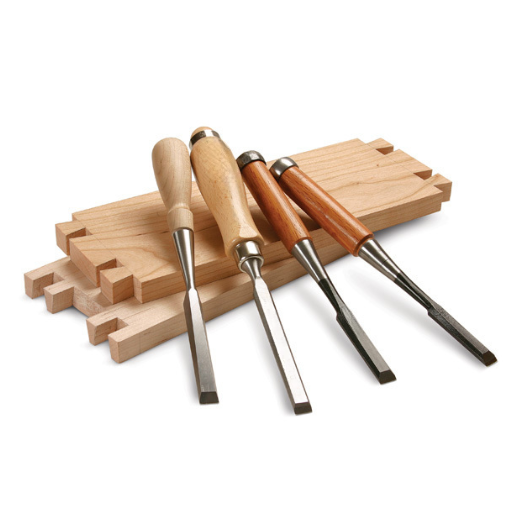
Woodworking tools that can’t be done without are chisels – they cut, form, and fine-tune the wood with high precision. Different types of chisels are made for different purposes; some are the bench chisels used for nearly everything, the mortise chisels that cut deep joints and paring chisels used for very delicate work. It is a good idea to buy a chisel with an edge that stays sharp and lasts long, which is commonly provided by a blade made of high-carbon or chrome-vanadium steel. Further, you may consider handles that are ergonomically shaped, so that they are comfortable and provide the user with higher control, having the bonus of decreasing fatigue when the chisel is being used for a long time. Regular sharpening and cleaning must be done to keep the chisels powerful and stable for a decade or so of woodworking.
What is a Chisel?
A chisel is a tool used for cutting, shaping, or carving materials like wood, metal, stone, etc. It comprises a sharp, beveled edge at one end of a strong blade having usually high-carbon steel composition for great strength and precision and a handle for supplying leverage and control. Different chisels have been made for various types of jobs, like the bevel-edge chisels which are used in finishing work mainly, the cold chisels for metal work and the masonry chisels for cutting through stones and concretes. The tools have gained more features when it comes to manufacturing. They now have better materials and the designs have also become human-friendlier. These tools without a doubt are the go-to tools for a number of the artisan trades, carpentry, and sculpting among others due to their vast usage and accuracy. They can be made to last long and be effective if used and maintained the proper way, like keeping a sharp edge and avoiding the use of wrong striking tools.
Importance of Chisels in Woodworking
Chisels are a necessity in woodworking to a great extent since they are vital in cutting, shaping, and jointing with utmost precision. These tools are very accurate in the task of taking away wood matter, which ends up in a detailed design or they may be a very accurate tool in joinery with as good joint as the dovetail and the mortise. Chisels have become more efficient with the advent of high-carbon steel and chrome-vanadium types that came to the markets, therefore having the product lasting longer and being resistant to wear.
Chisels will keep their edge if proper sharpening and honing methods are used on them, which are necessary for neat and effective cutting. Consequently, the changeover to leading-edge sharpening technologies has brought about a major breakthrough in the matter of edge-holding, giving at the same time no less than absolute and permanent high performance to tools worked with on both softwoods and hardwoods. Through the chisel tool, the carpenter can perform technical work that becomes a kind of art adding up to the significance of the long-famed trade.
Types of Woodworking Chisels
| Chisel Type | Primary Use | Blade Profile | Best Application | Typical Widths |
|---|---|---|---|---|
| Bench Chisel | General-purpose woodworking | Straight | Joinery, paring, chopping | 1/8″ to 2″ |
| Mortise Chisel | Cutting deep, precise mortises | Thick, sturdy | Mortise and tenon joinery | 1/4″ to 1″ |
| Paring Chisel | Delicate carving and fine work | Long, thin | Trimming and shaping | 1/8″ to 1 1/2″ |
| Firmer Chisel | Heavy-duty cutting | Thick, beveled | Rough shaping | 1/4″ to 2″ |
| Skew Chisel | Angled blade for detailed cuts | Beveled at an angle | Trimming, cleaning joints | 1/4″ to 1″ |
| Japanese Chisel | Precision with steel-reinforced blades | Laminated steel | Intricate traditional work | Various |
| Dovetail Chisel | Narrow blade for detailed joinery | Thin, tapered | Dovetail work | 1/8″ to 3/4″ |
| Butt Chisel | Compact for tight spaces | Short, straight | Cabinet work and detailing | 1/4″ to 1″ |
Types of Wood Chisels

Universally, in woodwork, chisels are said to be necessary and are employed to shape, smooth, and sometimes carve objects. These are the most common types of chisels and their main purposes:
- Bench Chisel: A chisel versatile enough to take care of almost anything, such as shaping the joints or removing the wood that is in the way.
- Mortise Chisel: Perfect for heavy work, it is the chisel of choice for the creation of deep and rectangular holes or cuts called mortises.
- Paring Chisel: Very thin and long, these chisels are the best tools for making the most accurate and uniform shaving of wood.
- Corner Chisel: Shaped in right angles, it is good to use in the cleaning of corners in wood joints.
- Firmer Chisel: The strong and solid chisel is the best tool for the chopping and slicing of timber that is harder than usual.
Every kind of chisel has an exclusive property, which makes it very critical to take the right chisel depending on the work requirements to be done.
Bench Chisels
The bench chisels are the most versatile and popular chisels in the woodworking scene. They are usually short with a wide and sharp blade, and a user-friendly with the handle being mallet- and hand-controlled, both. Used mainly for paring, trimming, and cleaning simple joints, bench chisels are able to perform a wide variety of tasks. The present-day bench chisels are commonly made from high-carbon steel or chrome-vanadium alloys which result in durability and edge retention even at regular use. The handles can vary, and the options include being made of wood, synthetic materials, and, many times, ergonomically shaped to reduce user fatigue. Selecting the suitable bench chisel includes choosing the blade’s width and type of handle as well as the chisel’s intended use so as to give the best performance and efficiency.
Japanese Chisels
In the world of carpentry, the Japanese chisels, which are popularly known by the name of “nomi”, are incredibly famous due to their unmatched quality and performance. It is an inherent quality of these tools to be coated with the layer of high-grade steel, which, by the way, may be the steel made through the process of laminating. Stellung the extreme hardness, while the underlayer of softer and more ductile iron is responsible for both the toughness and shock absorbent capacity, heightening process of the entire product.
Japanese chisels are different in their functions and there are several types of them, like oire-nomi which are used for general woodworking or usui-nomi which are used for fine and delicate work. They are usually shorter than chisels used in the West, so they offer more precision and control. Moreover, Japanese chisels typically come with octagonal or tapered handles which are made from Japanese oak or other similar hard and long-lasting woods. These materials, combined with high-quality steel, the designer’s careful consideration, and the diligent work of the craftsmen, make Japanese chisels the first choice of professional woodworkers who value precision and long life of their tools.
Mortise Chisels
Chisels that work on mortising are basically meant for the task of making deep and narrow rectangular slots or mortises best catering for different kinds of joints. They are distinctly characterized by the almost impregnable make that normally involves a wider blade and no compromise in the solidity of the design when put under the heave strain of work. The edge that does the cutting is either straight or beveled, and this depends on the kind of material, style, and the application itself. In order to have better results, the very best mortising chisels are often forged from special tool steel that is then hardened, thus giving it the best of the attributes, like being tough, magnetic, and highly elastic, but at the same time wear resistant.
Hardwood like hickory or ash is generally used for making the handles of modern mortise chisels such as the ones with ergonomic designs. Ferrules or reinforcing bands are added to the mortise chisels for splitting under continuous stress. There are Mortise Chisels in various widths: these widths might vary from tha narrow ones used for precision to the wider ones which are suitable for heavy jobs. Mortise chisels are a must in making the lovely, traditional mortise-and-tenon joints which demand the exactness and the clearness of the edge during the woodworking operation. Their design and strength have made them the backbone of both handcrafted and professional woodworking projects.
Specialized Chisels for Woodworking
- 1
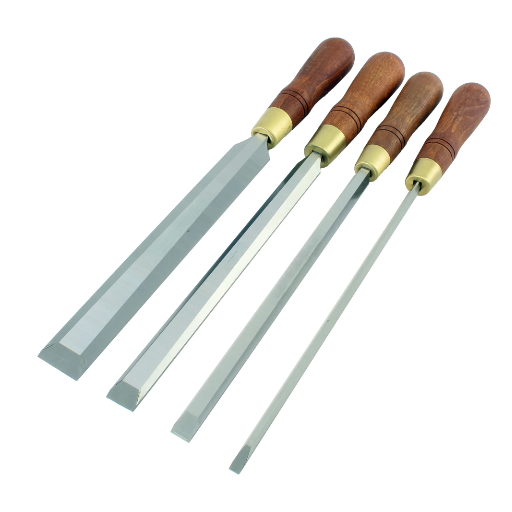
Paring ChiselsThese tools come with a narrow, long blade that has a low bevel angle. They are very suitable for delicate and accurate cuts. They are excellent for removing the wood surface and not leaving any marks. They also give fine control in doing their work in intricate patterns.
- 2
Corner ChiselsChisels with the L-shape cutting edge are the best tools to be used for clearing out and forming corners, mainly mortise joints. In this manner, one can form two 90-degree angles which are very necessary for woodworking projects.
- 3
Fishtail ChiselsFishtail chisels are the ones designed with a flared, fish-shape blade. They are therefore the most friendly tools to have when you want to reach the very tight spaces and corners of the dovetail joints especially. This unique design that they have, help them to be easily accessible without causing damages to the surrounding areas.
- 4
Skew ChiselsThe cutting edges of these chisels are positioned at such an angle that they are practically lying on their sides, thus enabling them to be more effective in the finishing of the cuts and dealing with awkward angles. The most common areas of lathe work and working on intricate carvings are where these tools are being used.
Understanding Mortise Chisels
Mortise chisels are specialized tools with thick, heavy blades and lasting edges that are designed to make very precise and very strong slots, known as tenon joints in woodworking, used to connect the parts. They are able to withstand the pressure of removing masses of material because of their very thickness, combined with the strength of their beveled edges. Contrary to general-purpose chisels, mortise chisels are showcased by their stouter cross-section, a feature that allows them to have higher strength and alignment retention in deep cuts.
Today, the modern mortise chisels come in various sizes, which usually are from 1/4 inch to 1 inch in width, in order to fit the different dimensions of mortises. The handles are typically crafted from very strong hardwoods or they are doubled or tripled with metal hoops to take heavy malleting. Their use is extensive in instances where the strength of the whole structure is essential such as the making of furniture, door frames, and cabinets. Mortise chisels need to be properly sharpened and maintained for efficient, clean, and precise cutting as well as for the tool to last longer.
The Role of Paring Chisels
Chisels are a kind of crafted tool which is specially designed for the precise fine tasks of woodworking and sawing. These chisels are mainly known for their long, slim blades, which provide maximum control and access in the most difficult and the most narrow parts. Paring chisels are able to handle a situation requiring shaving without creating the whole door frame, as they are not heavy, malletted mortise chisels; instead, they are typically used with hand pressure to carefully shave the wood surfaces or to smooth the tenon shoulders to make them fit perfectly.
Among various things, the tasks for excelling them by high-quality paring chisels comprise material alienation from dovetail joints, clean up of mortises, or making tenon shoulders shiny so as to have a perfect fit. High-grade paring chisels are produced with tough steel and ground to emit sharp bevels, providing the ability to cut accurate and smooth slices. Proper technique and continuous sharpening are absolutely necessary to retain the absorbing feature of their sharp edges and exact performance, thus providing utilization for fine woodworking.
Using Chisels for Joinery
When using chisels for joinery, the precise technique and right tool preparation are the most important factors to get the joints right and strong. First and foremost, make sure the edge of the chisel is very sharp as a sharp chisel will make cuts that are neater and easier with less effort and that will lessen the chances of mistakes or damage to the wood. In the case of dovetail joints, the mallet is used to deliver controlled blows while the chisel is used to remove the waste material between the pins or tails and finishing up by paring of the joint to the required fit.
When it comes to mortise and tenon joints, the mortises can be squared-off or deepened by a chisel, while the tenons can be trimmed to fit exactly into the mortises to guarantee a tight connection. Keeping the angle of attack equal to the cutting angle is a way to enhance the control and accuracy of the cut and this is more so if the design is an ornate one. Furthermore, chisels have become a thing that cannot be done without in the field of joinery and precision woodworking be it in the traditional or the contemporary practice due to the modern improvement and innovation of chisel materials such as cryogenically treated steel that have made them durable and the edge last.
Choosing the Best Wood Chisel
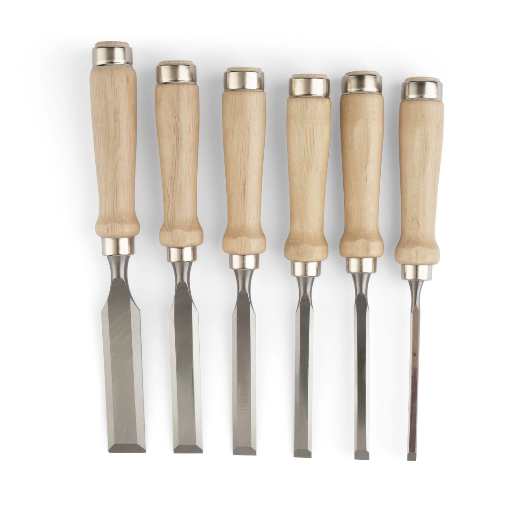
If you are selecting a wood chisel, then the prime factors to be looked into are:
- Blade Material
Chisels made from high-quality steel, such as carbon steel or chrome-vanadium, with a durable edge and wear resistance, should be the first choice for a user. Steel treated cryogenically is also an option if the goal is to go for a performance-enhanced tool.
- Handle Design
Choose those handles which give you comfort and have high durability. Wooden handles are popular and they also absorb shock well, whereas plastic or composite handles are rather stronger for heavy-duty work.
- Intended Use
Picking the correct kind of chisel for each and every job is a key factor. While bench chisels can be used for different purposes throughout the shop, mortise chisels are by far the best for making the deep joints. As for the paring chisels, they are specifically for the finest and most delicate work.
- Edge Retention
Chisels with sharp edges save time because they don’t have to be sharpened often and they also become reliable throughout their lives.
- Brand Reputation
Recognized manufacturers like Narex, Stanley, and Lie-Nielsen have a good reputation for offering constant and high-quality chisels.
By concentrating on the given criteria, a perfect choice of wood chisel will be made that is not only the best tool but also best-fitting and most reliable.
Material Quality: High-Carbon vs. Chrome-Vanadium Steel
| Property | High-Carbon Steel | Chrome-Vanadium Steel |
|---|---|---|
| Hardness | Extremely hard, resists deformation | Hard, with moderate deformation resistance |
| Edge Retention | Excellent, retains sharpness over long use | Good, maintains sharpness moderately |
| Durability | Prone to rust if untreated | Highly resistant to corrosion |
| Toughness | Brittle under impact, less flexible | High flexibility, absorbs impact well |
| Ease of Sharpening | Easy to sharpen, offers precision | Slightly harder to sharpen |
| Rust Resistance | Low, requires regular maintenance | High, superior corrosion resistance |
| Cost | Typically more affordable | Generally more expensive |
| Best Use Case | Ideal for fine, detailed woodworking | Suitable for heavy-duty or general projects |
Handle Ergonomics for Woodworkers
Ergonomically designed handles play a key role in the ease and efficiency of woodworking activities. The hand-friendly handle design lessens the load on the hand and wrist and thus the usage can last longer without causing any discomfort or tiredness. The grip, material and size of the handle are the main features to be taken into consideration. Square, rather than very round or irregular, shapes lead to a firmer grip and less hand slipping, especially during delicate operations. Composites covered with rubber or wood that has been treated for a stronger grip, even in damp conditions, are the kinds of materials that can be used.
The grip should therefore at minimum be designed in such a way that it fits the user’s hands thereby providing a secure hold but at the same time also a comfortable one. A handle with such qualities will also decrease the level of vibration that could cause fatigue and, as a result, be a good solution during the course of demanding and repetitive work which underlines the importance of ergonomics in the perspective of complete and efficient work and stress reduction.
Best Wood Chisel Sets for Different Skill Levels
The user’s ability will be the key point in finding the right wood chisel set since this will define the demanded balance among qualities, features, and price. The affordably priced set with chrome-vanadium steel blades that is long-lasting and not requiring much care would be the smartest choice for the newbies. Sets typically have various sizes which provide versatility for different jobs.
The professional woodworkers, however, will need first-class equipment including chisels with the best edge retention and perfectly beveled edges for fine work. One of the perfect examples is a set consisting of chisels that are produced from really tough high-carbon steel with a keen edge on them. The same-action kits should not lack handles that perfectly fit the user’s palm; otherwise, pain would be the outcome after even a short time.
The gold standard for premium chisel sets made from top-grade materials such as cryogenically treated steel and designed for advanced or professional craftsmen. Such sets offer better edge retention, improved wear resistance, and greater overall sharpness. In addition, many models have blades with an ultra-smooth cutting effect possible thanks to their finely polished surface. They are also equipped with either socket handles or a tang design that greatly improves control and balance.
Maintenance and Care for Woodworking Chisels
- Regular Sharpening
Among the methods is grinding the tool’s blade. The second technique is to use a honing guide to preserve the sharpness. It is advisable to grind the chisels before they become very blunt in order to achieve good and clean cuts.
- Cleaning After Use
Wipe the blade with a piece of soft cloth to remove the dust, wood particles, and humidity. If there is still any residue left, use a mild solvent.
- Rust Prevention
When in a humid climate, especially, always make it a point to have the blade oiled with a thin layer of good oil like camellia or mineral oil so that rust and corrosion can be a thing of the past.
- Safe Storage
Keep chisels in either a strong one find roll, wooden block or a protective case so that they will not get damaged, the tool case will also lessen the risk of accidental injury.
- Handle Care
Use linseed oil on wooden handles from time to time and it will help to prevent cracking or drying. Also, try to find the fittings that are not secure and secure them right away.
Sharpening Techniques
Maintaining chisels is likely to be somewhat inefficient and imprecise if your sharpening skills are not up to par. To begin the process, position the bevel edge firmly against the sharpening stone, see that the bevel angle is right around the range of 25 to 30 degrees which is the most common and depended upon the doctorates thereof. Use the same force to be applied to the rough-grit stone so that the sharpening will be done in a uniform manner. Gradually transition to the finer-grit stones like 1000 to 6000 grit to smoothen the surface and sharpen the blade to the sharpness of a razor.
To ensure the highest level of accuracy, one should enlist the use of a honing guide that secures the chisel in a fixed position while the sharpening is being done. To reduce the occurrence of friction and the problem of uneven wear, it is a good practice to wet the water stones with water or oil the oil stones with honing oil. Following the completion of the sharpening process, you should shave a thin layer of wood to determine the sharpness of the edge; a chisel with an edge that is properly sharpened will make clean and smooth cuts. The continued bevel maintenance is not only the key to work getting done but also the life of the tool.
Storage Solutions for Chisel Sets
A responsible maintenance of the chisel sets is utterly unfeasible without suitable storage solutions to preserve and prolong their total life span while they are also utilized. Perhaps the chisel roll, made exclusively for the purpose, which is frequently made of either leather or a heavy-duty fabric is the best and the most convenient one. Here, not only is each chisel well protected from damage, but also there is less hassle when one has to carry them from one place to another. On the other hand, a hand-crafted wooden rack can offer a fixed solution for chisel storage. Chisels that are placed in such a rack are not only prevented from falling but also can be separated according to their size or type.
Magnetic tool holders are another space-saving solution and especially beneficial for workshops where wall-mounted systems can place the most used tools within the closest distance while keeping the area less cluttered. To remove rust trouble, silica gel packets can be put in enclosed storage solutions to absorb moisture. For bigger sets or special uses, toolboxes with foam inserts that are the same size as chisels will protect more against shifting and random harm. Along with that, it is a bit hard work to store and care about the chisels/ chisel equipment and not doing it properly can adversely affect the result of the work.
Common Mistakes to Avoid
An often made error is that of lack of sharpening properly, which results in the chisel having blunt edges thus, its work becomes imprecise. By using the wrong angles and sharpening tools the blade can become thin thereby leading to its short life and less efficiency in cutting. Likewise, if the chisels are not cleaned after every job there can be wood shavings or even moisture left on them thus, corrosion will take place little by little. Furthermore, the use of excessive force during chiseling may become the cause of either blade-breaking or workpiece-damaging. Many craftsmen do not care about the storage of their chisels in a place with controlled conditions and this may result in the frequent and relatively rapid deterioration of those exposed to temperature and humidity changes. Following the prescribed ways of maintaining and using chisels can eliminate these problems and prolong the performance period of your tools.
Reference Sources
- A Plan for Beckett
Read more here - A Beginner’s Guide to Woodworking
Access the guide here
Frequently Asked Questions (FAQs)
Are chisel handles necessary for feel and control?
The chisel handles are a part of the chisel that is responsible for the feel in your hand, as well as how you strike or hold a chisel while you are working with woods. A chisel that is bulky with a wooden handle will be able to absorb the impact better when struck with a mallet than the other plastic ones which of course can be less both in weight and price. To many woodworkers the but end of the handle, its balancing, and the way the handle fits on the tang are what make the difference in a chisel’s quality and user’s comfort for either carving with delicate chisels or doing the heavy mortice chisel work.
What are the best new options for a first set of bench chisels?
The finest modern variations in the first ever set of the bench chisels are to count the three elements that are the most critical to the woodworker: the price factor, the steel and the handle. So, you have to be sure that the set of chisels you are after has both bevel edge chisel sizes and a mortice chisel. There are many people in the woodworking community that propose either the Narex or the Blue Spruce chisels. The same ones will justify your expenditure on Lie Nielsen or Veritas only if sharpness be retained longer. The power of the first set of bench chisels is in the fact that one will learn from them under the following heads: How to sharpen, how to have a flat back, and how to distinguish the styles of chisels as well as whether chisels are forged or stamped.
How do chisel handles affect performance in chisel set selection?
Chisel handles have a significant impact on comfort, control, and force transfer, particularly when using heavy chopping with mortise chisels compared to delicate paring chisels. For instance, Japanese chisels and bench chisel styles rather than socket chisels are more likely to have wooden handles. Moreover, some manufacturers offer handles that are reinforced or have sockets. Handles that are in the right shape for your hand will not only prevent the tools from wearing out quickly with the use but also when numerous chisels also share common handles, switching between them becomes a lot easier. It is always possible to physically run a check on the handle feel and thus make sure the handle is a perfect complement to one’s own technique.
Are Japanese chisels better for paring chisels or general joinery?
The Japanese chisels have the reputation of the thin, hard steel blades that are perfect for making exact paring and trim joins but they might not be an easy choice to do the heavy mortising work. Their built and edge geometry those were made in such a way that they are hand tools best choices when it comes to fine slices and details needed, they are so perfectly the opposite of the standard bench chisel. Their construction and edge geometry make them ideal hand tool choices when fine slicing and detail are required. For heavy chopping or levering in joinery, consider pairing them with thicker steel chisels or a dedicated mortise chisel to avoid damage. Woody workers are even seen mixing the traditional and modern style to catch the wave.