
Best Hand Tools for Electricians: Essential Toolkit Guide
Precision is one of the most important skills needed in the role of an electrician, because you do not want to harm the electric panel. Therefore, it is important that the tools that you will use in the toolbox are high quality as well. Crossing wires in a house, repairing malfunctions, there are many things that an electrician can deal with, specific equipment is essential to both safety and high quality of work. In this article, a selection of tools that every electrician should have while on the job will be provided. Starting with pliers and ending at certain multimeters, these tools are nothing short of ready, reasonable and undoubtedly of vital to everyday electrical works. During the completion of this article, readers will comprehend the crucial tools used in every electrical activity and how they are applied effectively.
Understanding the Essential Tools for Electricians
- Pliers
Every tool has a defined purpose, for which pliers were created to grip, cut, or part wires. There are needle-nose pliers for small spaces. And on the other hand, there are side cutting pliers for effective stripping of wires. - Screwdrivers and Nut Drivers
Having a stock of insulated screw drivers and nut drivers is good enough when there is a need to tighten or release screws or nuts even when such a task involves risks of electrical hazards and they are not supposed to. - Wire Strippers
Cable strippers allow the professional to work the wire without any harm to the conducting material after its removal from the insulating system. Make sure to try the adjustable ones as they fit many wire sizes. - Voltage Tester
Voltage testers check the wiring ‘hot-spot’ and, therefore, the live/no live state is established thereby ensuring no one is at risk. On the other hand, testers without contact are rather popular in that they are not difficult to use. - Measuring Tape
Performing the tasks of cutting wires, installing fixtures, and planning out layouts requires exactness in measurement. The use of a quality and durable measuring tape enhances this aspect by ensuring consistency.
What Every Electrician Needs in Their Toolkit
Electricians exercise safety most due to the risks that come with doing electrical installations due to electrical accidents. With the correct safety devices at hand, the expected guidelines are complied with, and there is also precaution in avoiding injury. Below are critical items every electrician should answer when compiling the toolkit list.
- Insulated Gloves – A good pair of gloves with insulation is essential for all electricians. This is to avoid electric shock when working in various environments. These gloves must also meet the American Society for Testing and Materials (ASTM) standards and have specific voltage ratings for cover-up applications on energized circuits.
- Safety Glasses – When operating in places where there may be flying materials, or sparks wearing goggles become a necessity. Such glasses should be equipped with high impact resistance that meets the ANSI Z87.1 Standard and proper optics that ensure clear electrical work focus.
- Hard Hat – Hats that have been designed specifically for the purpose of protection will prove to be very useful. Such a headgear is for preventing head injuries in case of an impact or in case live electrical equipment is contacted. The Class E-rated headgear is suitable for preventing electric shocks of high magnitude apart from covering the conventional purposes.
- Flame-Resistant Clothing – In order to reduce the risk of burns during arc flashes, clothes with special materials are necessary for wearing. The best clothing rating for an electrician is basically arc-rated equal to or more than the anticipated hazard for best results.
- Steel-Toed Boots – Foot protection is vital on construction sites and around machinery. Steel-toed boots that also provide slip resistance are better to wear as they offer support, stability and protect from tools or other equipment falling on the foot.
After adoption of the above precautions electricians not only eliminate hazards in their work place but also ensure the necessary capability and efficiency levels are maintained in their area of expertise.
Key Features of Best Electrician Tools
- Insulated Handles
Insulation is an integral part of the design of electricians’ tools in that it is expected to be able to resist up to 1,000 volts to prevent electrocution. Hence, the insulated screwdrivers, pliers, and shears are considered mandatory when servicing electrician devices that are already energized. - Ergonomic Design
Regardless of the length of the work, it is important that it is comfortable and efficient. Usage of the tools with thoughtful ergonomic design will reduce the exhaustion in hands and increase capabilities for speed responses hence helping electricians offer their services more faster and effectively. - High-Grade Material Construction
The most effective or suitable tools have their material composed of steel with high-quality chrome vanadium material or aluminum-steel material which makes them hardy to resistance, rust, and even heavy use. - Precision Engineering
Use of appropriate equipment and tools is vital in accuracy and fine tuning approaches of any given electrical task. Therefore, equipment such as multimeters, wire strippers and torque screwdrivers have to be designed in such a manner so as to minimize errors in obtaining measurements and information required for the task in question. - Compact and Lightweight Build
The importance of portability and user competence has been stressed. Compact tools come conveniently and electricians can easily work in constrained spaces while working, and the portability is aided by being compact. - Non-Slip Grip
Electricians often work on wet surfaces and are exposed to a high amount of moisture. In this line of work, it is advisable to use tools that have a grip made of a textured or rubberized material to avoid slipping accidents that may lead to electrocution in certain circumstances.
Core Hand Tools for Electricians
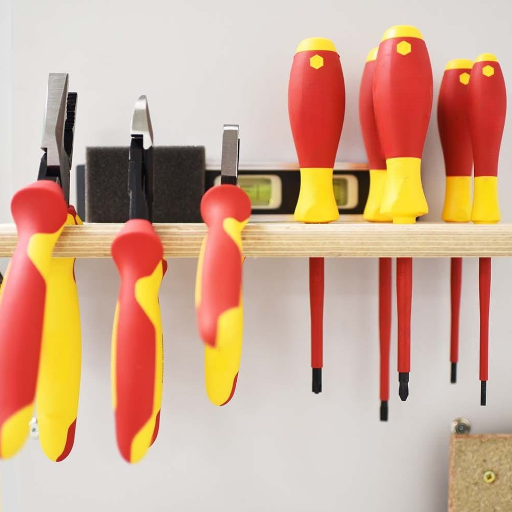
- Screwdrivers and Nut Drivers
Screwdrivers and nut drivers, in a variety of sizes, are necessary for the installation of various sorts of screws and nuts. They are useful in all non-metal hardware installations such as electrical outlets and a breakers. - Pliers
Pliers are a must-have tool for any maintenance work because of their ability to hold, bend, cut, and twist cables and wires. Some of the standard types available are the needle-nosed pliers for accuracy and lineman’s pliers for heavy tasks. - Wire Strippers
Wire strippers are another important tool used in the removal of the covers as insulation of cables and wires in a manner that prevents harm to the wires. - Tape Measure
A good distance measuring tape is helpful because one might be working with electrical gadgets including the installation of such items as pipes and circuit boxes. - Voltage Tester
Voltage detectors are instruments for showing the existence of live wires or current flow improving safety during the process of installation and during repairs. - Cable Cutters
Cable cutters are customized to neatly cutting thick electric cables without leaving loose fibers around the cut which might make later connections difficult.
Side-Cutting Pliers: A Must-Have Tool
Electrician’s shear pliers are an essential tool in any electrical system. These items are designed to help you cut, hold, and tweak wires effectively and quickly. The materials used to build the electrician’s pliers include forged steel, which is very tough, assisting the jaws in having a longer lifetime in a typical harsh working environment. Furthermore, when employed to reduce coated wires or massive wire casing, the combat effectiveness of the pair of tools remains high. Moreover, the ergonomically designed handles of an electrician’s mp illustrates the paramount aspect so that the safety of life and property is taken seriously. Such a protective feature ensures even the best electrical side-cutting piercer can handle up to 1000 volts while in use.
A standout feature of such tools is often the sharpness of the blade, which is made in a particular way, enabling one to quickly and repeatedly cut material without much difficulty. There is a possibility that more recent innovations may have operationally good handles that help handle the tool without significant loss of muscle power. The foregoing is important for installing and repairing projects with a professional level of finishing because the wire cutting is done with a high level of accuracy, the wires are joined without coming off and specialization of pasting takes place too, more efficiently.
Insulated Screwdrivers: Safety First
Insulated screwdrivers are built to cater to the needs of electricians and other professionals and protect them from electric current when working on or near live equipment. These hand tools are filled with insulating materials such as robust materials such as plastics and rubbers to cover both the handle and the shaft thus preventing leakage of current to the user in case of electric shock when used in energized conditions. They are immersed in saline solution and various types of insulating tar and checked for leakage at an internally applied pressure of 1000V for compliance with industry norms. Hence,in the factory settings of such products, voltage is rated up to 1000 V in addition to being subjected to other environmental requirements.
Besides, the ends of the insulated screwdrivers are manufactured with high precision making sure that they connect perfectly to screws without the possibility of slippage of the screw. Therefore, in such cases it is definitely necessary to ensure that the screw driver complies with IEC 60900. Although a lot of professionals work with the tools of the specified line, insulated, rather than the usual ones, which remains quite efficient and productive, even served to some clients that limiting accuracy is acceptable.
Precision Wire Strippers: Accuracy and Efficiency
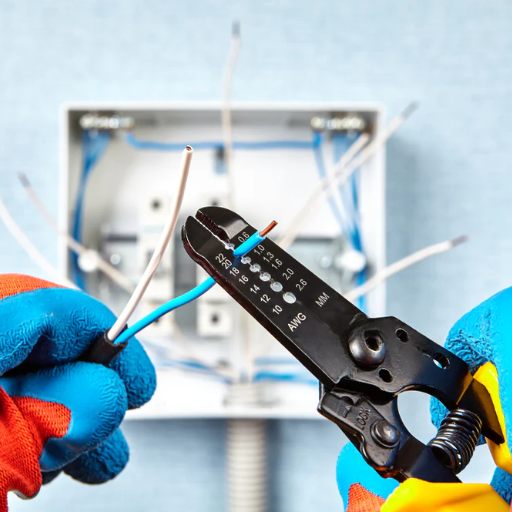
All electricians know that they do indeed need precision wire cutters. After all, the cutting of the wire and its insulation, so that only the former is exposed and the latter is complained takes a certain amount of skill. However, latest designs have incorporated the most advanced solutions and applied materials, including but not limited to the addition of rubber traction on the handles and elimination of the need to reset the measurement device. Contemporary and good assault wire stripping tools allow working with textures of different pitches and thicknesses and can be widely used in industrial and residential facilities. Moreover, a large number of contemporary precision wire strippers have an autostop mechanism that adjusts the depth of cutting with every change of wire. In such tools, the so-called “load-dependent automatic adjustment” allows one to strip the wire clean and from any location, making it a very valuable tool for electricians.
Testing Equipment Every Electrician Should Have
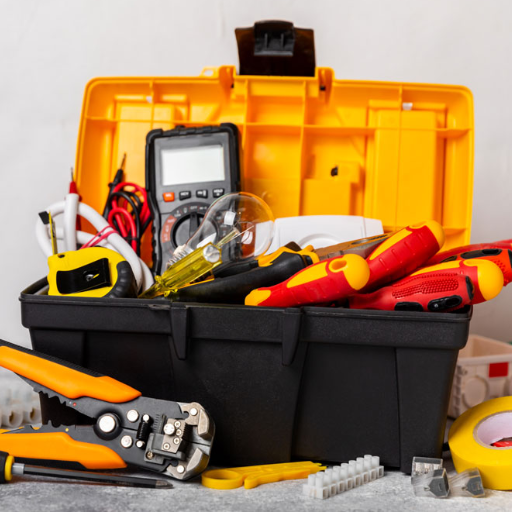
- Multimeters
Every electrician needs a multimeter; it is the only tool able to measure, resistance, current, and voltage. This skill is beneficial for finding faults in electrical systems, and help identify that systems are not over stretched and fuctioning properly. - Voltage Testers
A voltagetester is meant for fast and simple checks of the state of a circuit, whether or not it is powered. It is essential to ascertain functioning of electric energy before proceeding to maintenance activity. - Circuit Analyzers
Circuits checkers are devices used primarily in evaluating the safety and effectiveness of electrical outlets. These instruments may highlight such everyday things as reversed wiring, lack of earthing and poor alignment in industrial or domestic systems. - Clamp Meters
Current meter cells are of great use in measuring current without having any physical connections with live cables. Using them is quite easy as they are rid from direct contact with the wire through which the current flows. - Insulation Resistance Testers
Insulation resistance testers are also called as megaohmmeters which are specific test equipment for evaluating the state of insulation of wire. This helps in detecting any probable defects even before the actual short circuit takes place and therefore enhancing the reliability of the system.
Non-Contact Voltage Testers: Quick and Safe Checks
Non contact voltage tester is one of the tools that is extremely desirable especially because it helps one to notice if there is any voltage in electrical systems without needing to physically get in contact with the live parts. Their working principle is based on the detection of electric field that comes in contact with the electrical conductor, offering very safe and time efficient testing methods. Most up-to-date non-contact voltage detectors also possess adjustment with high sensitivity for testing applications with higher and lower voltage, and helps in nailing it with accuracy.
Most designs further offer the user-friendly, and removable interfaces, namely sound buzzer and light emitting diode alarms. These devices are very lightweight and can be easily moved, and they are made with very high safety measures that make them ideal for any setting. Apart from that, the devices are built to last for a long time and also withstand wide voltage changes which is of tremendous help in making them reliable and efficient in different situations.
Voltage Testers: Essential for Circuit Safety
Two main categories of voltage testers are available, depending on the task: contact and non-contact voltage testers are used for specific jobs and needs. A contact voltage tester requires direct physical contact with the component to be tested, which enables highly accurate operations in scenarios where the voltage to be measured is located behind a pane or to certify the serviceability of an outlet. That said, unlike contact voltage testers, non-contact types do not require direct contact with the conductors to work hence in clear applications like some quick safety checks or maybe detecting hidden live lines.
Voltage tester models that are now manufactured have options built in that will help adjust the intensity level of the tester and allow you to easily make any adjustments you desire regarding different voltage entries in an AC or DC circuit. In addition, a lot of tools these days have changes in their construction, where they are made for operations at dangerous voltages, reducing the risks of getting electrical shocks substantially. Such designs coupled with compliance with international regulations have improved the way people deal with electricity issues at their homes as well as in offices.
Understanding CAT Ratings and Their Importance
There are requirements (CAT) that outline harmlessness when working with electrical testing equipment. These requirements allow customers or other interested parties to assess the quality and, where relevant, the capabilities of the equipment electrotechnique. These have been defined by the International Electrotechnical Commission which helps in ensuring that the appropriate tools are used because they will be adaptable to the existing danger levels in a particular activity lessening even chances of equipment failures and injuries to users when used.
Measurement Category (CAT) ratings are distributed amongst four categories – CAT I, CAT II, CAT III and CAT IV- dedicated to the Maximum transient Overvoltage that any equipment may be exposed to. For instance, CAT I is related to applications on devices that operate in low-energy environments, like electronic equipment located behind protection mechanisms. CAT II is applicable for equipment connected to standard wall outlets for domestic and professional purposes. CAT III comprises of installations which are permanently connected to the power distribution system such as distribution panels and large appliances. Lastly, CAT IV is used in measurement taken at the service entrance since current faults are highest in this area.
Selecting the most appropriate test instrument requires considering the working conditions, the level of voltage being investigated, and the level of surge that the instrument is expected to handle. One example where you risk catastrophic failure of equipment is using a CAT II level rated device. Modern test tools now mostly include these ratings as well as other parameters such as the maximum rated voltages so that users are not at a loss. The CAT ratings system is critical for ensuring safety measures are taken and the device operates efficiently in all electrical conditions.
Maintaining Your Electrician Tools
To keep your electrician equipment in good condition, first clean and care for it. It is important to use all equipment wisely to achieve the best performance, and to avoid snowy, wet, or dirty weather conditions. It is also advisable to keep all equipment in a condition free of environmental impact. In case the equipment comes out dirty, find away to clean it up immediately. Back then, the equipment would seize. You may not use this method until you think about the capitalization of electrical tools. Maintain your appliances by means of a dust and scratch-proof kit or bag especially while in a transit or when the equipment is not in use, this is in addition to the tool bag or kit with the tools inside. In conclusion, the importance of heeding such protective measures cannot be understated, as this fosters the longevity of one’s equipment.
Best Practices for Tool Maintenance
To keep it working well and lasting as long as possible, improving machine operation may require the use of more effective maintenance strategies. It is highly recommended to look at simple routine checks and unnecessary inspections as a practical means of detecting corrosion, wrong connections, and reduced functionality, among other things. Recommendations include the use of cleaning solutions by different a respected brand, for various materials; for example, safe solvents will be used for tools made from metals, and clean wipes will be utilized on equipments that can be erased easily.
Parts in motion need proper lubrication, which can be done at regular intervals for all moving parts. The lube should match the usage and be up to the manufacture’s recommendations as this will also help reduce friction and minimize wear and tear. For precision instruments, in addition to updating tools and programs, updating should include firmware and software applications in order to secure a certain defense against safety threats and compatibility issues with new technology as well. It also helps if any of the available environmental monitoring features are used, such as humidity or temperature controls, to ensure devices that are kept under varying conditions do not end up spoiling the equipment, specifically due to moisture effects.
The practices identified above, accompanied by the advanced practices, can help experienced users ensure the best quality of their working materials, avoid unplanned stops when working, and observe safety and regulatory measures strictly. The applications of these approaches are also developed and maintained to maintain the optimum operational capacity of the otherwise more than a decade-old equipment.
How to Properly Store Your Tools
Storing tools is vital for their good work and long life being more so in professional and industrial fields. For a start, after each and every operation, tools are supposed to be thoroughly washed in order to remove any dirt, oil or other substances that can lead to corrosion. Also, tools upon being washed should be left to dry to completion to ensure no chances of it collecting moisture that will facilitate rust and corrosion of the metal.
The storage must be done skillfully, taking into consideration the nature of the tools. For instance, the metal tools like hand tools are valued if they are stored in an environment with temperature control and low humidity to minimize the oxidation risks related to them. Additionally, when the need to protect them arises, occurrences should be contained because toolboxes or cases that don’t trap moisture are made with desiccant packages. Concerning larger equipment, it is recommended that once any tool is not in use, it should be fixed to solid, non conductive shelves where it can adequately receive some heat.
On top of that, recent improvements in the storage technology have added cool attributes such as climate controlled and anti-static features to some of these newer storages, which are most effective in some precision electronic tools. Magnetic tool trays, pegboards, and modular plastic drawers with compartmentalized sections ensure that tools are well sorted for easy access thereby averting the possibility of damage from wrong storage.
Additionally, it is important to carry out regular maintenance checks of a tool storage system. Look out for any soft spots or mechanical defects in the tools or in their respective units. This method is not only basic in keeping the tools operational without any impairment, but also prevents any health hazards to the professional as well as the compliance risks. These measures will help the user to extend the life of tools and use them more effectively when needed.
Building Your Ideal Electrician Tool Belt
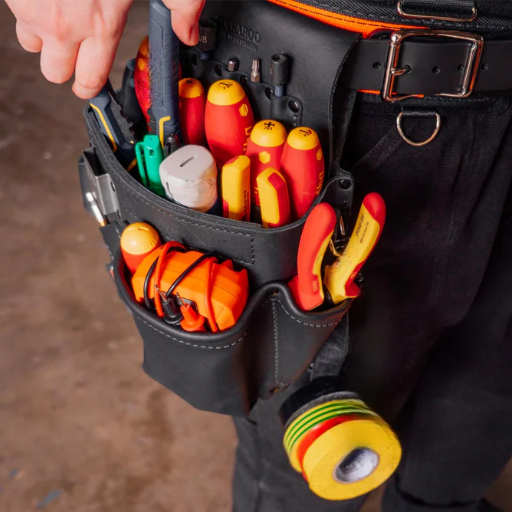
- Tool Belt Material: Opt for Belts of heavy duty fibres durable like leather or thick nylon rather than the lighter ones. Such materials are more likely to strain and bear the weight of a heavy tool.
- Weight Distribution: While choosing the tool, make sure it has padded straps or a belt fastening the tools to the body in order to disperse the load properly without the need to bend the lower body excessively.
- Essential Compartments: Prefer a pocket-oriented belt where the pockets are not many but buttons are there, from where the electrician can pull out small tools like screwdrivers, pills, wire strippers, and voltage testers.
- Customizability: There should be such a design, which includes sections to carry tools needed on the job or additional accessory kit for more demanding tasks.
- Fit and Comfort: It is important to make sure that tool belt is comfortable for you. No sagging and it has to be convenient by having adjustments to meet your demands and the number of tools used.
Choosing the Right Tool Bag
Improving one’s job outcomes, particularly in such work as construction, requires the right choice of a tool bag. It is important, then, to raise the following objections while shopping for such goods:
- Material Durability: Use the toughest possible material, such as a heavy ballistic nylon or a higher density cotton canvas to protect the item from the constant wear and tear. Extra strength stitching and waterproof finishes are little things, caution, used in cases where they are interlocked against the weather particularly outside most times.
- Storage Capacity: Before luggage installation, the space between the side exterior post and the baggage is filled with a wedge-shaped piece of plywood. As it Flexible packaging materials or textile fabrics are used, this one is compacted.
- Portability: Tool bags with handles or moldings for the shoulder to carry or transport them would be convenient. Especially since people who work in jobs that involve carrying heavy toolkits for long distances, either uphill or across broken roads, need to use rolling tool bags because they have strong wheels.
- Weight Distribution: Tool boxes made from lighter materials such as plastic and other wood contain wheels and an extending arm hence easier to pull where they reduce excessive manual labor.
- Specialized Features: Some of the tool bags are meant for specialized use. For instance, electricians may find it useful if theirs has insulated pockets, whereas carpenters may prefer those with hammer and/or saw storage within it.
- Technological Integration: A significant number of contemporary tool bags have gotten techy. Some of these tools include women’s handbags that come with special USB ports to let the user charge an electronic device such as a phone or tablet.
Understanding in-depth in these specifics is thus very important so that your tool bag doesn’t just help you carry on with your job but also helps improve your overall output rates and comfort in the field.
Essential Tools to Include in Your Electrician’s Tool Belt
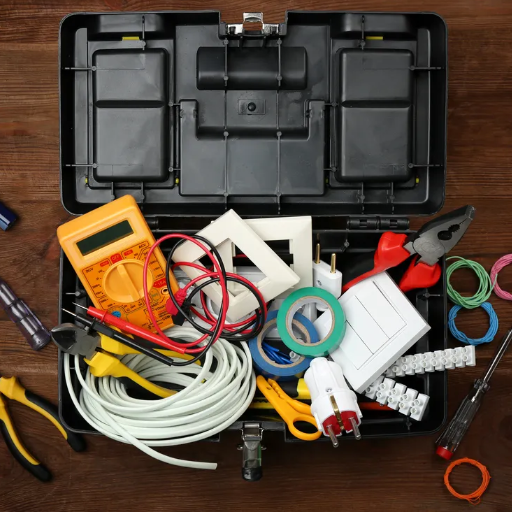
| Tool | Purpose | Key Features |
|---|---|---|
| Screwdrivers (varied sizes) | Tightening and loosening screws | Insulated, ergonomic handles |
| Pliers | Cutting, gripping, and twisting wires | Needle-nose, side-cutting styles |
| Voltage Tester | Detects electrical current presence | Contact and non-contact options |
| Wire Stripper | Removing insulation from wires | Adjustable gauges for precision |
| Electrical Tape | Insulating exposed wires | Heat-resistant, durable adhesive |
| Tape Measure | Measuring distances and lengths | Compact, retractable |
| Utility Knife | Cutting cables and materials | Replaceable, sharp blades |
| Multimeter | Measuring voltage, current, and resistance | Digital, accurate readings |
| Level | Ensuring straight and aligned installations | Compact or magnetic options |
| Flashlight or Headlamp | Illuminating dark work areas | Lightweight, rechargeable |
| Cable Ties | Organizing wires and cables | Adjustable, durable plastic |
| Nut Drivers | Tightening nuts or bolts | Insulated, various sizes available |
| Conduit Bender | Bending conduits for wire setup | Durable, ergonomic design |
| Fish Tape | Pulling wires through conduits | Sturdy, tangle-free design |
Reference Sources
- Shaping Electricians: Discursive Formations of Electricians in Discussions About Musculoskeletal Disorders
Read more on Taylor & Francis - Creating Manuals for Electrical Equipment: An Engineer’s Guide
Read more on Academia.edu