
Tool Belt Buying Guide: Best Tool Belts for Contractors
With regard to working efficiently and completing professional projects successfully, it becomes pertinent that one has the right equipment. A properly built tool bag for contractors can potentially be the deciding factor on a job site as it presents convenience and orderliness. In this article, you will be steered through the available tool bags for contractors that would facilitate the functions and suit your needs. If you need a high-quality, high-value kitchen that is also convenient, this article will show you what to look for in a kitchen and the best materials to use therein. Brace yourself to experience your work day in a new fashion, with a tool belt appropriate for every bit of work in your specialization.
Understanding Tool Belts
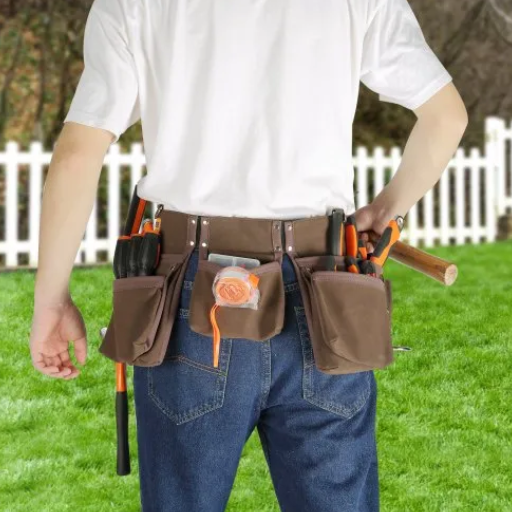
Work tool bag seems to have several characteristics, mainly its convenience, functionality, and portability. The feature of the instrument pack contains a proper arrangement of the tool sets, tool holders, pockets with zips, locks, and tapes meandered on the front side, forming different divisions like compartments and pouches that can carry commonly used tools. When it comes to longevity leather, canvas or nylon construction contributes greatly in the making of any utility belt as it can tolerate enhanced service abuse with minimal degradation of the material. Comfort is also always considered because a well-fitted tool belt accompanied with padded straps or ergonomically contoured padding nearly eliminates tiredness even in long-duration tasks, hence enhancing productivity. A specific profession needs weight designed tool belt is very helpful in doing the job well.
What is a Tool Belt?
A pouch-shaped or box-like wearable garment specially created for carrying out work while at the same time allowing easy access to frequently used items. While they are made out of materials that are sturdy and resistant to wear, like breathable, water-repellant, and sweat-infused types of cotton and polyester fabrics, a utility belt is able to withstand the rigors of a variety of professions and trades, such as those that involve building or making things, Carpentry, Electrical, and plumbing.
Thus, many current generation tool belts have separated spaces, fixes, and also devices to grip tools with different shapes and sizes, which helps to avoid frequent need to fetch things or use a set of tools. There are also improvements in design including softening belts and reducing the weight of the product to allow for more comfort while providing equivalent service over a long period of time. Therefore, high-quality tool belts are an essential accessory for specialists, as they enhance their performance and prevent any unnecessary search for the necessary equipment due to their permanent availability.
Importance of a Quality Tool Belt
Featuring good usability, a tool belt organizes tools for immediate search and use, therefore, saving the time spent looking for tools. We learned that tasks are handled better when suitable and well performing tool belts are available. Even in the busiest of work environments like workshops and construction sites, that percentage has been proved to be true in some statistics as beyond 25% with some types of operations. In designing the tool belt, the aim is to place compartments in the best way possible so that the user does not move unnecessarily and so that there is conservation of energy and concentration is not broken.
Types of Tool Belts for Professionals
| Type of Tool Belt | Key Features | Best For | Material Options | Price Range |
|---|---|---|---|---|
| Carpenter Tool Belt | Multiple pockets, hammer holders | Woodworking, renovation | Leather, nylon | $50 – $200 |
| Electrician Tool Belt | Insulated pouch for tools | Wiring, electrical projects | Reinforced nylon, canvas | $60 – $250 |
| Framers Tool Belt | Spacious pouches, balanced design | Heavy framing tasks | Leather, ballistic nylon | $100 – $300 |
| Plumbers Tool Belt | Specialized slots, wet resistance | Pipe fitting, plumbing | Vinyl-coated fabric, leather | $40 – $150 |
| Utility Tool Belt | Versatile, lightweight design | General maintenance tasks | Polyester, nylon | $30 – $120 |
| Roofer Tool Belt | Durable, loop holder for nails | Roofing applications | Synthetic leather, heavy-duty nylon | $80 – $250 |
| Garden Tool Belt | Compact, easy-access pouches | Gardening, landscaping | Canvas, lightweight fabric | $20 – $70 |
| HVAC Tool Belt | Compact with tool organization | Heating and cooling services | Leather, reinforced nylon | $50 – $180 |
Choosing the Best Tool Belt
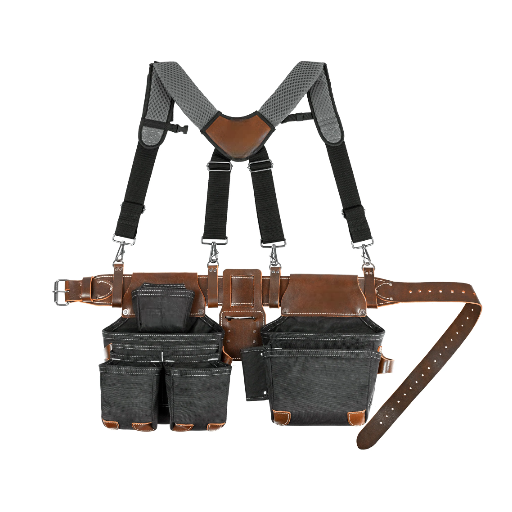
Choosing the right belt entirely depends on most repetetive nature of work that a person frequently undertakes as well as specific working conditions. In instances of maintenance, polyester or nylon wraps are always the preferred option for their lightness and the many ways in which it also comes in handy, as well as the fact that they are relatively inexpensive. A tool belt that is robust and fashioned from synthetic leather or crew fatigues material works best with such individuals, while any nails or screws or a hammer can be attached to it. Gardeners and landscapers will prefer smaller tool belts with readily available pockets made out of canvas or light fabrics, making it easier for tools to be stored. close at hand. Oftentimes, HVAC personnel have belts that are laser-focused on tools, which are easy to navigate, whilst made of fine leather or stronger fabrics, such as nylon, for protection against usage in tough alpine terrains.
Factors to Consider
- Material Durability
Ensuring that the tool belt’s material is tough is important as the tool belt is bound to last much longer and serve its purpose more efficiently. Leather is a tough material that is also resistant to wear, which makes it a perfect choice for people who use their tools a lot and also over an extended time. Meanwhile, reinforced nylon has proven to be a more resistant and strong material, often used in various production activity where accentuated contact with moisture or friction is a very frequent occurrence. - Weight Distribution and Comfort
A good tool belt would always be manufactured to allow the weight to get evenly enforced across the flanks and the floor. The improper distribution of weight may cause discomfort and even greater tension to areas that are under more stress especially when used for a longer time. Different accents like padded waist and additional straps will enable some extra comfort due to lesser exertion whenever one is fulfilling physical tasks. - Tool Organization and Accessibility
One of the most critical areas of concern to look at is efficiency in terms of the organization of tools themselves. The belts containing multiple utility pouches make it easier to reach the necessary tools as they are contained in several pockets, loops, and other compartments. This enhances work by reducing the unnecessary stops searching for missing tools. The tools that are in small pockets fit perfectly in the group that they are used and reduces time wasted when looking for them. - Industry-Specific Requirements
No two contractors of different disciplines wear the same type of tool belt out there. In some cases, for instance, electricians prefer tool belts with insulated pouches and extra space for tools used for wires. Carpenters, in comparison, find their tools, such as nail heads, tape measures and some portable equipment heavier, requiring deeper belt pouches. Opting for a belt that is specific to an industry is the best option since it enables one to work without any obstacles. - Fit and Adjustability
Avoidance of any discomfort or annoyance while performing tasks calls for a good fit. Use of adjustable tool belts will come in handy, specifically, because such belts are designed to satisfy all different waist belt sizes and still enable one to put them on over bulky winter attire. At the same time, providing a comfortable, non-binding fit allows movement without the belt shifting from its place. - Weather Resistance
In addition to the above, there is an essential concerns of those working friendly environment; the use of water-resistant or non-absorbing capabilities of clothing can help to keep the job location dry. Thus, in unanticipated occasions where there is heavy downpour, a tool belt having protective proof against such weather elements shall still be useful.
Choosing a Tool Belt for Different Trades
The proper tool rig should be picked based solely on the needs of a particular profession or a trade of a worker. For example, carpenter’s may use tool belts that consist of a number of pouches for storing nails, hammer, tape measure, utility knife and some free pockets. These belts are often made from leather or heavy nylon to keep them in good shape for even the most challenging work. As for electricians, it is completely different as they need compatible tool belts that cater to the placement of tools including wire cutters, screwdrivers, needle-nose pliers and other minute instruments. In fact, it is common for most electrician tool belts to have insulation, so that it is easier to work in the field when there is electricity.
The tool belt is of utmost importance for the construction worker and the foreman due to its ability to accommodate much more tools. Modern leaders with reinforced fitting are capable of supporting heavier equipment like drills and framing sash hammers, while more flexible ones that fit various waist lengths and hip supports allow for long day activities and high demobilization. It is important to note that holders are no longer the domain of construction workers only but also plumbers who might require their use because they can clean up retention sump pits in the event of contamination within the clean oil sump of the vehicle.
Construction tools have a few requirements that have to be implemented in the waist belt. Waist belts having padded sections that are allowed to slide forward and downwards of even stiff suspenders facilitate the users the ability to work the equipment while promoting the ergonomic use, which takes the strain of the back and the pelvis. Being attentive to the requirements of these differs trades will improve the creation and maintenance of safe and productive workplace.
Features of the Best Tool Belts
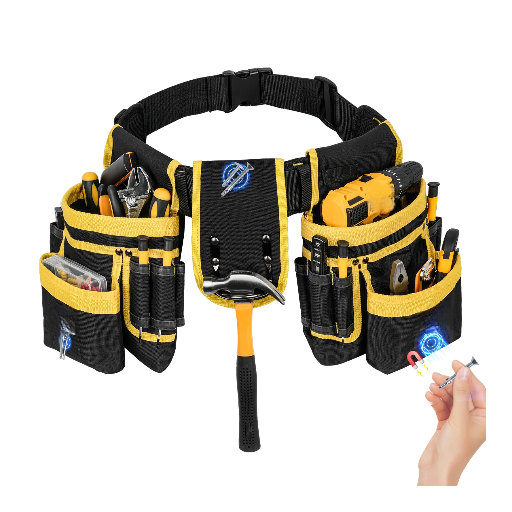
- Durable Materials
In the case of tool belts, thick, robust materials such as leather or nylon, and even reinforced polyester, are used to serve the purpose of durability and protection of the body against external wear and tear. - Ergonomic Design
Ergonomic arrangement usually involves the use of broad waistbands with cushioning, shoulder straps with regulation, and evenly distributed weight for fatigue reduction and comfortable wear for a long time. - Ample Storage Options
Skillfully created tool belts have breakaway pockets and a range of edges to accommodate different size tools in secure and easily manageable manner. - Versatility
When it comes to the greatest tool belts, they are for multiple classes of activities but offer a possibility of reconfiguration, featuring overhauls, and can even be a workshop belt or utility pouch. - Secure Fastening Mechanism
It may be fastened with adjustable tape, leg holsters, or buckled belts; all these elements ensure stability, and the tool belt will not ride up or down during the movements.
Material Quality: Leather vs. Nylon
| Parameter | Leather Tool Belts | Nylon Tool Belts |
|---|---|---|
| Durability | Extremely durable, long-lasting | High durability with lightweight construction |
| Weight | Heavier, offers stability | Lightweight, easier for prolonged use |
| Weather Resistance | Limited resistance to water and moisture | Excellent resistance to water and weather |
| Flexibility | Stiff initially, softens with use | Highly flexible from the start |
| Maintenance | Requires regular conditioning, cleaning | Minimal maintenance needed |
| Strength | Strong, supports heavy tools | Strong, suitable for medium to heavy tools |
| Cost | More expensive, premium material | More affordable, cost-effective |
| Customization Options | Limited, traditional designs | Highly customizable, modern features |
| Aesthetic Appeal | Classic, professional look | Modern, sleek design |
| Environmental Impact | Natural material, but higher production impact | Synthetic, lower impact if recycled properly |
Heavy-Duty Construction
Looking for a heavy use tool belt is of the essence for the workers who run into heavy usage of these without them getting worn out easily. Within such belts, it is common to expect that they will contain additional muscles and special designs especially because they are made using materials which are very strong such as correct silage, broken wires or even polyester. There are quite many different ones though, even in belts, it is possible to identify another smaller category such as leather belts which happens to offer maximum durability in cases where heavier objects are usually expected.
The sewing and rivet applications in thick tool bag belts are of equal value. Twice-stitched touches and finishing techniques with anti-corrosion rivets can be said to prolong the usage life and increase stability of the suspension of the tool belt, after successive wear under heavy loading conditions. Many present-day belts also incorporate an ergonomic padding or some other kind of modifiable element to help relieve the strain felt by the user and makes it quite comfortable to use the belt for long. These aptitudes are extremely desirable when it comes to professional outfits such as civil engineering, maintenance or any other situation where construction, joinery, mechanical fitting or electrical installations are crucially important issues.
In the end, the need for a robust tool belt will be determined by the nature of the tasking at hand. With all, there is no question that the more classic leather belts steal the show with the lavish look and strong fitting. On the contrary, there is a sharp rise in demand for synthetic options as over time, these are much easier. Professionals can grasp these critical pieces when offered and go on to pick a tool belt that would suit the purpose of the job they intend to do, in terms of longevity and performance.
Storage Capacity and Organization
A functional tool belt should not only be spacious but also easy to organize items for efficient utilization at the work site. When put on, device-enhanced construction specifically implements multiple pouches with a pocket for screwdrivers, one for pliers, etc. A newer philosophy allows for coming up with the design that the tools can be fixed on and even have additional elements, the construction bolsters a flexible and adjustable approach.
To increase sustainability, many workers who do heavy jobs use equipment made from such materials as ballistic nylon and tires with an additional protection layer. Moreover, many of them have pockets with magnetic tapes or are designed as overview strategies, frequently used tools. Moreover, the structure of the hardware, such as an adjustable bed base, should function properly to prevent strain, irritation and discomfort due to long use. For heavy duty work associated with occupation, many reputable products can accommodate at least 30 tools in one cloth belt without making it cumbersome to move or extend the user, and this belies the intricate nuances that encompass careful manufacture of the better device belts.
Tool Belt Setup and Organization
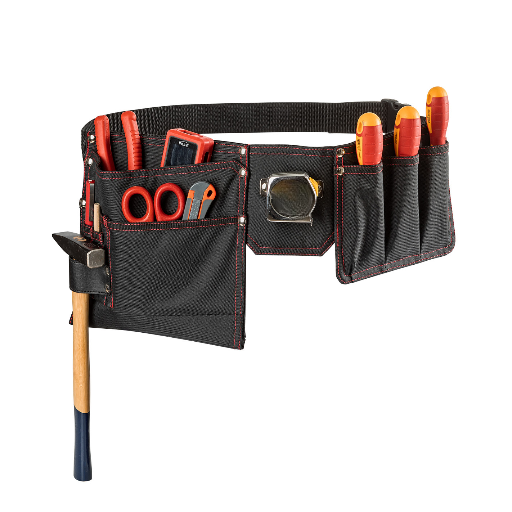
- Categorize Your Tools
Classify tools into categories of their usage as well as concentration levels. In specific areas categorized highly, tools such as hammers or screwdrivers are used more often and should be placed in compartments that are easily accessible. - Balance the Weight
Strap the tool belt in such a way that the weight of the tools is distributed evenly all over. You should put heavier tools at or near the hip regions to ensure that there is balance and not too much pressure on the lower back. - Use Designated Pouches
Make use of pouches specifically designed for the tools in question like nail pockets or holders for drill bits in order to save time and energy in looking for tools. - Maintain Flexibility
A firm séquence of the essentials is critical and adequate space should rather be allocated to task-related tools just in case. Overloading may slow down motion and work effectiveness. - Regularly Assess Setup
It is necessary to assess the design of your tool belt on a regular basis in order to deal with the changed requirements at the workplace as well as any new acquisitions.
How to Set Up Your Tool Belt
- Evaluate Your Work Requirements
First off, examine what type of responsibilities you usually handle, so as to be in a position to tell the tools you normally use, and finally whether or not the tools are decidedly needed. Because not all tools have to be within reach, some will have to be stored separately. Therefore, it is that categorization is done for the sake of easy identification of the appropriate tools whenever necessary. - Choose a Suitable Tool Belt Design
When considering a work belt, take into account the work that it suits. The most recent tool belts have different shapes of belts such as one-piece belts, harnesses or any specific customized mold type. Take note of the materials that the tool belt is made of, which should pose durability and comfort problems. - Strategic Tool Placement
Keep all the tools and materials strategically in close proximity to avoid unnecessary body movements. Arrange the commonly used stuff such as tape measure or screwdriver within the reach of your preferred hand. The least-popular fake eyelashes may be kept at hand somewhere on the back to avoid off-balance and wear and tear on the body during long-term wielding. - Distribute Weight Equally
Divide the heavy chunky tools equally across the belt so that the pressure is not developed on one side of the body. Use careful pouching and compartmenting in order to ensure that weight is proportional, make use of dual-belt or suspender systems when the load becomes weighty. - Secure and Maintain Tools
In order to keep everything tidy and prevent tools spilling out as they make a move, fastening loops and grips and straps should be used to hold the tools in place. Ensure that any sharp-edged or breakable tools have a proper covering or are safely kept in a pouch to provide security and increase their life. - Personalize for Comfort
Adjust your tool belt’s size to make it more comfortable on the hips or waist. Do not over fasten since this hampers motion and also see to it that it is not too loose to prevent it from sliding off. Padding can also be used in addition to the existing layers to provide relief from undue pressure on the body in case of a long duration.
Making Your Tool Belt More Comfortable
The choice of material of a tool belt has a direct impact on how comfortable and sturdy it is. The most modern tool belts are made from leather, nylon, or polyester for other advantages go with them. Leather tool belts have a very long life and conform to your shape as you use them, the only problem is that they may feel more rigid at the start, and they are more cumbersome compared to their synthetic counterparts. On the other side, the materials that can be used are nylon and polyester tool belts, as they can be used easily, and without the risk of damage or wear out; on the other hand, they provide more protection against water. Weather conditions and excessive sweating are controllable aspects by the selection of such belts.
Effective handling of the tool belt is vital in order to ensure that it does not create any back strain. In order to achieve this objective, please maintain your tools in balanced compartments and have the heavier tools — most of which you use more often — on the side of your stronger arm to minimize many wearable movements. Furthermore, one does more justice when they wear a tool belt with suspenders which will achieve the objective but also transfer some of the weight from the waist to the shoulders and therefore effective in performance in the project.
Essential Tools to Include in Your Tool Belt
| Tool | Purpose | Suggested Placement | Notes |
|---|---|---|---|
| Hammer | Driving and removing nails | Dominant hand side | Opt for a lightweight model |
| Tape Measure | Measuring lengths accurately | Front of the belt | At least 25 feet is ideal |
| Screwdrivers | Driving screws and fasteners | Dominant hand side | Include both flathead & Phillips |
| Utility Knife | Cutting materials | Front of the belt | Look for retractable blade |
| Pliers | Gripping and bending materials | Non-dominant hand side | Needle-nose pliers are versatile |
| Wrench | Tightening or loosening bolts | Side pocket | Adjustable models recommended |
| Level | Ensuring alignment and balance | Non-dominant hand side | Smaller levels fit better |
| Fasteners (Nails, Screws) | Securing materials | Pouch or central compartment | Separate by size and type |
| Chalk Line | Marking long, straight lines | Front or side pocket | Ensure chalk is refillable |
| Flashlight | Illuminating tight or dark spaces | Side loop or pocket | Choose lightweight LED models |
Maintenance and Care for Tool Belts
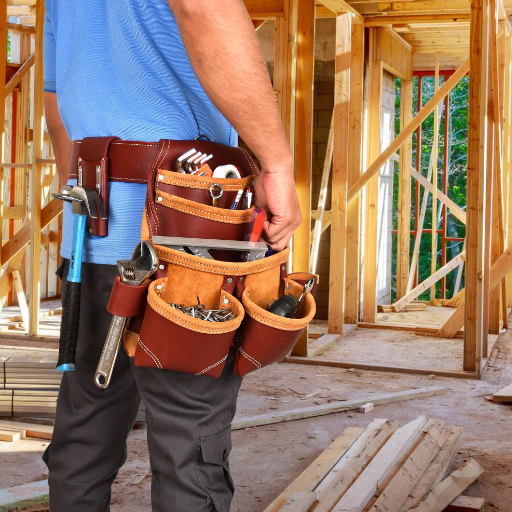
- Regular Cleaning
For more maintenance, clean the housing and the belt by the end of the day with a wet wipe or a damp cloth. In the hope that a little more cleaning is needed, the belt may be thoroughly cleaned with mild cleaning soap and water, keeping in mind the use of as few chemicals as possible since most of them contribute to rapid wear of the materials. - Inspect for Damage
Look out for wear and tear or breakage in joints, pockets, and straps. If necessary, you can replace or repair any of the parts. - Storage
Keep the tool belt in a cool but dry place which does not receive direct sunlight in order to avoid damage of materials contained in it. When not in use, avoid its unnecessary loading as it will cause it to lose its original shape. - Conditioning Leather Belts
From time to time, remember to apply a good leather conditioner to your leather tool belt to avoid cracking and in turn enhance stretching of the tough leather material. - Proper Weight Distribution
Keep shifting the position of the tools from time to time to avoid excessive strain on any section, tend to wear out unevenly. This practice also ensures the comfort of the user.
Caring for Leather Tool Belts
Caring for a leather tool belt should not be difficult. Protective methods and regular maintenance help protect the equipment for years. In other words, because leather is a material of biological origin, there exist some practices that if adhered to, the item can even last a couple of generations. Someone who has a tool belt for example, could start with wiping the material down with a dampened cloth to get rid, at least temporarily, of dirt that gets caught in the wiry ridges and pores of the leather fabric. Moreover, it is advised to use a mild solution with pH during the more aggressive methods in cleaning the belt to ensure the leather is in tact. Upon washing the belt, it is important to leave it in well aerated dark room to dry.
Adding a high-end leather condition accelerates the natural softness of the material as it is used by adding nourishing oils that were secreted by the animal skin and become disappear through time and natural elements. Always recolonize every three months, six months, or less frequently, whichever conditions you put your leather through. Check the hardware such as rivets or the buckles, do not allow them to get wet and wear out with time as this would lose a lot of the functionality present in them. Lastly, do inspect the belt from time to time to see if it is fine or there are areas that need any necessary repair- such as small torn corners, or when the seams are already open to an inch or so.
Caring for Nylon Tool Belts
Many people choose to wear the nylon tool belts due to their strong make and ability to withstand earth and weather conditions. To ensure the belts serve for long without compromising their quality, it is important to care them properly. This includes wiping off dirt with mild soapy water. Where stubborn stains are present, one may then use a soft scouring brush to gently introduce moisture into the dirt and scrub it away in case it’s either dirt or grease. Afterwards, it is advisable to hang the tool belt out to air-dry in a place away from direct sun exposure as the rays weaken the material.
To increase your nylon tool belt health, you can choose to additionally treat it with a water repellent solution. This type of spray places a shield between the fabric and water and helps to discourage the development of fungi that cause mold. Remember to check for any loose thread, stitches or adjustment locks which might need the wearer to take off the belt as it may cause abrasion. Early site of any damage, try to seal or strengthen those areas to prevent further decomposition as such measures help to mitigate higher destruction.
Chemical damage easily occurs on nylon tool belts when they are exposed to specific solvents or oil. Harsh substances that are known to degrade the tool belt should not be allowed to come into contact with it, and the belt should be put in a clean, dry place when not in use. On account of which these measures there is a good chance that one shall not suffer a loss, the inconvenience associated with a defect in the nylon tool belt and within a specific period of its operation.
When to Replace Your Tool Belt
When a tool belt starts revealing significant damage due to aging, which is safety, cosmetic, and functionality-wise, replacement becomes unavoidable. Such visible signs may be extreme fraying or ripping of the fabric, loose stitches, or the been belt’s excessive stretching resulting to the tools falling with minimal pressure. Moreover, defective or misplaced buckles, lack of appropriate length for hanging tools or any other accessory, breaches the security feature of the belt in the way it ensures tools are disturbed. Wearing out the cushions or the structure that can fill the space in an abnormally high sitting position can also aggravate pain during employment, compensating for the workload.
Everyone expects their belt to serve them as long as possible; however, it can be pretty difficult when referring to the synthetic tool belt, as most often such belts are used in such conditions that even the best nylon belt would be changing every two to three years. Leather belts may last longer provided that one takes due care. Nonetheless, some external factors such as prolonged exposure to extreme weather conditions, moisture, chemicals and many others may take a toll on the useful life of the belt. In order to meet health and safety requirements of every workplace, every concern that someone has about the condition of his/her tool belt should be addressed, and these belts will be disposed promptly when the wear and tear becomes unacceptable.
Reference Sources
- ScienceDirect: Visit the source
- Archive Market Research: Visit the source
Frequently Asked Questions (FAQs)
How to choose the right tool pouch and setup?
Many times, selecting an appropriate tool could be trying to align or fit the pouch layout and the types of hand tools that are commonly used in your job and which you use frequently, so as to access necessary tools with ease. carpentry or electrical work testes normally, consider the number of pockets and to have a hammer loop, for traditional tool belt and for modern tool belt. A right belt featuring proper weight distribution and such that the essential working tools are well arranged eases the work and makes the tasks quicker and helps reduce going to the tool boxes.
Why do reinforced stitches and construction matter?
The belt is said to be mainly loaded with a range of tools, and it is likely to be torn, and therefore reinforced stitches and a robust construction turn out to be crucial elements for its use. At wear and tear points most tool belts particularly undergo thorough stitch work and usually have studs or double lining for extending their life during difficult tasks. For that matter, a properly sewn blade can be local Lipschitz between the now-premier belt specialists, and sometimes it may even serve a man-in-the-street belt up amateur and home improvement wants for a long time.
What professionals look for in a tool belt?
The professionals in the construction industry mostly prefer a tough waist belt that is reliable, sturdy, and has numerous pockets and a loop for a hammer to be within easy reach. They usually opt for a long-term solution in the form of a tool bag made of genuine or reinforced leather, which can be additionally supported with tool belt suspenders in order to provide support and prevent sagging which may occur when the belt is loaded while working on suspended steel frames or pitched roofs. The use of this kind of belt helps in carrying the load effectively and makes quick access to essential tools helping to work in the workplace effective.
How do the best carpenters choose and maintain belts?
The best carpenters in the trades may well stick with an endeavor the embraces such characteristics as first importance in a belt the right count concerning pockets, a sturdy buckle and tough skin or it’s alternative, when it comes to work accessories. A good quality of the belt, reasonable maintenance and fastenings, punches, and the like of things call for the fact that more efforts of the specialist workmen are involved and trying harder activities are done completely. In general, a right belt will help spread the weight more evenly, make it easier to reach your hand tools or to everything stored in the utility belt and finally, work in a better way.