
M6 Screw Manufacturer Guide: Wholesale & Oem Sourcing From China
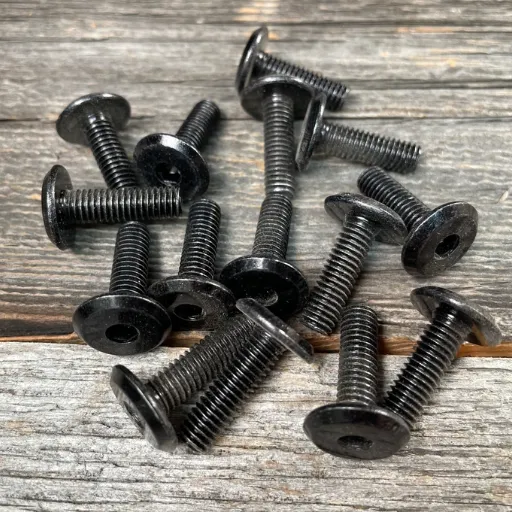
An M6 screw manufacturer is a factory that produces M6 fasteners to an international standard, from commodity socket cap screws and hex bolts to custom OEM runs for private-label brands. To choose the right one, you need to confirm the supplier runs a real factory, specify the correct material grade and standard, agree realistic MOQ, lead time, and payment terms, and inspect the goods before they ship. This guide shows how to do each of those steps, and how to turn a plain screw order into a branded fastening line that protects your margin.
Buying M6 screws in volume looks easy. You search a marketplace, compare per-piece prices, and place an order. This is exactly where many distributors lose money, because the cheapest listing is often a trading company reselling mixed stock from several workshops, not the factory that actually made the screw. Grades get swapped for cheaper material, plating is thinner than the spec, and quality varies from batch to batch. This guide is written from inside manufacturing, so it covers supplier verification, the grades and standards to put in an RFQ, realistic MOQs and lead times, and the inspection steps that protect you. We also cover the piece most sourcing guides miss: pairing your screw supply with the driver tools your customers need, which is where a fastening product line becomes profitable. For the full dimensions, thread callout, and screw-to-tool map, start with our M6 screw size guide.
Key Takeaways
- Verify the supplier is a real manufacturer before ordering; an audited factory with traceable mill certificates beats a cheaper listing from a trading company.
- Put the grade and standard in the RFQ: 8.8, 10.9, or 12.9 carbon steel or A2-70 / A4-80 stainless, to DIN, ISO, or GB.
- MOQ and lead time vary by product type; stock commodity M6 screws can start around 100 to 1,000 kg, while custom-drawing runs typically start at 5,000 to 10,000 pieces.
- Protect the order with samples, a during-production check, and a pre-shipment AQL inspection, and confirm the HS code and import duties before shipping.
- The real distributor edge is a branded fastening line, M6 screws bundled with the Allen keys, sockets, and bits that install them, sourced from one partner.
What to Look for in an M6 Screw Manufacturer
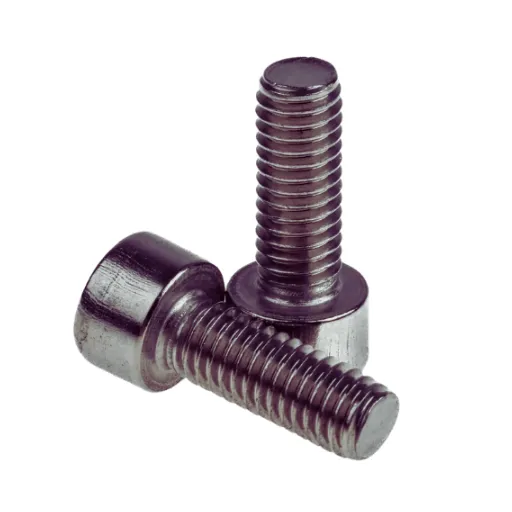
A reliable M6 screw manufacturer runs its own cold-heading and threading lines, holds quality certifications it can prove, sells to standard (DIN, ISO, or GB), and will let you verify production with samples, audits, and inspection reports before you commit a bulk order. Any supplier that cannot show you those basics should not get your volume.
Beyond the basics, a strong fastener factory earns its price in three ways. First, process control. Cold heading, heat treatment, and plating done in-house produce a consistent screw, while buying mixed stock from different workshops produces inconsistency you will see as returns. Second, traceability. A serious factory can tie a batch back to the raw-material heat lot and hand you a mill certificate for it. Third, flexibility. If you want a custom length, a private-label head mark, or special packaging, the factory that owns the tooling can say yes, while a trader can only repackage what it can find.
That last point matters most for distributors. A commodity M6 screw is priced within cents of every other commodity M6 screw. The margin is made upstream, in how you brand, bundle, and supply it, which is why working with a factory that supports OEM work is worth more than shaving a few dollars off the first order.
M6 Screw Manufacturer vs Trading Company: Are You Buying From a Real Factory?
The single biggest sourcing mistake is paying a trading company and believing you are buying from the factory. Trading companies are common on B2B marketplaces, and some are honest and helpful. But when the price is suspiciously low or the factory profile is vague, the screws you receive may come from three different producers, none of them responsible for the others’ quality.
| What to check | Real manufacturer | Trading company |
|---|---|---|
| Own production lines | Yes, cold heading, threading, heat treatment on site | No, buys from multiple factories |
| In-house QC lab | Tests material, hardness, plating, and threads | Usually none, relies on supplier reports |
| Custom OEM runs | Can tool custom lengths, heads, and packaging | Limited to repackaging standard stock |
| Batch consistency | Controlled by its own process | Varies by whichever workshop supplied |
| Certificates and traceability | Mill certs tied to its own heat lots | Third-party certs it cannot fully verify |
| Video or on-site audit | Willing to show the shop floor | Often avoids or stalls |
| Price | Realistic for material plus process | Can look cheaper because it skips process |
When Lars, a hardware distributor in Rotterdam, switched his M6 hex bolt line to a marketplace listing priced 12% below his previous supplier, the first container told the story. Rust spots appeared within weeks, and plating thickness measured about half the spec. The “factory” turned out to be a trading office that had sourced the bolts from three different workshops in two provinces. His rework and return cost more than the savings on the first three orders. A quick video walkthrough before ordering would have exposed it in ten minutes.
How do you tell them apart fast? Ask for a live or recorded tour of the production floor and the QC lab, and ask who owns the cold-heading machines. A manufacturer answers with specifics and schedules the call. A trader describes products instead. You can also compare the company name and address across its website, LinkedIn, and any platform profile, because inconsistencies are a reliable red flag. If you are new to buying fasteners in volume, HDBolt’s fastener sourcing guide is a useful buyer-side primer on the ordering basics.
How to Verify a Fastener Factory: A Buyer’s Checklist
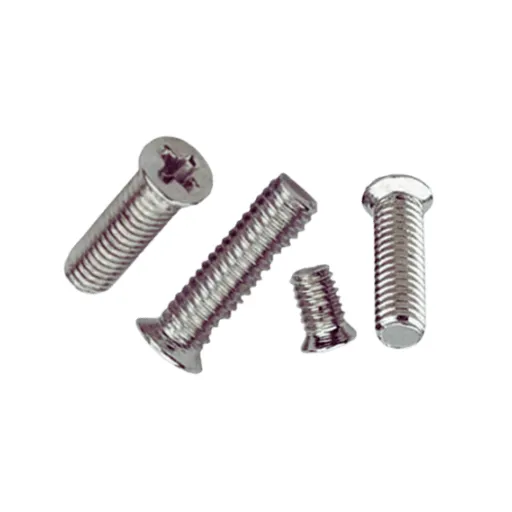
Use this checklist before you send a bulk order to any M6 screw manufacturer, whether you found it on Alibaba, Made-in-China, at a trade fair, or through a referral. Each item is quick to run and filters out the weakest suppliers early.
- Ask for certificate numbers, not logos. ISO 9001 is the baseline for a quality system. Automotive buyers should expect IATF 16949. Verify the number with the issuing body instead of accepting a picture of a certificate.
- Request material reports. A mill test certificate (MTC 3.1) ties the batch to a raw-material heat lot. If the supplier cannot provide one for the grade you ordered, treat it as a warning.
- Check the platform badge properly. An “Audited Supplier” badge from Made-in-China or Alibaba means a third party physically inspected the factory. “Gold Supplier” is mostly a paid membership with identity checks, and it is a much weaker signal.
- Ask for batch-level inspection data. A mature factory shares yield rates and inspection records. Refusal to share anything beyond a single sample report is a red flag.
- Order samples and measure them. Calipers, thread gauges, and a hardness check tell you more than any brochure. Good suppliers will credit sample cost against a first order. For the measuring method itself, McMaster-Carr’s how to measure screw size guide is a dependable reference.
- Watch for the classic red flags. A three-year-old “factory” claiming two thousand staff, generic marketing with no tolerance or yield numbers, or an address that does not match its stated location should all end the conversation.
This step costs a few hours. Skipping it can cost a full container, which is why the distributors who have been burned once never skip it again.
M6 Screw Grades, Materials and Standards to Put in the RFQ
The phrase “M6 screw” does not tell a supplier what to make. Grade and material decide strength, corrosion resistance, price, and which torque the screw can take, so you must state them in the RFQ. Our screw strength class guide explains the full engineering detail; here is the sourcing summary you need to write a clean spec.
| Specification | Common options | Why it matters for buying |
|---|---|---|
| Property class (carbon steel) | 8.8, 10.9, 12.9 | Higher class means higher tensile strength and higher price. M6 socket cap screws are commonly 12.9. |
| Stainless steel | A2-70 (about 304), A4-80 (about 316) | A4 handles marine and chloride environments. Stainless runs about 70 to 80% of the strength of grade 8.8 steel. |
| Finish | Zinc, mechanical zinc, black oxide, Dacromet | Black oxide protects little and rusts in moisture. Plated high-strength steel needs controlled processing to avoid hydrogen embrittlement. |
| Standard | DIN, ISO, or GB | Most Chinese factories work to GB, which is compatible with the equivalent DIN or ISO part for standard screws. |
| Head and drive type | Socket cap, hex head, button, countersunk, set | Drive type decides the tool your customers need, which matters when you build the fastening line. See types of M6 socket head cap screws. |
A clean RFQ line looks like this: “M6 x 20 mm socket head cap screw, DIN 912 / GB/T 70.1, property class 12.9, zinc plated, full thread, 50,000 pieces, palletized, FOB Shanghai.” One sentence removes almost all the ambiguity that causes wrong orders. Industry practice suggests that a large share of fastener order errors trace to specification miscommunication, which is exactly why a written, standard-referenced RFQ is your cheapest quality control. You can cross-check the thread and dimension limits behind each standard against the ISO metric thread tables on Engineers Edge so your spec and the factory’s process start from the same numbers.
MOQs, Lead Times and Pricing for M6 Screws
Minimum order quantities and lead times vary far more than buyers expect, so ask for a tiered quote and compare total landed cost, not unit price alone. The table below shows realistic ranges for M6 screws as of this writing. Confirm every number with each supplier, because terms differ.
| Order scenario | Typical MOQ | Typical lead time |
|---|---|---|
| Stock commodity M6 (e.g., DIN 933 hex bolts per size) | About 1 carton (25 kg) up to 100 to 1,000 kg per size | Stock 3 to 7 days; production to order 15 to 30 days |
| Low-MOQ and sample-friendly suppliers | 100 to 1,000 pieces | 5 to 17 days |
| Custom drawing or non-standard part | 5,000 to 10,000 pieces | 30 to 45 days including tooling |
| Large bulk production | 500 kg to 2 tons per size | Scheduled production, then sea freight of roughly 18 to 45 days depending on route |
Payment for new buyers is most often 30% deposit by T/T with 70% before shipment. Larger or repeat orders can move to 70% against bill of lading or an L/C. For the price comparison itself, add freight, import duty, and the cost of any rework to the unit price before you decide, because the cheapest FOB price rarely survives contact with a customs bill. And always compare the tooling cost and lead time separately for OEM work, since a custom head or thread needs dies that take weeks to produce.
If you want to start small, most serious factories will sell a sample or low-quantity trial order even when their bulk MOQ is higher. Ask whether the sample cost is credited against your first production order, and get the tiered pricing in writing so you can scale without renegotiating every time.
Sourcing M6 Screws from China: RFQ to Delivery, Step by Step
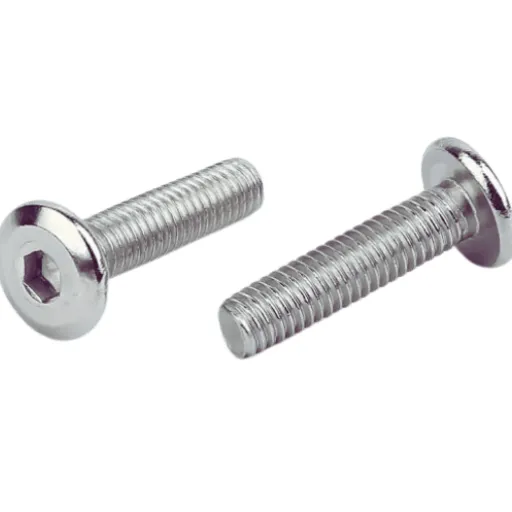
Once your specification is clear, the workflow from first contact to delivered stock follows the same seven steps whether you order 500 kg or five containers.
- Shortlist three to five suppliers. Use audited listings and factory referrals, then run them through the verification checklist in the section above.
- Send a structured RFQ. State the standard, size, grade, finish, quantity, packaging, destination, and the certificates you want. Compare the technical depth of the replies, not just the price.
- Order and test samples. Measure threads, heads, and plating, and check that the sample matches the certificate. Approve the sample before any bulk commitment.
- Agree the commercial terms. Lock MOQ tiers, payment, Incoterm (FOB, CIF, or DDP), and who owns any tooling, all in writing.
- Run a during-production check. For large or critical orders, a DUPRO check catches process problems while they are still cheap to fix.
- Inspect before shipment. A pre-shipment inspection using AQL sampling (commonly 1.5 to 2.5 for major defects) checks dimensions, thread fit, finish, and packaging, and it is where most defects are caught at roughly a tenth of the cost of fixing them after arrival.
- Ship and clear customs. Use the correct HS code, most M6 bolts and screws fall under 7318.15, nuts under 7318.16, and washers under 7318.22, and confirm the current import duty for your market, because tariffs on Chinese steel fasteners change.
Import paperwork and logistics deserve their own treatment, and our hand tool import guide covers the wider process of moving hardware from China, while KBear’s guide on importing fasteners is a solid external reference for HS codes and customs documents. The deeper point is that inspection and paperwork are not overhead; they are what separates a reliable supplier relationship from a one-time disappointment.
A distributor in Dubai learned this after a 12.9 socket cap order arrived with plating failures across roughly 8% of the cartons. The factory offered a credit, but the rework, shipping, and lost retail time cost several times the credit. His next order included a pre-shipment inspection clause, and the defect rate on that batch was near zero. The inspection cost a fraction of the rework it prevented.
Wholesale vs OEM: Selling M6 Screws Under Your Own Brand
There are two ways to buy M6 screws in volume. Plain wholesale means you resell the factory’s standard product, competing on price with every other seller of the same commodity part. OEM and private label means the factory makes the screw to your specification, in your packaging, sometimes with your own head marking or custom lengths, and you sell it as your brand.
Private label is where the margin lives, because a branded SKU cannot be price-matched against an identical import the way a plain one can. You choose the grade and finish that suit your market, set the quality bar, and control the packaging and the story. The tradeoff is a higher MOQ, tooling lead time, and the responsibility to specify correctly, which is why the discipline in this guide pays for itself on an OEM program.
Diego, a tool brand owner in Guadalajara, spent two years reselling unbranded M6 and M8 kits against dozens of identical listings. In 2025 he moved to a private-label fastening line with his logo on both the box and the driver handle. Within three quarters his average order value rose by about 40%, and returns fell because his own quality spec, enforced at the factory, was consistent. The screws were the traffic; the branded presentation was the profit.
For the tool side of your brand, Shanghai Oushike Hardware Tools manufactures hex keys, sockets, screwdrivers, and driver bits, and our OEM and private label services let you put your name on the tools and packaging with factory-direct pricing and flexible MOQs. Because we supply the drivers, we can also coordinate the screw supply from a verified fastener partner and assemble a complete catalog for you. See how a direct factory operates on our about page.
The Complete Fastening Line: Screws Plus the Tools That Drive Them
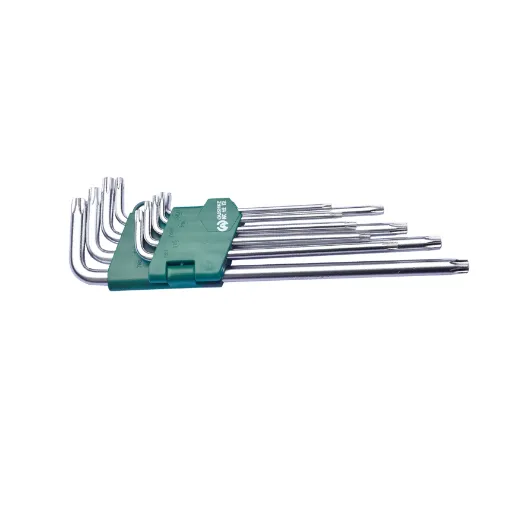
Here is the insight that turns a commodity into a product line. When a customer buys an M6 socket cap screw, they also need a 5 mm Allen key. When they buy an M6 hex bolt, they need a 10 mm wrench or socket. Stock the screw and the tool that installs it together, and you solve a real problem instead of selling a single part, which raises order value and repeat purchase rates.
| M6 fastener your customer buys | Tool they also need | Size |
|---|---|---|
| Socket head cap screw (DIN 912 / ISO 4762) | Allen key or hex bit | 5 mm |
| Button, countersunk, or low head socket screw | Allen key or hex bit | 4 mm |
| M6 set screw | Allen key | 3 mm |
| Hex head bolt and hex nut | Wrench or socket | 10 mm across flats |
If you supply these tools yourself, the math is simple. A hardware store that stocks only screws competes on price. A seller that bundles M6 socket cap screws with the correct hex keys, under one brand and one box, sells a solution. That is why the types of M6 socket head cap screws guide is worth reading alongside this one, because the head type you stock determines the driver tools you need to carry with it. The complete M6 screw size guide maps every fastener to its tool.
Shanghai Oushike supplies that tool side of the line as a direct factory, with the drivers your fasteners need, quality control at every stage, and export support from Shanghai and Ningbo. Ask us about scoping a sample order or a full coordinated fastening package for your catalog.
M6 Screw Manufacturer FAQ
What is an M6 screw manufacturer?
An M6 screw manufacturer is a factory that produces M6 threaded fasteners, such as socket cap screws and hex bolts, to an international standard like DIN, ISO, or GB. It owns its cold-heading and threading lines, controls quality in-house, and can supply wholesale and OEM orders.
How do I find a reliable M6 screw manufacturer?
Shortlist audited suppliers on B2B platforms, then verify each one. Ask for certificate numbers, a video factory tour, and batch-level inspection data, and order samples you can measure. A supplier that cannot show its production line is likely a trading company.
What is the difference between a screw manufacturer and a trading company?
A manufacturer owns the production lines and controls quality in-house, while a trading company resells stock bought from multiple factories. Manufacturers support custom OEM runs and provide traceable certificates; traders offer convenience and sometimes lower prices but less control over quality.
What is a MOQ and what can I expect for M6 screws?
MOQ means minimum order quantity. For stock commodity M6 screws, expect roughly 100 to 1,000 kg per size, while custom-drawing runs typically start at 5,000 to 10,000 pieces. Low-MOQ suppliers may accept 100 to 1,000 pieces for a trial.
What grade of M6 screw should I order?
Choose the property class by application. Common carbon steel classes are 8.8, 10.9, and 12.9, with socket caps usually sold as 12.9. For corrosion resistance use A2-70 (304) stainless or A4-80 (316) for marine conditions. Our screw strength class guide has the full comparison.
How do I know an M6 screw is good quality?
Order samples and measure threads, head size, and plating, and ask for mill certificates tied to the batch. For bulk orders, run a pre-shipment inspection using AQL sampling to check dimensions, thread fit, finish, and packaging before the goods leave the factory.
Are Chinese screw manufacturers reliable?
China produces a large share of the world’s fasteners, and its factories can be highly reliable when you verify them properly. Check certifications, audit the facility, test samples, and inspect before shipment. The risk is not the country, it is unverified suppliers and unclear specifications.
Can I get M6 screws made under my own brand?
Yes. OEM and private label programs let you specify the grade, head type, packaging, and sometimes custom head marking, and sell the screws as your brand. Expect higher MOQs and tooling lead times than plain wholesale, which is where consistent specification and a trustworthy factory matter most.
Conclusion
Finding the right M6 screw manufacturer comes down to five habits. Verify the supplier is a real factory before you order, with certificate numbers, a shop-floor tour, and measurable samples. Specify the grade, standard, and finish in writing so the factory builds what you actually need. Compare MOQ, lead time, and landed cost rather than unit price alone. Protect every bulk order with a pre-shipment inspection. And think beyond the screw itself, because the profit is in the branded fastening line, not the bare part.
Do that and M6 becomes one of the most dependable product categories in your catalog, a repeat-purchase line with stable demand and growing order value. The manufacturers that support OEM work, prove their quality, and answer questions clearly are the ones worth keeping for years.
Ready to build or expand your fastening line? Shanghai Oushike can supply the driver tools, coordinate a verified screw supply, and support private label on both. Request a bulk quote or contact our team to start with samples.