
Wholesale Pry Bars: A Buying Guide for Distributors and Retailers
Wholesale pry bars cost roughly US$1.44 to US$2.70 per piece at factory-direct volumes, and most distributors build a profitable line from six SKUs: a 10 to 15 inch flat bar, a 24 to 36 inch wrecking bar, a 36 to 60 inch crowbar, an 11 inch cat’s paw, a mini or EDC bar, and a 3 to 5 piece set.
Here is the part that decides whether that line makes money. A pry bar leaves a Chinese factory at about US$1.50. The same bar sits on a US shelf at about US$20. Everything between those two numbers is your business, and most distributors never model it properly.
You already know the FOB price isn’t the real cost. This guide takes you the rest of the way. It covers what to stock, how to price from landed cost rather than the factory quote, how to plan the container, and how to put your own brand on the bar.
We are Shanghai Oushike Hardware Tools, a factory-direct tools manufacturer. We forge pry bars and the rest of our hand tool range, so we can show you both sides of the transaction: what a bar costs to make, and what it takes to sell one.
In this guide: the products worth stocking → the margin math → the channel decision → the sourcing process → the house-brand play.
Key Takeaways
- Wholesale pry bars run US$1.44 to US$1.53 per piece at 1,200 to 9,600+ units from a factory, against retail equivalents of US$19.88 to US$29.20 for comparable Stanley FatMax models.
- Price your tiers from landed cost, not FOB. The factory price is only 60 to 75% of your true cost once freight, duty, brokerage and defect allowance are added.
- Six SKUs cover most of the market: flat/wonder bar (volume core), wrecking bar (margin core), crowbar, cat’s paw, mini/EDC bar, and a 3 to 5 piece set.
- Plan the container around cubic metres, not unit price. Heavy bars cube out at roughly 57,000 pieces in a 40HQ; lighter bars reach about 139,000.
- Plain standard SKUs start at 1,000 to 1,200 pieces; adding your logo and packaging lifts that to about 1,200 to 2,000 sets.
What Counts as Wholesale Pry Bars?
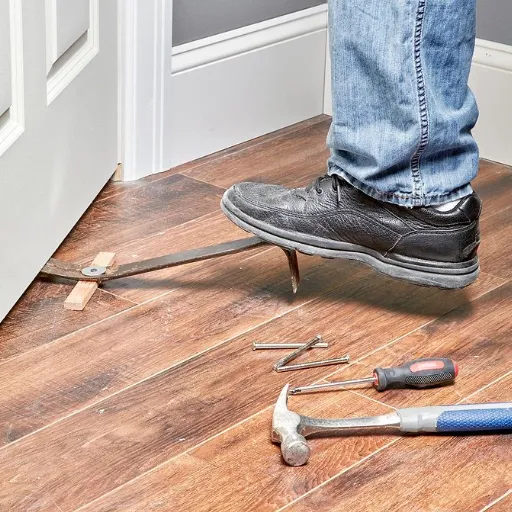
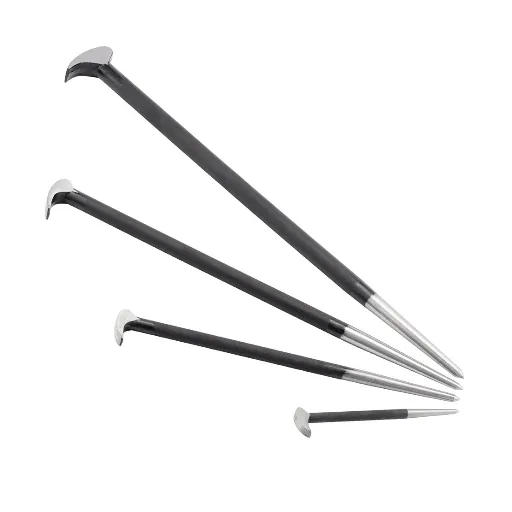
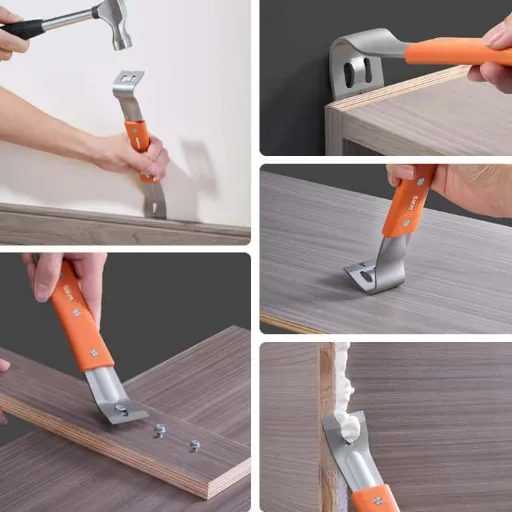
Wholesale pry bars, the bulk pry bars you buy at factory or distributor pricing for resale, are not sold to a single end user. The category covers every lever-style bar: flat and wonder bars, wrecking and gooseneck bars, crowbars and pinch bars, nail pullers, rolling head bars, alignment bars and mini or EDC bars.
“Pry bar” is an umbrella term, and the terminology trips up buyers constantly. A crowbar and a wrecking bar aren’t the same tool, and quoting the wrong name to a factory gets you the wrong product. Our guide to pry bar vs crowbar settles the naming question before you write a purchase order.
Your buyers are contractors, hardware retailers, e-commerce sellers, rental fleets and industrial MRO accounts. Each one wants a different slice of the range.
Contractors replace tools constantly. Retailers need shelf-ready packaging. Online sellers need a price point that survives platform fees. That mix is what makes the assortment decision the first real decision you make.
On the demand side, end users need to know how to use the tool safely. The technique side, including fulcrum placement and why pipe extensions cause failures, is covered in our guide on how to use a pry bar. Stocking a bar that fails under misuse costs you a warranty claim, not a reorder.
Want to see the full product range first? Browse our hand tools to see how pry bars sit alongside the rest of a one-stop sourcing line.
Why Pry Bars Belong in Your Product Line
Pry bars are a rare category in hand tools because the market is growing, the tool is simple, and the margin gap is wide.
The global crowbar market was worth US$1,450.3 million in 2025 and is forecast to reach US$1,924.6 million by 2033, a 3.6% CAGR, according to Cognitive Market Research. China alone grows faster, at 4.6%, and Asia-Pacific is the largest producing region at 4.3%.
The broader hand tools market tells the same story. It runs from US$27.27 billion in 2025 to an estimated US$44.46 billion by 2035, a 5.01% CAGR, with pry bars and crowbars a covered sub-segment.
What matters more than the headline growth is where the sales happen. Offline and distributor channels still carried about 69% of industrial hand tool revenue in 2025, while online channels grew at 7.7% from a 31% base, according to GMI. Hardware stores are the fastest-growing channel at roughly 6.5% CAGR.
Two conclusions follow. First, a distributor still owns the majority of this market, so the channel isn’t obsolete. Second, online is the growth lane, which is why the mini and EDC segment is expanding at about 8.5% a year.
There is also an operating reason to stock pry bars. They carry no electronics, no battery regulation and no firmware. A bar is steel, heat treatment and packaging. That means low tooling complexity, a predictable size run, and a line extension you can launch without an engineering project.
Building Your Wholesale Pry Bar Assortment
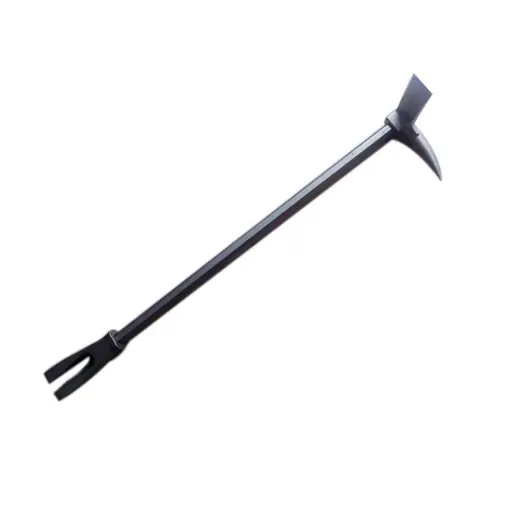
Most new pry bar lines fail because they stock too many similar bars. Eight variations of a 24 inch wrecking bar isn’t an assortment. It’s a warehouse problem.
Build the range around six jobs instead.
Core SKUs to Stock
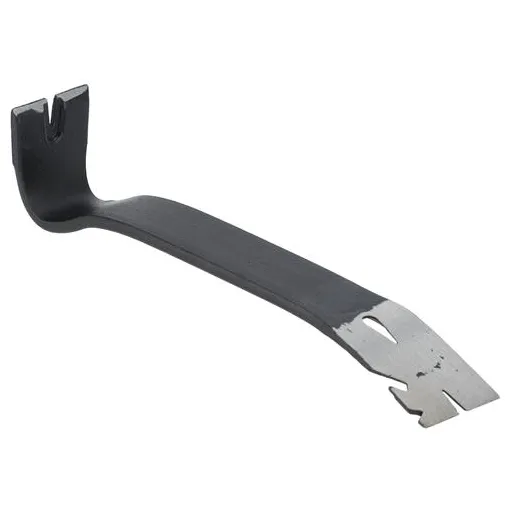
- Flat / wonder bar, 10 to 15 inch. The volume core. Every trade touches trim, flooring, baseboards and light prying. Cheapest to buy, fastest to sell.
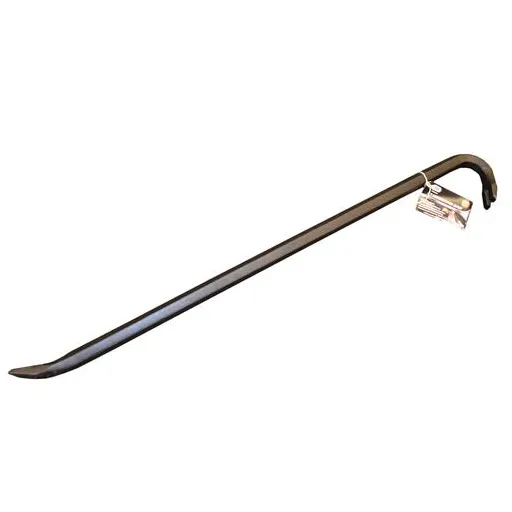
- Wrecking / gooseneck bar, 24 to 36 inch. The margin core. Heavier, higher perceived value, and the bar most professionals actually name. See our wrecking bar guide for the size and bend options.
- Crowbar / pinch bar, 36 to 60 inch. The heavy-trade SKU. Concrete, landscaping, rail and demolition. Lower volume, higher ticket.
- Cat’s paw / nail puller, 11 inch. The renovation SKU. Solves one narrow problem well, which is exactly why it reorders.
- Mini / EDC pry bar. The growth SKU. The fastest-expanding segment at about 8.5% a year, and the most e-commerce friendly bar in the range.
- 3 to 5 piece set. The order-value SKU. Sets lift average basket size because buyers bundle rather than choose.
Sets vs. Individual SKUs
Sets raise average order value and give you shelf presence. Singles serve replacement demand, which is steadier and often more profitable per unit. Carry both, and let the set be the entry product.
A useful ratio for a first order: roughly half your units in flat bars, a quarter in wrecking bars, and the rest split across crowbars, cat’s paws, mini bars and sets. Adjust by what your buyers actually ask for, but start there.
Size Runs and How Many SKUs to Carry
The standard length ladder runs from 6 inch mini bars to 48 inch crowbars, plus 1 to 2 metre export lengths for markets that buy in metric. Pick two lengths per family at launch, not every size. A 12 inch and 15 inch flat bar, a 24 inch and 36 inch wrecking bar, a 36 inch and 48 inch crowbar.
That gives you twelve to fifteen SKUs covering almost every request, with a clean ladder to expand into later.
Materials Buyers Will Ask About
You don’t need to be a metallurgist, but you need one line of specification you can defend. Forged bars run 45 to 52 HRC at the working ends with a tougher core around 35 to 40 HRC. Below 45 HRC the tip rolls over. Above 52 HRC the bar chips.
Steel is usually 45# carbon, rail steel, or 65Mn, with Cr-Mo on premium lines. The full factory-side specification, including the RFQ line to copy, sits in our pry bar manufacturer guide.
Wholesale Pry Bar Pricing and Margin Math
This is where most distributors lose money, and it starts with a single mistake: pricing from the FOB quote.
Build every tier from landed cost. The factory price is only 60 to 75% of your true cost. Freight adds 8 to 20%, duty ranges from 0 to 35% and stacks across tariff layers, and brokerage, inspection, financing and defect allowance take the rest. Pricing from FOB collapses the moment freight moves.
Here is the price ladder in real numbers. A forged hex-shaft wrecking bar from a Chinese factory runs:
| Order quantity | Unit price |
|---|---|
| 1,200 – 4,799 pcs | US$1.53 |
| 4,800 – 9,599 pcs | US$1.48 |
| 9,600+ pcs | US$1.44 |
Retail equivalents for comparable bars sit between US$19.88 and US$29.20. A 24 inch Stanley FatMax spring-steel wrecking bar lists at US$19.99, and the 15 inch FatMax Fubar sells near US$29.20.
That gap is the category’s margin. It also explains why the low-volume entry tier matters: marketplace listings at 50 piece minimums run US$2.30 to US$2.70 per piece, so moving from a marketplace to a factory at 1,200 units already cuts your cost by roughly 40%.
Worked example. At US$1.50 FOB with freight and duty added, a bar lands near US$3.00. Keystone logic puts your wholesale tier near US$6.00. A retailer doubling again reaches US$12.00, and premium positioning at US$19.99 leaves room for both of you. Target 20 to 30% gross margin on the wholesale tier, and check that your retail customer can still make their number.
One caution for e-commerce sellers. Sub-US$15 retail math usually fails after platform fees, ads and returns. Plan for an ASP of US$19.99 or higher, or sell in sets to lift the basket.
Ready to run your own numbers? Request our wholesale pry bar catalogue and current price tiers, and we will quote at your target volume. Request price tiers →
Factory-Direct vs. Distributor vs. Marketplace
Three channels can supply you, and each shifts risk differently.
| Regional distributor | B2B marketplace | Factory-direct | |
|---|---|---|---|
| Unit price | Highest, 2 to 3 tiers of markup | Low visibility, variable quality | Lowest, one margin |
| Minimum order | Low, often by the case | 50 pieces and up | 1,000 to 1,200 pieces |
| Customisation | None or limited | Limited, seller-dependent | Full, including branding |
| Quality control | Buyer’s responsibility | Buyer’s responsibility | Factory process records |
| Lead time | Days from stock | Variable | 25 to 45 days |
| Working capital | Lowest | Low | Highest |
A regional distributor makes sense when you need a case next week or you are testing a category before committing. A marketplace works for a small first order or a one-off SKU. Factory-direct wins as soon as volume and customisation matter, because you control the specification and remove a margin layer.
Most distributors end up running two channels: a local distributor for urgent fills, and a factory for the core line. That is a reasonable structure. Just do not let the convenience channel set your cost basis for the whole category.
How to Source Wholesale Pry Bars from a Factory
Sourcing is a process, not a conversation about price. Work through it in order.
Know the Manufacturing Hubs
Pry bar production clusters around specific regions. Hebei produces hex-shaft crowbars in volume. Shandong, around Dezhou and Linyi, runs large forged-bar capacity. Jiangsu covers general forged lines, and Zhejiang and Guangdong dominate mini and EDC bars. Loading ports are Shanghai, Ningbo, Qingdao and Tianjin.
Geography matters because it drives lead time and freight, not just price.
Define Your Spec Sheet Before You Contact Anyone
Write the specification first, then shop it. At minimum: bar type, steel grade, hardness target, length and cross-section, finish, pack quantity, and your target landed price. Suppliers quote what you ask for, and a vague brief gets you the cheapest bar that technically matches.
Verify the Supplier
Verify the business licence and credit code, request a live factory walkthrough, confirm in-house hardness testing, and order paid samples from two or three factories. The full factory-verification framework, including the manufacturer-versus-trader test and the certification numbers to demand, is in our pry bar manufacturer guide. Use it before you send a deposit.
Understand MOQ, Lead Time and Payment Terms
Plain standard SKUs start around 1,000 to 1,200 pieces. Adding your logo and packaging lifts that to 1,200 to 2,000 sets. Custom lengths, cross-sections or new dies run 2,000 pieces and up per size, because tooling has to be amortised.
Lead time is typically 25 to 30 days for standard forged orders and 30 to 45 days once you add custom tooling. Samples arrive in 7 to 15 days. Payment is commonly 30% T/T deposit with the balance before shipment, and letters of credit suit larger orders.
Calculate Landed Cost Properly
Landed cost is FOB plus freight, insurance, duty, brokerage, last-mile delivery, inspection, financing and FX, plus a 5 to 10% buffer for the unpredictable.
Duty is the line buyers underestimate. It’s set by HS code, charged on CIF value, and it stacks: a base rate plus a Section 301 surcharge plus potential anti-dumping duties. A single-digit HS code difference can swing the rate by 20 points, so confirm classification with a customs broker before you order. See our importing hand tools guide for the documentation side.
Plan the Container Around Cubic Metres
Cube beats unit price when you plan a load. A typical forged bar packs 20 pieces per carton:
| Size (mm) | Qty/case | Gross weight | Carton (cm) | CBM per piece |
|---|---|---|---|---|
| 6 × 8 × 250 | 20 | 5 kg | 30 × 10 × 10 | 0.00015 |
| 10 × 12 × 600 | 20 | 18.5 kg | 64 × 15 × 10 | 0.00048 |
| 14 × 16 × 600 | 20 | 29 kg | 65 × 20 × 18 | 0.00117 |
In a 40HQ container with roughly 67 CBM usable, the 10 × 12 × 600 SKU cubes out near 139,000 pieces. The heavier 14 × 16 × 600 SKU cubes out near 57,000. The heavy end approaches weight-out before cube-out, which is the practical reason distributors load long and heavy bars together with lighter SKUs.
Allocate freight by CBM per SKU, not by value. A bar’s value per cubic metre is low, so value-based allocation flatters bulky SKUs and hides which ones actually pay for their space.
Building a House Brand Against Stanley, Crescent and Mayhew
The majors own brand trust and retail shelf space. Stanley positions FatMax around spring steel and striking faces. Crescent and Mayhew own professional tier structures, from capped Dominator-class bars to line-up and rolling head families.
You will not beat them on brand equity. You can beat them on fit.
A house brand wins where the majors are inflexible: your own size mix, lengths that suit your market, bundled sets they do not offer, and packaging designed for your shelf rather than theirs. Finish colour, logo marking and carton design change almost nothing in the tool and a great deal in how it sells.
The positioning ladder is straightforward. Commodity flat bars compete on price. Trade-grade wrecking bars compete on specification. Professional demolition kits compete on presentation and warranty. Pick which rung you are on per SKU, and do not try to be all three with one bar.
Full customisation scope, including private-label packaging, design support and tooling ownership, sits in our private label program. The rule that protects you: agree in writing who owns the tooling after the order completes.
Wholesale Pry Bars FAQs
What are wholesale pry bars?
Wholesale pry bars are lever-style hand tools bought in bulk at factory or distributor pricing for resale. The category includes flat and wonder bars, wrecking bars, crowbars, pinch bars, nail pullers, rolling head bars and mini or EDC bars, typically ordered in runs of 1,000 pieces or more.
What is the minimum order quantity for pry bars?
Plain standard SKUs typically start around 1,000 to 1,200 pieces. Adding a custom logo and packaging usually lifts the minimum to roughly 1,200 to 2,000 sets. Custom lengths, cross-sections or new dies run 2,000 pieces and up per size, because the tooling must be amortised.
How much do pry bars cost wholesale?
Forged hex-shaft wrecking and crow bars run about US$1.53 per piece at 1,200 to 4,799 units, US$1.48 at 4,800 to 9,599, and US$1.44 at 9,600 or more. Low-volume marketplace entry tiers sit higher, around US$2.30 to US$2.70 at a 50 piece minimum.
Which pry bar types should a distributor stock?
Start with six: a 10 to 15 inch flat or wonder bar as the volume core, a 24 to 36 inch wrecking bar as the margin core, a 36 to 60 inch crowbar, an 11 inch cat’s paw, a mini or EDC bar, and a 3 to 5 piece set. Stock two lengths per family rather than every size.
Can I get private label pry bars with my own logo?
Yes. Finish colour, logo marking and packaging are the cheapest customisation levers. Custom length, cross-section, tip geometry and steel grade are possible but may trigger tooling and a higher MOQ. Agree tooling cost and ownership in writing before production starts.
How many pry bars fit in a container?
It depends on the bar. A 10 × 12 × 600 mm forged bar packs 20 per carton at 0.0096 CBM, so roughly 139,000 pieces fit a 40HQ by volume. A heavier 14 × 16 × 600 mm bar packs 20 per carton at 0.0234 CBM, so only about 57,000 pieces fit before weight becomes the limit.
Is it profitable to resell pry bars?
Yes, when you price from landed cost rather than the factory quote. A bar landing near US$3.00 supports a wholesale tier near US$6.00 and a retail shelf price near US$20, which leaves room for both you and your retail customer. The category fails when buyers compare FOB prices and ignore freight, duty and defect costs.
Conclusion
Wholesale pry bars work as a product line because the category is simple, the market is growing, and the margin gap between US$1.50 and US$20 is real. Protecting that margin comes down to five moves.
Plan the assortment around six jobs instead of dozens of similar SKUs. Price every tier from landed cost, not FOB. Choose factory-direct once volume and customisation matter, and keep a local distributor only for urgent fills. Plan the container around cubic metres so freight is allocated honestly. And decide which rung of the ladder each SKU sits on before you put your own brand on it.
Do those five things and the cheapest quote sheet stops being the deciding document. You will be comparing landed cost, sell-through and brand fit instead.
We forge pry bars factory-direct in Shanghai, in standard and custom lengths, finishes and packaging, with full OEM and private-label programs. Send us your target bar type, sizes and order quantity, and we will return a factory-direct quote with the price tiers and packaging options for your market. Start with our best pry bar guide if you are still defining the range, then request your wholesale quote and let us price the order.