
Pry Bar Sizes Chart: Lengths, Leverage & Which to Choose
Pry bar sizes run from 2 inches to 72 inches, and the length you choose is the biggest factor in how much leverage the bar delivers. For most jobs, the practical range runs from a 15-inch flat bar for trim work to a 36-inch wrecking bar for heavy demolition. Working pry bars for real loads sit between 24 and 72 inches.
Here’s the problem most buyers run into. Pry bar sizes get scattered across shop listings, half-explained in catalogue dimensions, and mixed up between types, so people guess. Guess wrong and you either bend a bar on a load it was never built for, or crack the very trim you were trying to save.
This guide fixes that. It gives you every standard pry bar size in one chart, the inch-to-millimetre equivalents, the lever math behind why length matters, and the exact size for each job. If you’re buying to resell, the last section shows how to build a size-based pry bar line instead of stocking single bars.
For the full picture of types and their uses, see our complete guide to pry bar types.
Key Takeaways
- Pry bar sizes span 2″–72″; the most common are 6″, 8″, 12″, 15″, 18″, 24″, 36″, and 48″.
- A pry bar is a Class I lever: length multiplies force, and bar width sets the strength limit.
- A 24″ bar gives roughly 3× the mechanical advantage of an 8″ bar for the same effort.
- If you buy only one bar, choose a 15″ flat bar; for one heavy bar, choose a 24″ wrecking bar.
- Never extend a bar with a pipe. That overloads it past its design limit and can snap it.
Pry Bar Sizes: The Complete Chart (2″ to 72″)
One rule governs every size decision, and it comes straight from the tool trade: the heavier the object to be lifted, the longer the bar needs to be (Gray Tools). Everything below is a consequence of that rule.
| Length | Metric | Typical category | Typical stock | Approx. weight | Leverage | Best for |
|---|---|---|---|---|---|---|
| 2″–5″ | 50–125 mm | Mini / EDC bar | 1/8″–3/16″ | 0.1–0.3 lb | Minimal | Paint cans, staples, scraping, pocket carry |
| 5.5″ | ~140 mm | Flat bar | 3/16″–1/4″ | 0.2–0.4 lb | Minimal | Precision trim, delicate molding |
| 6″–7″ | 150–180 mm | Flat bar | 1/4″ | 0.3–0.5 lb | Minimal | Light trim, shimming, small nails |
| 8″ | 200 mm | Flat / utility bar | 1/4″–5/16″ | 0.4–0.7 lb | Low | Trim, light prying, cabinets |
| 10″ | 254 mm | Flat bar | 5/16″ | 0.6–1.0 lb | Low | Molding and baseboard work |
| 12″ | 300 mm | Flat / small wrecking bar | 5/16″–1/2″ | 0.5–1.25 lb | Low–moderate | Cabinets, trim, light prying |
| 15″–16″ | 380–400 mm | Flat bar / pry bar | 5/16″–1/2″ | 1.0–2.0 lb | Moderate | The “one good bar” for home and trade |
| 18″ | 450 mm | Flat / wonder / wrecking bar | 1/2″–5/8″ | 1.2–1.8 lb | Moderate | Flooring, siding, crates, pallets |
| 24″ | 600 mm | Wrecking / ripping bar | 3/4″ | 1.2–3.6 lb | High | The recommended first wrecking bar |
| 30″ | 750 mm | Wrecking bar | 3/4″ | 2.0–4.5 lb | Very high | The best all-day working length |
| 36″ | 900 mm | Wrecking / crowbar | 3/4″–7/8″ | 2.6–6 lb | Maximum (standard) | Heavy demolition, framing tear-out |
| 42″–48″ | 1,050–1,200 mm | Ripping bar / pinch point | 7/8″–1″ | 5–12 lb | Extreme | Lifting slabs, breaking rock and concrete |
| 60″ | 1,500 mm | Pinch point bar | 3/4″–1-1/4″ | 9–18 lb | Extreme | Landscaping, lifting stone and timber |
| 66″–72″ | 1,675–1,830 mm | Long pinch bar | 1″–1-1/2″ | up to ~26 lb | Maximum available | Breaking rock, railroad, heavy timbers |
Two things stand out in this chart. First, the most common pry bar sizes are the ones that appear across the widest range of manufacturer catalogues and retail sets: 6″, 8″, 12″, 15″, 18″, 24″, 36″, and 48″.
Second, the weight climbs faster than the length. A 12-inch flat bar weighs about half a pound, while a 66-inch pinch bar can weigh 26 pounds. That gap is the whole reason size is the first decision you make.
Pry Bar Sizes in mm: Inch-to-Millimetre Conversion
International buyers and metric-market products are sold in millimetres, so cutting inches alone leaves half the market out. Use this conversion when you shop or specify.
| Inches | mm (approx.) | Common in |
|---|---|---|
| 5.5″ | 140 mm | Flat bars |
| 6″ | 150 mm | Flat bars, sets |
| 8″ | 200 mm | Flat bars, sets |
| 10″ | 254 mm | Flat bars |
| 12″ | 300 mm | Flat bars, wrecking bars, sets |
| 15″ | 380 mm | Flat pry bars |
| 16″ | 400 mm | Pry bars, sets |
| 18″ | 450 mm | Wonder and wrecking bars |
| 24″ | 600 mm | Wrecking bars, sets |
| 30″ | 750–762 mm | Wrecking bars |
| 36″ | 900–915 mm | Wrecking and crowbars |
| 48″ | 1,200 mm | Crowbars, pinch bars |
| 60″ | 1,500 mm | Pinch bars |
| 72″ | 1,830 mm | Long pinch and San Angelo bars |
German fire-service crowbars, for example, are made to DIN 14853 in 700 mm, 1,200 mm, and 1,500 mm lengths. When you quote a size, quoting both units removes the guesswork.
How Pry Bar Size Affects Leverage
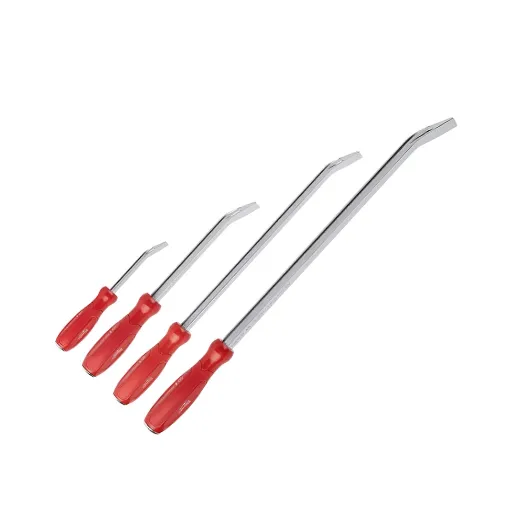
Every pry bar is a Class I lever, which means the fulcrum sits between the load and your hands. Length is the leverage multiplier, and the width of the bar is the strength limit. That single sentence explains most sizing questions.
The mechanical advantage scales with the ratio between the effort arm and the load arm. In practice, a longer bar multiplies your force roughly in proportion to its length. A 24-inch bar gives roughly 3× the mechanical advantage of an 8-inch bar (24 ÷ 8 ≈ 3). A 36-inch bar pushes that further still.
But leverage isn’t free. Stepping up in length also adds weight, increases fatigue over a long day, and demands more clearance to swing the bar.
Type matters too. A flat bar needs less operating clearance than a gooseneck wrecking bar of the same length. That’s why the usable leverage window tops out around 72 inches. Past that point, the bar is simply too heavy and too awkward to control.
Consider Ray, a site foreman stripping concrete formwork. His crew started with 12-inch flat bars because they were light and easy to carry. The bars bent, the work crawled, and the crew leaned on every pry. Switching to 30-inch wrecking bars gave them enough leverage to pop the forms in a fraction of the time.
Same job, same workers. The only thing that changed was the length.
The one rule that keeps a bar intact: never slip a pipe over the handle to add leverage. A “cheater bar” multiplies force past the bar’s design limit and turns a gentle bend into a sudden snap. If you need more leverage, buy a longer bar, not a longer handle.
What Size Pry Bar Should I Get?
For most jobs, a 15-inch flat bar handles trim, flooring, and general prying, while a 24-inch wrecking bar covers decking, framing, and subfloor work. Match the length to the load and the bar type to the surface, and you’ll rarely go wrong.
| Job | Bar type | Length | Why |
|---|---|---|---|
| Paint cans, staples, scraping | Mini / EDC bar | 2″–5″ | Pockets easily, low force needed |
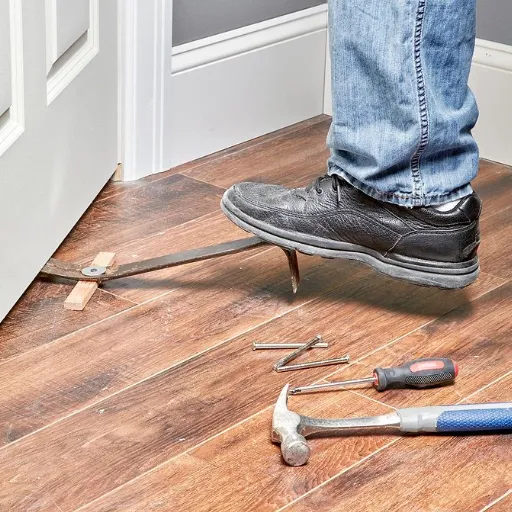
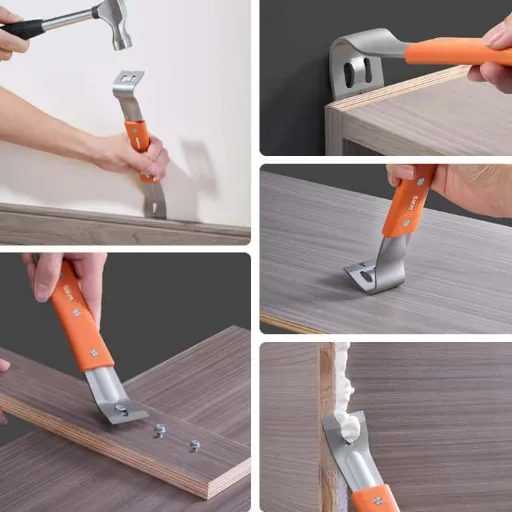
| Trim and molding you want to keep | Flat bar | 6″–15″ | Thin flat steel spreads the pressure |
| Cabinets, door hanging, hinges | Flat bar | 6″–12″ | Control matters more than force |
| Flooring, siding, crates, pallets | Flat / wrecking bar | 12″–18″ | More reach, still controllable |
| Everyday home use, one bar | Flat bar | 15″ | The best all-round size |
| Framing, decking, subfloor, formwork | Wrecking bar | 24″–36″ | Gooseneck claw plus leverage |
| Heavy demolition, joists, tear-out | Wrecking / crowbar | 36″–48″ | Maximum standard leverage |
| Rock, concrete, digging, timbers | Crowbar / pinch bar | 48″–72″ | Highest leverage on a thick section |
| Landscaping, stone, posts, stumps | Pinch point bar | 48″–72″ | The load’s height and mass demand it |
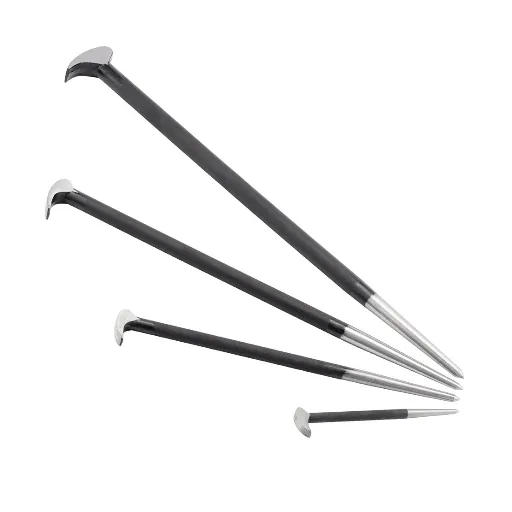
| Automotive and mechanical | Rolling head / alignment bar | 16″–30″ | Reaches fasteners and aligns holes |
If that table feels like a lot to remember, three answers cover most of it. Buy one bar for the home and it should be a 15-inch flat bar. Buy one heavy bar and it should be a 24-inch wrecking bar, or a 30-inch if you do a lot of demolition. Build a small kit and choose a short bar for trim (8″–12″), a mid bar for framing (18″–24″), and a long bar for demolition (36″–42″).
Want to compare the sizes side by side before you buy? Our flat pry bar and wonder bar guide walks through the trim-focused end of the range in detail.
Size Is Not the Only Spec: Length, Stock, Tip, Profile
When you search pry bar sizes, you’re usually asking about length. But four specs decide what a bar can actually do, and reading them together is what separates a good purchase from a costly mistake.
| Spec | What it controls | Typical range |
|---|---|---|
| Length | Leverage and reach | 2″–72″ |
| Stock (bar width) | Strength limit | 1/8″–1-1/2″ |
| Tip / end geometry | What it can grip or lift | Varies by type |
| Shaft profile | Grip, roll-resistance, strength-to-weight | Round, flat, contour, hex, I-beam |
Shaft profile deserves a quick note. A round shaft is the easiest to hold, a flat shaft fits tight spaces best, a contoured back adds leverage, a hexagonal shaft gives a six-sided grip for levering, and an I-beam profile is lighter for its strength. Get the length right and the profile wrong, and the bar still won’t feel right in your hands.
Pry Bar Sizes by Type
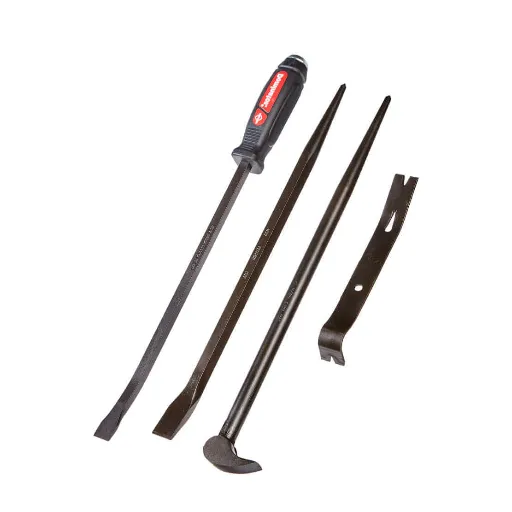
The chart above spans every category, but each family has its own size logic. Here’s the short version, with the detail in each dedicated guide.
Flat and wonder bar sizes (5.5″–18″)
The flat bar family is the precision end of the range. These thin, spring-steel bars protect finished surfaces, so the shorter lengths do the delicate work. The flat pry bar and wonder bar guide covers tip thickness and the full flat-bar selection chart.
Wrecking bar sizes (12″–36″)
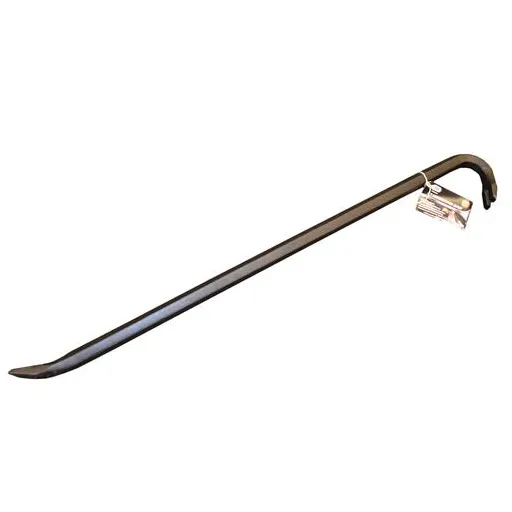
Wrecking bars carry a gooseneck claw and a prying wedge. The standard retail ladder is 12″, 18″, 24″, 30″, and 36″, with the 24-inch and 30-inch bars doing most professional work. For the full breakdown of bend styles and claw types, see our wrecking bar guide.
Crowbar and pinch bar sizes (48″–72″)
True crowbars are heavy digging bars over four feet long, and pinch bars taper to a prying point. These are the longest and heaviest bars you can buy, built for rock, concrete, and timbers. If you’re still deciding between a crowbar and a lighter pry bar, read pry bar vs crowbar first.
Cat’s paw and EDC sizes (2″–5″ and 6″–11″)
Mini bars and every-day-carry bars live below six inches, and cat’s paw nail pullers sit in the 6″–11″ band for pulling embedded nails. These are niche sizes, but they round out a complete range.
Buying Pry Bar Sets: What the Standard Ladders Cover
Buying a set is often the fastest way to cover several sizes at once, and the ladders are fairly standard. Here’s what the common configurations include.
| Set | Sizes |
|---|---|
| Canonical 4-piece flat set | 5.5″ / 7.5″ / 10″ / 15″ |
| Sealey AK881 4-piece | 300 / 400 / 450 / 600 mm |
| MAXPOWER 4-piece | 8″ / 12″ / 18″ / 24″ |
| SP Tools 3-piece | 200 / 300 / 460 / 610 mm |
| Snap-on precision ladder | 6″ / 12″ / 16″ / 20″ |
Read a set the same way you read the chart. A good set spans both ends of the lever trade-off: a small bar for delicate work and a long bar for leverage. A set that clusters four bars in the middle gives you four tools that do almost the same job.
Pry Bar Sizes for Professionals and Resellers
If you’re buying to resell, the size chart isn’t just a buying guide. It’s your SKU map. Distributors who stock only a single length miss sales at both ends: the trim buyer who needs a 10-inch flat bar and the contractor who needs a 36-inch wrecking bar. The winning range runs the full ladder.
Take Tomas, who ran a mid-sized tool distribution business. His pry bar section carried one 24-inch bar because it was the safe middle choice. Over a year, customers asked for heavier bars for demolition and lighter bars for cabinetry, and he sent both to competitors. When he rebuilt the line as a proper size ladder, spanning flat bars from 8 to 15 inches and wrecking bars from 24 to 36 inches, his pry bar revenue roughly doubled without adding a single new customer.
This is where a manufacturer relationship pays for itself. Oushike manufactures pry bars factory-direct in both imperial and metric lengths, so a distributor can build a clean size ladder from one source. Customization covers length in millimetres, stock profile, tip geometry, bend style, steel grade, finish, logo marking, and packaging. Flexible MOQs let you test one size before you scale the full range.
Pry Bar Sizes FAQ
What size pry bar should I get?
For most home and trade jobs, a 15-inch flat bar is the best all-round choice. If you need one heavy bar, choose a 24-inch wrecking bar. Match the length to the load: heavier work needs a longer bar.
How long should a pry bar be?
Pry bars run from 2 to 72 inches. Working sizes for real loads sit between 24 and 72 inches. Below 24 inches you lose leverage for heavy work; above 72 inches the bar becomes awkward and heavy.
What is the most common pry bar size?
The most common pry bar sizes are 6″, 8″, 12″, 15″, 18″, 24″, 36″, and 48″. These appear across the widest range of manufacturer catalogues and retail sets.
What size pry bar do I need for demolition?
Use a 24-inch to 36-inch wrecking bar for framing and deck demolition, and a 36-inch to 48-inch bar for heavy demolition such as floor joists. Longer bars give more leverage but weigh more.
How long is a crowbar compared with a wrecking bar?
A true crowbar is a digging bar over four feet long (48″–72″), while a wrecking bar runs 1 to 5 feet (12″–36″). For the full comparison, see pry bar vs crowbar.
Is a longer pry bar always better?
No. A longer bar gives more leverage, but it’s heavier, more tiring, and needs more clearance. Choose the shortest bar that comfortably handles the load.
What size pry bar should I use for baseboards?
Use a flat pry bar between 6 and 15 inches. The thin flat profile slides behind the baseboard and spreads the pressure, so the trim comes off without cracking. A full-length wrecking bar will crush the profile.
Conclusion
Pry bar sizes are easier to choose once you see them in one place. The range runs from 2 to 72 inches, the most common sizes are 6″ through 48″, and length is the lever that decides how much force you get and how much bar you can carry. Match the size to the load, check the stock width, convert between inches and millimetres, and never cheat a bar with a pipe.
Use the chart above as your reference, and keep three choices in mind: a 15-inch flat bar if you buy one bar, a 24-inch wrecking bar if you buy one heavy bar, and a full size ladder if you stock a range. For the complete family of types, start with our complete guide to pry bar types.
When you’re ready to build or expand a pry bar line, Oushike manufactures pry bars factory-direct in imperial and metric sizes, with OEM customization and flexible MOQs. Request a bulk quote and we’ll help you plan the sizes your market actually buys.