
Abrasives for Stainless Steel: Disc Selection and Contamination Control
Choose abrasives for stainless steel that the manufacturer approves for your exact operation, then keep them dedicated to stainless work. Check the tool, finish and handling rules before you approve a disc.
A new INOX disc cannot protect a part from a contaminated bench. If you’re buying for a mixed-metal workshop, the challenge extends beyond the abrasive label. Here are the checks to make when discs arrive, during work and before you release the part.
Illustrative scenario: A buyer finds similar-looking discs beside carbon-steel and stainless jobs. Nobody can identify their previous use. The purchase specification looks correct, but those loose discs cannot be approved for the stainless job on appearance alone.
Key Takeaways
- Match the product family to cutting, stock removal, blending or final conditioning.
- Check stainless suitability and prior-use history separately.
- Keep discs, brushes, contact surfaces and storage under contamination controls.
- Define finish acceptance before comparing replacement products.
Start with Oushke’s grinding and polishing options to browse by task, then use the checks below to narrow your inquiry.
Choose Abrasives for Stainless Steel by the Operation
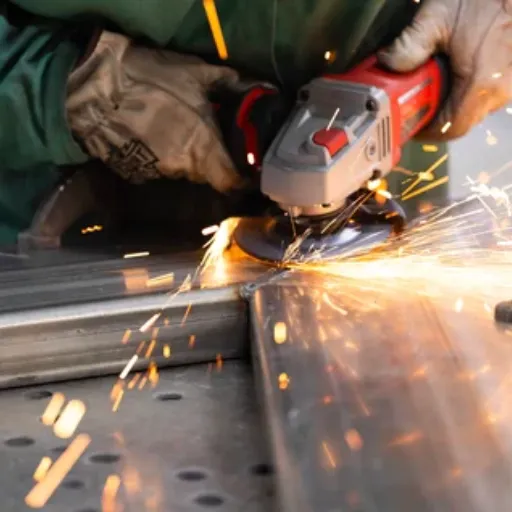
The same material claim can appear on products with different permitted working surfaces. What must change on the part? Write that down before you compare grains or prices. Are you separating stock, removing a weld, blending its edges or matching an existing surface?
The operation sets the first shortlist. Use this table to shortlist abrasives for stainless steel. Then check the exact disc and its instructions.
| Required operation | Product family to investigate | Decision to confirm |
|---|---|---|
| Separate sheet, tube or section | Stainless-suitable cutting disc | Cutting-only restrictions, access and machine compatibility |
| Remove substantial stock where permitted | Stainless-suitable grinding wheel | Removal allowance and permitted working surface |
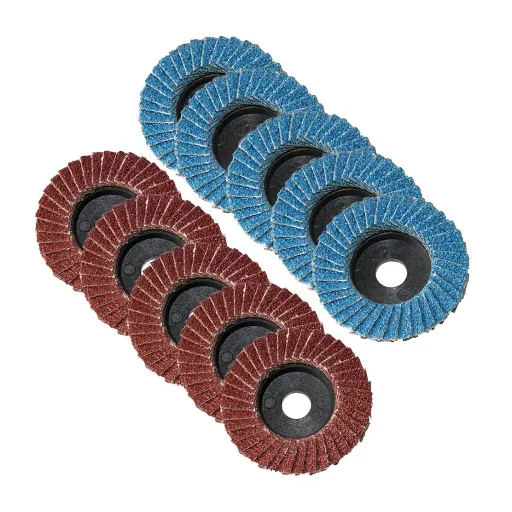
| Blend an approved weld or transition | Suitable coated flap or fibre disc | Backing arrangement, access and scratch pattern |
| Refine an existing surface | Suitable surface-conditioning product | Starting surface and agreed finish endpoint |
Separate cutting from grinding
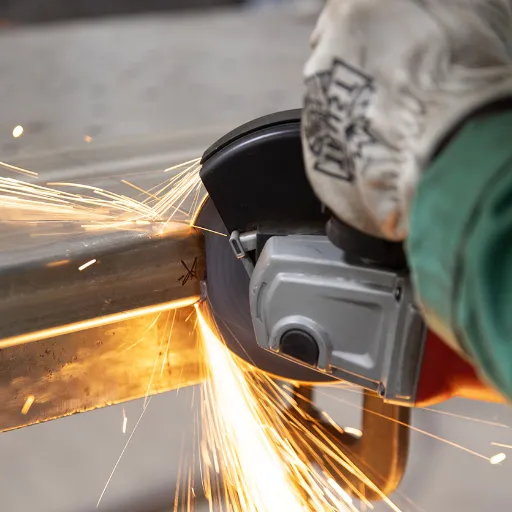
A cutting-only disc must not become a side-grinding tool simply because it fits the spindle. Review the exact product’s allowed use. Our comparison of cutting discs versus grinding discs explains why the operation matters before material approval.
Don’t assume that every weld should be ground flush. Check the drawing and approved work procedure. They set the limits on what you may remove. For abrasives for stainless steel, buying a more aggressive product doesn’t resolve an unknown removal allowance.
Match removal and finish stages
Grinding, blending and conditioning have different endpoints. Stock removal can leave scratches that need more work. A finishing product needs the right starting surface. Don’t assume it can do heavy removal too.
Norton’s weld-seam finishing guide separates removal, blending and finishing decisions. Use that sequence when specifying abrasives for stainless steel, while following the instructions for the actual products selected. For a closer family comparison, see flap discs versus grinding wheels.
Grain is one field in the buying record. Check ceramic, zirconia and aluminum-oxide products as a whole. Look at the grain, bond or backing, how the disc is built and its stated use. A premium grain name or matching grit number doesn’t prove that it suits stainless.
Check the part shape too. A broad flat face and a tight fillet may need different tools and products. Describe the access limit before asking a supplier to recommend abrasives for stainless steel; don’t force the nearest available disc into the job.
Read the Label on Abrasives for Stainless Steel
A clean formulation and a clean use history answer different questions. A new product may be marked for stainless or INOX use. Once it has worked on carbon steel, that claim doesn’t prove the used disc is still fit for stainless.
What does INOX establish?
Use INOX wording to start the product check. It isn’t a promise for every job.
Ask the supplier which exact product it is and which metals it can work on. Does the job limit iron, sulfur or chlorine? Ask for the exact product’s composition statement.
When sourcing abrasives for stainless steel, don’t transfer a trace-content figure from a different brand or product generation. Published guidance uses differing figures. Ask for the statement your job requires, tied to the exact product. Don’t assume one percentage applies to all discs.
Kondor’s 20 October 2026 stainless cutting-disc guide brings together material suitability, disc dimensions, speed and cutting-only use. It’s a useful recent manufacturer example of linked checks, rather than evidence that one thickness fits every stainless application.
Match the wheel and machine
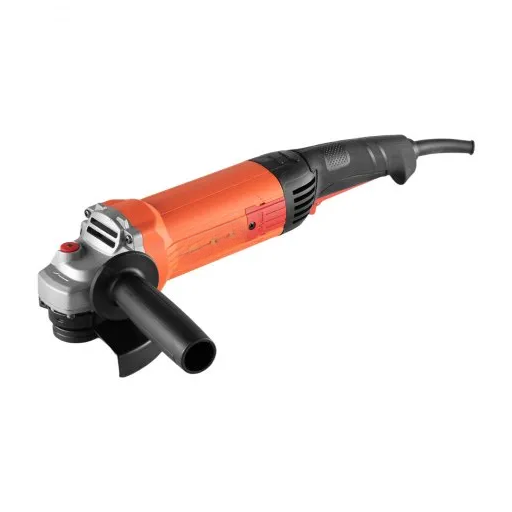
Check abrasives for stainless steel against the actual machine instructions and product label. Confirm diameter, bore or mounting type, wheel form, guard requirements and any required backing pad. A spindle fit is just one check.
The machine’s operating speed must not exceed the disc’s marked maximum speed. Also follow all other restrictions in the wheel and machine manuals. Don’t treat a maximum rating as a recommended working setting, or select a universal speed from an unrelated example.
Use the grinding wheel markings guide to organize the label check. Keep a clear record of the product code. Use it to check the next order against the approved item.
For abrasives for stainless steel, record one of these outcomes:
- Approve: Suitability, task, fit and restrictions are established.
- Clarify: A composition statement or readable product identity is missing.
- Reject: The proposed item’s allowed use or machine requirements conflict with the job.
Disc colour, the word ceramic and a magnet check cannot replace those fields. If information is missing, ask for it before use. Don’t infer a complete approval from one visible feature or a reassuring catalogue description.
Prevent Cross-Contamination Before, During and After Work
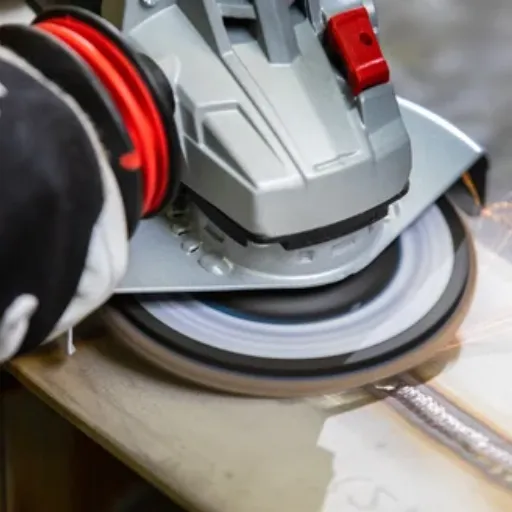
Dedicated abrasives for stainless steel are one part of a controlled work area. Carbon-steel contact can also come from brushes, storage supports, benches and nearby fabrication. Buying a fresh disc addresses only one possible path.
The American Welding Society’s September 2024 stainless guidance discusses contamination, handling and heat. Its practical implication for buyers is to include material segregation in the job plan, rather than relying on the consumable label alone.
Assign and identify consumables
Keep abrasives for stainless steel separate from those assigned to carbon steel. Label storage and issued consumables so the material assignment survives shift changes. Include brushes and other finishing tools in the same system; a dedicated disc doesn’t cancel contact from a shared brush.
At receiving, retain product identity and any required batch information. At issue, record the assigned material and the job. At return, separate known stainless-only items from loose products with unknown histories. Don’t put both into an unlabelled tray for the next operator.
You can adapt this workshop control to the job. Each job need not use the same tracking system. Match the record to the job requirements. Can the next person tell which item is approved and where it has been used?
Control contact points and nearby work
Before issuing abrasives for stainless steel, walk the route the part takes through the workshop. Where is raw stock stored? What supports it during fabrication? Where do finished parts wait?
Separate carbon-steel and stainless stock, and use clean contact arrangements appropriate to the work.
For abrasives for stainless steel, check the surrounding operation as well as the tool in hand. Nearby carbon-steel grinding and shared work surfaces deserve attention. Plan separation and housekeeping before starting, and protect finished surfaces during handling and transport.
Use this handover checklist to find gaps:
- Are stainless-only discs and brushes clearly identified?
- Are racks, supports and benches controlled for the material?
- Can adjacent work introduce carbon-steel debris?
- Are finished parts protected on the way to inspection?
- Is there a separate location for unknown-history items?
Isolate uncertain items and parts
Illustrative scenario: A carbon-steel brush has contacted a stainless assembly. The supervisor isolates the part and records the contact. Check the job’s finishing and inspection rules next. Don’t assume a fresh abrasive pass makes the part fit for release.
Keep unknown-history abrasives for stainless steel out of the approved stock until you know their status. If the part’s history is unclear, record what you know. Ask the person in charge of quality or the process to decide what happens next.
If a stain appears later, don’t diagnose its cause from appearance alone. Record the material, contact history and finishing route. Use the record to look for the cause. Don’t promise that one chemical or disc will rescue the part.
Control Heat and Define the Finish You Will Accept
Heat and finish belong in the specification for abrasives for stainless steel. Has the cutting action slowed? Don’t just push harder.
Check the product, its condition and the allowed method. Review prolonged contact, pressure and dwell against the manufacturer’s instructions.
Stop to assess unexpected discoloration or a changing scratch pattern under the job’s quality procedure. There is no single pressure, angle or speed recipe here. Products, tools and part shapes differ. The purpose of the check is to find the cause before continuing uncontrolled work.
Specify an endpoint before the trial
Agree on a reference sample for the look you need, where the job allows it. Record scratch direction, visible blend boundaries, dimensional limits and the inspection method required by the drawing or contract. A grit number alone doesn’t describe all those conditions.
For example, agree where a blend may end on a visible panel. Ask who will compare it with the reference and under what agreed viewing conditions. Write that decision into the trial record. This avoids judging each candidate by a different visual goal.
When comparing abrasives for stainless steel, keep the starting surface in the record. A test on a smooth flat coupon doesn’t show that a disc can reach a recessed weld. A bright sample doesn’t prove it will pass on a different starting surface either.
Norton’s manufacturer video introduces separate abrasive tasks for stainless fabrication. Use it as a product-and-process overview, not an independent performance test or an operating instruction for your own equipment.
If the player is unavailable, watch the Norton Live overview on YouTube.
Keep appearance and corrosion acceptance separate
A shiny surface is an appearance observation. It doesn’t prove that contamination has been removed or that required corrosion performance has been restored. Don’t use visual brightness as the release criterion when the job requires further inspection or treatment.
Selecting abrasives for stainless steel also doesn’t replace a specified cleaning or passivation route. Follow the applicable job procedure and qualified process authority. If the required endpoint is unclear, clarify it before buying the final finishing product.
Specify and Trial Abrasives for Stainless Steel Before Buying
An inquiry for abrasives for stainless steel should give enough detail to judge a proposed product. Ask for a recommendation against that record, rather than requesting a disc described only as suitable for stainless.
Build a copyable inquiry record
For abrasives for stainless steel, include the fields below. Mark unknown fields as questions; don’t silently convert them into assumptions.
| Inquiry field | Information to supply or request |
|---|---|
| Material | Stainless grade if known, stock form and surface condition |
| Operation | Cutting, permitted stock removal, blending or conditioning |
| Part | Geometry, access restrictions and removal allowance |
| Finish | Reference sample, scratch direction and acceptance procedure |
| Contamination controls | Dedicated-use requirement and any specified composition declaration |
| Machine | Exact tool, speed limits, mounting, guard and backing arrangement |
| Proposed consumable | Manufacturer, full product code, dimensions and application declaration |
| Approval record | Trial conditions, acceptance decision, reviewer and substitution restrictions |
Keep the completed record with the approved product identity. For repeat purchases, compare the delivered item with that record instead of relying on packaging colour or a shortened order description. Ask what changed if the product code or specification differs.
For a product inquiry, send your material and disc requirements to Oushke. Include the machine and finish information so the discussion starts with the application, without assuming availability or a particular supply arrangement.
Compare candidates at the same endpoint
Illustrative scenario: An approved finishing disc is discontinued. The buyer requests the replacement’s full specification and arranges a representative sample trial. Matching the old grit number is only a starting point; neither a successful finish nor a saving is assumed.
Trial abrasives for stainless steel on representative material with the required contamination controls. Use the same starting condition, task and finish goal for each candidate. Record time, disc wear and finish as needed. A faster disc still has to meet the agreed finish goal.
If a product cuts quickly but leaves extra blending work, include that next stage in the review. If it cannot reach the job geometry, record the access problem. These notes tell you more than a feeling that the disc cuts hard.
Control substitutions
Check a replacement against the stated requirements before you approve it. Ask for missing proof. Reject a mismatch in allowed use, tool fit or the required finish. Record the reason and who approved it.
The next order should not turn an unapproved trial item into the standard.
Keep the full product code and approved process for abrasives for stainless steel on record, with clear limits on substitution.
Questions About Stainless Steel Abrasives
Can I use a disc that already cut mild steel?
Don’t approve it for stainless work simply because it still looks usable. A disc used on carbon steel can carry contamination. Keep abrasives for stainless steel dedicated and identified. If a loose disc’s history is unknown, separate it from approved stock and resolve its status before use.
Does INOX mean stainless steel can never rust?
No. INOX suitability wording concerns the proposed abrasive, not every later contact or service condition. Verify the exact product declaration and keep handling controls in place. An INOX label cannot establish that a shared brush, bench or storage rack is clean, or guarantee a part’s corrosion performance.
Are ceramic grains required for every stainless job?
No. Grain name alone doesn’t tell you if a disc suits the task or offers value. Assess abrasives for stainless steel as complete products, including their construction, permitted application and machine requirements. Ask for the exact suitability statement and compare products on a sample job with the same finish and contamination rules.
Can one grit guarantee a No. 4 or mirror finish?
Don’t treat grit alone as a finish guarantee. The starting surface, product construction, process sequence and accepted reference all matter. Define the appearance and inspection endpoint before selecting the progression. If the job names a finish, ask how it will be checked; a matching grit number doesn’t prove it meets the requirement.
Does grinding away a stain prove corrosion resistance is restored?
No, removing a stain changes the look; it doesn’t prove corrosion resistance. Record what contacted the part and follow the job’s inspection and finishing rules. Where specified cleaning or passivation is required, abrasive work doesn’t replace it. Don’t improvise a repair and release the part without the required checks.
Make the next order specific
Return to the opening tray of unidentified discs: the missing history is a purchasing and handling question, not a reason to guess. Start with the operation and verify the exact product and machine match.
Keep the materials separate. Agree how the finished part will be checked before you place the order.
To discuss abrasives for stainless steel, contact Oushke with your material, machine, task and required finish. Use those details to frame the inquiry and keep the approval decision tied to the actual job.