
Coping Saw Buying Guide: Uses, Blades, And How To Choose One
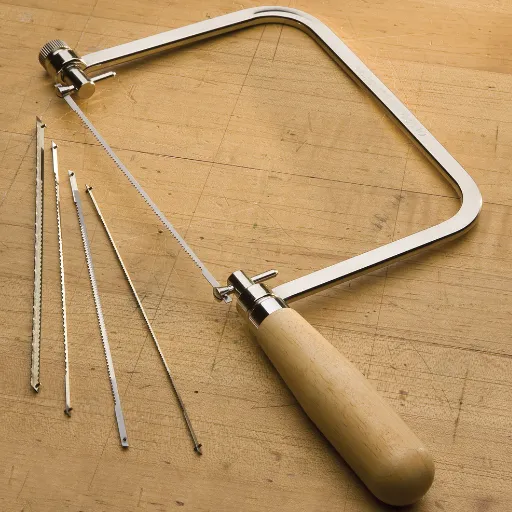
A coping saw is a hand-powered saw with a thin, narrow blade held under tension in a U-shaped frame. It’s the tool professionals reach for when they need to cut tight curves, interior cutouts, and seamless trim joints that a jigsaw or scroll saw can’t match in the field.
This guide explains what a coping saw is, what it’s used for, how to pick the right blade, and how to choose a saw that will serve you for years. You’ll also see how a real hardware manufacturer builds and quality-checks these tools, and how you can source them for a workshop or a product line. If you’re still deciding between saw types, our best hand saw buying guide covers the full range, and our breakdown of types of hand saws shows how a coping saw fits the family.
When a finish carpenter named Mike first showed me his trim kit, the coping saw was the tool he trusted most. On a high-end crown molding job, the mitered corners his crew cut one summer all opened up by winter as the house settled. The coped corners did not. That one lesson, repeated on nearly every interior trim job since, is why the coping saw still earns its place in professional kits more than a century after it was invented.
Key Takeaways
- A coping saw cuts tight curves, interior cutouts, and coped trim joints with a thin blade held in a U-shaped frame, typically costing $10-$30.
- Match the blade TPI to the job: 15 TPI for general trim, 18-20 TPI for crown molding, 24+ TPI for metal and thin material.
- Set the blade so teeth face the handle for pull-stroke cutting, and tension it until the blade rings with a crisp “ping” when plucked.
- Choose a frame that holds high tension and a comfortable handle; rigidity, not brand, is what keeps cuts straight.
- Most beginner problems are technique and blade selection, not the tool, and quality frames prevent more mistakes than any skill tip.
What Is a Coping Saw?
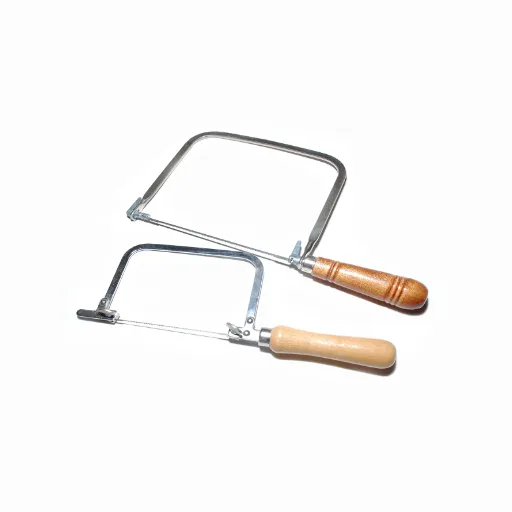
A coping saw is a hand-powered cutting tool with a thin, replaceable blade stretched across a C-shaped or U-shaped frame. The blade can rotate up to 360 degrees in the frame, which lets you change cutting direction and reach tight spots that fixed-blade saws cannot.
The frame holds the blade under tension, usually with a handle that twists to tighten or loosen it. Most frames take standard 6.5-inch pinned blades, and the blade pivots at both ends so it can follow complex patterns. Because the blade is thin, it removes very little material and leaves a narrow kerf, which is exactly what you want for fine, precise work.
A coping saw sits in the framed saw family alongside the fret saw and the bow saw. The fret saw has a much deeper frame and finer blades for delicate work like veneering. The bow saw is a larger, deeper-framed tool for rough cutting of larger stock. All three share the tensioned-blade design, but they are built for different jobs.
What Is a Coping Saw Used For?
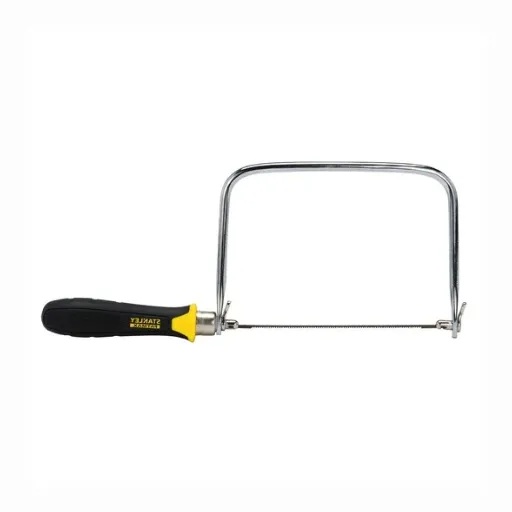
A coping saw is used for four main jobs: coping trim joints, cutting tight curves and scrollwork, making interior cutouts, and removing waste in joinery. Each one takes advantage of the same qualities, a thin blade, a pivoting frame, and precise manual control.
- Coping trim joints. Baseboard, crown molding, and casing profiles meet at inside corners. Instead of joining two mitered ends, you miter one piece and cut the other to follow the first profile. This is called a coped joint, and it stays tight even when corners are not perfectly square or the house shifts.
- Cutting tight curves and scrollwork. The thin blade and pivoting frame let the saw turn on a very small radius. That makes it ideal for intricate shapes, decorative fretwork, and trellis designs cut from the edge of a board.
- Interior cutouts. To cut a hole in the middle of a board, you drill a pilot hole, detach one end of the blade, thread it through the hole, and reattach it. You can then cut the shape from inside the work, which a jigsaw cannot do cleanly.
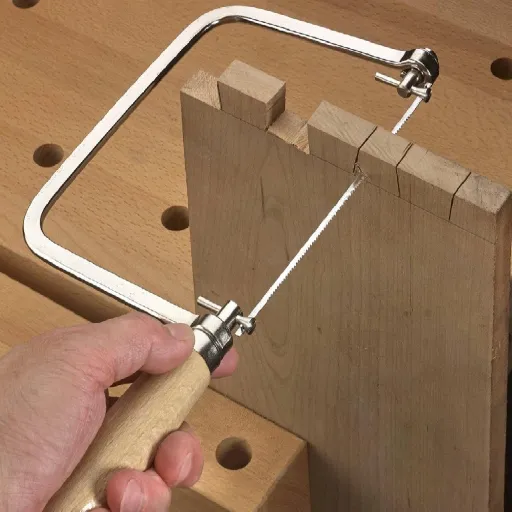
- Removing waste in joinery. Cabinetmakers use coping saws to clear the waste between dovetails and other joints before paring to the line. For a deeper look at joinery saws, our dovetail saw guide covers the dedicated tools for that work.
A coping saw is not the tool for long straight cuts, thick boards, or heavy stock removal. For those jobs you want a panel saw, a rip saw, or a power tool. Think of the coping saw as the precision instrument of the hand-saw family, not the workhorse.
Coping Saw vs Fret Saw vs Scroll Saw vs Jigsaw
Each of these saws cuts curves, but each one has a job it does better than the others. This comparison should settle the question.
| Feature | Coping saw | Fret saw | Scroll saw | Jigsaw |
|---|---|---|---|---|
| Power source | Manual | Manual | Electric, benchtop | Electric, handheld |
| Typical cost | 10−10−30 | 30−30−100 | 100−100−2,000+ | 29−29−200 |
| Portability | High | High | Low, bench-mounted | High |
| Blade support | Both ends, pivoting | Both ends, fixed | One end, table moves | One end |
| Tightest radius | Very tight | Extremely tight | Extremely tight | Loose, wanders |
| Interior cutouts | Yes, thread blade | Yes, thread blade | Yes, thread blade | With drilled hole |
| Best for | Trim coping, field curves | Fine veneer, inlay | Benchtop fretwork | Fast curves, panels |
The scroll saw wins on bench precision, and the jigsaw is faster on large panels. But only the coping saw is portable, needs no power, and handles trim work and tight curves on the job. That is why finish carpenters carry one in every kit.
How to Use a Coping Saw
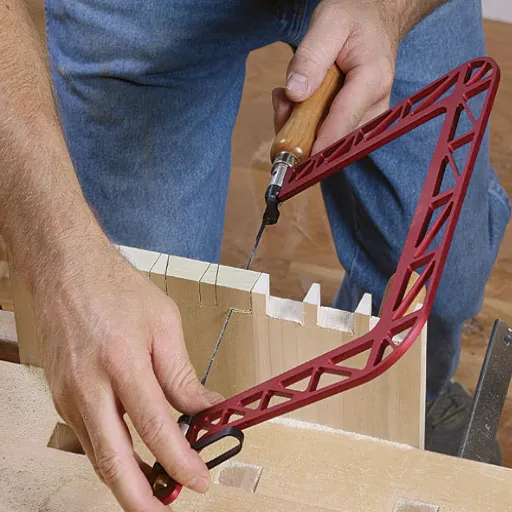
Good results with a coping saw come from three basics: correct blade setup, proper tension, and controlled strokes. Master these and the saw does the precision work for you.
Install the blade with teeth toward the handle. Most woodworkers cut on the pull stroke, which keeps the thin blade in tension and prevents buckling. Hook one end onto the pin at the front of the frame, the other onto the pin near the handle, then twist the handle to tension it. If you prefer a push stroke, point the teeth away from the handle. Pull cutting is the standard for good reason.
Tension the blade until it rings. Pluck it like a guitar string. A crisp, high-pitched ping means the tension is right; a flabby twang means tighten it. Don’t overtighten, because an over-tensioned blade snaps under load. Always release the tension after use, since leaving it tight for weeks fatigues the blade and frame.
Cut with short, controlled strokes. Use the full length of the blade and let the teeth do the work. Rotate the frame slowly on curves and make relief cuts at tight turns so the blade doesn’t bind. For interior cutouts, drill a pilot hole, thread the blade through, and reattach.
Coping a trim joint step by step. Cut a 45-degree miter, highlight the exposed profile with a pencil, and clamp the work with the miter just past the bench edge. Follow the profile on the waste side with the saw angled about 30 degrees to create a back bevel, then fine-tune the fit with a rasp or sandpaper. That back bevel is what lets the profiles meet with no visible gap.
Coping Saw Blades: TPI and How to Choose
Blade selection matters more than any other choice with a coping saw. The right TPI for your material makes the cut clean and easy; the wrong one makes the blade wander, bind, or snap.
| TPI range | Best for | Typical materials |
|---|---|---|
| 10-15 TPI | Fast rough cuts, general shaping | Softwood, thicker stock |
| 15-18 TPI | General woodwork, finish trim, coped joints | Pine, poplar, MDF baseboard and chair rail |
| 18-24 TPI | Hardwood, delicate curves, fine profiles | Oak, maple, crown molding |
| 24-32 TPI | Thin, fine, and metal or plastic cutting | Veneer, sheet metal, plastic trim |
Keep at least two or three teeth in contact with the material at all times. Higher TPI cuts smoother but slower; lower TPI removes material fast but leaves a rougher edge. For most baseboard and chair rail, 15 TPI is the reliable sweet spot, while crown molding with an intricate profile works best at 18 to 20 TPI.
Most coping saws use standard 6.5-inch pinned blades, which makes them easy to find and swap. High-carbon and high-speed steel blades stay sharp longer than budget steel. Keep a few blades on hand, one coarser for fast work and one finer for finish cuts, so you can switch without a trip to the store.
Anna learned this the hard way. She bought her first coping saw to trim her living room baseboard and spent an afternoon fighting it, convinced the saw was cheap junk. The blade was a coarse 10 TPI meant for rough work, and she had installed it with the teeth facing forward and tension barely tightened. Once she swapped in a 15 TPI blade, turned the teeth toward the handle, and tensioned it until it pinged, the same saw cut clean, tight corners in minutes. The tool was fine all along. The setup was the problem.
How to Choose a Coping Saw
When you shop for a coping saw, ignore the brand and judge the tool on five things. A saw that gets these right will cut straighter and last longer than a premium name with the wrong spec.
Frame rigidity. The frame must hold high tension without flexing. A rigid steel or die-cast frame prevents blade wander and keeps curves accurate. It is the single most important quality, and it is why two saws at similar prices perform so differently.
Frame depth. Deeper frames, around 6.3 inches, let you cut larger stock and make interior cuts without the frame hitting the work. If you mostly trim molding, a standard depth is fine.
Blade compatibility and ease of change. Stick with frames that accept standard 6.5-inch pinned blades so replacements are easy to find. A tool-free or quick-change mechanism saves real time when you switch between materials on a long job.
Handle comfort. Trim work is long, repetitive work. A comfortable, secure grip reduces fatigue and improves control. Hold the saw in your dominant hand before you buy it, and check that the tension knob turns smoothly.
Accessories and budget. Many saws ship with a few blades or a case. Decide whether you need the extras, and set a budget that matches how often you’ll use it. A $20 saw with a rigid frame and good blades serves most users for years.
Best Coping Saws by Use Case
Treat the named models as representative of each tier, and judge any saw against the five criteria above.
- Best overall value. The Olson SF63510 pairs a sturdy flat-wire frame with a good rigidity-to-weight balance, making it the reliable everyday pick for most woodworkers.
- Best professional / high-tension. The BAHCO 301 holds high tension, rotates the blade a full 360 degrees, and switches blades quickly. It is built for trim carpenters who use the saw daily.
- Best budget. The Eclipse 70-CP1R and Stanley 15-106 are simple, dependable entry saws for MDF and pine molding. Low price, but enough tension for clean work.
- Best precision / fine work. The Knew Concepts fret saw offers an ultra-stiff frame and extreme tension for detail work, while the Robert Larson deep-throat frame suits complex crown profiles. Both are premium picks.
- Best for trim and crown molding. The DEWALT DWHT20547L minimizes blade flutter on thick, ornate molding, and the KAKURI coping saw with a five-blade set is a strong all-rounder for trim and cabinet work.
How a Coping Saw Is Made
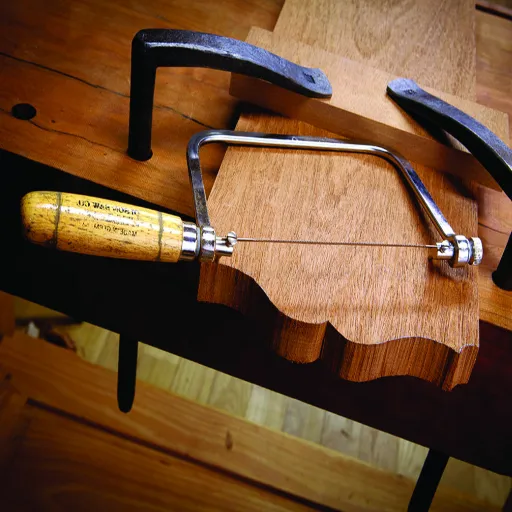
A coping saw looks simple, but building one that cuts straight takes real care. The frame starts as steel tube or bar stock, bent into shape, welded, ground, and plated. The blade is cut from steel strip, the teeth milled or filed, the set applied, and the edge hardened before it is pinned.
Two details separate a good saw from a cheap one. A frame even slightly out of square twists under load and sends your cut wandering. Teeth that are unevenly set or poorly hardened dull fast and cut ragged. That is why factory quality control matters so much.
Shanghai Oushike inspects every stage of production, from raw material to the finished tension mechanism, and tests blades for straightness and tooth uniformity before they ship. When a saw arrives from a manufacturer that runs these checks, you’ll spend your time cutting, not fighting the tool. That is the difference between factory-direct sourcing and picking a random unit from a marketplace.
What to check when a coping saw arrives. Inspect the frame for straightness and any twist. Turn the tension knob and confirm it moves smoothly. Check that the blade is sharp with even teeth and that the pins seat cleanly. Hold the handle and confirm it is comfortable. This two-minute check saves you from discovering a defect mid-project.
Common Coping Saw Mistakes and How to Fix Them
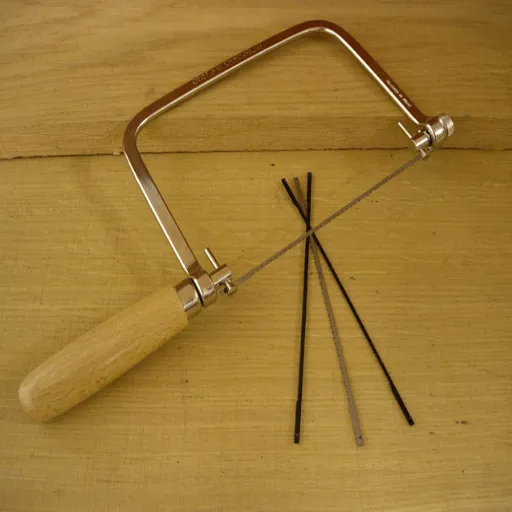
Most coping saw problems are avoidable. Here are the ones we see most often and the fix for each.
- Pushing too hard. The saw is not a power tool. Forcing it bends or snaps the blade. Fix: use light, steady strokes and let the teeth cut.
- Installing the blade backward. Teeth must face the handle for pull-stroke cutting. Fix: flip the blade and re-tension.
- Ignoring blade tension. A loose blade wanders and twists. Fix: tension until it pings, and check before each use.
- Forcing turns on curves. Turning on the non-cutting stroke breaks blades. Fix: rotate the frame slowly and make relief cuts at tight turns.
- Using the wrong blade spec. A coarse blade on thin trim, or a fine blade on thick stock, both cut badly. Fix: match TPI to material.
- Skipping the pilot hole for interior cuts. Cutting an interior shape without a starter hole binds the blade. Fix: drill first, thread the blade, then cut.
- Leaving tension applied after use. This fatigues the blade and frame. Fix: always release the tension when you finish.
Safety is straightforward. Wear safety glasses, especially for fretwork where a worn blade can snap. Do not overtension the blade, keep your hands clear of the cut line, and store the saw with the blade protected. These basics follow the same principles every professional shop uses.
Sourcing Coping Saws for Your Business
If you are a distributor, brand owner, or e-commerce seller, a coping saw is a strong line item: compact, affordable, and always in demand from trim carpenters and DIYers. Sourcing factory-direct changes the economics of your product line.
Working directly with a manufacturer means factory-direct pricing with no middleman, so your margins hold up. You can private-label the saw with your own branding and packaging through OEM and ODM services. Flexible minimum order quantities let you start small and scale as demand grows, and stable quality control means every batch meets the same standard, so you avoid the returns and complaints that come from inconsistent product.
A distributor we worked with in Poland started with a single private-label saw model to test the market. The first container sold out faster than expected, so he added two more SKUs, a budget saw and a premium high-tension model, on the next order. Within a year, hand saws became one of his best-margin categories.
Coping Saw FAQs
What is a coping saw used for?
A coping saw is used to cut tight curves, interior cutouts, and coped trim joints where baseboard, crown molding, and casing meet at inside corners. Its thin, pivoting blade gives precise control that jigsaws cannot match on small, detailed work.
What is the difference between a coping saw and a fret saw?
A coping saw has a rugged frame, a pivoting blade, and thicker blades for general curves and trim work. A fret saw has a much deeper frame and finer blades for delicate work like veneering and inlay. Both are hand-powered, but they serve different levels of detail.
Can a coping saw cut wood, metal, and plastic?
Yes. Use 10-15 TPI for softwood and fast rough cuts, 15-24 TPI for wood and trim, and 24-32 TPI for thin metal and plastic. Match the blade to the material and the cut stays clean.
What TPI is best for a coping saw?
For most wood and trim work, 15 TPI is the reliable all-round choice. Use 18-20 TPI for crown molding and intricate profiles, and lower TPI for fast rough cuts or higher TPI for fine, delicate work.
Coping saw vs scroll saw: which should I choose?
Choose a scroll saw for bench-mounted precision fretwork, puzzles, and marquetry. Choose a coping saw for portability, trim work in the field, and tight curves that need no power outlet. Most jobsite trim work favors the coping saw.
How do you tension a coping saw blade?
Twist the handle to pull the blade tight until it rings with a crisp ping when plucked. A flabby twang means it is too loose. Do not overtighten, and always release the tension after you finish using the saw.
Can I use a coping saw for dovetails?
Yes, a coping saw is commonly used to remove the waste between dovetails before paring to the line. For choosing the dedicated saw for cutting the dovetails themselves, see our dovetail saw guide.
Conclusion
A coping saw earns its place in any workshop because it does one thing better than any powered alternative: precise, controlled cutting of tight curves and trim joints. Choose a rigid frame that holds tension, match the blade TPI to your material, and keep the blade sharp and correctly installed, and the saw will serve you for years.
The payoff is practical. A coped joint stays tight where a mitered one opens up. An interior cutout comes out clean without a bench-mounted saw. And a $20 hand tool with a quality blade handles work that would stall a jigsaw. For professionals, that reliability is worth more than any brand name.
If you’re equipping a workshop, stocking a crew, or building a product line, we can help. Contact us for factory-direct coping saws, OEM and private-label options, and wholesale pricing that keeps your margins healthy.