
Jewelry Making Pliers: Types, Uses, & Buying Guide
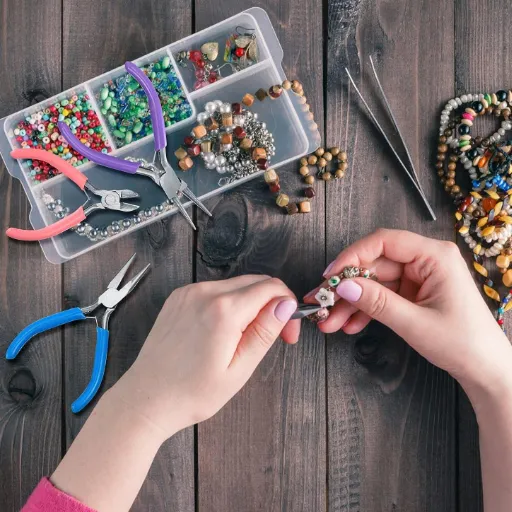
Jewelry making pliers are precision hand tools designed to grip, bend, and shape fine wire without marking it. The three you need most are chain nose, round nose, and flat nose pliers, and together they cover most beginner jewelry projects. This guide explains every common type, how to choose the right jaws and materials, and how to source wholesale jewelry pliers for resale.
If you’re new to the craft, the good news is that you don’t need a large collection. A quality starter kit with a few well-made pliers will take you further than a cheap multi-piece set that damages your wire. When Maya picked up beading in March, her $12 ten-piece set scratched every gold-filled jump ring she touched within a month. A smooth-jaw chain nose plier from a reputable maker solved the problem in one afternoon.
The challenge for most makers is not finding pliers, but knowing which type to reach for. Serrated jaws ruin soft metals. The wrong steel bends under pressure. A rounded jaw can flatten a loop before you finish it. By the end of this guide, you’ll know the right tool for each job, how to judge quality, and what to specify if you plan to buy jewelry pliers wholesale for your own brand or store.
Key Takeaways
- Chain nose, round nose, and flat nose pliers are the essential starter trio; half-round and flush cutters round out a beginner bench.
- Smooth, polished jaws protect fine wire, while serrated jaws mark soft metals like gold-filled and silver.
- Round nose pliers create loops and coils; chain nose pliers grip, bend, and open jump rings; flat nose pliers straighten and crimp.
- Quality signals are forged stainless or high-carbon steel, box-joint construction, spring action, and ergonomic grips.
- For resellers, wholesale jewelry pliers from China run about $0.40-$1.50 per tool with MOQs from 200 pieces, and OEM private labeling is widely available.
What Are Jewelry Making Pliers?
Jewelry making pliers are small, precision hand tools used to grip, bend, shape, and cut wire and findings during jewelry assembly. Unlike general-purpose pliers, they feature finer tips, smoother jaws, and lighter spring action, which give the control needed for delicate work without crushing or scratching the metal.
The key difference is the jaw. Jewelry pliers prioritize a clean, smooth surface that will not mar soft materials such as copper, silver, gold-filled, and plated wire. Many also include a spring that opens the jaws automatically, which reduces hand fatigue during hours of repetitive work. Needle nose pliers belong to this same precision family, and our needle nose pliers guide covers the wider category in detail.
Types of Jewelry Making Pliers
Jewelry pliers come in many shapes, and each shape exists for a reason. The table below shows the most common types and what they are built for.
| Type | Jaw style | Best for | Beginner? |
|---|---|---|---|
| Chain nose | Flat inside, round outside, tapered tip | Gripping, 90-degree bends, opening jump rings | Yes |
| Round nose | Smooth, conical, tapered | Loops, coils, spirals, eye pins | Yes |
| Flat nose / duck bill | Wide, flat jaws | Straightening wire, firm grip, crimp beads | Yes |
| Bent nose | Chain nose with 45-degree angled jaw | Awkward angles, reducing hand strain | Optional |
| Half-round | One flat, one rounded jaw | Gentle curves, ring bands, tapers | Nice to have |
| Crimping | Dimpled jaws | Closing crimp tubes and beads | Advanced |
| Nylon jaw | Nylon/coated tips | Scratch-free shaping of soft metals | Nice to have |
| Looping / coiling | Tiered round jaws | Repeat-size loops and coils | Advanced |
| Cutters | Sharp blades | Trimming wire and findings | Yes |
Chain Nose Pliers
Chain nose pliers are the workhorse of the jewelry bench. Their jaws are flat on the inside and rounded on the outside, tapering to a fine point. That shape lets you grip small parts firmly, make crisp 90-degree bends, open and close jump rings, and tuck wire ends into tight spaces.
Most guides recommend chain nose pliers as the first pair a beginner buys. If you can only own one plier, this is usually the one.
Round Nose Pliers
Round nose pliers have smooth, conical jaws that taper to a point. They exist for one main job: forming loops. Position the wire near the handles for a larger loop or near the tip for a smaller one. The smooth surface keeps the wire clean and free of flat spots.
You’ll use round nose pliers for wrapped loops, eye pins, coils, spirals, and any curved element in a design.
Flat Nose / Duck Bill Pliers
Flat nose pliers offer wide, flat jaws for a firm, even grip. They straighten kinked wire, hold pieces steady while you work the other end, and press down crimp beads. The flat surface makes them the right choice for sharp, angular bends.
Bent Nose Pliers
Bent nose pliers are chain nose pliers with the jaw angled about 45 degrees. The angle lets you reach into tight or awkward spots without twisting your wrist. Jewelry makers use them to open jump rings on finished pieces, set closures, and work behind components. They also reduce hand strain over long sessions. For a deeper comparison of angled jaw designs, see our guide to bent nose pliers.
Half-Round Pliers
Half-round pliers pair one flat jaw with one rounded jaw. They shape gentle curves, taper metal, and form ring bands without leaving flat marks. Metalsmiths reach for them often, and they are a useful addition as your skills grow.
Crimping Pliers
Crimping pliers press crimp tubes and beads flat and then fold them into a rounded form. The result is a secure, neat connection on beading wire. If you work with crimp beads, these are worth adding once you move past the basics.
Nylon Jaw Pliers
Nylon jaw pliers have coated tips that will not scratch even the softest metal. They are ideal for shaping wire, straightening findings, and working with plated or precious metals where every mark matters.
Cutters for Jewelry Making
Flush cutters trim wire close to the work surface and leave a clean end. Side cutters handle heavier wire, and memory wire shears are hardened for the tough steel used in memory bracelets. Every jewelry bench needs at least one good pair of flush cutters.
Chain Nose vs. Round Nose Pliers: What’s the Difference?
Chain nose and round nose pliers are the two most confusing pairs for beginners, because they look similar at first glance. The difference comes down to jaw shape and the job each one does.
| Comparison | Chain Nose Pliers | Round Nose Pliers |
|---|---|---|
| Jaw shape | Flat inside, round outside, tapered | Fully round and conical |
| Main job | Gripping, bending, opening jump rings | Forming loops and coils |
| Mark risk | Low on flat surfaces | Low, designed for smooth looping |
| Best for | Grip and precision bends | Consistent wire loops |
Use chain nose pliers when you need to hold or bend. Use round nose pliers when you need to create a loop. Most designs require both, which is why they are sold together in starter sets. If you are deciding between needle nose and chain nose styles for detailed work, our comparison of needle nose vs long nose pliers explains how the longer tips change your control.
Serrated vs. Smooth Jaws: Which Do You Need?
Smooth jaws are the safest choice for most jewelry work. A polished, non-serrated surface grips wire without leaving tooth marks, which matters when you work with soft metals such as gold-filled, silver, or copper. Serrated jaws add grip on slippery or hard materials, but they will scratch and dimple fine wire.
The rule is simple: use smooth jaws for fine and precious metals, and serrated jaws only for tough wire you do not mind marking. Nylon jaw pliers offer a middle path, giving grip without any metal-to-metal contact.
What Pliers Do I Need for Jewelry Making?
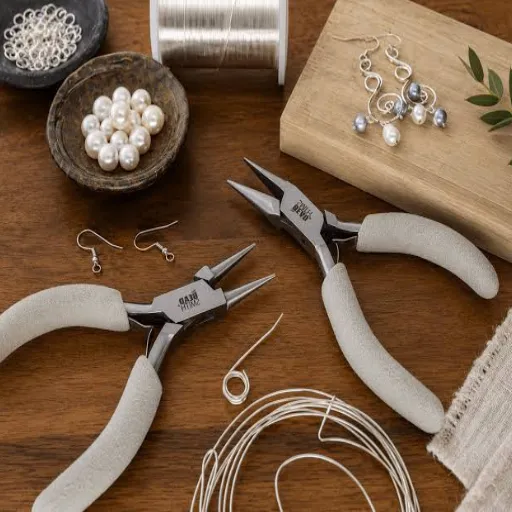
Your needs depend on whether you are starting out or working professionally.
Beginner Starter Kit
Start with the core trio, plus a pair of flush cutters:
- Chain nose pliers for gripping and jump rings
- Round nose pliers for loops
- Flat nose pliers for straightening and crimps
- Flush cutters for trimming wire
Add half-round pliers when you begin forming curves and ring bands. This five-tool setup covers the vast majority of beginner projects.
Sets vs. Individual Pliers
Starter sets are convenient and cost less per tool, but quality varies widely. The cheapest multi-piece sets are often made from recycled steel that deforms quickly, and their jaws may not align. A better approach is to buy a smaller set from a known manufacturer, or build your kit one tool at a time. It’s worth paying for smooth jaw finishing and box-joint construction.
Professional Additions
Working jewelers add crimping pliers, looping and coiling pliers, parallel action pliers, and setting pliers for stone setting. Precision bench work benefits from box-joint construction, which keeps fine tips aligned even under repeated use.
How to Choose Quality Jewelry Making Pliers
Quality in a plier shows up in the steel, the joint, and the finish.
- Steel: Stainless steel resists corrosion and is a good default for retail lines. High-carbon steel is strong and holds an edge but needs a polished or plated finish to resist marking. Forged construction is a stronger signal of quality than cast.
- Joint: Box-joint construction keeps the jaws aligned under pressure. Lap-joint pliers are cheaper but can twist. Check that the tips meet cleanly with no gap.
- Spring action: A built-in spring opens the jaws automatically, reducing fatigue during repetitive work. Look for a smooth, consistent spring.
- Handles: Bi-material grips (rubber or TPR over a core) cushion your hands and prevent slipping. Comfort matters when you spend hours at the bench.
- Finish: Polished, smooth jaws are the mark of a plier made for jewelry. Any rough edge or burr will transfer to your work.
When Mia’s small repair studio in Portland switched from cheap serrated pliers to smooth-jaw box-joint models, her rework rate on prong repairs dropped noticeably within two weeks. The cleaner grip meant fewer crushed findings and less time redoing each piece.
Sourcing Jewelry Making Pliers Wholesale
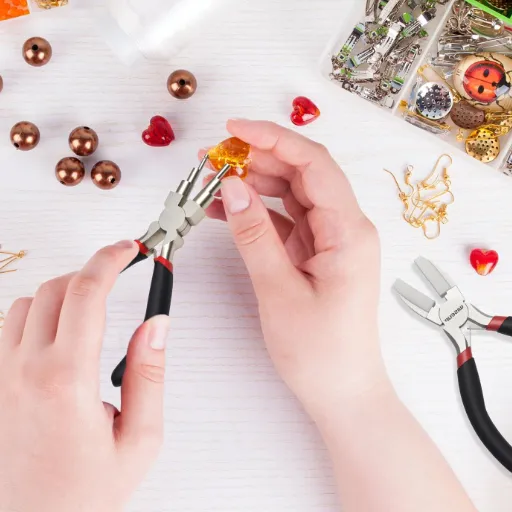
If you run a craft store, jewelry brand, or e-commerce line, wholesale jewelry pliers are a practical product to carry. The demand for jewelry making supplies is steady, with the global jewelry making supplies market forecast to reach USD 10.05 billion by 2033. The DIY and handmade market keeps that demand broad, from hobbyists to professional studios.
Where Jewelry Pliers Are Made
Most of the world’s jewelry pliers come from a few manufacturing clusters in China. Jiangsu Province around Zhangjiagang is the core area for precision pliers, with dedicated factories producing chain nose, round nose, flat nose, and bent nose designs. Guangdong Province adds precision fabrication capability, and Jiangxi is an emerging, cost-effective cluster. Factory-direct sourcing from these hubs is how private label brands keep unit costs low.
MOQ, Pricing, and Lead Times
Wholesale pricing depends on type, steel, finish, and order size. As a directional guide, individual jewelry pliers run roughly $0.40-$1.50 per tool at wholesale, while a 3-8 piece plier set runs about $1.80-$5.00. Minimum order quantities typically start around 200 pieces for standard models and rise to 1,000 or more for custom branding. Lead times run about 15-45 days for standard orders, with samples available in as little as a few days.
OEM and Private Label Options
Customization is where a commodity plier becomes a branded product. Factories can laser or stamp your logo, color the handles, select the steel grade, adjust the jaw finish, and build custom set compositions with your packaging. Flexible MOQs let you test a small run before scaling. This OEM path is how many jewelry tool brands launch without owning a factory. For a fuller checklist on verifying a pliers factory, see our guide to choosing a pliers manufacturer.
Quality Checklist for Bulk Orders
Before you commit to a bulk order, confirm the following with any supplier:
- Raw material certificates showing the steel grade
- Smooth, aligned jaws with no burrs or rough edges
- Consistent spring action across the batch
- Polished or appropriate finish for the target market
- Third-party inspection (SGS, TUV, Bureau Veritas) and pre-shipment inspection at AQL 2.5
- Sample approval before production
Sourcing directly from a manufacturer instead of a trading company gives you better control over these quality points. It is the difference between a consistent product line and an inconsistent one that eats into your returns budget.
Jewelry Making Pliers FAQs
What are the most important jewelry making pliers?
Chain nose, round nose, and flat nose pliers are the essential trio. Add a pair of flush cutters, and you can complete most beginner jewelry projects.
What is the difference between chain nose and needle nose pliers?
Chain nose pliers have flat inner jaws and a tapered, rounded outer edge, made for gripping and bending without marking. Needle nose pliers have extra-long, narrow jaws that reach deep into tight spaces, but their serrations can scratch fine metal. Jewelry makers usually prefer chain nose.
What are round nose pliers used for in jewelry making?
Round nose pliers form loops, coils, spirals, and eye pins in wire. The tapered jaw lets you control loop size by where you position the wire.
Are serrated or smooth pliers better for jewelry?
Smooth jaws are better for jewelry. They grip fine wire without leaving tooth marks. Serrated jaws grip harder but scratch soft metals like gold-filled and silver.
What is the best jewelry pliers set for beginners?
A quality set with chain nose, round nose, flat nose, and flush cutters is the best starting point. Choose smooth jaws, high-carbon or stainless steel, and box-joint construction.
Can I get private label jewelry pliers with my own brand?
Yes. Factories offer OEM private labeling, including logo stamping, custom handle colors, set composition, and custom packaging. Minimum orders for branded pliers typically start around 1,000 pieces.
Conclusion
Jewelry making pliers are precision tools, and the right choice comes down to three things: the jaw shape for the job, a smooth finish that protects your wire, and quality steel that stays aligned. Start with chain nose, round nose, and flat nose pliers plus flush cutters. Choose smooth jaws over serrated ones for fine metals. And when you are ready to source wholesale jewelry pliers for your own line, specify your steel, finish, and QC requirements before you order.
If you are a maker, build your kit from a trusted manufacturer rather than a cheap set. If you are a brand owner, store, or e-commerce seller, factory-direct sourcing with a clear spec sheet is the fastest route to a consistent, profitable jewelry pliers line. Request a quote from our team to see how we can support your jewelry pliers project, from standard models to fully customized private label sets.