
Needle Nose Pliers Sizes: Complete Size & Dimension Guide
Needle nose pliers come in overall lengths from 4 inches (100 mm) up to 12 inches (300 mm), and the two most common general-purpose sizes are 6 inches (150 mm) and 8 inches (200 mm). The size you choose determines reach, gripping strength, and how well the tool fits the job, so matching length and jaw to your trade matters more than brand. This guide covers every common size, what the dimensions mean, and how to pick the right pliers for electronics, electrical, automotive, and industrial work.
Most buyers reach for whatever pair is closest on the rack. That habit costs real time on the job. Dan, an electrician in Ohio, spent two years carrying a 9-inch pair in his pouch because it felt sturdy. It reached fine, but it was heavy, and the long jaws flexed on small wire nuts inside junction boxes. When he switched to a 6-inch insulated pair for panel work and kept an 8-inch for deeper pulls, his daily kit got lighter and his grip tightened up noticeably.
By the end of this guide, you will know exactly which size fits which task, how to read jaw length and tip width, and what to specify if you are buying needle nose pliers wholesale for a resale line.
Key Takeaways
- Needle nose pliers range from 4 inches (100 mm) to 12 inches (300 mm); 6-inch and 8-inch models cover most jobs.
- Overall length controls reach and use, while jaw length and tip width control precision and access.
- Electricians most commonly use 160-200 mm (6″-8″) insulated pliers; electronics work favors shorter 125-160 mm models.
- Buy for the tighter constraint first: a 7-inch pair beats a 10-inch pair in a confined space even when the longer one has more use.
- For wholesale buyers, a spread across 130-250 mm with insulated, ESD, and bent-nose variants builds the most sellable line.
What Sizes Do Needle Nose Pliers Come In?
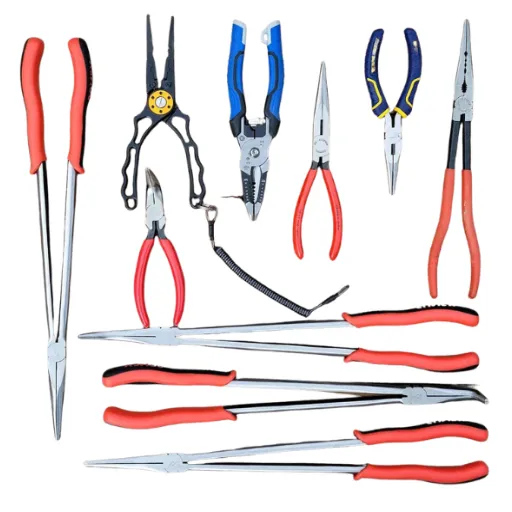
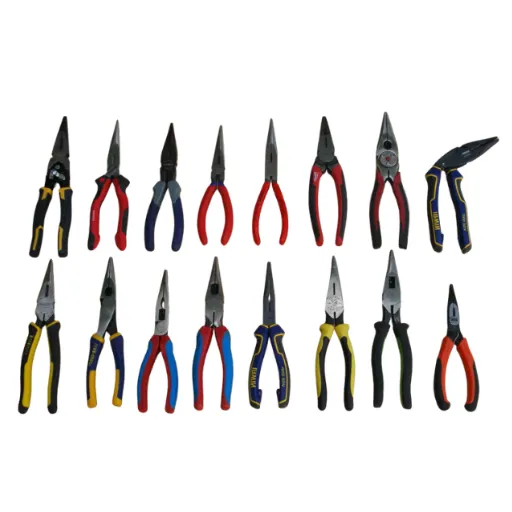
Needle nose pliers come in overall lengths from about 4 inches (100 mm) to 12 inches (300 mm), measured from the tip of the jaws to the end of the handles. The most common sizes are 6 inches (150 mm) and 8 inches (200 mm), with 4-5 inch models for precision work and 9-12 inch models for heavy-duty reach and use.
In metric markets you will also see 130 mm, 140 mm, 160 mm, 165 mm, 180 mm, 200 mm, and 250 mm listed as standard lengths. Because naming is not perfectly standardized, a “6-inch” plier can be sold as 150 mm or 152 mm depending on the maker. Always confirm the actual millimeter figure when a specification matters. Our needle nose pliers guide walks through the full product family if you want the broader picture before choosing a size.
Needle Nose Pliers Size Chart
This is the core reference. It shows the standard overall lengths, their millimeter equivalents, and the jobs each size suits best.
| Size (inches) | Length (mm) | Jaw length (approx.) | Typical use |
|---|---|---|---|
| 4″ | 100 mm | 0.9″-1.1″ (22-28 mm) | Precision electronics, ESD-safe work, watchmaking, jewelry repair |
| 5″ | 125-127 mm | ~1″ (25 mm) | Fine wire, hobby electronics, tight fuse pulling |
| 6″ | 150-152 mm | 1″-1.5″ (25-38 mm) | Most common. General purpose, electrician’s compact carry |
| 7″ | 175-178 mm | ~1.5″ (38 mm) | Mid-range reach, tool pouch carry, light automotive |
| 8″ | 200-203 mm | 1.5″-3″ (38-76 mm) | Electrical and automotive standard, general shop, deep reach |
| 9″ | 225-229 mm | up to 3″ (76 mm) | Heavy duty, thick cable, long reach |
| 10″ | 250 mm | up to 3″ (76 mm) | Industrial, long reach, high use |
| 11″-12″ | 280-300 mm | up to 3″ (76 mm) | Maximum reach and use, confined-space access |
The table is a starting point, not a rule. A distributor stocking a resale line, for example, will typically carry 130 mm through 250 mm so customers can find both a compact precision pair and a heavy-duty long-reach pair from one supplier.
Needle Nose Pliers Dimensions Explained
Beyond overall length, four dimensions decide whether a pair works for a specific task: jaw length, tip width, jaw opening, and bend angle. Each one changes what the pliers can actually reach and grip.
Overall Length
Overall length is the primary sizing metric and the one used in almost every product name. It controls two opposing qualities: reach and use. A longer plier reaches deeper into an engine bay, a machine, or a panel, and keeps your hand farther from hazards. The same extra length reduces gripping force, because the jaw acts at the end of a longer lever that resists your squeeze.
That is why a 6-inch pair feels more precise than a 12-inch pair on small parts. For everyday work, the 6-inch and 8-inch sizes offer the best balance, which is why nearly every manufacturer, including Channellock, lists them as standard offerings.
Jaw Length
Jaw length is the length of the tapered nose from the pivot to the tip. It ranges from about 12 mm (7/8″) on miniature precision models up to about 60 mm (3″) on long-jaw industrial pairs. Longer jaws reach into recesses and cable runs. Shorter jaws are stronger and grip more precisely, which is why electronics and jewelry work favor compact models.
Precision and ESD-safe pliers, the type covered in our precision pliers guide, use short jaws with fine tips so technicians can work on circuit boards without flexing the nose.
Tip Width
Tip width is the width of the pointed end of the jaws. True needle-nose tips measure under 1 mm, which is what lets them slip between tightly packed wires and into small holes. Standard long-nose tips run 1-3 mm for more grip on slightly larger parts.
A practical rule: if you route wire through grommets or cable ports, look for a tip around 2 mm or less. If you grip fittings and fasteners all day, a wider tip gives you a stronger, more stable hold.
Max Jaw Opening and Jaw Width
Jaw opening is how far the tips spread apart. It ranges from about 1 inch on small models up to about 2 inches or more on heavy-duty pairs. The opening should match the largest workpiece you grip. A plier that opens much wider than needed adds weight without improving grip, so match the tool to the part rather than buying the biggest pair on the rack.
Bend Angle
Straight jaws are the default, but angled versions with 35, 45, 60, or 90 degree bends let you reach work at awkward angles without twisting your wrist. Electricians and mechanics use 45 and 90 degree pairs for hose clamps, spring clips, and deep fasteners. The angle is part of the size decision because it changes how much clearance the tool needs.
Cutting Capacity
Most needle nose pliers include a side cutter near the pivot. The cutter is rated by wire diameter, not by plier length. A typical pair cuts hard wire up to about 1.2-1.6 mm and medium-hard wire up to about 2.5-3.2 mm. For heavier cutting, use a dedicated pair of diagonal cutters rather than forcing the small cutter on the pliers.
What Size Needle Nose Pliers Do Electricians Use?

Electricians most commonly use 160-200 mm (6″-8″) needle nose pliers, and the 8-inch size is the standard for electrical work because it reaches into junction boxes while still offering good control. Insulated models rated to 1,000 V AC per IEC 60900 are required when working on or near live circuits, and these are typically sold in 160 mm, 180 mm, and 200 mm lengths.
Within that range, the choice comes down to the job. A 6-inch pair is lighter and easier to carry in a tool pouch for panel work. An 8-inch pair adds reach for deeper pulls and heavier wire. Many electricians own both, which is exactly the dual-size approach we recommend in our buying guide to needle nose pliers for electricians.
How to Choose the Right Needle Nose Pliers Size
Choosing the right size is simpler than it looks. Use this checklist and the table below.
- Pick the smallest plier that reaches the work and gives enough use.
- Buy for the tighter constraint first. Inside a cabinet or engine bay, a 7-inch pair beats a 10-inch pair.
- Keep a 6-inch pair for tight access and fine control, plus an 8-inch pair for reach. Two sizes cover most jobs.
- Match jaw opening to your largest workpiece instead of oversizing.
- Choose a tip width that fits the work: under 2 mm for wiring and precision, wider for fasteners.
- Add insulated, angled, or ESD-safe versions only when your work requires them.
| Trade / application | Recommended length | Why this size |
|---|---|---|
| Electronics, PCB, watchmaking | 125-160 mm (5″-6″) | Fine tips under 1 mm, short jaws for control, ESD-safe variants |
| Jewelry making | 110-140 mm (4.3″-5.5″) | Smooth-jaw precision models that do not mark soft metal |
| Electricians | 160-200 mm (6″-8″) | Insulated VDE 1000 V standard; 6″ for pouch carry, 8″ for reach |
| Automotive / mechanics | 180-250 mm (7″-10″) | Reach into engine bays; 45/90 degree bent variants for clips |
| Industrial / heavy duty | 200-300 mm (8″-12″) | Maximum reach and use on thick cable and large fittings |
When precision work is the priority, shorter is better. When access is the problem, longer is better. Knowing which constraint applies to your job is the whole game.
Quality and Materials by Size
A plier’s size only helps if the tool is built well, because the same dimensions in cheap steel will flex, dull, and misalign. The quality markers to look for do not change much across the size range.
- Steel: chrome vanadium (Cr-V) is the professional standard. It holds an edge, resists wear, and is drop-forged and heat-treated. Plain carbon steel is softer and deforms sooner.
- Hardness: professional jaws and cutting edges are typically hardened to 55-65 HRC. Cutting edges are often induction-hardened to about 60-61 HRC for longer life.
- Joint: box-joint construction keeps the jaws aligned under pressure. Lap-joint pliers are cheaper but can twist. Check that the tips meet cleanly with no gap.
- Handles: bi-material rubber or TPR grips reduce fatigue. For electrical work, insulated handles must be VDE/1000 V certified to IEC 60900.
- Standards: DIN ISO 5745 and 5746 cover pliers and nippers, and ANSI sets quality expectations for the US market.
Sizing an Assortment for Wholesale Buyers
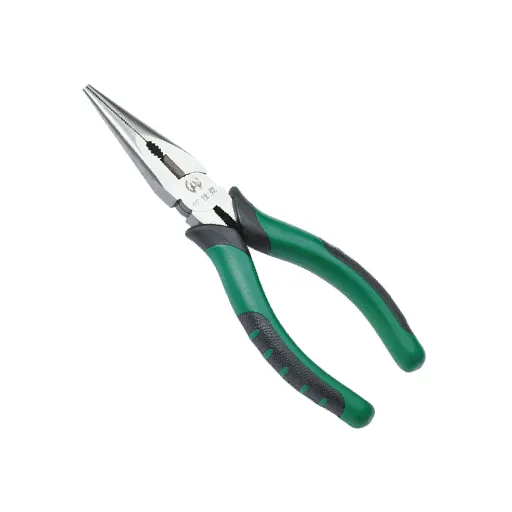
If you stock pliers for resale, the size range you carry is a business decision, not just a tool decision. The global hand tools market is projected to grow from about USD 25.61 billion in 2025 to USD 34.51 billion by 2033, and pliers make up a meaningful slice of that demand. Distributors who cover the common sizes across multiple variants sell more units per line.
The Size Mix That Sells
A practical plier line covers 130 mm, 160 mm, 180 mm, 200 mm, and 250 mm overall lengths. That spread gives customers a compact precision pair, the two most common professional sizes, and a heavy-duty long-reach pair. Add variants within those sizes: straight and 45 degree bent noses, insulated VDE models for electrical buyers, and ESD-safe models for electronics. Each variant serves a distinct customer group and keeps the line from competing with itself.
Sourcing Benchmarks
When you buy wholesale, prices and minimums depend on size, steel, and customization. As a directional guide, standard needle nose pliers run roughly $0.40-$1.50 per piece at wholesale, with minimum order quantities starting around 200 pieces for standard models and rising to 1,000 or more for custom branding. Lead times run about 15-45 days for standard orders, with samples available sooner.
OEM and Private Label
Customization is where a commodity plier becomes a branded product. Factories can laser or stamp your logo, color the handles, select the steel grade, adjust jaw finish, and build custom set compositions with your packaging. Flexible MOQs let you test one size before scaling the full range. This OEM path is how many hardware brands launch a pliers line without owning a factory.
Sourcing directly from a manufacturer instead of a trading company gives you better control over quality and consistency. It is the difference between a predictable product line and one that eats into your returns budget.
Needle Nose Pliers Sizes FAQs
What sizes do needle nose pliers come in?
Needle nose pliers come in overall lengths from 4 inches (100 mm) to 12 inches (300 mm). The most common sizes are 6 inches (150 mm) and 8 inches (200 mm), with compact 4-5 inch models for precision work and 9-12 inch models for heavy-duty reach.
What size needle nose pliers do electricians use?
Electricians most commonly use 160-200 mm (6″-8″) pliers, with 8 inches as the standard for electrical work. Insulated models rated to 1,000 V AC per IEC 60900 are required for live work and are typically sold in 160 mm, 180 mm, and 200 mm lengths.
Is a 6-inch needle nose plier the same as 150 mm?
Usually yes, but not always. A “6-inch” plier can be listed as 150 mm or 152 mm depending on the manufacturer. Confirm the exact millimeter figure when a precise specification matters.
Are longer needle nose pliers stronger?
No. Longer pliers reach further but reduce gripping force. Shorter jaws grip more strongly and precisely, which is why precision work favors compact sizes.
What is the smallest size of needle nose pliers?
The smallest common size is about 4 inches (100 mm) overall length, with jaw lengths under 1 inch and tips under 1 mm wide. These are used for electronics, watchmaking, and jewelry work.
What is the difference between needle nose and long nose pliers?
Needle nose and long nose pliers are near-synonyms with the same tapered, narrow jaws. “Needle nose” usually refers to the finer-tipped versions, while “long nose” can describe slightly wider or longer-jaw models. Our comparison of needle nose vs long nose pliers explains the small differences and when each style is preferred.
How do I know which plier size I need?
Pick the smallest plier that reaches the work and provides enough use. Keep a 6-inch pair for tight access and an 8-inch pair for reach, and add a longer pair only when the job needs it.
Conclusion
Needle nose pliers sizes matter because length and jaw shape decide whether a tool reaches, grips, and fits the job. Start with the overall length range from 4 to 12 inches, use the size chart to match dimension to task, and buy for the tighter constraint when a space is tight. For most professionals, a 6-inch and an 8-inch pair cover the majority of work, with insulated versions for electrical jobs and compact precision models for electronics.
If you are a professional, build your kit around quality steel and the right size for your trade. If you are a distributor, brand owner, or e-commerce seller, stock a spread across 130-250 mm with insulated, ESD, and bent-nose variants to serve every customer. Factory-direct sourcing with a clear spec sheet is the fastest route to a consistent, profitable pliers line. Request a quote from our team to discuss sizes, customization, or wholesale pricing for your needle nose pliers project.