
Nut Runner Safety and Ergonomics: Protecting Your Assembly Team
Nut runners are significantly safer than impact wrenches, but they are not harmless. Every day, assembly operators face four distinct hazards: hand-arm vibration, hazardous noise levels, torque reaction forces, and poor ergonomic posture. Understanding nut runner safety is essential for controlling these risks before they become injuries, workers’ compensation claims, or lost production time.
Most facilities assume that switching from impact wrenches to nut runners solves their safety problems. It helps, but it does not eliminate the risks. A pneumatic nut runner running at 95 decibels still damages hearing over time. A high-torque tool without a reaction arm still transfers dangerous forces into an operator’s wrist and shoulder. And a poorly maintained tool vibrates more than a properly serviced one, accelerating the onset of Hand-Arm Vibration Syndrome.
This guide covers every major nut runner safety hazard your team faces. You will learn the specific exposure limits that matter, the standards that govern workplace safety for torque tools, and the practical controls that prevent injuries without slowing production. For the complete picture on nut runner types, selection, and sourcing, refer to our complete nut runner guide.
Key Takeaways
- Pneumatic nut runners produce 90-100 dB of noise, exceeding OSHA action levels and requiring hearing protection.
- Hand-Arm Vibration Syndrome (HAVS) is permanent but preventable; ISO 5349 sets the measurement framework for exposure limits.
- ISO 11148-3 mandates reaction arms for pistol-grip tools above 10 Nm and straight tools above 4 Nm.
- Electric and cordless nut runners are generally safer than pneumatic tools, with lower noise and vibration levels.
- Poorly maintained tools vibrate more, produce more noise, and create higher injury risk than well-maintained ones.
- A simple pre-operation safety checklist takes 60 seconds and prevents the majority of nut runner-related injuries.
Why Nut Runner Safety Deserves Attention
The False Sense of Security
Nut runners apply smooth, continuous torque. Impact wrenches deliver percussive hammer blows. Because nut runners feel more controlled, operators and supervisors often treat them as low-risk tools. That perception is misleading. The forces involved in industrial fastening are substantial, and the cumulative exposure over months and years creates serious health risks.
An operator running a pneumatic nut runner on an automotive frame line tightens 400 joints per shift. Each tightening exposes the hand and arm to vibration and the ears to noise. Over a year, that operator completes roughly 100,000 cycles. Small exposures add up.
The Cost of Ergonomic Injuries
Musculoskeletal disorders and hearing loss are among the most expensive workplace injuries to treat. A single HAVS diagnosis can trigger permanent restrictions, medical monitoring, and compensation costs that exceed $50,000 over a worker’s lifetime. A wrist or shoulder injury from torque reaction force can put an operator on light duty for weeks while production scrambles to cover the station.
A maintenance supervisor at a Midwest stamping plant learned this lesson the hard way. An operator named Carlos developed wrist tendonitis after six months of using an 85 newton-meter nut runner without a reaction arm. Carlos resisted the full torque reaction force four hundred times per shift. Medical costs, light-duty wages, and temporary replacement labor totaled nearly 12,000.A12,000.A2,500 torque arm would have prevented the injury entirely.
Regulatory Landscape Overview
Several standards govern nut runner safety in the workplace:
- OSHA 29 CFR 1910.95 sets the legally enforceable noise exposure limit at 90 dBA over an 8-hour shift
- ISO 5349 defines how hand-arm vibration is measured and evaluated
- ISO 11148-3 specifies safety requirements for reaction devices on handheld power tools
- ANSI S2.70 provides HAV exposure guidelines adopted by many US employers
Compliance is not optional, and the General Duty Clause gives OSHA authority to cite employers for recognized hazards even without a specific vibration standard.
Hand-Arm Vibration and HAVS
What Is Hand-Arm Vibration Syndrome
Hand-Arm Vibration Syndrome (HAVS) is a permanent, progressive disorder affecting blood vessels, nerves, muscles, and joints in the hand, wrist, and arm. It is caused by regular exposure to vibration from handheld power tools. Early symptoms include tingling, numbness, and reduced grip strength. Advanced cases develop vibration white finger, a painful condition where fingers blanch and lose circulation in cold weather.
HAVS is irreversible. Once nerve and vascular damage occur, it does not heal. Prevention is the only effective strategy.
Hand Arm Vibration Levels by Nut Runner Type
Not all nut runners vibrate equally. Power source and tool condition are the primary factors determining hand-arm vibration exposure.
| Power Source | Typical Vibration Level | Relative Risk |
|---|---|---|
| Pneumatic (stall-type) | 3-8 m/s² | Higher |
| Pneumatic (clutch) | 2.5-5 m/s² | Moderate |
| Electric corded | 1.5-3 m/s² | Lower |
| Cordless | 1.5-3 m/s² | Lower |
| Hydraulic (handheld) | 2-6 m/s² | Moderate-High |
Pneumatic stall-type tools generally produce the most vibration because the motor stalls abruptly at torque target, creating a sharp mechanical shock. Electric and cordless tools with electronic shut-off deliver smoother torque curves and lower vibration.
ISO 5349 and Exposure Limits
ISO 5349 is the international standard for measuring and evaluating hand-arm vibration exposure. It defines how vibration is quantified but does not set legally binding limits. Individual countries and regions adopt their own thresholds based on the ISO framework.
| Standard | Daily Exposure Action Value | Daily Exposure Limit Value |
|---|---|---|
| EU Directive 2002/44/EC | 2.5 m/s² A(8) | 5.0 m/s² A(8) |
| UK Control of Vibration at Work | 2.5 m/s² A(8) | 5.0 m/s² A(8) |
| ANSI S2.70 (USA) | 2.5 m/s² | 5.0 m/s² |
In the United States, OSHA does not have a specific Permissible Exposure Limit for hand-arm vibration. However, employers must address recognized hazards under the General Duty Clause. Most responsible employers follow ANSI S2.70 guidelines.
Prevention Strategies
The most effective controls follow the hierarchy of controls:
Engineering controls: Select low-vibration tools. Electric and cordless nut runners typically produce lower vibration than pneumatic equivalents. Keep tools well-maintained; worn bearings, damaged clutches, and loose gearboxes increase vibration significantly.
Administrative controls: Rotate operators between tasks to reduce individual exposure time. Limit continuous trigger time. Schedule high-vibration tasks across multiple shifts.
PPE: Anti-vibration gloves reduce vibration transmission but do not eliminate the hazard. They should supplement engineering and administrative controls, not replace them.
Noise Exposure and Hearing Protection
Decibel Levels by Power Source
Noise is the most immediately noticeable hazard of nut runner operation. The difference between power sources is dramatic.
| Power Source | Noise Level | OSHA Status |
|---|---|---|
| Pneumatic | 90-100 dBA | Exceeds Action Level; may exceed PEL |
| Electric corded | 70-80 dBA | Below Action Level in most cases |
| Cordless | 70-80 dBA | Below Action Level in most cases |
| Hydraulic | 75-85 dBA | Near or above Action Level |
A pneumatic nut runner at 95 dBA exceeds the OSHA action level of 85 dBA. At 100 dBA, it exceeds the permissible exposure limit of 90 dBA. Operators working with pneumatic tools in enclosed spaces or near compressors face compounded noise exposure.
OSHA 1910.95 vs NIOSH Recommendations
OSHA sets the legally enforceable standard. NIOSH provides best-practice recommendations that are stricter.
| Parameter | OSHA (Legally Enforceable) | NIOSH (Recommended) |
|---|---|---|
| Permissible Limit | 90 dBA (8-hour TWA) | 85 dBA (8-hour TWA) |
| Action Level | 85 dBA (triggers Hearing Conservation Program) | — |
| Exchange Rate | 5 dB | 3 dB |
Under the OSHA 5 dB exchange rate, allowable exposure time halves with every 5 dB increase:
- 90 dBA = 8 hours maximum
- 95 dBA = 4 hours maximum
- 100 dBA = 2 hours maximum
NIOSH uses a 3 dB exchange rate, which is more protective. Many leading manufacturers now design to NIOSH guidelines, even though OSHA compliance is the legal minimum.
Hearing Conservation Program Requirements
When noise exposure reaches the 85 dBA action level, employers must implement a Hearing Conservation Program. This includes:
- Baseline and annual audiometric testing for exposed workers
- Hearing protection provided at no cost
- Training on noise hazards and proper PPE use
- Engineering controls to reduce noise where feasible
Engineering Controls vs PPE for Noise
The hierarchy of controls applies to noise just as it does to vibration. Engineering controls are always preferable to relying on personal protective equipment alone.
Engineering controls: Selecting quieter tools is the most effective approach. Electric and cordless nut runners operate at 70-80 dBA, which is 15-20 dBA lower than pneumatic equivalents. That difference represents a 30- to 100-fold reduction in sound energy. Enclosing compressors, adding acoustic barriers, and isolating vibration also reduce noise at the source.
Administrative controls: Limiting exposure time through job rotation reduces cumulative dose. Scheduling noisy tasks during shifts with fewer workers nearby lowers facility-wide exposure.
PPE: Hearing protection is the last line of defense, not the first. Earplugs and earmuffs are effective when fitted and worn correctly, but they add discomfort, communication barriers, and compliance challenges. For industry-specific guidance on where different nut runner types are used, see our breakdown of nut runner applications by industry.
Torque Reaction Arm Safety and Force Management
How Reaction Force Causes Injury
When a nut runner reaches its target torque, the motor or clutch stops. The rotational energy does not disappear. It creates a reaction force that pushes back against the operator. On a soft joint tightened to 50 newton-meters, the operator can experience a pull-back force of approximately 135 newtons, or roughly 30 pounds of force.
Resisting that force hundreds of times per shift causes cumulative trauma. Wrist strain, elbow tendonitis, shoulder impingement, and lower back stress are all documented outcomes of uncontrolled torque reaction.
When Reaction Arms Are Mandatory
ISO 11148-3 specifies safety requirements for handheld power tools. It recommends using a device to absorb reaction torque when tightening with direct-driven tools above:
- 10 Nm for pistol-grip tools
- 4 Nm for straight (inline) tools
These thresholds are conservative because they assume repetitive operation. Even below these limits, task rotation and ergonomic assessment are advisable for high-volume applications.
Types of Torque Reaction Systems
Torque Arms: Articulated or linear arms mounted to a fixture or bench. They absorb the reaction force at shut-off and support the tool weight. The Atlas Copco AX1 articulated arm absorbs up to 120-150 Nm in horizontal, vertical, or angled orientations. Arms also keep the tool aligned, preventing side-loading and cross-threading.
Torque Tubes: Overhead-mounted vertical balancers that support Z-axis movement and neutralize kickback from right-angle nut runners. They maintain control in high-volume tasks without the sway of a chain hoist.
Reaction Bars: Essential for high-torque handheld tools. They brace against a solid surface to absorb reaction force. Critical safety note: The forces at the bar-workpiece interface can crush or sever fingers. Operators must never hold the reaction bar during tightening.
Safe Operating Posture
Hold the tool close to the body with a neutral wrist position. Avoid extreme wrist angles, especially when force is required. When working overhead, use torque arms or balancers to eliminate static muscle loading. CCOHS recommends counter-balancing any frequently used tool weighing more than 0.5 kilograms.
Nut Runner Ergonomics: Tool Selection and Workstation Design
Grip Design and Handle Angles
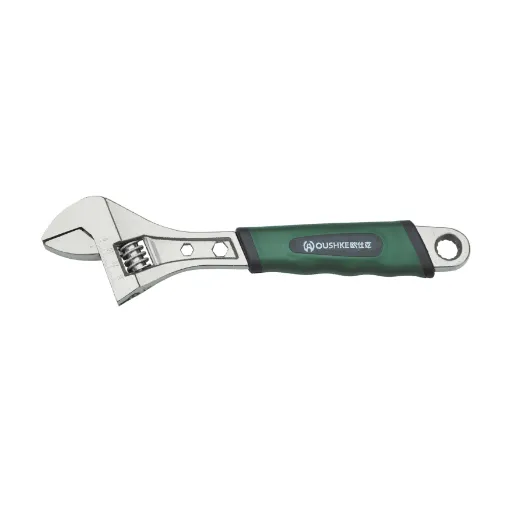
Tool geometry directly affects operator posture. Pistol-grip tools suit downward tightening with a neutral wrist. Right-angle tools fit tight spaces but transmit more vibration through the longer gearbox path. Inline tools work in depth-restricted channels but require careful wrist alignment.
Selecting ergonomic torque tools with proper handle geometry is one of the most effective long-term investments in operator health. For guidance on matching tool specifications to your application, see our guide on how to choose a nut runner with the right safety features. Modern tools like the Atlas Copco Tensor Revo HA use adjustable handle angles and two-hand triggers. The two-hand design distributes weight between both arms and ensures hands stay clear of pinch points.
Tool Weight and Balancing
A heavy tool causes static muscle loading even before the trigger is pulled. For tools used continuously, consider:
- Tool balancers or hose reels to support the weight
- Torque arms that carry the tool between cycles
- Lighter battery platforms for cordless tools
Workstation Layout
Position the workpiece at elbow height when possible. Avoid overhead and floor-level fastening when alternatives exist. Ensure adequate lighting so operators can see fastener alignment. A misaligned socket causes side-loading, which increases vibration and reaction force.
Task Rotation and Break Schedules
Repetitive fastening is inherently risky. Rotate operators between fastening tasks and non-fastening tasks every two hours, where production allows. Short micro-breaks of 30-60 seconds every 20 minutes reduce cumulative fatigue more effectively than one long break per shift.
Nut Runner PPE Requirements for Safe Operation
Hearing Protection
Mandatory when operating pneumatic nut runners or working near compressors. Earplugs or earmuffs must provide adequate attenuation. Workers enrolled in a Hearing Conservation Program require training on proper insertion and fit.
Anti-Vibration Gloves
Recommended for extended use with high-vibration tools. Modern glove-embedded monitoring systems provide real-time HAV exposure tracking and alerts compliant with ISO 5349. For facilities looking for HAVS prevention tools, glove-mounted vibration monitors are increasingly affordable and integrate directly with safety management systems. Gloves reduce transmission but do not replace exposure time limits.
Eye Protection
Flying debris from damaged sockets, broken fasteners, or stripped threads can cause eye injuries. Safety glasses with side shields are standard requirements on most assembly floors.
Safety Footwear
Steel-toe or composite-toe boots protect against dropped tools, falling fasteners, and accidental contact with hydraulic equipment.
Nut Runner Safety Checklist
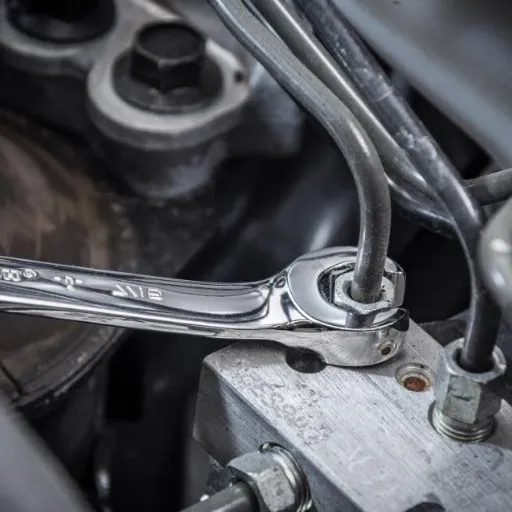
A 60-second nut runner operator safety checklist prevents the majority of nut runner-related injuries.
Before Operation
- Inspect the tool housing for cracks or damage
- Verify the reaction arm or bar is secure and properly positioned
- Check that the socket is the correct size and in good condition
- Confirm hearing protection is available and functional
- Ensure the workstation is well-lit and the workpiece is stable
During Operation
- Maintain a neutral wrist position
- Keep the tool aligned with the fastener axis
- Do not hold the reaction bar during tightening
- Take micro-breaks during extended fastening sessions
- Stop immediately if unusual vibration or noise occurs
After Operation
- Store the tool in its designated holder or case
- Report any damage, excessive vibration, or noise to maintenance
- Log any near-misses or symptoms for safety review
Connecting Safety to Maintenance
How Poor Maintenance Increases Hazards
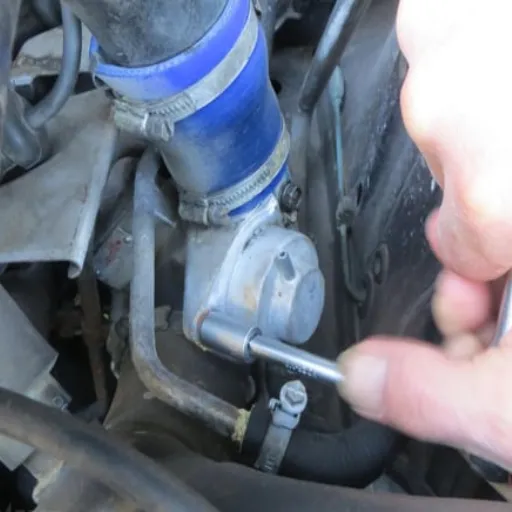
Poorly maintained tools are more dangerous than well-maintained ones. Worn bearings increase vibration. Damaged clutches create erratic torque curves and sharper reaction forces. Clogged motor vents cause overheating, which degrades electronic controls and can trigger unexpected shut-off behavior.
A German automotive supplier documented this connection clearly. They switched from pneumatic to electric nut runners on a high-volume transmission assembly line. Noise dropped from 95 dBA to 78 dBA, eliminating the need for hearing protection in that zone. They also implemented a strict maintenance schedule. HAVS exposure claims dropped by 60% within 18 months. The maintenance investment paid for itself through reduced workers’ compensation premiums.
Calibration Drift and Joint Safety
A nut runner that is out of calibration does more than produce bad joints. It creates unpredictable reaction forces and extended cycle times. An undertightened joint may require rework. An overtightened joint can damage the fastener or the workpiece, creating sharp edges or flying debris.
For a complete maintenance framework that protects both tool accuracy and operator safety, see our guide to nut runner maintenance and calibration.
When to Remove a Tool from Service
Never operate a nut runner that shows visible damage, excessive vibration, unusual noise, or erratic torque behavior. Tag the tool out immediately and send it for inspection. Operating a damaged tool puts the operator, the product, and the facility at risk.
Conclusion
Nut runner safety is not about adding bureaucracy to the shop floor. It is about protecting your most valuable asset, your people, while maintaining predictable production. The four hazards are real: vibration, noise, reaction force, and poor ergonomics. Each has proven controls.
Start with tool selection. Electric and cordless nut runners reduce both noise and vibration compared to pneumatic alternatives. Add reaction arms wherever ISO thresholds apply. Implement hearing conservation where pneumatic tools remain in use. Train operators on posture and early symptom recognition. And maintain your tools rigorously, because a well-maintained tool is a safer tool.
For a broader view of nut runner technology and selection, see our complete nut runner guide.
If you are evaluating nut runners for your product line and want specifications on low-vibration, low-noise models, or if you need OEM safety-compliant tool solutions, contact our team. We help you select and source tools that protect your operators while meeting your production targets.