
Nut Runner Applications: A Guide to Industries, Torque Specs, and Tool Selection
A nut runner is used wherever a threaded fastener needs to be tightened to a precise torque value. That sounds simple until you realize the range spans from a 0.1 Nm screw on a circuit board to a 5,000 Nm bolt on a wind turbine tower. The tool that handles one cannot handle the other. Matching the right nut runner to the right application is the difference between a reliable joint and a field failure.
Yet most guides treat nut runner applications as an afterthought. They list a few industries in a bullet list and move on. Buyers are left guessing which tool type, torque range, and standards apply to their specific work.
This guide breaks down nut runner applications across seven industries with the torque specifications, tool recommendations, and compliance standards you actually need to make a decision.
Key Takeaways
- Automotive assembly uses electric controlled nut runners for engine, chassis, and EV battery fastening, with torque ranges from 2 Nm to 200 Nm and mandatory torque traceability under IATF 16949.
- Aerospace demands the highest precision, with airframe fasteners at 2-200 Nm and engine bolts at 100-300 Nm, all requiring AS9100 and NADCAP compliance.
- Wind energy operates at the opposite extreme, with tower flange bolts reaching 1,000-5,000+ Nm on M36-M64 fasteners, typically handled by hydraulic torque wrenches.
- Construction structural steel bolting follows AISC and RCSC standards, with A325 bolts at 200-500 Nm and A490 bolts at 400-1,000 Nm.
- Electronics and appliance assembly requires micro nut runners at 0.1-5 Nm, where clean room compatibility and ESD safety matter more than raw power.
What Is a Nut Runner Used For?
A nut runner is a power tool designed to tighten nuts, bolts, and other threaded fasteners to a specific torque value with controlled accuracy. Unlike an impact wrench that delivers repeated blows for speed, a nut runner applies torque in a controlled manner and stops automatically when the target value is reached. This makes it the standard tool for any assembly where joint integrity, safety, or regulatory compliance matters.
Nut runners serve industries from automotive and aerospace to construction, energy, electronics, and heavy machinery. The specific tool type, torque range, and features vary dramatically by application. A nut runner for automotive engine assembly has little in common with one used to tighten bridge bolts, even though both perform the same basic function. For a deeper comparison of nut runners against other fastening tools, see our guide to nut runners vs. impact wrenches.
Nut Runner Applications by Industry: Overview
The table below maps major industries to their common applications, typical torque ranges, recommended tool types, and key standards. This is the starting point for matching a nut runner to your work.
| Industry | Common Applications | Torque Range | Recommended Tool Type | Key Standards |
|---|---|---|---|---|
| Automotive | Engine, chassis, EV battery, body-in-white | 2-200 Nm | Electric controlled | IATF 16949, VDA, ISO 5393 |
| Aerospace | Airframe, engine, landing gear, composites | 2-500 Nm | Electric-controlled, fixed | AS9100, NADCAP, NAS/AN |
| Wind Energy | Tower flanges, nacelle, blade root bolts | 100-5,000+ Nm | Hydraulic, high-torque pneumatic | IEC 61400, DNV GL |
| Construction | Structural steel, bridge, prefab buildings | 50-1,000 Nm | Pneumatic, hydraulic | AISC, RCSC, ASTM A325/A490 |
| Electronics | PCB mounting, housing assembly, and medical devices | 0.1-10 Nm | Electric micro | ESD standards, FDA (medical) |
| Appliance | Drum bolts, compressor mounting, HVAC | 2-40 Nm | Electric, pneumatic | UL, CE |
| Heavy Machinery | Track pads, arm pins, and railway wheels | 100-2,000 Nm | Pneumatic, hydraulic | EN 13261, SAE J429 |
| Oil & Gas | Pipeline flanges, subsea, refinery | 200-10,000+ Nm | Hydraulic | ASME PCC-1, API 6A |
If you need help narrowing down the right tool type for your specific torque requirement, our guide on how to choose a nut runner provides a step-by-step framework.
Automotive Assembly
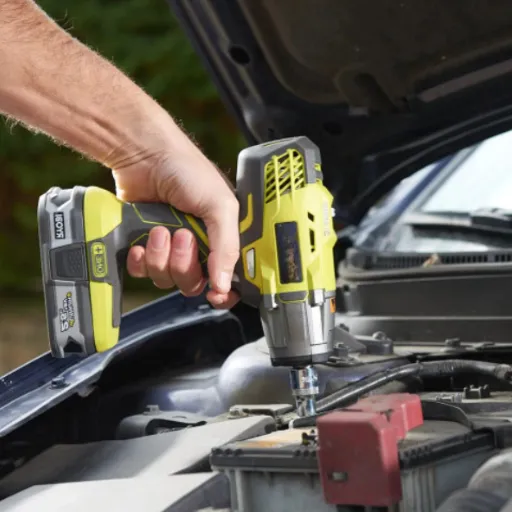
The automotive industry is the largest consumer of controlled nut runners worldwide. A single vehicle contains 3,000 to 4,000 threaded fasteners, each specified to a torque value that affects safety, performance, and warranty. Assembly lines run at high speed with zero tolerance for missed or incorrect tightenings.
Engine and Powertrain
Engine assembly is the most torque-critical stage. Cylinder head bolts require 60-150 Nm, often with a torque-plus-angle strategy to achieve precise clamp force on the head gasket. Connecting rod bolts are tighter at 20-40 Nm, but demand the same precision because a failure here means engine destruction. Transmission housing bolts range from 30 to 120 Nm, depending on the design.
The standard tool for engine work is an electric-controlled nut runner with closed-loop torque measurement and angle sensing. These tools log every tightening with a time stamp, torque curve, and angle value. This data feeds directly into the plant’s Manufacturing Execution System (MES) for full traceability. If a warranty claim comes in years later, the manufacturer can pull the exact torque data for that engine.
Chassis and Suspension
Chassis fasteners handle dynamic loads from road conditions. Control arm bolts typically require 50-200 Nm. Subframe mounting bolts range from 80-160 Nm. These joints often use torque-plus-angle strategies because the fastener must reach a specific clamp force, not just a torque number.
Electric or pulse nut runners are common here. Pulse tools deliver torque through hydraulic pulses rather than continuous rotation, which reduces reaction force on the operator’s wrist. This matters on chassis lines where operators may tighten hundreds of joints per shift.
Body-in-White
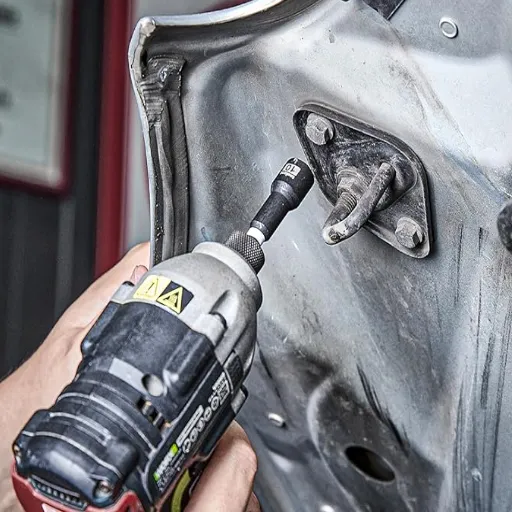
Body-in-white (BIW) assembly uses a mix of spot welds and threaded fasteners. The threaded fasteners are lighter-duty, typically 10-50 Nm, for attaching brackets, reinforcements, and mounting points. Pneumatic inline nut runners are common because they are lightweight and fast.
EV Battery Pack Assembly
Electric vehicle battery assembly is the fastest-growing nut runner application in automotive. Battery module mounting bolts require 15-40 Nm with torque-plus-angle control. Cooling plate fasteners are lighter at 5-15 Nm. The critical requirement here is data traceability. Battery packs carry warranty periods of 8-10 years, and if a fastener fails, the manufacturer must prove every bolt was tightened to spec.
Electric-controlled nut runners with MES integration are the standard. Some plants use cordless smart nut runners for flexibility as battery pack designs evolve rapidly.
Standards
Automotive nut runner applications must comply with IATF 16949 (quality management for automotive), VDA 6.3 (process audit), and ISO 5393 (rotating torque tool test method). These standards mandate torque accuracy, calibration frequency, and data traceability.
For a broader view of torque specifications across tool types, see our guide to nut runner torque ranges.
Aerospace Assembly
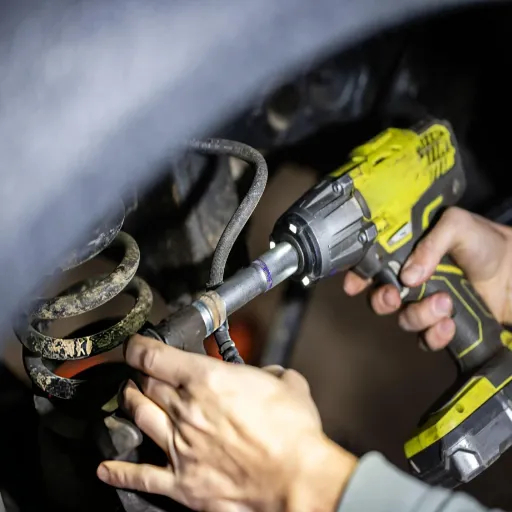
Aerospace fastening is the most demanding nut runner application in terms of precision and traceability. A commercial aircraft contains over one million fasteners. Every one must be tightened to a specified torque and documented. The consequences of a fastener failure in flight are catastrophic, which is why aerospace standards are the strictest in any industry.
Airframe Assembly
Fuselage skin panel fasteners require 2-20 Nm depending on the material and fastener type. Aluminum panels use standard fasteners at the lower end. Composite panels require careful torque control to prevent delamination, typically 5-30 Nm with a soft-start feature that ramps torque gradually.
Wing-to-body joints are among the most critical fasteners on the aircraft. These require 50-200 Nm with torque-plus-angle control. Fixed electric nut runners mounted on automated drilling and fastening systems handle these joints. The tool must achieve plus or minus 1% accuracy at every tightening.
Engine Assembly
Turbine casing bolts require 100-300 Nm with extreme precision. The operating environment involves temperatures exceeding 600 degrees Celsius and rotational speeds above 10,000 RPM. A bolt that is under-tightened can loosen under vibration. One that is over-tightened can stress the material beyond its fatigue limit.
Fixed electric nut runners with closed-loop control are standard. These tools are often integrated into automated cells where a robot positions the casing, and the nut runner tightens each bolt in sequence with full torque and angle logging. Leading assembly tool manufacturers like Atlas Copco have developed aerospace-specific nut runner ecosystems with full torque-angle traceability.
Landing Gear
Landing gear fasteners are high-strength steel bolts in the 200-500 Nm range. These joints absorb the entire impact of landing, cycle after cycle. Hydraulic nut runners or high-torque electric nut runners handle these bolts, often with multi-pass tightening strategies.
Composite Structure Fastening
Composite materials require special handling. Too much torque cracks the fibers. Too little and the joint loosens under vibration. Electric nut runners with torque ramping and soft-start features are essential. The tool gradually increases torque rather than applying it suddenly, protecting the composite matrix.
Standards
Aerospace nut runner applications must comply with AS9100 (quality management for aerospace), NADCAP (National Aerospace and Defense Contractors Accreditation Program), and NAS/AN fastener specifications. Calibration is typically required more frequently than in automotive, often every 30-90 days, depending on the tool class.
For an overview of how different nut runner types compare in precision applications, see our guide to types of nut runners.
Wind Energy and Renewable Infrastructure
Wind turbine construction and maintenance push nut runners into extreme torque territory. The bolts are massive, the joints are critical, and the work often happens at height or offshore, where access is difficult, and safety margins are thin.
Tower Flange Bolting
A typical onshore wind turbine tower consists of steel sections joined by flange bolts. These are M36 to M64 bolts requiring 1,000 to 5,000+ Nm of torque. The bolts must be tightened in a specific cross-pattern sequence to ensure even clamp force across the flange.
Hydraulic torque wrenches are the standard tool. They deliver high torque in a compact package that can be positioned on the flange. Multi-pass tightening is common, with each pass increasing torque by a defined increment until the final value is reached.
Nacelle Assembly
The nacelle houses the gearbox, generator, and main shaft. Gearbox mounting bolts require 200-800 Nm. Generator mounting bolts range from 100 to 400 Nm. These are assembled in the factory, so electric or pneumatic nut runners with data logging are typical.
Blade Root Bolt Connections
Blade root bolts connect the rotor blade to the hub. These joints experience cyclic loading from wind forces and are designed for a 20-30 year service life. Torque requirements range from 500-1,500 Nm. Hydraulic nut runners with multi-step tightening strategies are used to ensure consistent preload across all bolts in the pattern.
A wind farm maintenance crew in northern Europe switched from carrying hydraulic power units up 100-meter tower climbs to using high-torque cordless nut runners for bolt retightening inspections. The cordless tools eliminated 30 minutes of setup time per tower and reduced the weight the technicians carried by 15 kg. The trade-off was lower maximum torque, but for retightening checks at 800-1,200 Nm, the cordless tools had sufficient capacity.
Standards
Wind energy applications follow IEC 61400 (wind turbine design standards) and DNV GL certification guidelines. Bolt tightening procedures must be documented and traceable, particularly for offshore installations where access for re-inspection is expensive.
Construction and Structural Steel
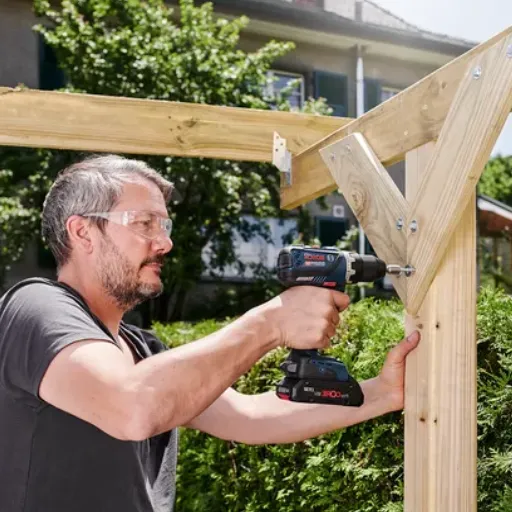
Construction bolting follows strict engineering standards because structural failures endanger lives. The tools must be calibrated, the procedures must be documented, and the inspectors must verify every critical joint.
Structural Steel Erection
Structural steel connections use high-strength bolts per ASTM standards. A325 bolts, common in building construction, require 200-500 Nm depending on bolt size (M16-M24). A490 bolts, used in higher-strength applications, require 400-1,000 Nm (M16-M30).
The Research Council on Structural Connections (RCSC) specifies three approved tightening methods: turn-of-nut, calibrated wrench, and direct tension indicators. The calibrated wrench method uses a nut runner that has been calibrated to deliver the required torque. Pneumatic nut runners are common on steel erection sites because they are fast, reliable, and do not require battery management.
Bridge Construction
Bridge bolting involves high-strength friction-grip bolts at 300-800 Nm. The joints must develop enough clamp force to prevent slip under load. Hydraulic torque wrenches are preferred because they deliver consistent torque regardless of the operator’s technique.
Prefabricated Building Assembly
Prefab and modular construction uses lighter structural connections at 50-200 Nm. Cordless or pneumatic nut runners work well here because the assembly happens in a factory environment with controlled conditions.
Standards
Construction nut runner applications follow AISC (American Institute of Steel Construction) and RCSC standards. ASTM A325 and A490 define the bolt specifications. Calibration records must be maintained, and tools must be recalibrated at the start of each job or at defined intervals.
Electronics and Appliance Manufacturing
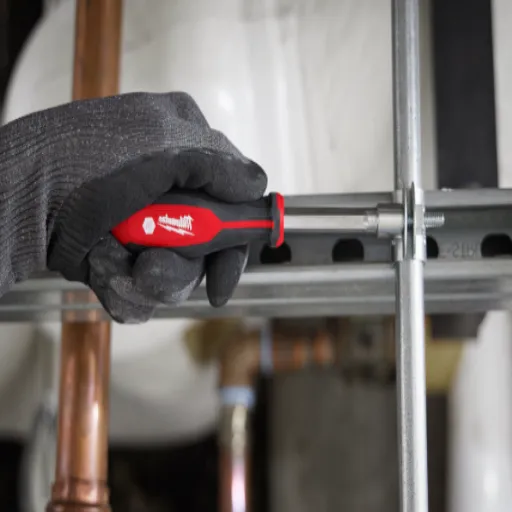
At the opposite end of the torque spectrum from construction, electronics, and appliance assembly requires precision at very low torque values. The fasteners are small, the materials are delicate, and the assembly speed is high.
Consumer Electronics
PCB mounting screws require 0.1-2 Nm. Housing assembly fasteners are typically 1-5 Nm. The challenge is not torque magnitude but consistency and speed. An assembly line producing 10,000 smartphones per day cannot afford a single cracked PCB from over-torquing.
Electric micro nut runners with programmable torque settings are the standard. These tools often include screw-feeding systems that present one fastener at a time to the operator, reducing cycle time and preventing missed screws.
Appliance Assembly
Washing machine drum bolts require 10-30 Nm. Refrigerator compressor mounting bolts range from 5-20 Nm. HVAC connections are heavier at 10-40 Nm. Appliance assembly lines typically use electric or pneumatic nut runners with cycle counters to track production volume.
Medical Device Assembly
Medical device fastening is a specialized subset. Surgical instrument screws may require 0.5-5 Nm with full torque traceability for FDA compliance. Device housing fasteners are typically 2-10 Nm. The data logging requirements are similar to automotive, but the volumes are lower, and the fasteners are smaller.
Electric micro nut runners with data logging are essential. Every tightening must be recorded and traceable to the specific device serial number.
Clean Room Requirements
Electronics and medical device assembly often takes place in clean rooms. Pneumatic tools vent exhaust air that can carry oil mist from the compressor, contaminating the environment. Electric and cordless nut runners produce no exhaust, making them the preferred choice in clean rooms and sensitive environments.
ESD-safe tool variants are available for electronics assembly to prevent electrostatic discharge damage to sensitive components.
Heavy Machinery and Mining Equipment
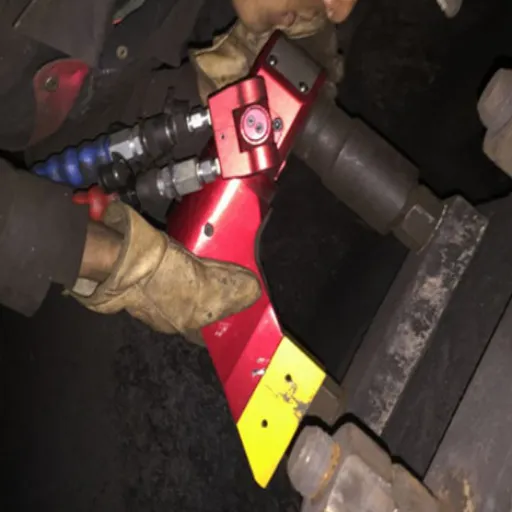
Heavy machinery assembly involves large structural fasteners at high torque values. The bolts are big, the joints are critical, and the assembly environment is often harsh.
Excavator and Bulldozer Assembly
Track pad bolts require 200-600 Nm. Arm pin fasteners range from 300-800 Nm. These are structural joints that must survive repeated impact and vibration during operation.
Pneumatic or hydraulic nut runners handle these torque ranges. On the assembly line, pneumatic tools are preferred for speed. For field maintenance, hydraulic tools provide the torque needed without requiring a large compressor.
Mining Equipment
Crusher mounting bolts require 500-2,000 Nm. Conveyor belt fasteners range from 100-400 Nm. Mining equipment operates in abrasive, high-vibration environments where bolt loosening is a constant concern.
Hydraulic nut runners are the standard for high-torque mining applications. They deliver precise torque without the reaction force that makes pneumatic tools difficult to control at high torque values.
Railway Assembly
Railway wheel assembly bolts require 300-800 Nm. Bogie fasteners range from 200 to 500 Nm. Coupler assembly bolts are 150-400 Nm. Railway standards (EN 13261) mandate full torque traceability because wheel detachment is a safety-critical failure.
Electric-controlled nut runners with data logging are used in railway manufacturing. Every wheel bolt tightening must be recorded with the torque value, angle, time stamp, and operator ID.
Oil, Gas, and Pipeline
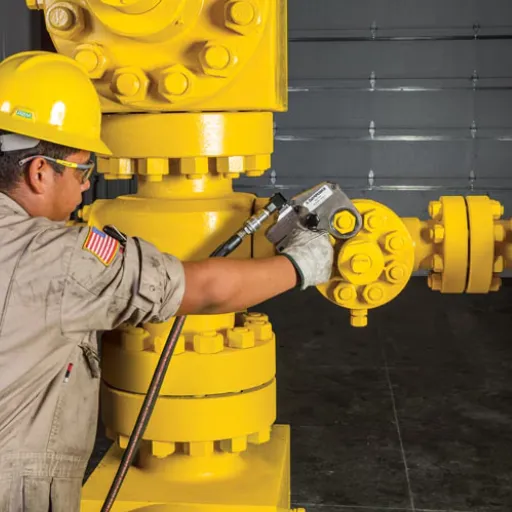
Oil and gas applications push nut runners to their highest torque values. Pipeline flanges, subsea equipment, and refinery connections use large-diameter bolts at extreme torque levels. The work environments are often hazardous, requiring tools rated for explosive atmospheres.
Pipeline Flange Connections
Pipeline flanges per ANSI/ASME B16.5 use bolts from 200-5,000+ Nm, depending on the flange class and bolt size. A Class 900 flange with 2-inch bolts may require over 3,000 Nm. These are hydraulic torque wrench applications.
The tightening procedure must follow ASME PCC-1 guidelines, which specify multi-pass bolt tightening sequences to achieve uniform gasket compression. Each pass increases torque by a defined increment, typically 30%, 60%, and 100% of the final value.
Subsea Equipment
Subsea connections operate under extreme pressure and corrosion conditions. Torque requirements range from 500-3,000 Nm. The tools must be subsea-rated, meaning they can operate at depth and resist saltwater corrosion.
Hydraulic nut runners with subsea-rated components are the standard. These are often custom-built for specific subsea applications.
Refinery Maintenance
Heat exchanger bolts require 200-1,000 Nm. Valve connections range from 100 to 500 Nm. Refinery maintenance is a field application where portability and reliability matter. Pneumatic or hydraulic nut runners are common.
A critical safety note: explosive environments in refineries and chemical plants require pneumatic or certified explosion-proof tools. Electric nut runners must carry ATEX or IECEx certification per OSHA hazardous location guidelines for use in hazardous areas. For comprehensive guidance on tool safety in hazardous and high-torque environments, see our nut runner safety guidelines.
Standards
Oil and gas applications follow ASME PCC-1 (bolted flange assemblies), API 6A (wellhead equipment), and NACE MR0175 (sour-service materials). Calibration records and tightening documentation are mandatory for pressure-containing connections.
How to Match a Nut Runner to Your Application
Choosing the right nut runner is not about picking a brand or a power source first. It starts with the application. Follow this five-step framework.
Step 1: Identify Your Torque Requirement
Get the joint specification from your engineering team. The torque value, fastener size, and joint type (hard or soft) determine the tool you need. If you do not have a specification, do not guess. A torque that is too low risks joint failure. One that is too high risks fastener breakage or material damage. Our nut runner torque ranges guide provides detailed specifications by tool type.
Step 2: Determine Your Environment
Ask three questions. Does the operator move between stations or stay at one? Is the environment a clean room, a factory floor, or an outdoor job site? Is compressed air available?
Mobile operators need cordless or lightweight tools. Clean rooms need electric or cordless tools (no oil exhaust). Outdoor job sites without power need cordless or pneumatic tools with portable compressors.
Step 3: Assess Data and Traceability Needs
Automotive and aerospace applications require full torque data logging. Construction and appliance assembly often do not. If your customer, your quality system, or your industry regulations require traceability, confirm the tool supports MES integration and exports data in a format your system can consume.
Step 4: Select Power Source
- Pneumatic: Best for high-speed assembly where compressed air is available. Lower upfront cost. Limited data logging.
- Electric corded: Best for precision applications requiring data logging and MES integration. Higher upfront cost. Unlimited runtime.
- Cordless: Best for mobile operators, field service, and flexible layouts. Requires battery management. Growing smart features.
- Hydraulic: Best for extremely high-torque applications (1,000+ Nm). Portable for field use. Slower cycle times.
Step 5: Verify Standards Compliance
Every industry has fastening standards. Make sure your tool, your calibration schedule, and your documentation meet the requirements. Common standards include ISO 5393 (rotating tools), AS9100 (aerospace), IATF 16949 (automotive), AISC (construction), and ASME PCC-1 (flange assembly).
Conclusion
Nut runner applications span from micro-electronics to heavy industry, and the right tool for each job is fundamentally different. A 0.1 Nm micro nut runner for a circuit board and a 5,000 Nm hydraulic wrench for a wind turbine tower share a name but almost nothing else.
The key to choosing the right nut runner is starting with the application, not the tool catalog. Define your torque requirement, understand your environment, assess your traceability needs, and then select the power source and tool type that fit. The standards that govern your industry will narrow the field further.
If you need help specifying nut runners for your specific application, or if you want to explore factory-direct sourcing and OEM customization for industry-specific torque tools, contact our team. We also recommend reading our complete nut runner guide for a broader overview of nut runner technology and sourcing strategies. For brand owners interested in private-label assembly tools for specific industries, see our guide to OEM nut runner solutions.