
Types of Nut Runners: Pneumatic, Electric, Cordless and Hydraulic Explained
Not all nut runners are the same. The types of nut runners you choose for your operation determine torque accuracy, cycle speed, operator comfort, and total cost of ownership. A facility running high-volume automotive assembly needs a different tool than a wind turbine maintenance crew working at height. Yet many buyers default to whatever their supplier stocks, not what their application actually demands.
Understanding the full taxonomy of nut runners helps you match the right tool to the right job. That means fewer warranty claims, less rework, and better throughput. This guide covers every major nut runner type by power source and design configuration. You will see torque ranges, accuracy ratings, best applications, and honest limitations for each category. You will also learn how to classify nut runners by control method and design shape, so you can specify tools with confidence.
Here is what you will learn. How nut runners are classified by power source, design, and control method. The four main power types are pneumatic, electric, cordless, and hydraulic. The four design configurations are pistol grip, right angle, inline, and fixed. A comparison table you can reference in seconds. And a decision framework for matching type to application.
Key Takeaways
- Pneumatic nut runners are fast and durable but less precise. Best for high-volume lines with compressed air infrastructure.
- Electric corded nut runners deliver the highest accuracy (±1-3%) and support data traceability. Best for quality-critical assembly.
- Cordless nut runners match electric accuracy with full mobility. Fastest-growing segment, ideal for field service and mixed lines.
- Hydraulic nut runners handle ultra-high torque (up to 50,000+ Nm). Essential for wind energy, shipbuilding, and heavy construction.
- Design configuration (pistol, angle, inline, fixtured) is independent of power source and determines workspace fit.
What Is a Nut Runner?
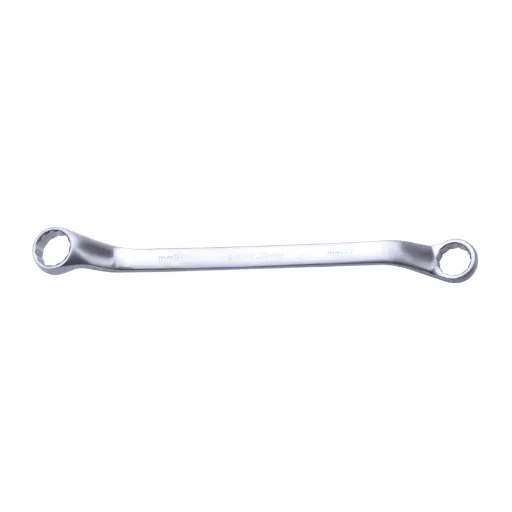
A nut runner is a torque-controlled fastening tool that tightens bolts and nuts to a predetermined torque value. Unlike standard wrenches, which rely on operator strength and feel, nut runners use internal mechanisms to stop or signal when the target torque is reached. This prevents over-tightening and under-tightening, both of which create quality and safety risks.
Nut runners critically differ from impact wrenches. An impact wrench delivers repeated hammer blows with high variance. A nut runner delivers controlled torque with measurable accuracy. For a deeper comparison, see our guide to nut runner vs impact wrench.
How Nut Runners Are Classified
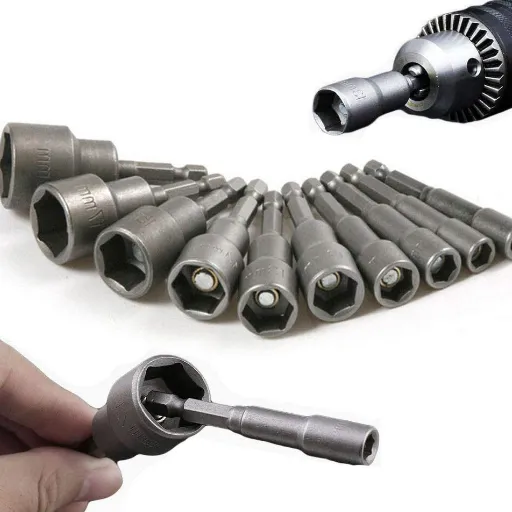
Nut runners fall into three classification systems. Most buyers start with a power source, then refine by design configuration and control method.
By Power Source
This is the most common way to categorize nut runners.
- Pneumatic: Compressed air drives a vane motor.
- Electric (corded): Mains-powered brushless motor.
- Cordless / Battery: Battery-powered brushless motor.
- Hydraulic: Hydraulic pressure drives a piston mechanism.
By Design Configuration
This describes the physical shape and how the operator holds or mounts the tool.
- Pistol grip: Handle angled below the drive, like a handgun. Best for open access and vertical tightening.
- Right angle: Drive offset 90 degrees from the motor axis. Best for tight spaces and horizontal joints.
- Inline: Drive in line with the motor axis. Best for depth-restricted areas.
- Fixtured / Stationary: Mounted to fixtures, robots, or workstations. Best for automated lines.
By Control Method
This describes how the tool knows when to stop.
- Mechanical clutch: Springs and cams disengage the drive at a preset torque.
- Stall mechanism: The motor stalls when resistance exceeds a threshold.
- Transducer (electronic): A strain gauge measures torque in real time and shuts off the motor at the target value.
Pneumatic Nut Runners
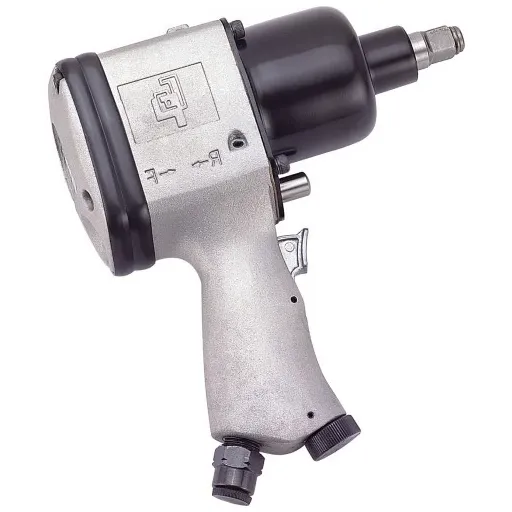
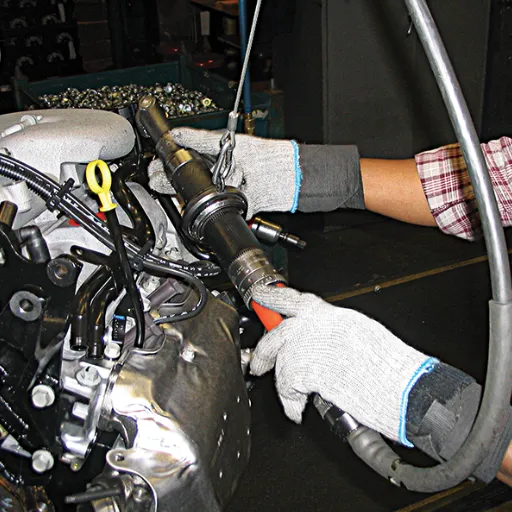
Pneumatic nut runners are the workhorses of high-volume assembly. They have been the default choice in automotive and heavy machinery plants for decades.
How They Work
Compressed air enters a vane motor and spins a planetary gearbox. The gearbox multiplies torque and delivers it to the drive square. A clutch or stall mechanism inside the tool controls the torque output. When the preset torque is reached, the clutch slips or the motor stalls, stopping further tightening.
Torque Range and Accuracy
Pneumatic nut runners typically cover 5 Nm to 3,000 Nm. Accuracy depends on the control method. Mechanical clutch models achieve ±3-5%. Stall-type models achieve ±5-8%. Both are tested to the ISO 5393 standard for rotating tools with threaded fasteners.
Best Applications
Pneumatic nut runners excel where speed matters and air infrastructure already exists. Common applications include automotive frame assembly, engine production, heavy machinery manufacturing, and high-volume appliance lines. They are less suitable for precision electronics or data-traceable operations.
Pros and Cons
Pneumatic models are fast, durable, and do not generate motor heat during continuous use. Their upfront cost is lower than that of electric alternatives. However, they require a compressed air system with consistent pressure. They are also louder than electric tools, typically producing 90-100 dB, which exceeds OSHA hearing conservation thresholds in many jurisdictions. Accuracy is acceptable for most assembly work, but not sufficient for safety-critical joints demanding ±1-3% precision.
Cost Profile
Pneumatic nut runners have the lowest tool cost of any power type. The hidden cost is the air infrastructure: compressors, dryers, filters, and line maintenance. Energy efficiency is also lower than electric because compressors convert electricity to air pressure with significant loss.
For a deeper cost comparison between pneumatic and electric, read our electric vs pneumatic nut runner comparison.
Electric (Corded) Nut Runners
Electric corded nut runners represent the precision tier of the category. When accuracy and data matter, electric is the standard.
How They Work
A brushless motor drives the gearbox. A transducer, essentially a digital strain gauge, measures torque in real time at the output drive. The controller compares the measured torque to the target value and shuts off the motor the instant the target is reached. Some models also measure rotation angle for torque-plus-angle strategies.
Torque Range and Accuracy
Electric corded nut runners cover 2 Nm to 4,000 Nm. Transducer-controlled models achieve ±1-3% accuracy, the highest of any power type. This level of precision meets the strictest automotive and aerospace torque specifications.
Best Applications
Electric corded nut runners dominate where precision and traceability are non-negotiable. Applications include final automotive assembly, aerospace structural fastening, medical device manufacturing, and any operation requiring torque data logging for audit or quality review.
Pros and Cons
Electric models offer the best accuracy, the quietest operation at 70-80 dB, and built-in data logging on most models. They do not require a compressor. The downside is a higher upfront cost, limited mobility due to the power cord, and motor heat buildup at very high duty cycles.
Cost Profile
Upfront cost is higher than pneumatic. Operating cost is lower because electricity is cheaper and more efficient than compressed air. Calibration schedules are also more predictable, which reduces long-term quality control costs.
For specific torque ranges by application, see our guide to nut runner torque ranges. Calibration schedules for electric tools follow the ISO 6789 standard to maintain rated accuracy over time.
Cordless Nut Runners

Cordless nut runners are the fastest-growing segment in the nut runner market. They combine electric precision with full mobility.
How They Work
A battery-powered brushless motor with electronic transducer control delivers the same ±1-3% accuracy as corded electric models. The difference is the power source. Modern lithium-ion battery platforms deliver consistent voltage and runtime across hundreds of cycles. Battery management systems monitor cell health, temperature, and charge state to maintain performance.
Torque Range and Accuracy
Cordless nut runners currently cover 2 Nm to 1,500 Nm, with higher ranges appearing each year. Accuracy matches corded electric at ±1-3%. For a complete guide to selecting battery-powered models, see our cordless nut runner buyer’s guide.
Best Applications
Cordless models excel where mobility is essential. Common uses include mobile assembly stations, field service and maintenance, mixed production lines where operators move between stations, and remote locations without air or power infrastructure.
Pros and Cons
The main advantage is freedom from cords and hoses. Cordless nut runners also integrate with Manufacturing Execution Systems for data traceability on the move. The downsides are battery management overhead, limited runtime per charge, and the highest total cost of any power type when batteries and chargers are included.
Cost Profile
Tool cost is similar to corded electric, but battery platforms add significant expense. A typical industrial setup requires two batteries per tool and a charging station. Over five years, the total cost often exceeds corded electric but remains competitive when mobility savings are factored in.
Hydraulic Nut Runners

Hydraulic nut runners occupy a specialized niche: ultra-high torque applications where no other power type can compete.
How They Work
A hydraulic power pack generates pressure that drives a piston inside the tool head. The piston converts hydraulic pressure into rotational torque through a ratchet or gearbox mechanism. Because hydraulic systems can generate enormous force in a compact package, these tools achieve torque levels impossible for pneumatic or electric models.
Torque Range and Accuracy
Hydraulic nut runners cover 100 Nm to 50,000+ Nm. Accuracy is typically ±3-5%, sufficient for structural bolting where the primary concern is achieving enough clamp load, not microscopic precision.
Best Applications
These tools are essential for wind turbine tower flange bolting, heavy construction structural connections, shipbuilding deck and hull fastening, mining equipment maintenance, and bridge construction. Any application involving M36 bolts or larger in high-strength steel typically requires hydraulic torque equipment.
Pros and Cons
Hydraulic nut runners deliver massive torque in a relatively compact form factor. They are reliable and well-understood technologies. The drawbacks are significant: they require a hydraulic power pack, setup time is longer, cycle speed is slower than pneumatic or electric, and maintenance requires hydraulic fluid management and seal replacement.
Cost Profile
Hydraulic systems carry the highest upfront cost of any nut runner type. The tool itself is expensive, and the required power pack adds thousands more. Operating cost includes hydraulic fluid, filter changes, and periodic seal service.
Design Configurations: Pistol, Angle, Inline, and Fixtured
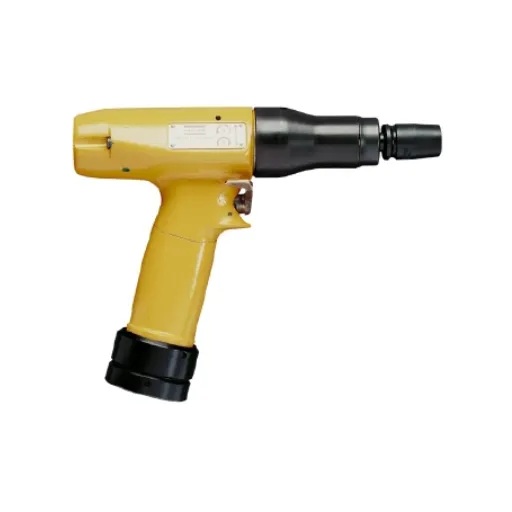
The power source tells you what drives the tool. Design configuration tells you how the tool fits your workspace. The two are independent. A pneumatic nut runner can be pistol grip or right-angle. An electric model can be inline or fixed.
Pistol Grip Nut Runners
The handle sits below the drive axis at roughly a 90-degree angle, like a handgun. This is the most common and ergonomic configuration for vertical or downward tightening. Operators can apply body weight and maintain a neutral wrist position. Pistol grip nut runners are available in all four power types and suit open-access joints where clearance is not a constraint.
Right Angle Nut Runners
The drive is offset 90 degrees from the motor axis. This configuration is built for tight spaces where a pistol grip tool cannot fit. Automotive underbody assembly, engine bay work, and confined machinery compartments all favor right-angle designs. The trade-off is slightly more vibration transmission to the operator’s hand because the gearbox path is longer. For industry-specific guidance, see our breakdown of nut runner applications by industry.
Inline Nut Runners
The drive sits directly in line with the motor axis, creating a straight, narrow profile. Inline tools are ideal for depth-restricted areas such as electronics enclosures, appliance housings, and aerospace structural channels, where a right angle or pistol head would collide with the surrounding structure.
Fixtured and Stationary Nut Runners
These tools mount to fixtures, robotic arms, or automated workstations rather than being handheld. Fixtured nut runners eliminate operator variability. The tool aligns the fastener, applies torque, and reports data with zero human influence. Repeatability is the highest of any configuration. Automated automotive lines, aerospace drilling and fastening cells, and high-volume electronics assembly all use fixtured tools. The limitation is flexibility: changing joint locations requires mechanical reprogramming or fixture redesign.
Smart Nut Runners and Industry 4.0
Modern nut runners are no longer standalone tools. Smart nut runners connect to factory networks and feed torque, angle, and process data directly into Manufacturing Execution Systems or Programmable Logic Controllers. Leading assembly tool manufacturers like Atlas Copco are expanding their smart tool ecosystems to support full digital traceability on the production line.
This capability is most common in electric and cordless models because they already contain the electronic controllers needed for data processing. Pneumatic and hydraulic tools can be retrofitted with sensors, but native smart functionality belongs to the electric category.
The business value is traceability. Every fastener gets a digital fingerprint. If a quality issue arises, the manufacturer can trace it to the exact tool, the exact operator, and the exact torque curve. This level of accountability is becoming standard in automotive and aerospace supply chains.
Comparison Table: All Types at a Glance
| Feature | Pneumatic | Electric (Corded) | Cordless | Hydraulic |
|---|---|---|---|---|
| Torque Range | 5-3,000 Nm | 2-4,000 Nm | 2-1,500 Nm | 100-50,000+ Nm |
| Accuracy | ±3-8% | ±1-3% | ±1-3% | ±3-5% |
| Speed | Fast | Moderate | Moderate | Slow |
| Noise Level | 90-100 dB | 70-80 dB | 70-80 dB | 75-85 dB |
| Data Logging | Rare | Standard | Standard | Rare |
| Mobility | Hose-limited | Cord-limited | Full | Hose-limited |
| Best For | High-volume, air-equipped lines | Precision, traceability | Mobile, mixed lines | Ultra-high torque |
| Upfront Cost | Low | Medium-High | High | Very High |
| Operating Cost | Moderate | Low | Moderate | High |
How to Choose the Right Type for Your Application
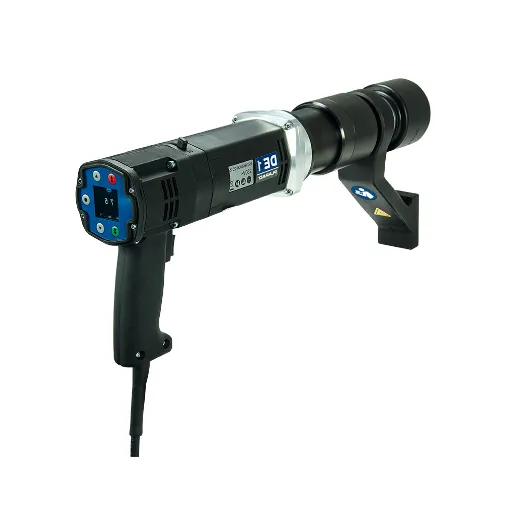
Use this framework to narrow the field.
Step 1: Define Your Torque Requirement
Start with the joint specification. If your target torque is under 5 Nm, only electric or cordless models will give you the precision you need. If your target is above 1,500 Nm, hydraulic may be your only option.
Step 2: Check Your Power Source
Do you have compressed air on the line? Pneumatic becomes viable. Do you need mobility? Cordless wins. Do you have reliable mains power and no air? An electric corded is the logical choice.
Step 3: Assess Workspace Access
Open joints favor a pistol grip. Tight spaces need a right angle. Depth-restricted channels need inline. Automated lines need to be fixed.
Step 4: Determine Data and Traceability Needs
If your customer or quality system requires torque records for every fastener, it is essentially mandatory for electric or cordless tools.
Step 5: Match Budget to Total Cost
Pneumatic tools look cheap until you factor in compressor energy and line maintenance. Cordless tools look expensive until you factor in the labor savings from mobility. Calculate five-year total cost, not just purchase price.
For a step-by-step selection process that goes deeper than type alone, read our guide on how to choose the right nut runner.
Total Cost of Ownership by Type
Over a five-year lifecycle, the cheapest tool to buy is rarely the cheapest tool to own.
A pneumatic nut runner might cost $800 upfront but consume $400 per year in compressed air energy and line maintenance. An electric corded model might cost $2,500 upfront, but cost only $100 per year in electricity and calibration. Over five years, the electric tool is often cheaper while delivering better accuracy.
Cordless tools carry the highest total cost because of battery replacement. Industrial batteries typically last 2-3 years under heavy use. Factor in two battery replacements over five years when comparing to a corded electric.
Hydraulic systems are in a category of their own. The tool plus power pack can exceed $15,000. But for bolting wind turbine towers or bridge girders, no alternative exists.
Conclusion
The types of nut runners available today cover every application from delicate electronics assembly to massive structural bolting. Pneumatic tools dominate high-volume automotive lines. Electric corded tools lead in precision and traceability. Cordless tools are redefining mobility on the shop floor. Hydraulic tools handle torque ranges no other category can touch.
No single type is best. The right type is the one that matches your torque requirement, power source availability, workspace access, data needs, and budget. Start with torque. Then filter by power source. Then refine by design configuration.
If you need help specifying nut runners for your product line, or if you want to explore factory-direct sourcing and OEM customization for any of these types, contact our team. We also recommend reading our complete nut runner guide for a broader overview of nut runner technology, applications, and sourcing strategies.