
Electrical Test Equipment: A Complete Buyer’s Guide
The core electrical test equipment every industrial facility needs includes digital multimeters, clamp meters, oscilloscopes, insulation testers, power analyzers, and LCR meters. Choosing the right instrument means matching the measurement task to the tool’s range, accuracy, safety rating, and form factor. Get any of these wrong, and you risk inaccurate readings, equipment damage, or serious injury on the factory floor.
Here is the real problem most buyers face. A multimeter and an oscilloscope are both called “electrical test equipment,” but they solve completely different problems. The same goes for a CAT II handheld meter and a CAT III industrial meter. They may look similar, yet one can fail violently inside a distribution panel while the other keeps working safely. Buyers who only compare price miss the specifications that actually matter.
In this guide, you will learn how each major type of electrical test equipment works, which specifications to check, how CAT safety ratings protect your team, and how to source these instruments efficiently from Chinese manufacturers. Whether you are equipping a maintenance team, stocking a distribution catalog, or building a private label brand, this article gives you a practical framework for making the right purchase.
Key Takeaways
- Electrical test equipment covers six core instruments: multimeters, clamp meters, oscilloscopes, insulation testers, power analyzers, and LCR meters.
- CAT ratings and True RMS capability are non-negotiable for industrial and field electrical work.
- Match the instrument’s voltage range, accuracy, bandwidth, and form factor to your actual application.
- Guangdong Province is China’s leading region for electronics-integrated electrical test equipment manufacturing.
- OEM and private label options work well for distributors building branded electrical tester lines.
What Is Electrical Test Equipment?
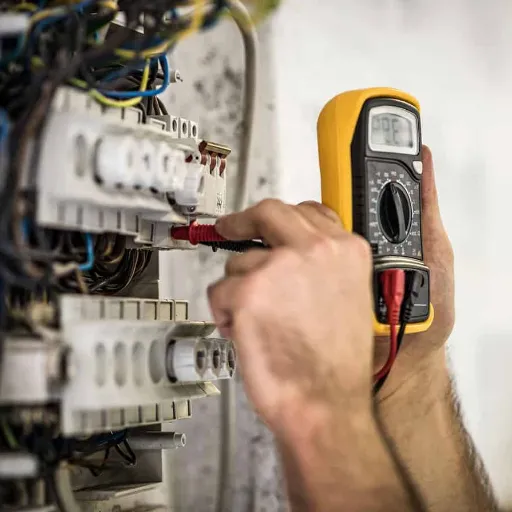
Electrical test equipment includes instruments used to measure, verify, and diagnose electrical properties such as voltage, current, resistance, frequency, power quality, and insulation integrity. These electrical testing instruments give engineers, electricians, and quality teams the data they need to confirm that circuits, components, and systems operate safely and within specification.
For a broader view of how these tools fit into the larger test and measurement market, see our complete guide to test and measurement tools. For a categorized overview of all major instrument families, read our article on the types of test and measurement tools.
The business value is straightforward. Reliable electrical measurements prevent unplanned downtime, reduce safety incidents, and protect warranty claims. Inaccurate measurements do the opposite. They hide faults, create false pass/fail decisions, and can lead to catastrophic failures in high-energy systems.
The global electrical test equipment market is projected to reach approximately USD 7.38 billion in 2026 and grow to USD 9.16 billion by 2030, according to The Business Research Company. That growth is driven by EV infrastructure testing, renewable energy expansion, predictive maintenance programs, and stricter electrical safety standards worldwide.
Core Electrical Test Equipment Every Facility Needs
Most industrial electrical work can be handled by six types of electrical testing instruments. Each one has a primary measurement role, and no single tool covers everything.
Multimeters
A digital multimeter (DMM) is the most common of all electrical testing instruments. It measures AC/DC voltage, AC/DC, resistance, continuity, and often capacitance, frequency, diode forward voltage, and temperature. Industrial-grade models add features like True RMS, data logging, and Bluetooth connectivity.
The most important distinction for buyers is average-responding versus True RMS. Average-responding meters assume a clean sine wave. True RMS multimeter models measure the actual effective value of an AC waveform, even when it is distorted. For a deeper dive, read our multimeter buying guide.
Clamp Meters
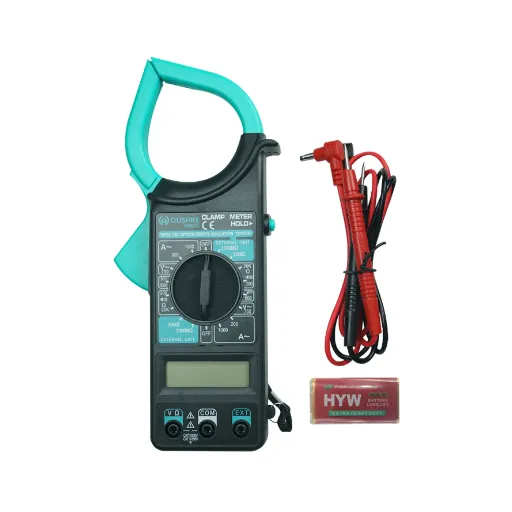
A clamp meter measures current without breaking the circuit. The jaws clamp around a single conductor, and the instrument reads the magnetic field generated by the current. This makes clamp meters faster and safer for high-current measurements in panels, motors, and transformers.
Many modern clamp meters also include multimeter functions such as voltage, resistance, and continuity. Advanced models measure both AC and DC, offer flexible current probes for large conductors, and include wireless displays so technicians can read results from a safe distance.
Oscilloscopes
An oscilloscope displays voltage over time as a waveform. Technicians use it to analyze signal shape, frequency, timing, noise, transients, and distortion. Oscilloscopes are essential for electronics R&D, motor drive troubleshooting, power quality analysis, and communication signal verification.
Key specifications include bandwidth (the highest frequency the scope can accurately capture), sample rate (how many samples per second it takes), and channel count. Handheld scopes work well for field service. Benchtop scopes offer higher performance for labs. If you are deciding whether to buy a multimeter or an oscilloscope first, read our multimeter vs oscilloscope comparison or see our full oscilloscope buyer guide recommendations below.
Insulation Testers
An insulation tester, also called a megohmmeter, applies a high DC voltage to insulation and measures the resistance in megohms. It reveals moisture contamination, aging, cracks, or damage in motor windings, transformer insulation, cable jackets, and switchgear.
Common test voltages include 250V, 500V, 1000V, and 5000V. The right voltage depends on the equipment rating. Too low misses degradation. Too high can damage sensitive insulation. Always follow the equipment manufacturer’s testing recommendations.
Power Analyzers
A power analyzer measures voltage, current, active power, reactive power, apparent power, power factor, harmonic distortion, and energy consumption. These instruments are used for industrial energy audits, compliance testing, harmonic analysis, and power quality troubleshooting.
Power analyzers range from handheld single-phase units for field work to three-phase benchtop systems for laboratory-grade compliance testing. Buyers should confirm the number of channels, harmonic analysis capability, and data logging features before purchasing.
LCR Meters
An LCR meter measures inductance (L), capacitance (C), and resistance (R) in electronic components. These are common in electronics manufacturing, repair, and component sorting. Handheld LCR meters work for quick field checks. Benchtop models provide higher accuracy and more test frequencies for labs.
A maintenance supervisor named David once bought standard handheld multimeters for his industrial panel teams. The meters were accurate enough for bench use, but their CAT II rating was too low for distribution panels. During a routine check, one meter failed under a transient spike. No one was injured, but the incident stopped production for half a day and triggered a full safety review. After that, David required CAT III 600V minimum for all field electrical testers. The lesson is simple: the right electrical test equipment must match the environment, not just the measurement.
Key Electrical Test Equipment Specifications Explained
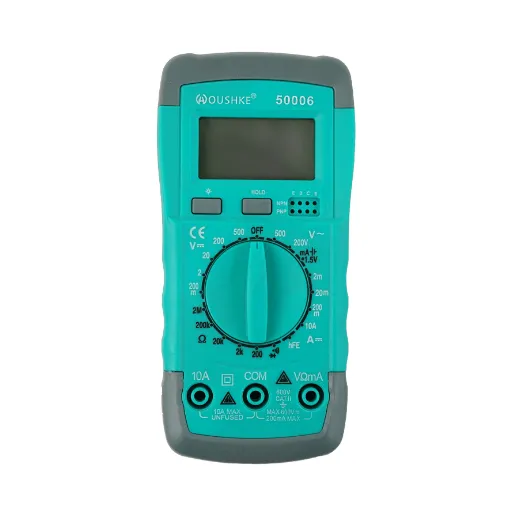
Electrical test equipment datasheets contain dozens of numbers. Here are the ones that matter most for buyers of electrical testing instruments.
Voltage and Current Range
The instrument must safely cover the highest voltage or current you expect to measure. Industrial facilities often need 600V or 1000V capability. Higher ranges usually come with larger, more rugged instruments and higher prices.
Accuracy and Resolution
Accuracy tells you how close the reading is to the true value. Resolution tells you the smallest change the instrument can display. A meter with 0.5% accuracy and 10,000 counts gives more trustworthy results than a 1.5% accuracy meter with 2,000 counts. Labs and calibration work need tighter accuracy. General maintenance can tolerate wider tolerances.
True RMS Capability
True RMS is essential whenever you measure AC power in modern industrial environments. Variable frequency drives, switching power supplies, LED drivers, and HVAC motor controls all produce non-sinusoidal waveforms. An average-responding meter can read 20% to 40% low on these loads. That error leads to incorrect diagnosis and wasted troubleshooting time.
Bandwidth and Sample Rate
Bandwidth matters most for oscilloscopes. As a rule, the scope bandwidth should be at least five times the highest frequency you need to measure. Sample rate determines how finely the waveform is captured. Higher sample rates reveal more detail in fast-changing signals.
Input Impedance and Protection
High input impedance (typically 10 MΩ) prevents the instrument from loading down the circuit being measured. Good input protection includes fuses, varistors, and isolation barriers that protect both the meter and the technician from overloads.
A technician named Priya once trusted an average-responding multimeter while troubleshooting a variable frequency drive. The display showed a stable current reading, so she assumed the drive was healthy. When the motor kept overheating, she brought in a True RMS clamp meter and discovered the actual current was 35% higher than the first meter indicated. The distorted waveform from the drive had fooled the average-responding instrument. After switching to True RMS tools for all VFD work, her team’s diagnostic accuracy improved immediately.
Safety Ratings: Why CAT Matters
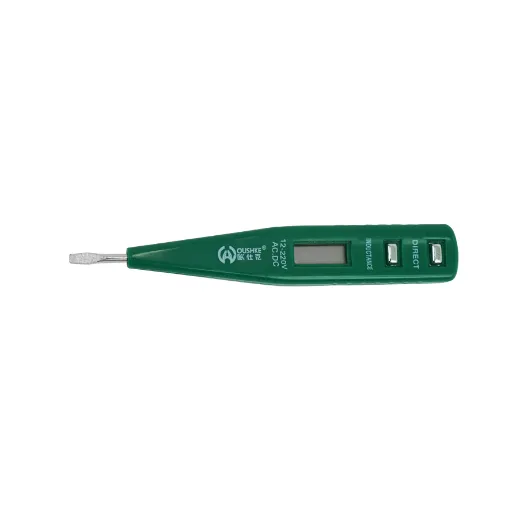
CAT ratings are the single most misunderstood specification on electrical test equipment. They are also one of the most important.
Understanding CAT I Through CAT IV
CAT stands for Measurement Category. It comes from safety standards such as IEC 61010. The CAT rating describes the electrical environment where the instrument can be used safely. It is always paired with a voltage rating, such as CAT III 600V or CAT IV 600V.
| Category | Typical Location | Examples |
|---|---|---|
| CAT I | Low-energy, isolated circuits | Electronics bench, battery devices, PC boards |
| CAT II | Single-phase loads connected to outlets | Appliances, plug-in equipment, and lighting circuits |
| CAT III | Distribution and three-phase equipment | Circuit breaker panels, busways, and industrial switchgear |
| CAT IV | Service entrance and outdoor lines | Utility meters, service entrances, primary supply cables |
Matching CAT Rating to Your Environment
A higher CAT rating means the instrument can withstand higher transient overvoltage energy. In a CAT IV location, available short-circuit current can exceed 1,000 amps. An under-rated meter can arc, overheat, or explode.
For commercial electrical maintenance and industrial panels, choose a CAT III 600V True RMS multimeter minimum. For distribution-level work, utility metering, or service entrances, choose CAT IV 600V or CAT III 1000V. You can safely use a higher-rated instrument in a lower-rated environment, but never the reverse.
Test Lead and Accessory Ratings
The meter is only as safe as its weakest accessory. Test leads, probes, clips, and adapters must carry the same or higher CAT/voltage rating as the meter. Look for leads rated to UL 61010-031 or equivalent standards. Cheap, unmarked leads are a common safety failure point.
Electrical Test Equipment Form Factors: Handheld vs. Benchtop vs. Modular
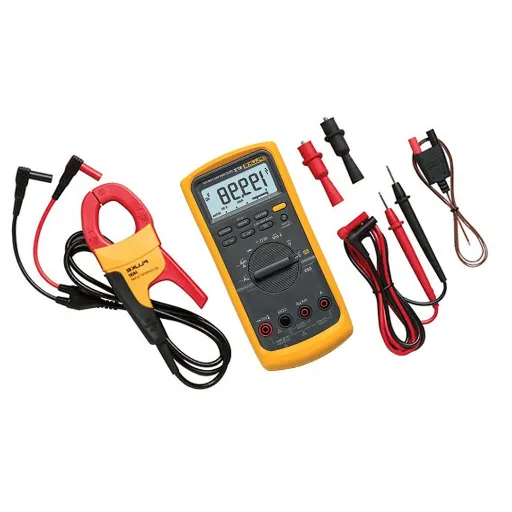
The physical form of electrical test equipment affects where and how it can be used.
Handheld Instruments
Handheld multimeters and clamp meters dominate field service and maintenance. They run on batteries, fit in a tool bag, and withstand rough handling. Industrial models add rugged housings, IP54 or IP65 ingress protection, backlit displays, and magnetic hangers.
The trade-off is lower accuracy and fewer features than benchtop instruments. For most troubleshooting and routine maintenance, handheld units are the right choice.
Benchtop Instruments
Benchtop oscilloscopes, power analyzers, and LCR meters offer higher accuracy, larger displays, more channels, and better connectivity. They are designed for labs, calibration stations, and production test benches where precision matters more than portability.
Benchtop instruments usually need AC power and a stable environment. They are not built for field work, but they deliver the performance that labs require.
Modular and USB Instruments
Modular instruments and USB-based scopes provide a lower-cost entry point for R&D, education, and specialized testing. They connect to a PC and rely on software for display and analysis. These can be a good fit for buyers who need occasional waveform capture or custom test setups without investing in a full benchtop scope.
How to Choose Electrical Test Equipment for Your Application
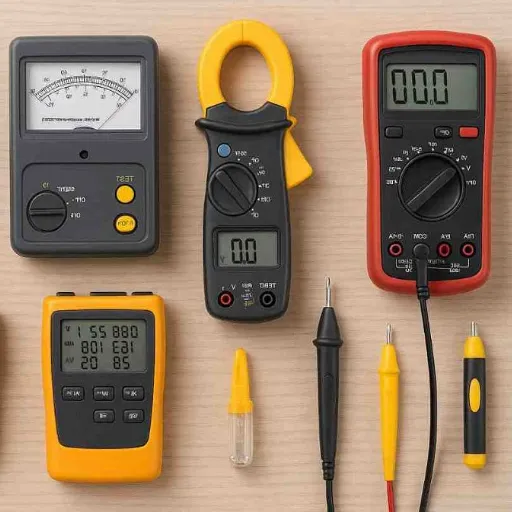
The right instrument depends on what you are trying to accomplish. Here is how to match common applications to the right tools.
Maintenance and Troubleshooting
For routine electrical maintenance, start with a CAT III 600V True RMS multimeter and a clamp meter. Add an insulation tester for motor and cable checks. A thermal camera is also valuable for finding loose connections and overloaded conductors without contact.
Electronics R&D and Repair
For circuit design and repair, prioritize a digital oscilloscope with adequate bandwidth, a benchtop multimeter with high accuracy, and an LCR meter for component testing. A variable DC power supply and function generator round out a basic electronics lab.
Power Quality and Energy Audits
For power quality work, use a power analyzer or power quality meter with harmonic analysis capability. Look for instruments that log data over time and export reports. Three-phase capability is essential for industrial systems.
Safety Testing and Commissioning
For commissioning and safety verification, use insulation testers, ground resistance testers, and loop impedance testers. Verify that instruments carry the right CAT rating for the installation and that calibration certificates are current.
For a step-by-step selection framework that works across all test and measurement categories, see our guide on how to choose test and measurement tools.
Sourcing Electrical Test Equipment from China
China is one of the world’s largest manufacturing regions for electrical test equipment. Guangdong Province, especially Shenzhen, Dongguan, and Guangzhou, hosts a dense cluster of suppliers producing multimeters, clamp meters, oscilloscopes, thermal cameras, and related electrical testing instruments.
Working with an experienced supplier can simplify supplier qualification and reduce sourcing risk. The right partner helps you verify certifications, manage samples, and coordinate production.
What to Verify in a Supplier
Before placing a bulk order, confirm these points:
- Business license scope confirms the company is registered for manufacturing, not only trading.
- Certifications such as ISO 9001, CE marking, and IEC 61010 compliance should be current and verifiable.
- Calibration capability matters because every electrical tester needs traceable calibration. Ask whether the supplier has in-house calibration equipment and whether certificates are linked to recognized standards.
- Production facilities should include assembly lines, testing stations, and burn-in (aging) test areas for electronic products.
- Export experience ensures the supplier understands documentation, packaging, and shipping requirements for your market.
Strong quality control processes protect the value of your investment. Ask for pre-shipment inspection reports, sample approval records, and defect rate data before committing to volume.
OEM and Private Label Options
Handheld electrical testers are a practical starting point for distributors who want to build a private label brand. Customization options include logo printing, color schemes, manuals, packaging, carrying cases, and even custom measurement ranges or firmware.
A distributor named Lena worked with a Guangdong manufacturer to develop a branded multimeter kit for electrical contractors. The kit included a custom pouch, branded leads, and a manual written for her local market. She priced it below the leading global brand while maintaining a healthy margin, and the kit became one of her top-selling product lines within a year.
Typical MOQs and Lead Times
Minimum order quantities vary by product type and customization level:
- Basic handheld multimeters and clamp meters: 100 to 500 units
- Digital oscilloscopes: 50 to 200 units
- Power analyzers and benchtop instruments: 10 to 50 units
- OEM/private label products: 500 to 2,000 units, depending on customization depth
Sample orders are essential. They let you verify build quality, accuracy, display clarity, battery life, and documentation before committing to bulk production.
Common Mistakes Buyers Make
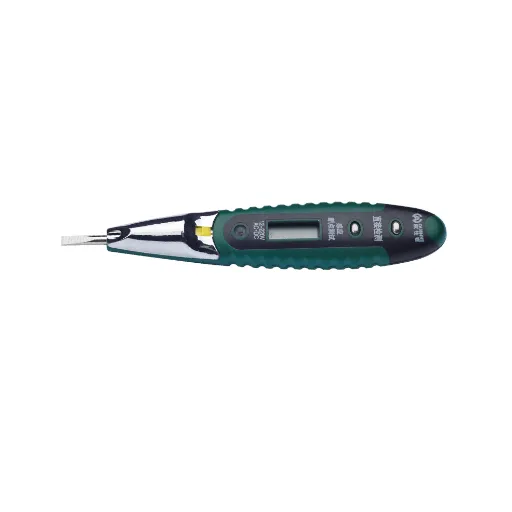
Even experienced buyers make these errors when sourcing electrical test equipment.
Buying the Wrong CAT Rating
A CAT II 1000V meter is not automatically safer than a CAT III 600V meter. The CAT level matters more than the voltage number. Using a CAT II meter in an industrial panel creates a real explosion risk.
Ignoring True RMS
Modern electrical environments are full of non-sinusoidal waveforms. Buying an average-responding meter for VFD or switching power supply work leads to misleading readings and wasted troubleshooting time.
Choosing Range Without Margin
An instrument that barely covers your expected values leaves no room for unexpected conditions. Choose a range that gives at least 20% headroom above your maximum expected measurement.
Overlooking Calibration and Traceability
A tester without traceable calibration is just a guessing device. Confirm calibration certificates, intervals, and standards before purchase. For high-volume buyers, ask whether the supplier can provide calibration as part of the order.
Prioritizing Price Over Total Cost
A low-priced instrument that fails in the field, needs frequent recalibration, or lacks replacement parts often costs more over five years than a higher-quality alternative. Factor in accessories, calibration, training, and downtime when comparing options.
Frequently Asked Questions
What are the main types of electrical testing instruments?
The main types of electrical testing instruments are digital multimeters, clamp meters, oscilloscopes, insulation testers, power analyzers, and LCR meters. Each measures different electrical properties and serves different applications, from routine maintenance to laboratory-grade compliance testing.
What does CAT III mean on electrical test equipment?
CAT III means the instrument is rated for use on distribution-level electrical systems such as circuit breaker panels, busways, feeders, and industrial switchgear. A CAT III 600V rating is the minimum recommended for most commercial and industrial electrical maintenance work.
Why is True RMS important in a multimeter?
True RMS is important because modern electrical loads, such as variable frequency drives, switching power supplies, and LED drivers, produce non-sinusoidal waveforms. A True RMS multimeter measures the actual effective value of these waveforms, while an average-responding meter can read 20% to 40% low and lead to incorrect diagnosis.
Where is most electrical test equipment manufactured in China?
Most electrical test equipment in China is manufactured in Guangdong Province, particularly in Shenzhen, Dongguan, and Guangzhou. These cities host dense clusters of electronics-integrated manufacturers producing multimeters, clamp meters, oscilloscopes, and related instruments.
Can electrical test equipment be private labeled?
Yes. Handheld electrical testers are a practical starting point for private labeling. Manufacturers can customize logos, color schemes, manuals, packaging, carrying cases, and even measurement ranges or firmware for distributors building their own brands.
Conclusion
Electrical test equipment is the foundation of safe, reliable electrical maintenance and quality control. The right choice depends on matching the instrument to your measurement needs, environment, safety rating, and long-term calibration plan. Multimeters, clamp meters, oscilloscopes, insulation testers, power analyzers, and LCR meters each serve a distinct role, and most facilities need more than one.
For buyers sourcing at scale, China’s Guangdong manufacturing region offers strong capabilities across handheld and benchtop electrical testers. Working directly with a verified manufacturer gives you more control over specifications, pricing, branding, and quality. It also reduces the risk of buying under-rated or uncalibrated instruments that create safety and liability problems.
If you are sourcing electrical test equipment for your business, start with a clear specification and request samples before committing to bulk production. Look for suppliers with proven export experience, traceable calibration capability, and the flexibility to support your growth.
Looking for factory-direct electrical test equipment? Contact us for a category-specific catalog, sample quote, or OEM consultation. We can connect you with the right production capabilities and help you build a reliable electrical test equipment supply chain.