
Japanese Pull Saw: Complete Guide to Types and Uses (2026)
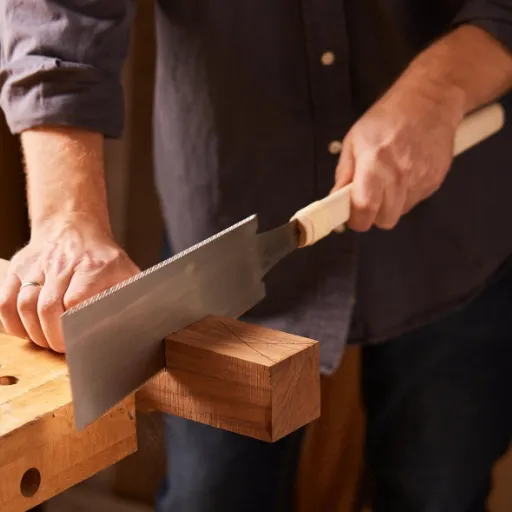
A Japanese pull saw is a hand saw that cuts on the pull stroke, not the push. Its blade stays thinner and more flexible than a Western saw, so it removes less wood, binds less, and leaves a cleaner cut. If you’re starting, a Ryoba is the best first Japanese pull saw because it gives you both rip and crosscut teeth in one blade.
Many woodworkers pick the wrong type because the options look similar. The result is a saw that kinks, skips, or sits unused in a drawer. Whether you’re a hobbyist upgrading your tool kit or a buyer sourcing tools for resale, this guide covers the main types, the specs that matter, how to use the saw, and how to source it reliably.
For a broader look at hand saws, see our best hand saw buying guide. For project-specific picks, our guide to the best hand saw for woodworking breaks down the top use cases.
Key Takeaways
- Japanese pull saws cut on the pull stroke, producing a thinner kerf and smoother finish than most Western push saws.
- Ryoba is the most versatile starter type; Dozuki is best for precision joinery; Kataba handles deeper cuts; Kugihiki trims flush.
- Blade thickness, tooth geometry, and hardening quality separate a useful saw from one that kinks or dulls fast.
- Look for 65Mn or SK5 steel, impulse-hardened teeth, and replaceable blades when sourcing for retail or OEM.
- Pull saws are ideal for fine woodworking and joinery, but not for heavy framing or very tough hardwood stock.
How a Japanese Pull Saw Works
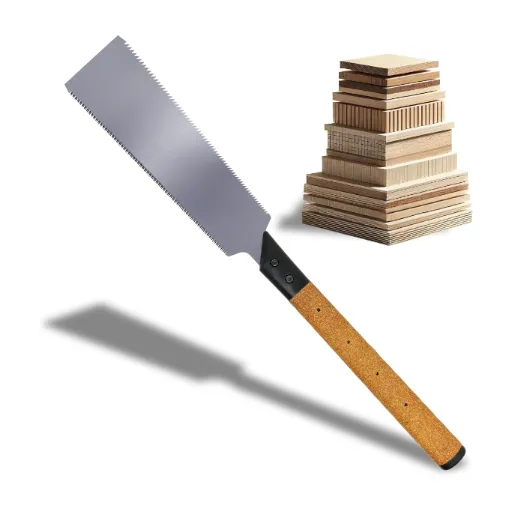
In a Western push saw, the blade is under compression on the push stroke. That thicker blade resists buckling but also removes more material. A Japanese pull saw works the opposite way. The blade is under tension when you pull, so it can stay much thinner without wobbling.
Typical blade thickness runs 0.3 to 0.6 mm on a quality Japanese pull saw, compared to roughly 0.9 to 1.2 mm on a Western hand saw. The thinner blade creates a narrower kerf, which means less wasted wood, less resistance, and more control on delicate cuts.
Most modern Japanese hand saws use impulse-hardened teeth that stay sharp longer but are difficult to resharpen. That’s why many designs use replaceable blades. For a busy shop or a retailer explaining value to customers, replaceable blades lower the lifetime cost and reduce complaints about dulling.
Types of Japanese Pull Saws
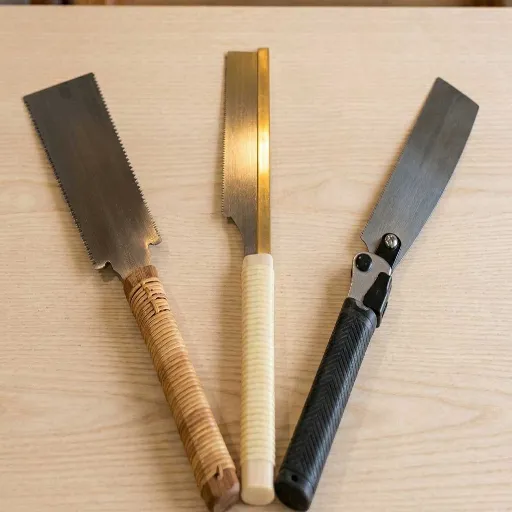
Understanding the five main hand saw types in the Japanese category helps you choose the right tool for the cut.
Ryoba
The Ryoba is the most versatile Japanese pull saw. One edge carries rip teeth for cutting with the grain; the other carries crosscut teeth for cutting across it. That dual-purpose design makes it the best first saw for most woodworkers and the volume seller in many retail lines.
Typical specs: 7 to 10.5-inch blade, 9 to 17 TPI, replaceable blade, bamboo or wood handle. It’s a practical choice for general joinery, sizing boards, and trimming work.
Dozuki
The Dozuki is built for precision. A stiff metal spine keeps the ultra-thin blade perfectly straight, so it excels at dovetails, tenons, and fine cabinet work. The fine tooth count gives a glass-smooth cut but removes material slowly.
Typical specs: 6 to 9.5-inch blade, 20 to 30 TPI, spine-backed, replaceable blade. If your customers ask for a dovetail saw, a Dozuki is often the answer.
Kataba
The Kataba is a single-edged pull saw with no spine, allowing deeper cuts than a Dozuki. It’s a good middle ground for general fine carpentry and deeper rips where a Ryoba can’t reach.
Typical specs: 9 to 12-inch blade, 9 to 16 TPI, no spine, flexible but controlled.
Kugihiki
The Kugihiki is a flush-cut saw. Its flexible blade has no tooth set, so it cuts dowels, plugs, and trim flush with the surface without scratching the surrounding wood. It’s a small, affordable addition that woodworkers reach for constantly.
Typical specs: 4 to 7-inch blade, 17 to 25 TPI, highly flexible, no set.
Azebiki
The Azebiki has a short, curved, double-edged blade designed to start a cut in the middle of a board. It’s used for plunge cuts, grooves, and small cutouts where other saws can’t begin.
Typical specs: small curved blade, 17 to 25 TPI, double-edged.
| Type | Edge | Best For | Typical TPI | Skill Level |
|---|---|---|---|---|
| Ryoba | Double (rip + crosscut) | General woodworking | 9 to 17 | Beginner to pro |
| Dozuki | Single, spine-backed | Precision joinery | 20 to 30 | Intermediate to pro |
| Kataba | Single, no spine | Deeper cuts, fine carpentry | 9 to 16 | Intermediate |
| Kugihiki | Single, no set | Flush cuts on dowels/plugs | 17 to 25 | Beginner to pro |
| Azebiki | Double, curved | Plunge cuts, grooves | 17 to 25 | Intermediate |
Best Uses for a Japanese Pull Saw
A Japanese pull saw shines where control and finish quality matter more than raw speed. Common applications include fine joinery, dovetails, tenons, miters, flush trimming, and detail work in furniture and cabinetry.
It is not the right tool for heavy framing, construction lumber, or very tough hardwoods where a thicker, stiffer blade is safer and faster. For those jobs, a Western rip or crosscut saw, or a power saw, is the better choice. We cover that tradeoff in our guide to the best hand saw for woodworking.
A quick story. Tom, a furniture maker in Oregon, spent years using a Western tenon saw for dovetails. In 2025 he tried a Dozuki on a set of drawers and cut the tails in half the time with almost no chaser work. The thin kerf let him split the baseline cleanly, and his assembly gaps disappeared. Now his shop keeps three Dozuki blades on hand and a Ryoba for rough sizing.
Japanese Pull Saw vs Western Push Saw
The choice between a Japanese pull saw and a Western push saw depends on the work, not on which is objectively better. Pull saws win on precision, kerf width, and ease of use for fine cuts. Western push saws win on toughness, heavy stock removal, and the ability to be resharpened by the user.
| Feature | Japanese Pull Saw | Western Push Saw |
|---|---|---|
| Cutting action | Pull stroke | Push stroke |
| Blade thickness | ~0.3 to 0.6 mm | ~0.9 to 1.2 mm |
| Kerf | Narrow | Wider |
| Weight | Lighter | Heavier |
| Best for | Joinery, fine cuts, detail work | Framing, heavy stock, rough cuts |
| Tooth life | Impulse-hardened, often replaceable | Usually resharpenable |
Many experienced woodworkers keep both. A Western panel saw handles the rough breakdown, and a Japanese pull saw handles the precision cuts. For a retailer, offering both types covers more customer workflows than either type alone.
How to Use a Japanese Pull Saw

Pull saws feel different at first, but the learning curve is short. The key is to let the saw do the work instead of forcing it.
Start with a light pull. Place the blade near your knife line, draw it back gently once or twice to create a small notch, then continue with smooth, controlled pulls. Don’t push hard into the cut; the teeth engage on the pull.
Use your thumb as a fence. Rest your thumb beside the blade to guide the first few strokes. Once the kerf is established, the saw will track itself.
Grip lightly. A tense grip transfers vibration and fatigue. Hold the handle with your index finger pointing along the blade for better aim.
Use a knife line. A scored line is easier to follow than a pencil line and gives cleaner results, especially on fine joinery.
Protect the blade. Store the saw flat or hang it. A thin blade can kink if something leans against it, and impulse-hardened teeth are brittle.
Stocking a tool line? Our team can recommend a pull saw assortment matched to your customer base and margin targets. Talk to us about your needs and we’ll map out the right mix.
How to Choose Your First Japanese Pull Saw
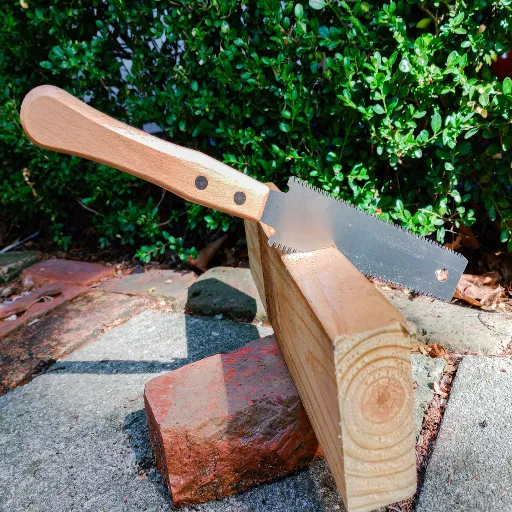
If you only buy one, choose a Ryoba. It handles the two most common cuts and lets you learn pull-saw technique without buying multiple tools. Add a Dozuki once you move into fine joinery, and add a Kugihiki when flush trimming becomes a regular task.
For buyers sourcing a product line, the same logic applies. A Ryoba is the volume SKU. A Dozuki serves the precision market. A Kugihiki is a low-cost add-on that improves average basket value. Match TPI to the materials your customers cut most, and make sure the factory can maintain blade straightness and tooth consistency batch to batch.
Sourcing Japanese Pull Saws for Retail or OEM
The global hand tools market reached roughly USD 27.6 billion in 2025, and cutting tools are among the fastest-growing segments, according to ResearchAndMarkets. As woodworking continues to attract hobbyists and professionals, Japanese-style pull saws remain a strong niche SKU for retailers and private-label brands.
When sourcing, confirm the basics:
- Steel grade: 65Mn or SK5 high-carbon steel is standard for blades.
- Hardening: Impulse-hardened teeth stay sharp longer; confirm the process is consistent.
- Handle: Wood, bamboo, or composite; check for secure fit and comfort.
- Replaceable blades: A major selling point; verify blade availability and attachment design.
- Tooth geometry: Rip, crosscut, or dual-edge to match the saw type.
OEM customizations typically include handle material and color, blade length and TPI, logo application by laser or silkscreen, and private-label packaging. A reliable hand saw manufacturer will help you spec each detail without guessing.
A second story. Lin, a tool buyer for an online hardware store, added a mid-priced Ryoba to her line in early 2026 after noticing rising search interest in Japanese hand saws. She worked with her supplier to standardize 65Mn steel, impulse-hardened teeth, and a branded handle. The SKU now sells consistently alongside Western panel saws because the listing clearly explains when to choose the pull saw over a push saw.
At Shanghai Oushike Hardware Tools Co., Ltd., we manufacture and supply hand saws for distributors and brand owners, including Japanese-style pull saws. We support OEM and ODM customization, flexible order quantities, multi-stage quality control, and export documentation.
Japanese Pull Saw FAQs
What is a Japanese pull saw used for?
It’s used for fine woodworking tasks like joinery, dovetails, tenons, miters, and flush trimming. The thin blade and pull action give clean, controlled cuts that need little cleanup.
What is the best Japanese pull saw for beginners?
A Ryoba is the best starter because it has rip teeth on one edge and crosscut teeth on the other. That dual design covers the widest range of cuts without requiring multiple saws.
Can you resharpen a Japanese pull saw?
Most modern Japanese pull saws use impulse-hardened teeth that are very hard to resharpen without damaging them. Replaceable blades are the practical solution when a blade dulls.
What’s the difference between Ryoba and Dozuki?
A Ryoba is a double-edged general-purpose saw. A Dozuki has a spine-backed, ultra-thin blade with fine teeth for precision joinery. Choose Ryoba for versatility; Dozuki for accuracy.
Are Japanese pull saws better than Western saws?
They’re better for fine, precise cuts and leave a narrower kerf. Western saws are better for heavy stock, rough cuts, and jobsite work. Many woodworkers use both.
Why does my Japanese pull saw bind or drift?
Binding often comes from forcing the cut, using a dull or low-quality blade, or cutting wet or resin-heavy wood. Drifting usually means the blade is kinked or the starting notch wasn’t straight.
Conclusion: Add a Japanese Pull Saw to Your Line
A Japanese pull saw is one of the most useful additions to a woodworking tool kit or retail catalog. Ryoba covers general work, Dozuki handles precision, Kataba reaches deeper, and Kugihiki trims flush. The thin blade and pull action deliver clean cuts with less effort, as long as the blade steel and hardening are consistent.
For retailers and brand owners, the opportunity is in clear positioning. Explain which type suits which cut, and stock quality blades your customers can trust. If you’re sourcing Japanese pull saws for your line, Shanghai Oushike Hardware Tools Co., Ltd. can help with factory-direct pricing, OEM customization, and flexible order quantities. Contact our team to discuss specs and samples.