
Metric Screw Sizes Explained: What M6, M8 & M10 Mean
Metric screw sizes describe a fastener by its thread in millimeters. The M stands for ISO metric thread, and the number after it is the nominal outside diameter of the thread, so an M6 screw has a 6 mm thread and an M8 has an 8 mm thread. When a pitch is written, such as M6 x 1.0, that second number is the distance between threads in millimeters.
If you grew up working with inch fasteners, a code like M6 x 1.0 x 20 can look like a secret language. It is not. The M-series is a clean, logical system used across most of the world, and once you can read the label, choosing the right screw becomes straightforward. This guide decodes the full metric system: what each part of the callout means, how sizes run from M2 to M24, which metric screw size to choose for different jobs, and the tools that fit each size. Need a complete deep dive on one size first? Our M6 screw size guide covers dimensions, thread pitch, and fastening tools for the most popular size in the series.
Key Takeaways
- Metric screw sizes use a simple code: M plus the thread diameter in millimeters (M6 = 6 mm), with an optional pitch (M6 x 1.0 means 1.0 mm between threads).
- When no pitch is shown, the standard coarse pitch applies, so “M6” always means M6 x 1.0.
- Sizes run in a set progression from tiny M1.6 electronics screws up to heavy M24 industrial fasteners; the practical step for most buyers is M3, M4, M5, M6, M8, M10, M12.
- Match the size to the job: M2 to M3 for electronics and precision work, M5 to M6 for general furniture and brackets, and M8 and up for anything load-bearing.
- Metric and inch threads are not interchangeable. An M6 screw is close to a 1/4-inch screw but will cross-thread and damage the part if forced.
How Metric Screw Sizes Work
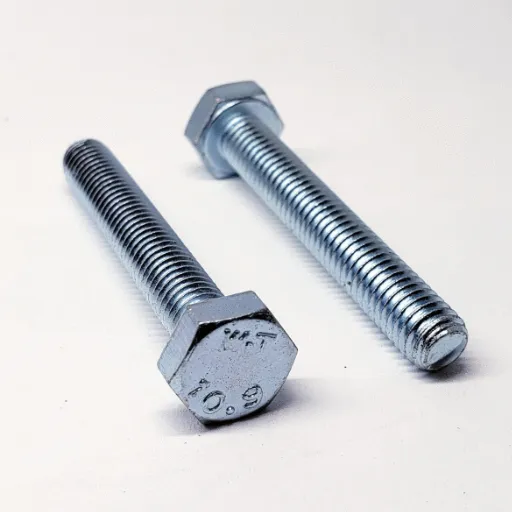
A metric screw size is built from two measurements, both in millimeters: the thread diameter and the thread pitch.
The letter M marks the thread as metric. It refers to the ISO metric screw thread standard that manufacturers follow worldwide, the same specification catalogued in the ISO metric hardware reference tables on Engineers Edge. The number directly after M is the nominal diameter, which is the outside width of the threaded portion measured across the crests. An M5 screw measures about 5 mm across the threads, an M6 about 6 mm, and an M8 about 8 mm.
The pitch is the distance from one thread crest to the next, also in millimeters. A coarse thread like M6 x 1.0 advances 1.0 mm with every full turn. Metric sizing is consistent because it is standardized. An M6 screw from one factory fits an M6 nut or threaded hole from another factory, as long as the pitch matches. This interchangeability is one reason the metric system dominates global hardware, from furniture and electronics to automotive and construction.
How to Read a Metric Screw Callout: M6 x 1.0 x 20
Take the full callout M6 x 1.0 x 20. It packs three facts into a short string, and each one tells you something you need before you buy or install.
| Callout element | Example | What it means |
|---|---|---|
| M | M | Metric (ISO) screw thread |
| Diameter | 6 | Nominal outside diameter of the thread, 6 mm |
| Pitch | 1.0 | Distance between threads, 1.0 mm |
| Length | 20 | Length of the screw, 20 mm |
Length is measured from under the head to the end for most head styles. Countersunk head screws are the exception, because the head sits flush, so you measure the full length including the head. If you are measuring an unknown screw, our how to measure screw size guide walks through the caliper-and-pitch-gauge method step by step.
When the pitch is omitted, the screw uses the standard coarse pitch for that diameter. That is why “M6” on a drawing or a bin label always means M6 x 1.0. A fine thread is marked explicitly, like M6 x 0.75, because it is not the default. The same thread applies whether the part is a screw, a bolt, or a nut. M6 is a thread size, not a part type, which is why the bolt-versus-screw question comes up so often with metric hardware.
Metric vs. Imperial Screw Sizes: The Key Difference
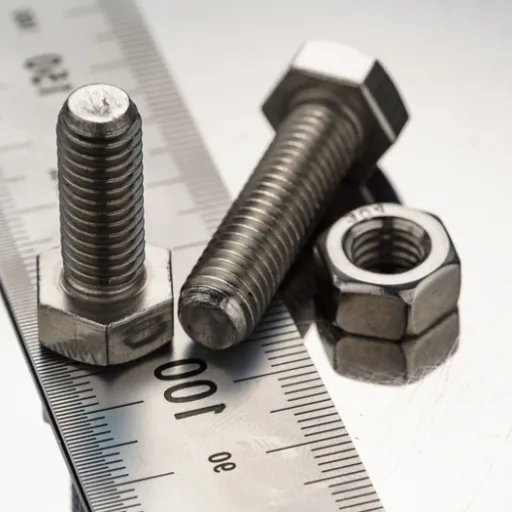
The metric system measures thread pitch in millimeters, while inch-based systems like UNC and UNF measure it in threads per inch. A 1/4-20 screw, for example, has a 0.25-inch diameter and 20 threads per inch.
The confusion happens because some metric and inch sizes look alike. M6 measures 6.0 mm across, and a 1/4-inch screw measures 6.35 mm. They are close in diameter but different in pitch, and they are not interchangeable. Forcing an M6 screw into a 1/4-inch thread will cross-thread and can permanently ruin an aluminum part. This is a real problem with camera tripod mounts, imported furniture, and mixed-hardware toolboxes. Our metric vs imperial screw conversion guide explains the differences and how to avoid cross-threading.
A simple habit prevents most mistakes: keep metric and inch hardware in separate containers, and check the label before you reach for a driver. When a product was made outside the United States, assume metric threads until you measure them.
Metric Screw Sizes from M2 to M24: The M-Series at a Glance
The metric series follows a set progression. Sizes step up by diameter, and each step brings more strength and usually a larger tool size. The table below lists the preferred sizes most suppliers stock, with the standard coarse pitch for each.
| Size | Nominal diameter (mm) | Coarse pitch (mm) | Common fine pitch (mm) |
|---|---|---|---|
| M1.6 | 1.6 | 0.35 | – |
| M2 | 2.0 | 0.40 | 0.25 |
| M2.5 | 2.5 | 0.45 | – |
| M3 | 3.0 | 0.50 | 0.35 |
| M4 | 4.0 | 0.70 | 0.50 |
| M5 | 5.0 | 0.80 | 0.50 |
| M6 | 6.0 | 1.00 | 0.75 |
| M8 | 8.0 | 1.25 | 1.00 |
| M10 | 10.0 | 1.50 | 1.25 |
| M12 | 12.0 | 1.75 | 1.50 |
| M16 | 16.0 | 2.00 | 1.50 |
| M20 | 20.0 | 2.50 | 1.50 |
| M24 | 24.0 | 3.00 | 2.00 |
There are also less common sizes such as M3.5, M7, M9, and M11. They exist for specific designs, but most buyers never need them. If you cannot find a size in the table above, you probably need to step to the next preferred size rather than hunt for an odd one. The full dimensional standard, including limits and tolerances for every metric thread size, is documented in the ISO metric thread dimensions reference from Accu. A complete reference with minor diameters, tap drill sizes, and clearance holes for every size from M3 to M24 is in our metric screw size chart.
Which Metric Screw Size Do I Need?
The best way to pick a size is to match it to the job. Diameter drives strength, so a screw that must hold real weight needs a larger diameter, not just a longer version of the same size.
| Size range | Typical applications |
|---|---|
| M1.6 to M2.5 | Precision instruments, small electronics, circuit-board mounts |
| M3 | Electronics, small machinery, 3D-printed parts, light brackets |
| M4 to M5 | Panels, light furniture, electrical boxes, small guards |
| M6 | General-purpose assembly: furniture, electronics, bicycle parts, automotive brackets |
| M8 | Medium-duty work: machinery guards, structural brackets, automotive mounts |
| M10 to M12 | Heavier loads: equipment frames, suspension parts, structural steel |
| M16 and up | Large plant, heavy construction, industrial machinery |
Consider how Ben, a workshop owner in Ohio, learned this lesson. He won a contract to repair a run of imported workbenches, all assembled with M6 screws. The first unit was fine with M6 replacements. Then he hit a joint that had failed twice, so he tried an M8, and the repair finally held. Ben was not wrong about the material. He was wrong about the size. The bracket needed a larger diameter to carry the load, and stepping up one size fixed it.
If you are unsure which size a product uses, measure an existing screw or the hole before ordering. Our how to measure screw size guide shows exactly how to read diameter, pitch, and length from a screw in your hand, and McMaster-Carr publishes a supplier-side guide to measuring screw size that covers the same caliper-and-gauge method.
When to Step Up a Metric Screw Size
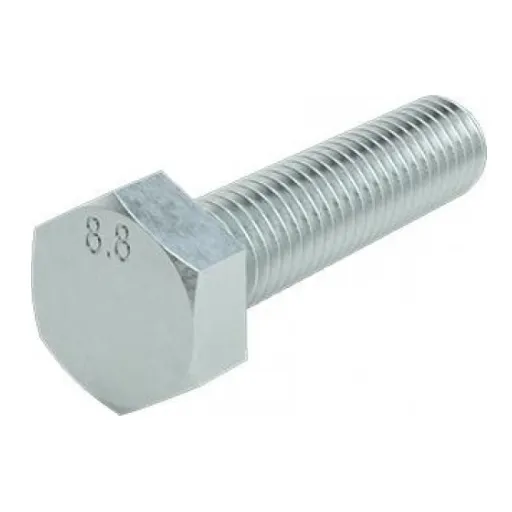
A common question is whether to use an M6 or an M8 for a given joint. The rule of thumb is simple: if a screw strips, shears, or loosens under the load, step up to the next preferred diameter. That usually means moving from M6 to M8, not from M6 to M7.
Why does one step matter so much? Because strength scales with diameter faster than most people expect. Roughly speaking, doubling a screw’s diameter can multiply its strength by about four times for the same material. That is why one M8 screw can often outperform two M6 screws where space allows. The tradeoff is that larger screws need larger holes and larger tools, so you want the smallest diameter that safely handles the load, not the biggest one available.
Pitch matters too. Coarse threads are the default and handle most jobs well. Fine threads are used where you need finer adjustment or better resistance to vibration, but they strip more easily. If you are choosing between them, coarse is usually the right starting point.
Tools That Fit Metric Screws: Hex Keys, Wrenches & Sockets
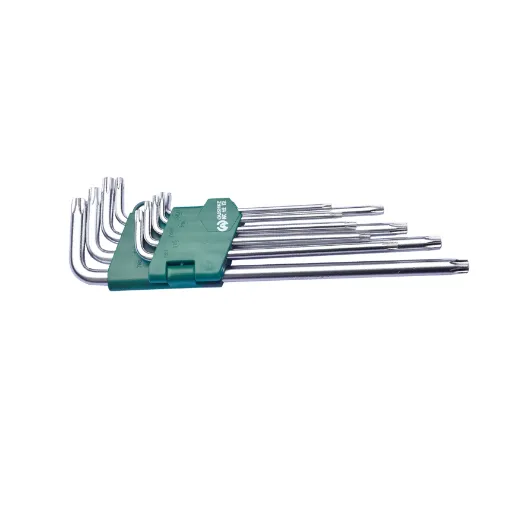
Every metric screw size pairs with a specific driver tool. For socket head cap screws, the common style in machines and brackets, you use a hex key, also called an Allen key. The key size grows with the screw, and getting it right prevents rounded-out sockets.
| Screw size | Hex key (Allen) size for socket cap screws |
|---|---|
| M3 | 2.5 mm |
| M4 | 3 mm |
| M5 | 4 mm |
| M6 | 5 mm |
| M8 | 6 mm |
| M10 | 8 mm |
| M12 | 10 mm |
Hex head bolts and hex nuts work differently. They use an open-end wrench or socket sized across the flats. In practice, M6 hardware commonly takes a 10 mm wrench, M8 takes 13 mm, M10 takes 17 mm, and M12 takes 19 mm. For a full breakdown of hex key sizes and how they map to screws and bolts, see our Allen wrench sizes chart and our guide to types of wrenches.
Elena, a distributor who supplies fastening kits to e-commerce sellers, found that half her customer complaints traced back to one thing: buyers using the wrong driver. A customer reached for an imperial 7/32-inch key instead of a 5 mm key for an M6 socket cap screw, rounded the socket, and blamed the screw. Once Elena added a printed size card to every kit and paired each screw size with the right screwdriver and driver bit, the returns dropped sharply. The lesson applies to any shop: the tool is part of the specification, not an afterthought.
Metric Screw Grades and Materials at a Glance
A full metric screw label can also include a strength class, such as 8.8 or 10.9, or a material grade such as A2-70 stainless steel. The strength class tells you how much load the screw can carry, and the material tells you how it handles corrosion and temperature.
For most general work, a carbon steel screw in class 8.8 is a reliable default. Where rust is a concern, A2 stainless steel, roughly equivalent to grade 304, is common, while A4 stainless, roughly equivalent to grade 316, suits marine environments. Choosing the right grade matters for safety and for cost, especially when you buy in volume. The combination of grade and diameter determines what the joint can actually hold.
Sourcing Metric Screws and the Tools That Fit Them
If you buy screws for a product line or a resale catalog, specifying the full thread code is the single best way to avoid costly mistakes. “M6 screws” leaves too much open. “M6 x 1.0 x 20, class 8.8, zinc plated” leaves nothing to guess.
The industrial fasteners market is large for a reason. Fasteners show up in nearly every manufactured product, and distributors who source them consistently can build a reliable repeat business. Working with a factory-direct manufacturer helps on three fronts: pricing without middlemen, batch-consistent quality, and the option to pair screws with the driver tools your customers need. At Shanghai Oushike Hardware Tools, we make the tools that drive metric fasteners, including hex keys, wrenches, sockets, and screwdrivers, and we can support OEM and private label programs so you can customize hand tools under your own brand. For guidance on moving a full product line from an overseas factory, see our hand tool import guide.
If you are building a fastening range for resale, think of the screws and the tools as one product line, not two. A customer who buys M6 socket cap screws also needs 5 mm hex keys. Stocking them together raises your average order value and solves a real problem for the end user. When you are ready to plan a range or place a bulk order, contact our team for a quote.
Metric Screw Sizes FAQ
What does M6 mean?
M6 means a metric screw with a nominal thread diameter of 6 mm. The M identifies the ISO metric thread, and the number is the outside diameter in millimeters. When no pitch is given, M6 uses the standard coarse pitch of 1.0 mm.
What does the x mean in M6 x 1.0?
The x separates the diameter from the thread pitch. M6 x 1.0 means a 6 mm thread with 1.0 mm between each thread crest. Fine-pitch versions are written the same way, such as M6 x 0.75.
Is M8 bigger than M6?
Yes. M8 has a nominal thread diameter of 8 mm, while M6 has a 6 mm diameter. The larger diameter gives the M8 more strength, which is why it suits heavier loads.
Which metric screw size should I use?
Use M2 to M3 for electronics and precision work, M5 to M6 for general furniture and brackets, and M8 or larger for anything load-bearing. When a joint fails, step up to the next preferred size, such as M6 to M8.
What size Allen key fits an M6 screw?
A standard M6 socket head cap screw takes a 5 mm hex key. Button head, countersunk, and low-head M6 variants take a 4 mm key, and M6 set screws take a 3 mm key.
Are metric and imperial screws interchangeable?
No. Metric threads are measured in millimeters and inch threads in threads per inch, and the sizes do not match exactly. An M6 screw and a 1/4-inch screw look similar but will cross-thread if forced together.
What is the difference between a metric screw and a bolt?
The thread size can be identical. The difference is in how the part is used and driven. Screws are usually driven with a screwdriver or a key into a threaded hole, while bolts are tightened with a wrench against a nut.
Conclusion
Metric screw sizes are a simple, standardized code once you know how to read it. The M tells you the thread is metric, the number after it is the diameter in millimeters, and a second number, if present, is the pitch. Match the diameter to the job, step up one preferred size when a joint is weak, and pair every screw with the correct tool.
Keep the key numbers in mind: M6 is the general-purpose default at 6 mm with a 1.0 mm pitch, and it needs a 5 mm hex key for a socket cap screw or a 10 mm wrench for a hex nut. When you need a dimension reference for any size from M3 to M24, our metric screw size chart has the full tables. If you are sourcing metric screws and the tools to drive them for your business, we would be glad to help you plan the range. Request a quote and our team will support you from a single screw size to a full catalog.