

Circular Saw Blades Supplier: Wholesale & OEM Buying Guide
The right circular saw blades supplier for a distributor is a factory-direct manufacturer that publishes full specifications, confirms MOQ and lead time in writing, and documents its quality control. It isn’t the listing with the lowest FOB price. Most buyers learn that difference after their first mixed container, when returns start eating the margin.
The global circular saw blade market is worth roughly $8 billion to $13 billion in 2026. Yet many purchases still happen on a marketplace tab with a photo, a diameter, and one price. If you have compared listings that tell you almost nothing, you know why that breaks down at scale.
This guide gives you a repeatable way to specify, verify, and cost a blade line before you commit to a container. It is written for distributors, importers, brand owners, and e-commerce sellers.
Key Takeaways
- Every circular saw blade SKU sheet needs eight fields: diameter, arbor, kerf, plate thickness, tooth count, grind, hook angle, and maximum RPM.
- Standardize the arbor first. A mixed-bore catalog is the leading cause of returns and dead stock.
- Build a 12 to 20 SKU core around TCT blades, then add metal, laminate, and diamond specialties.
- Verify a supplier with a seven-step audit and a sample cut test, not a certificate logo.
- US duty on Chinese-origin circular saw blades was 37.5% as of October 2026, so a $2.00 FOB blade can land near $3.16.
What Is a Circular Saw Blades Supplier?

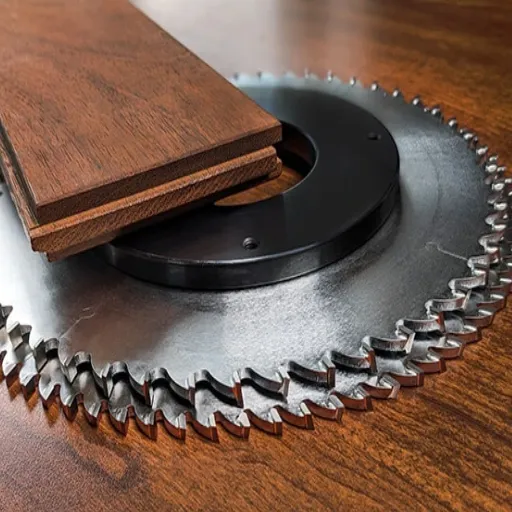
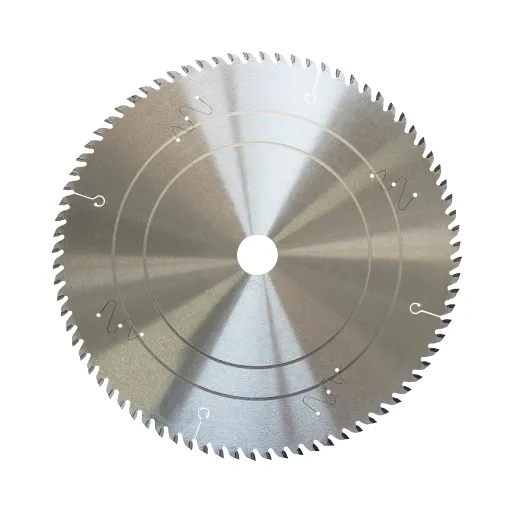
A circular saw blades supplier manufactures or distributes circular saw blades in bulk for distributors, retailers, brands, and industrial buyers. A reliable supplier provides standardized specifications, consistent carbide and steel quality, flexible MOQs, OEM or private-label options, export documentation, and predictable lead times, not just a price list.
That definition matters because “supplier” hides four different businesses. A factory controls steel, carbide, welding, tensioning, and inspection; a trading company controls none of it and adds a margin; a distributor holds stock; a marketplace hosts all three and verifies almost none.
For a buyer choosing a circular saw blades supplier for a private label, the distinction changes everything. A trading company adds a second margin and an invisible quality filter. A marketplace gives you whatever documentation the seller chooses to upload.
| Business type | What it controls | Best use case | Main risk |
|---|---|---|---|
| Manufacturer | Steel, carbide, welding, tensioning, QC, packaging | Private label, OEM, container volume | Minimum order discipline; verify capability |
| Trading company | Sourcing, documentation, consolidation | Small mixed orders | Hidden margin and limited process control |
| Distributor | Local stock, credit terms, fast delivery | Urgent replenishment | Higher unit cost; limited customization |
| Marketplace | Listings, payment protection, disputes | Price discovery, samples | Inconsistent specs; opaque supplier identity |
A reliable manufacturer also gives you a specification sheet you can hand to your own customers. That sheet is the foundation of your catalog, your warranty policy, and your return defense. For how blades move from steel coil to finished product, see our saw blades manufacturer guide.
Ready to compare your current blade against a documented factory spec? Request a quote and the 2026 blade catalog with your diameter, arbor, and annual volume.
The Eight Specifications Every Distributor Must Standardize
Most sourcing problems start with a vague purchase order. A buyer asks for “7-1/4 inch 40 tooth TCT blades” and receives the wrong bore, a thinner plate, or a lower RPM rating. The price looked right because the specification was incomplete.
A proper SKU sheet answers eight fields. If a supplier cannot provide all eight in writing, you cannot plan a catalog or defend a return.
| Specification | What it controls | Typical range or options | What goes wrong if unspecified |
|---|---|---|---|
| Diameter | Depth of cut and saw compatibility | 3″ to 16″; common: 6-1/2″, 7-1/4″, 10″, 12″ | Blade will not fit or will not deliver rated depth |
| Arbor / bore | Mounting on the saw spindle | 5/8″ (15.87 mm), 20 mm, 22.23 mm, 25.4 mm, 30 mm | Bore mismatch is a safety issue and the top return cause |
| Kerf | Width of material removed | Thin kerf 1.6 to 2.0 mm; full kerf 2.2 to 3.2 mm | Wrong kerf changes motor load, speed, and waste |
| Plate thickness | Blade stiffness and stability | Roughly 1.2 to 2.2 mm depending on diameter | Too thin deflects; too thick drags the motor |
| Tooth count | Speed versus finish | 16 to 24T rip; 40T general; 60T finish; 80T+ fine | Burning, tear-out, slow feed, or a rough cut |
| Grind | Tooth shape and cutting behavior | FTG, ATB, ATBR, TCG | The blade rips when it should crosscut, or dulls |
| Hook angle | How aggressively teeth bite | Positive 10 to 20 degrees; 0 to negative for metal | Kickback risk or burned, slow cuts |
| Maximum RPM | Safe operating speed | Typically 3,000 to 8,000 RPM for handheld blades | Overspeeding can crack or eject a blade |
Arbor and maximum RPM are not details you can fix later with a bushing and a warning label. A loose blade can wobble, overheat, or leave the arbor under load. A blade rated below the saw’s no-load speed is a liability.
Dana, a purchasing manager at a regional US distributor, learned this the expensive way. In early 2025 she placed a mixed order of 7-1/4″ blades to hit a container minimum. Half the SKUs arrived with a 20 mm bore instead of the 5/8″ arbor her contractors used.
The supplier offered reduction rings, but contractors lost them, and Dana’s return rate hit 18% in one quarter. The FOB price was 9% below her previous supplier, but the returns cost more than the savings.
Spec-sheet discipline turns a price negotiation into a conversation about a product both sides can measure.
Types of Circular Saw Blades by Application
A circular saw blades supplier doesn’t need to stock every blade ever made. The catalog needs the blades that cover the largest share of demand in your market, plus a small specialty layer for margin.
| Blade type | Best for | Typical teeth | Typical grind | Wholesale role |
|---|---|---|---|---|
| Rip / framing | Cutting along the grain, dimensional lumber | 16 to 24T | FTG | Volume core in construction |
| Crosscut | Cutting across the grain, trim, sheet goods | 40 to 80T | ATB | Core general-purpose SKU |
| Combination | Mixed rip and crosscut work | 40 to 50T | ATBR | Default contractor and DIY SKU |
| Fine finish | Cabinets, trim, veneer, melamine | 60 to 80T+ | ATB or HATB | Margin SKU for professionals |
| Plywood / sheet goods | Plywood, MDF, laminate | 80 to 100T+ | ATB or TCG | E-commerce and professional |
| Metal / aluminum | Non-ferrous profiles, tubing, sheet | 60 to 120T | TCG, negative hook | Specialty line with higher ASP |
| Masonry / concrete | Brick, block, concrete, stone | Diamond segment or rim | Not applicable | Separate construction supply chain |
| Laminate / plastic | Laminate flooring, PVC, acrylic | 60 to 100T | TCG | Niche margin line |
| Demolition | Nail-embedded lumber, rough work | 16 to 24T | FTG or ATB | Contractor consumable |
The commercial rule is simple. Framing and general-purpose blades pay the bills through volume. Fine-finish and specialty blades pay the margin. Masonry and diamond blades belong in a separate catalog because the supply chain and safety story are different.
For a full taxonomy with edge-case categories, read our guide to the types of circular saw blades.
Blade Materials and Wholesale Cost Tiers
Material choice determines your price ladder, warranty exposure, and the customer segment you can serve.
| Material | Cutting behavior | Life and resharpening | Relative cost | Best wholesale role |
|---|---|---|---|---|
| HSS | Softwood, plastics, light duty | Limited; usually replaced | Low | Entry price point |
| TCT (tungsten carbide tipped) | Wood, MDF, plywood, laminates, some non-ferrous | Long; commonly resharpened 5 to 10 times | Low to mid | Core of most wholesale catalogs |
| PCD (polycrystalline diamond) | Aluminum, composites, abrasive panels | Very long; specialized resharpening | Mid to high | Premium fabrication line |
| Diamond (segmented or rim) | Concrete, masonry, stone, tile | Abrasive wear; not resharpened like TCT | Low to mid per blade | Construction and masonry channel |
The rule is easy to state: TCT cuts tough but not abrasive material, diamond cuts abrasive but not tough material, and HSS is the low-cost legacy option. Aluminum is the gray zone, soft but abrasive and sticky, which is why a wood blade gums up. Use a TCG grind, a negative hook angle, and lubricant. See our guide to the best blade for cutting aluminum.
For a circular saw blades supplier, TCT is the center of gravity. It covers woodworking, remodeling, and light metal work and supports a resharpening loop. PCD and diamond are add-on lines. For carbide grades and steel bodies, see TCT versus diamond saw blades.
How to Match a Blade to the Material

Selection is a sequence, not a guess.
- Identify the material. Wood, sheet goods, non-ferrous, ferrous, masonry, plastic, or laminate.
- Choose the blade family. Rip, crosscut, combination, specialty metal, or diamond.
- Set the tooth count. Low for speed and chip clearance, high for finish.
- Choose the grind. FTG for ripping, ATB for crosscutting, TCG for abrasive or non-ferrous.
- Set the hook angle. Positive for wood, neutral or negative for metal.
- Confirm diameter, arbor, and maximum RPM. The blade must fit and be rated for the saw.
A cabinet shop cutting 3/4″ plywood and MDF on a 10″ table saw needs a clean edge. The sequence gives sheet goods, a crosscut family, 60 to 80 teeth, an ATB grind, a 10 to 15 degree hook, and a 10″ blade with a 5/8″ arbor rated above the saw’s no-load speed. That combination cuts cleanly without burning the edge.
The logic works in reverse when a customer complains. Burning usually means too many teeth, a dull blade, or a warped plate. Splintering means too few teeth or the wrong grind.
Our how to choose a saw blade tutorial expands each decision with worked examples by saw type.
Tooth Count and Grind: Building a Catalog That Sells
Tooth count is the specification buyers ask about first and understand least. More teeth mean a slower feed, a smoother cut, and a gullet that clears chips less efficiently.
| Tooth count | Label | Best for | Cut quality |
|---|---|---|---|
| 16 to 24T | Framing / rip | Fast rips, framing lumber, demolition | Fast but rough |
| 40T | General purpose | Everyday crosscuts, plywood, MDF | Balanced |
| 60T | Finish | Trim, sheet goods, cleaner crosscuts | Smooth |
| 80T+ | Fine finish | Cabinets, veneer, melamine, plastics | Slowest and cleanest |
| Grind | Tooth shape | Best for | Avoid |
|---|---|---|---|
| FTG | Flat top | Ripping, fast stock removal | Fine finish |
| ATB | Alternate top bevel | Crosscutting wood, general purpose | Heavy abrasive material |
| ATBR | ATB with raker | Combination rip and crosscut | Dedicated high-finish work |
| TCG | Triple chip | Laminates, plastics, non-ferrous | Fast ripping of softwood |
Two rules keep a catalog coherent. Tooth count scales with diameter: a 10″ blade needs more teeth than a 6-1/2″ blade for the same pitch. And a core of 24T, 40T, 60T, and 80T covers framing through fine finish without stocking every count in every diameter.
For the complete chart, TPI conversion, and grind science, read our guide to circular saw blade tooth count.
Arbor and Bore Compatibility for Domestic and Export Markets
Arbor size is where catalogs quietly break. A blade that fits a US cordless saw will not fit a European panel saw, and a 30 mm bore will not mount on a 5/8″ spindle without a bushing.
| Blade diameter | Common US arbor | Common metric bore | Notes |
|---|---|---|---|
| 3″ | 1/4″ | 10 mm | Mini and trim saws |
| 4-1/8″ | 3/4″ | 20 mm | Some trim and cordless saws |
| 5″ | 7/8″ (22.23 mm) or 5/8″ | 20 mm | Cordless and trim saws |
| 6-1/2″ | 5/8″ (15.87 mm) | 16 or 20 mm | Common cordless size |
| 7-1/4″ | 5/8″ (15.87 mm) | 20 mm; some 16 mm | Dominant US handheld size |
| 8″ and 8-1/4″ | 5/8″ | 20 or 25.4 mm | Table and bench saws |
| 9″ | 1″ (25.4 mm) | 25 mm | Industrial and handheld |
| 10″ | 5/8″ | 25.4 or 30 mm | Table and miter saws |
| 12″ | 1″ (25.4 mm) | 30 mm | Miter, radial, and table saws |
| 14″ to 16″ | 1″ | 30 mm | Industrial and cut-off saws |
Three rules prevent most bore problems. Never assume the bore; confirm the spindle and whether the blade uses a diamond knockout or bushing. Standardize the arbor before expanding the diameter range, because every extra bore is a separate SKU and return risk. Treat a mixed-bore catalog as an export decision: a US 5/8″ line will not serve European 30 mm panel saws.
Reduction rings bridge the gap but add a part, a failure point, and a support question. Use them for low-volume specialties, not as a substitute for planning.
Our full circular saw blade sizes and arbor chart covers every diameter, and how to change a circular saw blade explains installation and fit checks.
RPM Ratings, Kerf, and Safety Compliance
Maximum RPM is the specification buyers ignore until something goes wrong. A blade must be rated at or above the saw’s no-load speed. Overspeeding can crack, vibrate, or eject a blade. The rating should be marked on the blade with diameter, bore, tooth count, and brand.
Kerf is both a performance and a commercial decision. Thin kerf removes less material and reduces motor load, suiting cordless saws and finish work. Full kerf is stiffer and holds a line in heavy cuts.
Compliance depends on the market. For woodworking blades sold in Europe, EN 847-1:2017 covers design, marking, maximum speed, and information for use. In the US, OSHA 29 CFR 1910.213 governs woodworking machinery and ANSI O1.1 provides machinery safety context. EN 847-1 doesn’t cover every blade type; metal-cutting blades may fall under different requirements.
A distributor needs correct marking, a declaration that the blade is rated for the intended machine speed, and a supplier who stands behind the batch. ISO 9001 is a process signal, not a product guarantee. Ask for the scope, expiry date, and a batch inspection report.
Our guide to saw blade RPM ratings explains the mechanics and standards.
Quality Control: How to Verify a Circular Saw Blade Manufacturer
Supplier claims are cheap. Verification protects your margin. Use this seven-step checklist before a production order.
- Confirm the legal entity and factory address. Match the business license, export license, and factory address. If you cannot visit, ask for a live video walkthrough.
- Request the spec sheet, not a catalog photo. Require diameter, bore, kerf, plate thickness, tooth count, grind, hook angle, maximum RPM, and carbide grade.
- Verify the quality system. Ask for the ISO 9001 certificate, scope, and expiry date, plus the latest internal inspection report.
- Test the carbide and the weld. Request tip hardness data, braze or weld strength information, and a batch cut test on your material.
- Check tensioning and balance. Ask how the plate is tensioned, flattened, and dynamically balanced, and request runout tolerances.
- Run a sample order. Cut the same material with the sample and your current blade. Measure cut length, chipping, vibration, noise, and tooth wear.
- Audit the commercial terms. Put MOQ, sample cost, lead time, packaging, Incoterms, payment terms, warranty, and the defect policy in writing.
The sample test is the step buyers skip most. A blade can look correct, measure correctly, and still fail because the plate was not tensioned or the carbide grade is too brittle.
Kenji runs product development for a private-label brand in the Pacific Northwest. In 2024 he approved a supplier on price and a certificate, skipping the cut test to save three weeks. The first production run looked perfect in the warehouse.
Six weeks later, contractors reported that the 7-1/4″ framing blades were losing teeth on nail-embedded lumber. The defect rate reached 9%, and the brand paid for replacements and freight on two containers. A $400 sample test would have caught the brittle carbide grade.
Keep the ISO certificate and scope, steel and carbide material certificates, tip hardness results, weld or braze data, batch inspection reports, and evidence of RPM marking on file. If a supplier can’t produce them, treat the price as provisional.
For the full factory audit and import verification process, see our guide to importing saw blades from China.
Have a spec sheet ready? Send it to our team with your annual volume for a written quote.
Wholesale Pricing, MOQ, and Packaging Options
Wholesale blade pricing varies because the specification varies. A 7-1/4″ 40T blade at volume is a different product from a 12″ 80T industrial blade or a PCD-tipped aluminum blade. When you compare circular saw blades supplier quotes, make sure the specification matches before you compare the price.
The ranges below reflect marketplace listings in October 2026. They are not Oushike terms; replace them with a written quote for your specification.
| Item | Directional benchmark | What drives the difference |
|---|---|---|
| Commodity TCT blade | Roughly $0.85 to $2.90 per piece at volume | Diameter, tooth count, carbide grade, packaging |
| Premium or large blade | Roughly $20 to $30 per piece; higher for PCD | Diameter, material, tolerances |
| Trial MOQ | 1 to 10 pieces on some listings; 50 to 100 on audited suppliers | Standard catalog items, not private label |
| Private-label logo MOQ | Commonly 100 to 500 pieces | Branding method |
| Custom packaging MOQ | Commonly 500 to 1,000 pieces; higher for boxes and blisters | Print setup and material |
| Lead time | 7 to 30 days standard; 15 to 30 custom; samples 3 to 7 | Order size, customization, factory load |
| Payment terms | T/T 30% deposit and balance before shipment; L/C for larger orders | Order value and relationship history |
Packaging is a cost lever. Bulk cartons are cheapest but have no retail presence, poly bags serve low-cost retail, color boxes build a brand but raise MOQ, blisters deter theft and cost the most, shrink packs suit e-commerce, and palletized export cartons with SKU labels are the practical distributor choice.
Blades are usually cube-sensitive before weight-sensitive, so packaging changes container economics. Confirm carton dimensions and gross weight with the factory.
For bulk-buying mechanics and freight math, read our wholesale saw blades buying guide. If you also stock whole saws, see wholesale hand saws.
OEM and Private Label Circular Saw Blades

OEM and private label are how a distributor becomes a brand. The blade can carry a laser-etched logo, printed specification, and brand color. The packaging can carry your artwork, barcode, warnings, and part numbers.
Entry cost depends on customization depth. A laser-etched logo on a standard blade usually starts at a few hundred pieces. Custom packaging starts higher because of print setup. A fully custom specification has the highest threshold and longest lead time.
Roll out in phases. Start with three to five high-volume SKUs using a standard blade and your logo. Test sell-through for a season, add custom packaging to proven SKUs, then consider a custom specification. This protects cash and shows the factory which items deserve priority.
Artwork approval should be explicit: vector artwork and Pantone references, a digital proof, written approval, and a physical pre-production sample. Don’t skip the physical sample; colors shift between screens, printers, and substrates.
Oushike provides OEM and private label services for blades and packaging, plus custom manufacturing for non-catalog specifications. For the full playbook, see our guide to custom saw blades.
Importing Circular Saw Blades: HS Codes, Tariffs, and Landed Cost
Import cost is where sourcing decisions are won or lost. FOB is only the first line. Duty, freight, brokerage, inspection, defects, and financing change the number that matters.
The HS code depends on the working part.
| HS code | Covers | Notes |
|---|---|---|
| 8202.31 | Circular saw blades with a steel working part | Common for steel-cutting blades |
| 8202.39.10 | Circular saw blades with a diamond or CBN working part | Diamond and CBN blades |
| 8202.39.90 | Other circular saw blades | Includes many TCT woodworking blades |
Classification errors change duty and documentation. A blade declared under the wrong code can be held, reclassified, or assessed at a higher rate.
For US-bound shipments, the landscape changed in 2026. As of October 20, 2026, Chinese-origin blades under HTS 8202.39.00.70 carried a 37.5% total effective rate: MFN free, plus 25% Section 301, plus a 12.5% Section 301 surcharge that replaced an expired rate in July 2026. Diamond sawblades are also subject to an antidumping order, and Commerce opened a covered-merchandise inquiry on October 19, 2026. Rates exclude AD/CVD and can change; verify at shipment.
Landed cost per blade =
 FOB price
+ ocean freight and insurance per unit
+ import duty (HS rate x customs value)
+ brokerage, port, and inland delivery
+ QC and inspection
+ defect and returns allowance
+ financing and FX buffer
Here is an illustrative example for a 7-1/4″ 40T mid-grade TCT blade. Every figure is an assumption, not a quote.
| Cost element | Assumption | Per blade |
|---|---|---|
| FOB price | 7-1/4″ 40T TCT, mid-grade | $2.00 |
| Ocean freight and insurance | Consolidated LCL or FCL allocation | $0.18 |
| US import duty | 37.5% effective rate x $2.00 | $0.75 |
| Brokerage, port, inland | Allocation | $0.12 |
| QC and inspection | Batch sampling | $0.03 |
| Defect and returns allowance | 2% of FOB | $0.04 |
| Financing and FX buffer | 2% of FOB | $0.04 |
| Landed cost | ~$3.16 |
At $3.16 landed, a distributor selling to retail at $6.50 and a retailer selling at $14.99 to $19.99 has room, but only if the blade performs. A $1.50 FOB blade with a 10% defect rate can erase the margin through replacements, freight, and lost accounts.
Incoterms shift risk. FOB puts the main carriage and insurance on you; CIF adds freight and insurance to the destination port but not inland delivery or duty; DDP shifts the most responsibility to the seller but hides the duty line. State the term on the purchase order.
For documentation and inspection, see our hand tool import guide. For supplier verification in depth, see import saw blades from China.
How a Circular Saw Blades Supplier Builds a Product Line
A catalog is a financial decision. Every SKU carries inventory, warehouse space, training, and return risk. A circular saw blades supplier with catalog experience can help you cover roughly 80% of demand with 12 to 20 SKUs.
| Layer | Choose | Recommended core | Why it matters |
|---|---|---|---|
| Market | US handheld, EU panel, cordless, metal fabrication, e-commerce | Pick one primary market first | Arbor and diameter differ by market |
| Diameter | 4 core sizes | 6-1/2″, 7-1/4″, 10″, 12″ or 160, 180, 250, 300 mm | Covers cordless, framing, table, industrial |
| Arbor | 2 to 3 bores | 5/8″, 20 mm, 30 mm | Reduce with bushings where safe |
| Tooth count | 4 core counts | 24T, 40T, 60T, 80T | Framing through fine finish |
| Grind | 3 core grinds | FTG, ATB, TCG | Rip, crosscut, abrasive and non-ferrous |
| Tier | Good, better, best | Entry, professional, premium | Serves multiple channels |
| Specialty | Add after the core | Metal, laminate, diamond | Higher price, lower volume |
A 16-SKU US handheld range: 6-1/2″ in 24T, 40T, 60T; 7-1/4″ in 24T, 40T, 60T, 80T; 10″ in 40T, 60T, 80T; 12″ in 60T, 80T; plus 7-1/4″ metal TCG, 10″ laminate TCG, 7-1/4″ diamond masonry, and 6-1/2″ thin-kerf framing. All use 5/8″ arbors except the 12″ and specialty blades.
Assortment follows the market. A US framing distributor needs 7-1/4″ and 6-1/2″ first, a European panel shop needs 250 and 300 mm TCG blades with a 30 mm bore and EN 847-1 marking, a cordless e-commerce seller can build 6-1/2″ three-packs, and a metal fabricator needs TCG blades with negative hook angles. Serving all four from one container produces dead stock.
Priya, a category manager for a European panel shop supplier, started with the arbor, not the price. She standardized on 30 mm bore, 250 and 300 mm diameters, and 80 to 96 teeth for laminate and MDF. That gave her eight SKUs, all compatible with her customers’ panel saws.
The narrow range let her commit to a private-label sleeve and negotiate a better unit cost. Two years later, those eight SKUs still produce most of her blade revenue.
The price ladder is the other half: good, better, best in each core size. Entry competes on price, professional on cut quality and life, premium on finish and uptime. Don’t compete only on FOB.
Aftermarket is the most underused lever. TCT blades are typically resharpened 5 to 10 times. A sharpening or exchange program creates recurring service revenue. See our guide to circular saw blade sharpening.
Finally, connect blades to saws, accessories, and hand tools. Oushike’s saws and saw blades range, power tools, and professional hand tools let you build a broader order without a second supplier.
Frequently Asked Questions
What is a circular saw blades supplier?
A circular saw blades supplier manufactures or distributes blades in bulk for distributors, retailers, brands, and industrial buyers. A reliable supplier provides full specifications, consistent material quality, flexible MOQs, OEM or private-label options, export documentation, and predictable lead times.
How do I choose a circular saw blade supplier?
Start with the specification sheet, then verify the legal entity, factory address, quality system, carbide and weld data, tensioning process, and commercial terms. Run a sample cut test on your own material before ordering.
What is the minimum order quantity for circular saw blades?
It depends on the product and customization. Trial orders for standard catalog blades can start at 1 to 100 pieces. Private-label logos commonly start at 100 to 500 pieces, and custom packaging often starts at 500 to 1,000 pieces.
What tooth count is best for plywood?
For clean plywood cuts, use 60 to 80 teeth with an ATB grind. For fast framing cuts in plywood, a 24T blade is acceptable but will tear out more.
What is the HS code for circular saw blades?
The main codes are 8202.31 for blades with a steel working part, 8202.39.10 for diamond or CBN working parts, and 8202.39.90 for other circular saw blades. Confirm with your customs broker before shipment.
How much do circular saw blades cost wholesale?
Common small and medium TCT blades can range from roughly $0.85 to $2.90 per piece at volume. Large, premium, PCD, and industrial blades cost more. Diameter, tooth count, carbide grade, and packaging all move the price.
Can I get private label circular saw blades?
Yes. Most factories offer laser-etched logos, printed blades, custom sleeves, color boxes, and blister packaging. Logo MOQs commonly start at a few hundred pieces, while custom packaging requires higher volumes.
How many circular saw blades fit in a 40ft container?
It depends on packaging. A 7-1/4″ blade weighs roughly 200 to 340 grams, and a 25-pack carton weighs about 5 kg. At an assumed 0.015 to 0.020 CBM per carton, a 40HQ could hold roughly 84,000 to 111,000 blades, but blades are often cube-limited before weight-limited.
Conclusion
A circular saw blades supplier is either a shortcut to a profitable blade line or a slow leak in your margin. The difference isn’t the first quote. It’s whether the supplier can document eight specifications, standardize an arbor, verify quality with a cut test, and explain landed cost before you sign.
Five decisions carry most of the outcome: standardize the specification sheet, choose the arbor before the diameter range, build a 12 to 20 SKU core around TCT, verify the factory with documents and a sample, and calculate landed cost with the current duty rate.
Oushike supplies circular saw blades and saw accessories with factory-direct pricing, OEM and private-label support, flexible MOQs, and export documentation for buyers in more than 30 countries. Learn more about our manufacturing and sourcing capabilities.
Request a quote and the 2026 blade catalog. Send five fields and we will reply with a specification-matched proposal: diameter, arbor, tooth count, application, and annual volume. Contact our team to start.