
Pry Bar Material: Steel Grades, Heat Treatment, and How to Choose
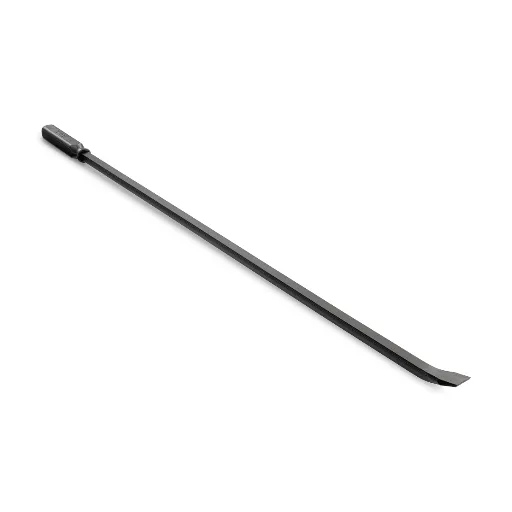
A pry bar is usually made from forged medium-carbon or alloy steel, most often 1045/45#, 65Mn, chrome vanadium, or 4140/4340. The bar is then heat-treated to roughly 45-52 HRC at the working ends with a tougher core.
Two bars can look identical on a shelf. One bends slowly under overload and gives you a warning. The other snaps without one.
The difference is rarely the paint. It’s the steel grade, the forming method, the heat-treatment window, and where the hardness is actually measured.
Every supplier says “forged steel.” The phrase explains nothing: not the carbon content, the tempering temperature, or where the hardness was checked.
This guide gives you the pry bar material details you can act on: a grade-by-grade comparison, the failure mode behind each forming method, the heat-treatment range, and the tests to put in a purchase order.
Key Takeaways
- Most pry bars are forged from 1045/45#, 65Mn, Cr-V, or 4140/4340 steel, then heat-treated to about 45-52 HRC at the working ends.
- One-piece forging aligns grain flow with the bar shape. Cast, stamped, and welded bars are cheaper but fail differently.
- Hardness below 45 HRC lets the tip roll. Hardness above 52 HRC trades toughness for wear resistance and raises the risk of snapping.
- A hardness number without a test location and scale is not a specification.
- For heavy prying, demand the steel grade, heat-treatment range, hardness map, and a mill test report in the RFQ.
What Is a Pry Bar Made Of?
A pry bar is usually made from forged medium-carbon or alloy steel, commonly 1045/45#, 65Mn, chrome vanadium, or 4140/4340, then heat-treated to about 45-52 HRC at the working ends with a tougher core. One-piece forging aligns the grain with the bar’s shape. Casting, stamping, and welded assemblies are cheaper but more prone to bending or sudden failure.
Steel is the default because it combines stiffness, hardness, and cost in a way no other material does at the same size. Titanium, stainless steel, aluminum, and non-sparking copper alloys exist, but each solves a narrower problem.
Grade is only half the answer. A bar can use the right steel and still fail early if a weld cuts the grain flow or casting porosity interrupts it.
If you are still deciding which style of bar fits the job, our complete guide to pry bar types compares flat bars, wrecking bars, crowbars, and cat’s paws before you lock in a material.
Pry Bar Steel Grades Compared
The table below compares the grades that show up most often in pry bar specifications. Chemistry ranges are typical, not exact mill limits. Hardness figures assume a properly austenitized, quenched, and tempered part.
| Grade (equivalents) | Typical chemistry | Typical pry bar hardness | Toughness | Relative cost | Best pry bar use |
|---|---|---|---|---|---|
| 1045 / 45# / S45C | C 0.42-0.50%, Mn 0.60-0.90% | 42-50 HRC | Good; bends before breaking | Low | Flat bars, general forged bars, crowbars |
| 65Mn / 1065 | C 0.62-0.70%, Mn 0.90-1.20%, Si 0.17-0.37% | 45-52 HRC | High strength and elasticity | Low-medium | Flat, wrecking, and spring-tempered bars |
| 6150 / Cr-V / 50CrV4 | C 0.48-0.53%, Cr 0.80-1.10%, V 0.15% min | 48-54 HRC | Very good fatigue life | Medium | Professional bars and sets |
| 4140 / 42CrMo4 / SCM440 | C 0.38-0.43%, Cr 0.80-1.10%, Mo 0.15-0.25% | 45-52 HRC | Good balance in thick sections | Medium | Heavy wrecking bars |
| 4340 | C 0.38-0.43%, Ni 1.65-2.00%, Cr 0.70-0.90%, Mo 0.20-0.30% | 45-52 HRC | Highest toughness in thick sections | High | Premium heavy-duty bars |
| 5160 | C 0.56-0.64%, Cr 0.70-0.90% | 45-52 HRC | Excellent resilience | Medium | Bars that must flex and recover |
| Boron steel (27MnCrB5 family) | C 0.25-0.40%, Mn and Cr, B 0.0005-0.003% | 45-52 HRC | High strength with ductility | Medium-high | Premium wrecking bars |
| Hadfield manganese | C 0.90-1.45%, Mn 11-14% | About 190-200 HB as supplied | Extreme toughness; work-hardens | High | Specialty demolition and mining bars |
Carbon steel: 1045 / 45# / S45C
The economical baseline. Medium carbon gives good toughness at 42-50 HRC, and the bar bends before it breaks. Use it for flat bars, general forged bars, and crowbars where cost matters more than wear resistance.
Manganese spring steel: 65Mn, and why it is not Hadfield
65Mn is a spring steel with about 1% manganese and 0.62-0.70% carbon. It takes a good edge, resists fatigue, and is common in Chinese pry bar production. “Manganese steel” on a listing usually means 65Mn.
Hadfield manganese is different: 11-14% manganese, austenitic, and work-hardening under impact. If a supplier says “11-14% manganese” and quotes 48 HRC, ask for the chemistry certificate.
Chrome vanadium, chrome molybdenum, and spring steels
6150 (Cr-V) adds chromium and vanadium for hardenability and fatigue life. 4140 hardens deeply for heavy wrecking bars, and 4340 adds nickel for the highest toughness in thick sections.
5160 is a forgiving spring steel. 8650 holds 50-54 HRC in premium mini bars. Boron steel uses 0.0005-0.003% boron for hardenability, and Ovako supplies it to Hultafors for more than 100,000 bars a year, according to the case study.
A distributor in Rotterdam learned this in 2024. He stocked a 45# bar for a rental chain’s demolition counter because the price was right. Crews used it to lever frozen formwork, and within three months the tips had rolled and the shafts had taken a set. He moved the heavy line to 4140 and kept the 45# bar for lighter work.
For how a grade choice changes a specific tool, see our guide to wrecking bar design and sizes.
Forged vs Cast vs Stamped: How Forming Changes Performance
Forming decides how the bar fails. Forging pushes the grain along the shape. Casting can leave porosity.
Stamping creates stress risers at every thickness change. Machining keeps clean geometry but wastes material. Welding puts a heat-affected zone exactly where the bending moment is highest.
| Method | How it works | Typical failure mode | Best use | Relative cost |
|---|---|---|---|---|
| Hot drop forging | Billet heated to roughly 1,000-1,200 °C, hammered or pressed in dies, flash trimmed, straightened | Bends or yields gradually under overload | Demolition, wrecking, heavy prying | Medium-high |
| Casting | Molten steel poured into a mold | Can snap under shock; may take a permanent set | Complex shapes or lower-stress parts | Low-medium |
| Stamping | Flat sheet cut and pressed to shape | Bends at stress risers and abrupt thickness changes | Light or occasional prying | Low |
| Machining from bar stock | Bar cut, milled, and ground | Good if grain direction is respected | Low-volume custom and precision bars | High |
| Welded assembly | Separate pieces joined by welding | Fails at the weld or heat-affected zone | Avoid for struck or heavily pried bars | Low |
“Forged” on a label does not always mean one-piece or fully heat-treated. Some square-shank bars start as bar stock with only the tip forged and bent. Some are hardened only at the tip. Ask whether the bar is one-piece forged and whether heat treatment covers the working ends, the shaft, or both.
A brand owner in Texas ordered 800 “forged” wrecking bars for a framing contractor. The bars looked right, but a weld joined the shaft to the claw and the paint covered it. Failures showed up around the sixtieth use, always at the same line.
The contractor returned the lot. The 9% price saving cost more in freight and lost account value.
Heat Treatment and Hardness: Why 45-52 HRC
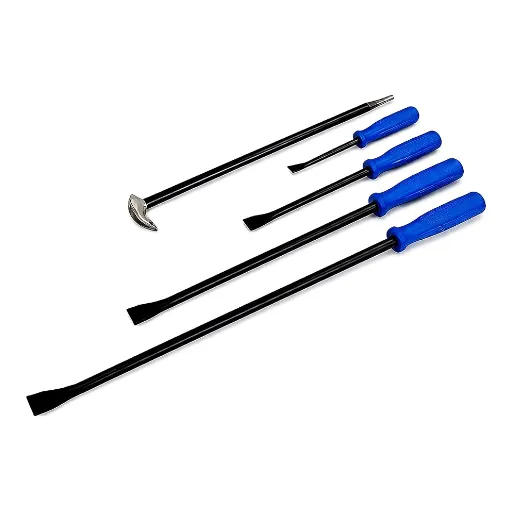
Heat treatment turns a shaped piece of steel into a tool. The typical sequence looks like this:
- Normalize or anneal to refine grain and soften the steel for machining.
- Austenitize at roughly 830-860 °C for 45# and 65Mn, and around 850 °C for 4140/4340.
- Quench in water, oil, or polymer. 65Mn, 4140, 4340, and 5160 usually take oil or polymer.
- Temper at 300-600 °C depending on grade and target hardness. 65Mn commonly runs 540 ± 50 °C.
- Straighten, stress-relieve, and verify hardness at defined locations on a defined scale.
The 45-52 HRC band is a practical compromise, not a clause in a standard. Below about 45 HRC, the tip dulls or rolls and the bar can take a permanent set. Above about 52 HRC, the steel is harder but less tough, so the tip can chip and the bar can snap instead of yielding.
Surface and core do different jobs. A common specification is 45-52 HRC at the surface with roughly 35-40 HRC in the core. Some bars harden only the working ends; one published Bahco specification lists a 25-36 HRC shaft and 45-53 HRC at the nails. That’s legitimate, as long as the supplier declares it.
Test location matters as much as the number. One published product specification cites 48 HRC at 6 inches from the chisel end. A single “48 HRC” with no location or scale tells you very little.
| Defect | Cause | Symptom | What to check |
|---|---|---|---|
| Under-hardness | Low austenitizing temperature, slow quench, over-tempering | Tip rolls or dulls; bar takes a set | Hardness map at ends and shaft; temper records |
| Over-hardness | Over-austenitizing, under-tempering, water quench on high-carbon steel | Tip chips; bar snaps | Target 45-52 HRC; oil or polymer quench; temper records |
| Decarburization | Surface carbon loss during heating in air | Soft skin; fast tip wear | Controlled atmosphere; grind after heat treat; hardness at depth |
| Quench cracks | Thermal stress, water quench, sharp section changes | Cracks at tip or transitions | Oil or polymer quench; magnetic particle inspection |
| Temper embrittlement | Holding in a susceptible temperature range, slow cooling | Poor impact toughness at acceptable hardness | Avoid embrittling holds; cool quickly; impact test |
Need a hardness specification you can put in a purchase order? Ask our team for a sample material specification →
Alternative Materials and Finishes
Titanium, stainless, aluminum, and non-sparking alloys
Steel wins most prying jobs because it is stiff, hard, and cheap at the same size. The alternatives trade one of those properties for something else.
| Material | Density | Hardness | Corrosion | Relative cost | Best use |
|---|---|---|---|---|---|
| Carbon or alloy steel | About 7.85 g/cm³ | 45-52 HRC | Poor unless coated | Low-high | Heavy prying, demolition, striking |
| 420 / 420HC stainless | About 7.8 g/cm³ | 50-56 HRC | Good | Medium | Marine, food processing, wet environments |
| Titanium Grade 5 (Ti-6Al-4V) | 4.4-4.5 g/cm³ | 31-36 HRC | Excellent | High | EDC, light prying, corrosive carry |
| Aluminum 6061-T6 / 7075-T6 | 2.7-2.8 g/cm³ | About 60-150 HB | Good | Low | Handles and light fixtures, not prying |
| Beryllium copper / aluminum bronze | About 8.2-8.9 g/cm³ | About 20-40 HRC | Excellent | Very high | Oil and gas, mining, non-sparking zones |
Titanium Grade 5 is stronger than steel by weight, not by volume. At the same dimensions, steel is roughly twice as stiff, with a modulus near 200 GPa against 110-116 GPa for titanium, and it is much harder at the tip. Titanium suits light carry and corrosive environments, not hammer-assisted prying or concrete-form removal.
420 and 420HC stainless can be hardened and still resist corrosion, which suits marine and food-processing work. 304 and 316 resist corrosion well but can’t be hardened to a pry-bar edge, so they stay in light-duty roles. Aluminum isn’t a prying material at all. Beryllium copper and aluminum bronze are specialty alloys for non-sparking environments, where lower hardness is an accepted trade-off.
For carry-specific trade-offs in weight, size, and price, see our EDC pry bar guide.
Finishes and corrosion protection
A finish protects the steel and signals quality, but it can also hide a heat-treatment problem. The numbers below are indicative ranges. Actual salt-spray performance depends on coating thickness, pretreatment, and edge coverage.
| Finish | Typical thickness | Indicative salt spray | Best for | Watch out for |
|---|---|---|---|---|
| Powder coat | 60-100 µm | 48-500 hours | Retail and OEM color | Thin coverage at sharp tips |
| Black oxide | 1-3 µm | 24-96 hours, oiled | Precision and professional bars | Thin film; depends on oil |
| Phosphate | 5-15 µm | 48 hours or more, oiled | Industrial and paint-base parts | Porous; needs oil |
| Zinc plating | 8-25 µm | 96-500 hours | Hardware and lower-hardness parts | Hydrogen embrittlement on hard steels |
| Electrophoretic (E-coat) | 15-25 µm | 240-500 hours | OEM and complex shapes | Less chip-resistant than powder |
Zinc plating on bars at 45 HRC and above carries a hydrogen-embrittlement risk unless the parts are baked after plating. For humid markets and long sea freight, pair the finish with VCI paper, desiccant, and a moisture barrier. A flat-coupon test doesn’t prove protection at a scratched tip.
Matching Pry Bar Material to Type and Price Tier
The right grade depends on section size, load, and use. A thin flat bar needs spring and a hard tip. A long crowbar needs shaft toughness. A mini EDC bar needs corrosion resistance and low weight more than maximum strength.
| Product | Typical steel | Forming | Hardness target |
|---|---|---|---|
| Flat / wonder bar | 65Mn, 1065, SK5 | Flat spring steel, forged or rolled | Body 42-48 HRC; SK5 tip 55-60 HRC |
| Wrecking bar | 45#, 65Mn, 4140 | One-piece drop forging | 45-52 HRC |
| Crowbar / pinch bar | 45#, 55#, 60#, 65Mn | Forged from hex or round stock | 45-52 HRC |
| Cat’s paw / nail puller | 45#, 65Mn | Forged with a short claw | Tip 48-52 HRC; body softer |
| Pry bar set | Cr-V, 4140 | Forged | 48-52 HRC |
| EDC / mini bar | Ti Grade 5, 420HC, 304 | Machined or forged | 31-56 HRC, depending on material |
| Tier | Steel | Forming and heat treatment | Finish | Hardness | Best for |
|---|---|---|---|---|---|
| Budget / DIY | 45# / 1045 | Stamped or basic forged; tip hardened | Paint or powder coat | 40-46 HRC | Occasional use, entry price |
| Trade | 65Mn or Cr-V | One-piece forged; full quench and temper | Powder coat or black oxide | 45-52 HRC | Daily site use |
| Professional / industrial | 4140, 4340, 5160, boron | One-piece forged; through or selective hardening; MTRs | Black oxide, powder, E-coat | 48-52 HRC | Heavy demolition, rental fleets |
| Premium EDC | Ti Grade 5 or 420HC | Machined or forged; optimized for the material | Anodize, PVD, stonewash | 31-56 HRC | Pocket and keychain carry |
Steel is a modest share of landed cost. Forging, heat treatment, finishing, and testing are the bigger drivers.
Under-hardness creates rolled tips and returns. Over-hardness creates chipped tips and snapped bars. Both end up as a credit note.
How to Specify and Verify Pry Bar Material
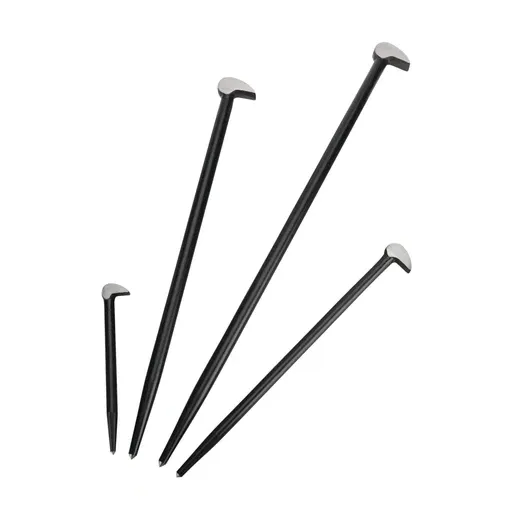
A procurement manager in Hamburg, Priya, compared two suppliers in 2025. Both quoted 48 HRC. She asked each to hardness-test three points per bar and report the location. Supplier A tested only the tip.
Supplier B tested the tip, midpoint, and shaft. Its shaft read 36 HRC, matching its declared selective hardening. Supplier A’s shaft read 29 HRC, although the bar was sold as through-hardened. She wrote the test locations into the next order and cut incoming defects by more than half.
You can do the same. Write these lines into the purchase order:
- Grade and standard. For example, “65Mn per GB/T 1222” or “4140 per ASTM A29.” Never accept “high-carbon steel” as the only description.
- Chemistry limits. Carbon, manganese, chromium, molybdenum, vanadium, and boron where applicable. Cap sulfur and phosphorus.
- Forming method. “One-piece hot drop forging, no welds.” Add the die number and parting-line location.
- Heat treatment. Austenitizing range, quench medium, tempering range, and whether treatment covers the full length or only the working ends.
- Hardness. Surface and core, working ends and shaft, Rockwell scale, test location, and sample size.
- Mechanical tests. Bend angle or load with no permanent set, plus impact testing if the application calls for it.
- Finish. Type, thickness, color, salt-spray hours, adhesion, and a post-plate bake for plated high-hardness parts.
- Traceability. A mill test report per heat lot, with the heat number recorded or stamped.
- Sample validation. Hardness at three points per bar, a bend test, a cross-section, a salt-spray coupon, and a tip file test.
- Packaging. VCI paper, desiccant, and a moisture barrier for export, with extra protection at tips and claws.
The current U.S. reference is ASME B107.410-2018 (R2023), Struck Tools. It consolidated the older B107.52 nail-puller standard, whose 1998 edition is marked withdrawn.
Check the edition before you cite a standard in a contract. For EU-bound product, TÜV Rheinland EK5/AK2 19-01.2:2022 references DIN EN ISO 683-1/-2 and took effect on 2022-11-01. Reference ISO 6508-1 or ASTM E18 for hardness and ISO 9227 for salt spray.
Red flags in a quote:
- No grade, or only “high-carbon steel.”
- “Forged” appears next to a welded neck, handle, or striking cap.
- An HRC number with no test location, scale, or sample size.
- “11-14% manganese” without a chemistry certificate.
- Hardness only at the tip, with no shaft or core data.
- No mill test report or heat-lot traceability.
- Coating over heat-treat discoloration that might hide uneven hardness.
- A supplier cites ANSI B107.10 as the pry-bar standard. That standard covers socket-wrench handles, not pry bars.
If you are choosing between factories rather than grades, our guide to how pry bars are sourced and audited covers QC gates, sample approval, and MOQ planning. This article covers the material specification itself.
Pry Bar Material FAQ
What is a pry bar made of?
Most pry bars are made of forged medium-carbon or alloy steel such as 1045/45#, 65Mn, Cr-V, or 4140/4340. The working ends are heat-treated to about 45-52 HRC, with a softer core for shock absorption. One-piece forging is the usual quality marker.
Are pry bars forged or cast?
Better pry bars are hot drop forged in one piece. Cast bars are cheaper and can work in low-stress shapes, but casting can leave porosity that fails suddenly under shock. Stamped and welded bars sit at the lower end for heavy prying.
What is the best material for a pry bar?
There’s no single best grade. 65Mn and Cr-V cover most trade bars. 4140, 4340, 5160, and boron steel suit heavy or thick-section work, while 45# is the economical choice for light duty. Match the grade to the load and section size.
How hard should a pry bar be?
Most quality pry bars land between 45 and 52 HRC at the working ends, with a core around 35-40 HRC. Below 45 HRC the tip rolls. Above 52 HRC the tip may chip and the bar may snap. The test location matters as much as the number.
Is titanium good for a pry bar?
Titanium Grade 5 suits light EDC bars and corrosive environments. It’s 42-45% lighter than steel, but about half as stiff and much softer at 31-36 HRC. It’s stronger by weight, not by volume, and not suited to hammer-assisted prying.
What is the difference between 65Mn and manganese steel?
65Mn is a spring steel with about 1% manganese and 0.62-0.70% carbon. “Manganese steel” in listings often means 65Mn. Hadfield manganese steel contains 11-14% manganese, is austenitic, and work-hardens under impact. They are different grades with different heat treatment.
How can I verify the steel grade and hardness?
Ask for a mill test report per heat lot, a chemistry certificate, and a hardness report with the scale, test location, and sample size. Validate with your own hardness checks at three points per bar and a bend test. A certificate alone isn’t verification.
The Bottom Line on Pry Bar Material
Pry bar material is a four-part decision: the steel grade, the forming method, the heat treatment, and the finish. Get the grade right for the load, insist on one-piece forging, specify a hardness range with a test location, and choose a finish that matches the shipping and service environment. Then verify all four with documents and tests, not with a label.
The 45-52 HRC band is a useful starting point, but it is not a specification on its own. A bar that passes at the tip and fails in the shaft is still a failed bar. The purchase order is where material science becomes a quality guarantee.
If you need a pry bar material specification for your next order, or want a sample tested against your current supplier’s bar, send our team your requirements. We will confirm the grade, heat treatment, hardness map, finish, and documentation available for your line before you commit to production.