
Wholesale Hand Saws: Buying Guide for Distributors
Wholesale hand saws give distributors and retailers one of the most dependable product lines in the hand tools market, with typical reseller margins between 34% and 72% and bulk pricing that can start below $1 per unit. Most results for “wholesale hand saws,” however, are bare marketplace listings. None of them tell you what to stock, how to price for margin, or how to verify the factory behind the quote.
Ask Mark, a hardware distributor in Ohio. In early 2024 he picked the lowest price on a B2B marketplace and ordered 2,000 carpenter saws. A month after delivery he noticed blade hardness varied from one box to the next. Returns climbed, retail accounts stopped reordering, and the savings on unit cost cost him two seasons of customer trust.
That outcome is avoidable. This guide explains how to plan a profitable wholesale hand saw assortment, price it for real margin, compare sourcing channels, and check a factory before you spend a dollar. It’s written from the perspective of a manufacturer that ships hand saws to distributors in more than 30 countries. If you are earlier in the buying journey, start with our best hand saw buying guide for the product-level view.
Key Takeaways
- Wholesale hand saws carry reseller margins of 34-72%, with bulk pricing from about $1 to $14 per unit depending on type and spec.
- A balanced assortment covers five core categories: crosscut/rip, Japanese pull, hacksaw, pruning, and coping or joinery saws.
- Target a 20-30% gross margin and price at keystone, roughly double your landed cost, not your factory invoice.
- Landed cost decides profitability; freight and warehousing can add 10-20% on top of the factory quote.
- Factory-direct sourcing with private label turns a commodity saw into a differentiated product with stronger margin.
What Counts as Wholesale Hand Saws?
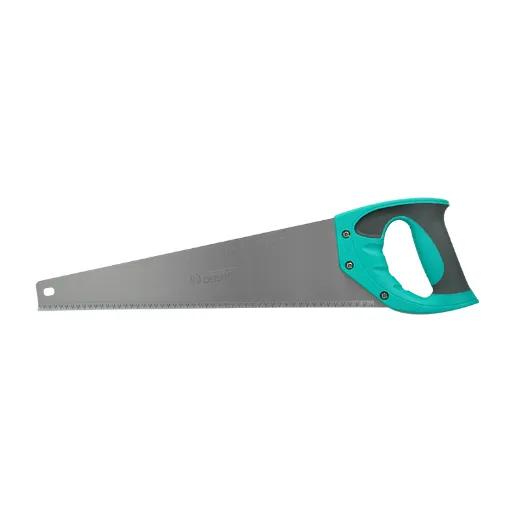
Wholesale hand saws are hand-operated cutting tools purchased in bulk for resale, restocking, or commercial use. The category spans more than a dozen saw types, and each one serves a different customer:
- Crosscut and rip saws for general woodworking
- Japanese pull saws for precision and finish work
- Hacksaws and hacksaw blades for metal and PVC
- Pruning and folding saws for garden and tree care
- Coping and fret saws for curved cuts and trim
- Dovetail and tenon saws for joinery
The typical buyers are hardware retailers, e-commerce sellers, regional distributors, contractors stocking their crews, and tool-rental companies. They buy for different reasons, but they share one goal: consistent quality at a predictable cost.
This scope matters because a one-line wholesale approach rarely works. A distributor who stocks only budget saws misses the trades. A garden retailer who carries only pruning saws misses the woodworking buyer. A full-line hand saw catalog shows how wide the range can be, from single replacement blades to complete saw sets.
Why Hand Saws Belong in Your Product Line
Hand saws earn their place in a tool line for four reasons: steady demand, simple logistics, repeat purchases, and healthy margin.
The global hand tools market was valued near USD 18-20 billion in 2026 and is forecast to reach USD 28-32 billion by 2036, according to Future Market Insights. Construction drives about 32% of demand, and professional users account for roughly 60% of purchases. Asia-Pacific is the largest and fastest-growing region, and China produces more than 60% of the world’s hand tools, which keeps factory-direct sourcing competitive.
Hand saws are also forgiving to stock. They are durable, easy to store, and light on logistics complexity compared with bulky power tools. Replacement blades drive repeat orders: a customer who buys one hacksaw will keep buying hacksaw blades. That repeat revenue stabilizes cash flow between larger restocks.
Demand holds up in slower markets too. Repair and replacement buying stays steady even when new construction dips, which makes saws a reliable staple line for a wholesale hand saw supplier and a natural bridge into the rest of the professional hand tools range.
Building Your Wholesale Hand Saw Assortment
Core categories to stock
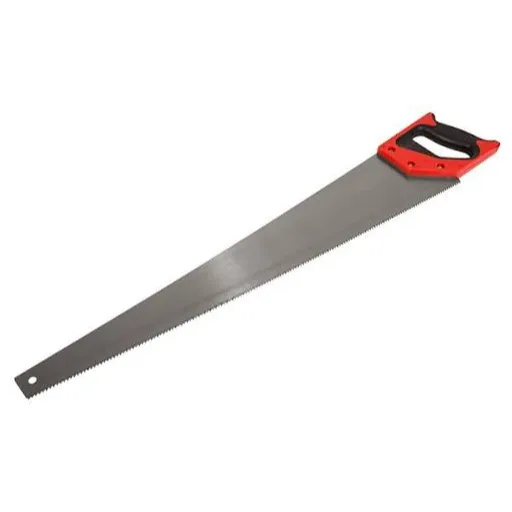
A practical starting assortment covers five categories and lets you serve most customers without overstocking:
- General woodworking: crosscut and rip saws, 20-26 in. blades
- Precision and finish: Japanese pull saws and dovetail saws
- Metal and plastic: hacksaws with replaceable blades
- Garden and outdoor: pruning and folding saws
- Trim and curves: coping saws and jab or drywall saws
For each category, plan a budget tier and a professional tier. The budget tier pulls in price-sensitive DIY buyers. The professional tier, with stronger steel and better handles, earns the margin from tradespeople.
First-fix vs. second-fix hand saws
If your customers include contractors, stock both first-fix and second-fix saws. First-fix saws are longer, usually 20-22 inches with 7-8 TPI, built for fast, aggressive cuts in framing and rough work. Second-fix saws are shorter, about 14-18 inches with 11-14 TPI, made for clean finish cuts in trim and joinery. Carrying both covers the full jobsite workflow and creates a natural upsell.
Blade materials and TPI buyers ask about
Buyers now ask about blade steel, and you should be ready to answer. The most common grades are 65Mn and SK5 high-carbon steel, with a heat-treated hardness around HRC 48-58. Bi-metal blades, which pair a hardened steel edge with a flexible body, are common in hacksaw blades.
Teeth per inch (TPI) drives the cut. Lower TPI (6-10) cuts fast and leaves a rough edge. Higher TPI (12 and up) gives a smooth finish for joinery. A short TPI table on your product page answers most customer questions before they pick up the phone.
Packaging and private label
Standard packaging keeps cost low. Custom packaging with your logo, a blister card, or a color-matched handle differentiates the product on a shelf or a marketplace listing. Private label turns a $3 saw into a $9 saw with your brand on it. That’s the fastest way to protect margin when competing against named brands.
Wholesale Hand Saw Pricing and Margin Math
Pricing wholesale hand saws for resale starts with a simple rule: double your landed cost. Keystone pricing, where wholesale is about half the retail price, is the industry baseline. It protects a gross margin target of 20-30%, and experienced wholesalers treat anything below 15% as a warning sign. Shopify’s wholesale pricing guide covers the same formulas in detail.
Reseller margins on branded wholesale saw lines run 34-72% in practice. The spread depends on the saw type, the volume you buy, and whether you private label. The higher end of that range comes from differentiation, not from buying the cheapest product.
Here is a realistic worked example for a mid-tier carpenter saw:
| Line item | Amount |
|---|---|
| Factory unit price (MOQ 1,000) | $2.10 |
| Freight and duties per unit | $0.55 |
| Warehousing and labor per unit | $0.25 |
| Platform fees and defect allowance | $0.30 |
| Total landed cost | $3.20 |
| Wholesale price to your accounts | $6.50 |
| Retail price | $12.99 |
| Your gross margin | 51% |
The margin looks strong, and it can be. But the math only works if you calculate landed cost honestly. Many resellers price off the factory invoice and discover later that freight, duties, and fees ate a third of their margin.
For e-commerce sellers, the price tier matters more than ever. A 2026 analysis of hand tool SKUs found that retail prices under $22 stopped working for most operators once fulfillment fees, storage surcharges, advertising, and returns were added in. At a $24.99 average selling price, the same analysis showed roughly $7.91 in contribution margin per unit. The lesson: if you’re reselling online, target at least a $24.99 retail price for hand saws.
Consider how Priya, an e-commerce seller, used this math. She launched a private-label three-saw line in March 2026 priced at $24.99 per saw. By pricing above the failing sub-$22 tier and sourcing factory-direct, she kept contribution margins near $7.50 per unit, enough to run targeted ads and still turn a profit in her first quarter.
Factory-Direct vs. Distributor vs. Marketplace
You have three main sourcing channels for wholesale hand saws. Each has a place.
| Channel | Price | Customization | Quality control | Lead time | Accountability |
|---|---|---|---|---|---|
| Factory-direct | Lowest at volume | Full OEM and private label | Your inspection plus factory QC | Longer, 30-45 days custom | Direct with the maker |
| Regional distributor | Marked up | Limited | Established | Short | Through the distributor |
| B2B marketplace | Variable | Varies by seller | Mixed, buyer beware | Variable | Weak, often a trading company |
Factory-direct wins for distributors who buy in volume and want private label. Shanghai Oushike Hardware Tools operates this way: direct manufacturing, no middlemen, and multi-stage quality control through incoming steel, hardening, tooth geometry, and final inspection.
A regional distributor or marketplace still makes sense when you need a small order fast, or when you are testing a category for the first time. Use those channels to validate demand, then move the volume line to factory-direct once it proves itself.
How to Source Wholesale Hand Saws from a Factory
Know the manufacturing hubs
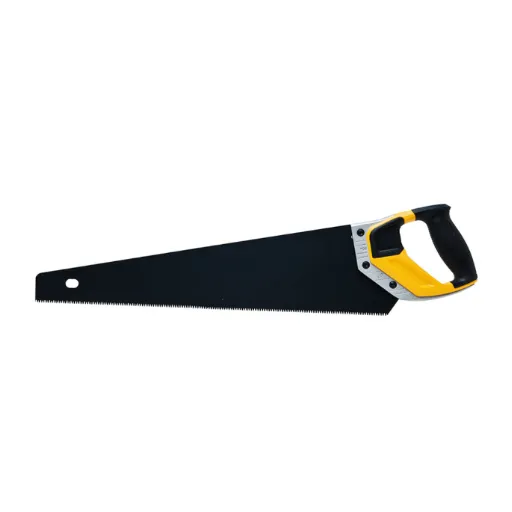
Hand saw production concentrates in a few Chinese regions. Zhejiang province, especially Yongkang and Jinhua, is the heart of the hand tool industry with a fully integrated supply chain. Guangdong focuses on export with CE and ANSI compliance. Shandong and Hebei handle cost-effective mass production, and Jiangsu leans toward precision manufacturing.
Matching the factory to your product tier, budget versus professional, saves you time and money.
Verify the supplier before you buy
A marketplace listing is not a factory. Trading companies pose as manufacturers all the time. Before you commit, check four things:
- Confirm the business type is a manufacturer or factory with its own production lines.
- Request certifications: ISO 9001 for quality systems and CE where your market requires it.
- Order samples and check blade hardness, TPI consistency, and handle fit across the batch.
- Ask for a third-party inspection report, such as SGS or BV, on the production run.
For the full step-by-step framework, see our hand saw manufacturer guide on how to evaluate and verify a factory.
A garden retailer in the Netherlands learned this lesson the hard way. He sourced folding pruning saws from a listing that promised “factory direct,” only to find the goods came from a trading company with no quality process. Batches arrived with mismatched blade thickness, and his returns ate the margin. He switched to a verified manufacturer with samples and inspection reports, and seasonal orders from the same retail accounts doubled the next spring.
MOQ, lead time, and payment terms
Expect testing MOQs of 50-200 pieces so you can validate the product before scaling. Bulk orders typically run 500-3,000 pieces, and private label branding usually requires 300-500 pieces or more. Lead times run about 15 working days for standard products and 30-45 days for custom hand saws. Negotiate payment terms before production, not after.
Calculate landed cost before you commit
Landed cost is the true cost of your product. The formula is:
Unit price + freight + import duties + warehousing + sorting and labor + platform fees + allowance for defects
Freight and warehousing alone can add 10-20% to total cost. A saw that looks cheap at the factory can turn expensive by the time it reaches your warehouse. So price your resale off landed cost, never off the invoice.
For imports, confirm the Incoterms with your supplier. EXW and FOB put freight and risk on you. DDP shifts most of the logistics burden to the supplier but often raises the quoted price. Also plan for the standard export documents: commercial invoice, packing list, certificate of origin, and bill of lading.
Wholesale Hand Saws FAQs
What is the MOQ for wholesale hand saws?
Testing orders start around 50-200 pieces. Bulk wholesale orders typically run 500-3,000 pieces, and custom private label branding usually requires 300-500 pieces or more.
How much do wholesale hand saws cost per unit?
Bulk pricing ranges from under $1 for basic budget saws to $14 for premium or fully customized units. A typical mid-tier carpenter saw runs about $2-3 per unit at a 1,000-piece order.
What types of hand saws should a distributor stock?
Start with five categories: crosscut and rip saws, Japanese pull saws, hacksaws, pruning saws, and coping or joinery saws. Include a budget tier and a professional tier in each.
Can I get private label hand saws with my own logo?
Yes. Factory-direct suppliers offer custom handles, laser or silkscreen logos, and custom packaging. Private label is the fastest way to differentiate and protect margin.
How long does a bulk hand saw order take?
Standard products ship in about 15 working days. Custom hand saws with branding and packaging typically take 30-45 days from order confirmation.
Is it profitable to resell hand saws?
Yes, when priced correctly. Reseller margins of 34-72% are common, and keystone pricing at roughly double landed cost protects a 20-30% gross margin.
Conclusion
Wholesale hand saws reward careful planning. Start with a balanced assortment across five core categories, price for at least a 20-30% gross margin using keystone math, and base every decision on landed cost rather than factory invoice. Compare sourcing channels honestly, and when you scale, move the volume line to a verified factory-direct partner that can private label your product.
Get the assortment right and the margin holds. Verify the factory and the supply stays consistent. That is the difference between a saw line that earns repeat orders and one that becomes a lesson in sourcing.
Ready to build your hand saw line? Request a quote from the Oushike team, or browse our hand saw range and start planning your next order.