
Best Crimping Tools: Wire Crimper Buying Guide
A crimping tool is among the essential tools that are needed for producing reliable and secure wiring connections. It really doesn’t matter if you’re an experienced electrician, a do-it-yourselfer, or a person who is dealing with wiring for the first time; opting for the finest wire crimper may lead to a major change in the performance, output, and longevity of your work. That being said, there are various crimping tools at the market—starting from the very basic ones and ending up with the specialized options which means that selecting the proper one is not that easy. This post is going to show you individually the top available crimping tools and the main features of each, but most importantly, it will guide you on what and how to think about when going for your purchase. At the end of the article, you will already be able and confident to choose the perfect tool for your job and need.
Introduction to Wire Crimping
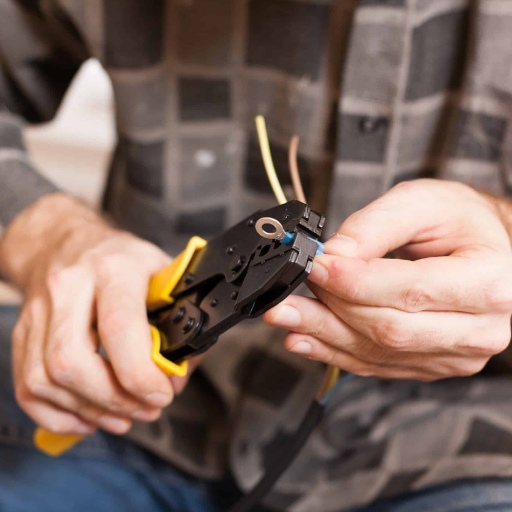
Wire crimping is a technique that is used to connect two metals securely, often a wire and a connector, by squeezing them together. The process is essential to making the connections of and the subsequent output good to go even in the situation of emergency like in households or in big companies. The crimping process even maintains the good electrical flow, the mechanical bond, chemical bond very well, hence the risk of connection failure is fairly limited. Crimping, differently from soldering, is not done with the application of heat, hence making it a safer and a quicker method. The process of wire crimping will thus be perfect only when the right crimping tool is paired with the connector of the right type.
The Importance of a Good Crimp Tool
A reliable crimp tool is absolutely crucial when it comes to making electrical connections that are both reliable and efficient. The top-notch crimp tools are normally crafted to dispense the right amount of pressure, giving rise to a strong and safe tie between the wire and the connector without any damage to the parts. These tools largely have adjustable settings or replaceable dies to suit different wire sizes and connector types which invariably contributes to their versatility. The latest crimp tools have merged sophisticated engineering such as the ratcheting system or ergonomic design thus, making them consistent and less tiring through repeated use.
📊 Research Finding: Researchers have proved that soldered connections are at least five times as likely to be flawed as those made by a professional crimp tool when thermal, mechanical, and environmental real stresses are applied, so the latter is a must-have for critical applications in aerospace, automotive, and telecommunications. Furthermore, buying a tool for crimping wires will not only prevent accidents but will also save time and material, and therefore pay for itself over the years.
Overview of Wire Crimping
Wire crimping is a process that relies much on accuracy to be able to produce an untouchable, good electrically conductive bond between a wire and either a terminal, contact or connector. Through the use of a crimping tool, both the wire and the connector material are placed under pressure which consequently makes the connection very hard against both pull and twist and also efficient for electric current flow. The development of state-of-the-art crimping technology has, among others, lastly brought forth connectors not only durable but also with a high degree of flexibility, allowing them to be used in a wide variety of applications.
Recent industry research confirms that the high-quality job of crimping terminations and splices significantly reduces the unexpected disruptions in the electrical circuit. To be more specific, besides that, using insulated connectors with the right tools and wire terminals that are matched can signal a boon for the initial connection performance and at the same time the corrosion and environmental resistance start to go down. It is a must to follow the UL 486A or the MIL-SPEC specifications for the bonds to be on the top level when the equipment is under operational pressure, especially in priority installations such as aircraft cabling or data centers.
The data also shows that many times those working with wires are not crimping them properly. Not using the recommended gauge or not applying enough pressure are but a few of the many possible reasons for the connection-related problems. Many manufacturers are switching to automated crimping systems that are not only capable of producing uniform results but also of checking themselves for defects during the operation. These developments point out the fact that the wire crimping technologies are changing for the better and that they are a major factor in ensuring system safety, efficiency, and durability among industries.
Applications in Automotive and Other Fields
1. Automotive Industry
Wire crimping is an essential part of the automotive industry, and is done to make sure that automotive wiring harnesses are connected and stable. By using these harnesses the power required for the operation of engines, infotainment systems, and advanced driver-assistance systems (ADAS) units is brought to the vehicle. Also, crimps that are done well are very important for vehicles because the malfunction of the power supply can impose a safety risk. It was stated that the average amount of wiring in modern vehicles is more than 1.5 kilometers long, which highly indicated the necessity of uniform crimping.
2. Aerospace Sector
The aviation industry as it is now makes it practically impossible to have any lapses in the electrical connections under such flying stress. The weight and reliability are the two main qualities that are mingled in the crimp joint joining aircraft electrical system. Those connections to navigation systems, communications, and safety. Automatic crimping equipment in the aerospace industry reduces errors and meets the stringent quality requirements imposed by organizations such as the FAA and EASA that are the regulatory bodies for civil aviation.
3. Telecommunications
The Telecommunication industry expects that its infrastructure has been implemented with the best connection solution and the transfer of data is so high that it demands high-performance connections. Cables made of fibers, Ethernet cabling, and other communication systems utilize crimping as the assembly method. The latency will stay at a minimum and the transmission will be at a very high level only with the perfect calibration that is continuously done all over the world for the 5G network.
4. Consumer Electronics
Compact yet durable connections from crimping are a key feature of wearables, laptops, smartphones, among others. Hospitals, factories, schools, and households utilize such devices, and the demand for more and more wire connections that are practically invisible is increasing all over the world.
5. Industrial Automation
Reliable crimps are the backbone that robotics and automated systems in manufacturing plants lean on heavily. The systems cannot function without them as they keep the power flowing to actuators, sensors, and control systems which are on all the time. Just a small mistake in crimping will lead to loss of power or units being off and that will stop the production line.
6. Renewable Energy
Renewable energy like solar and wind power has been increasing along with its crimping requirement in the electric installations. For instance, photovoltaic (PV) panels need crimp connections for their outdoor use which can last for several years and at the same time remain electrically sound. Global objectives to shift to green energy are also maintained through reliable crimping.
Types of Crimping Tools
- 1
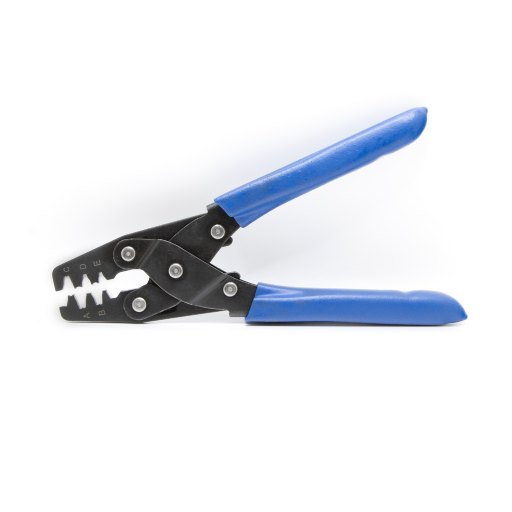
Manual Crimping Tools
These tools are manual and are generally best for small projects or less important tasks. They offer precise control and are frequently put to personal or easy industrial use. - 2
Hydraulic Crimping Tools
Hydraulic tools work by using fluid pressure to create a higher crimping force, and that makes them more able to work with thicker cables and terminals. They are often used in middle to high volume settings. - 3
Electrical Crimping Tools
Motor power is built into the electrical crimpers so as to perform repetitive tasks in very efficient way. These are very fast and perfect tools and thus they may be the choice for such areas where one needs to control the quality of work over a long period. - 4
Pneumatic Crimping Tools
This group of tools utilize air pressure to conduct very fast crimps and change over physical work. They are particularly appropriate for high-volume industrial settings.
Handheld Crimpers
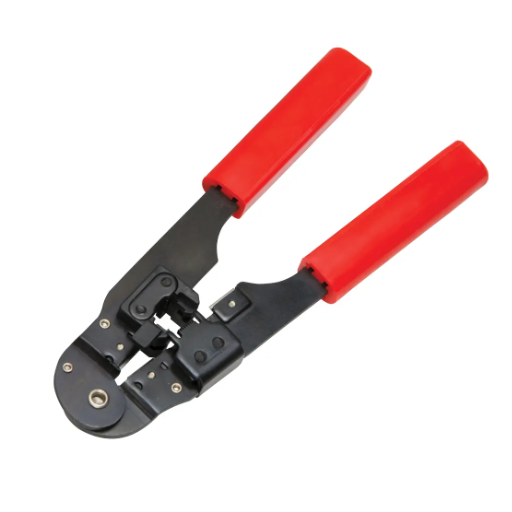
Handheld crimpers are little tools that are operated by hand and are compact and mobile. These are also very much required in the electronics industry for applications like the immediate termination of a cable or repair work at the shop floor. The latest handheld crimpers are coming with a perfect design that allows ergonomic handling making a user feel less fatigue even after continuous use. In general, the advanced, functional types have the added feature of dies adjustable to the wire gauge sizes and terminals types at one push to get maximum versatility and making them user-friendly. High-grade, durable materials such as alloy steel, which is the preferred material, are used for many of them for their construction, so they can offer resistance to wear and long service life. Concerning the tools of the kind, they are perfect for fieldwork, lower to medium-volume tasks, and of course for the locations, that are easily reachable.
Hydraulic Crimping Tools
Hydraulic crimping tools give a standard and stable crimping power, which is a must for industrial applications, characterized by a high volume and heavy-duty tasks. A person operates these tools with the aid of hydraulic pressure to exert a great force without putting a lot of manual effort, thus guaranteeing the driver a stable and uniform connection. Most of today’s hydraulic crimpers come with different dies to support a variety of cable sizes and terminal ends, providing the user an added versatility.
More advanced designs are being done by computer programs instead of by hand. If the machine vibrates a lot when operated, e.g., for crimping, in spite of the best efforts, the user is likely to suffer from fatigue during prolonged use. Also, the fatigue of the user, which gradually develops, makes it difficult for him to act immediately and at all times during the course of the task. To help the operator with these conditions, the handles on the tools are designed in such a way as to eliminate the points of concentrated effort. A safeguard in the system which will protect the operator from sudden impact when a high circuit voltage gets through or when the power goes off is an example of safety features mentioned in the explanation.
Bench-Mounted Crimpers
Bench-mounted crimpers are a very stable and reliable option for high-volume or precision crimping tasks. They are usually made of a heavy-duty frame and securely attached to a workbench preventing any vibration during the crimping process. More advanced crimpers allow the operators to change the dies according to the connector and wire sizes, thus increasing the range of compatibility. Often, bench-mounted crimpers come with a ratchet system or pneumatic power assist that ensures the consistent application of pressure, hence less operator fatigue and higher accuracy overall.
Because of the crimping requirements, they are preferred by the professionals of such areas as telecommunication, automobile production, and aerospace among others. They have to adhere to the crimping specifications strictly and one of the factors that plays a significant role is the crimp tool. In one of the areas relevant to this subject, the crimp is the most critical part of the process that cannot be altered or compensated in any way.
Key Features to Look For
🎨 Ergonomic Design
A bench-mounted crimper with good design should have an ergonomic layout to guarantee operator comfort and minimal fatigue during long usage periods.
⚙️ Adjustable Settings
You should buy the models with which the settings could be programmed or changed simply and quickly so that the preciseness and adaptability for various crimping needs can be guaranteed.
💻 Digital Integration
Digital displays or automated functions in devices will provide higher and repeatable accuracy levels; thus, ensuring uniform quality in high-volume production.
🔨 Durability
The use of crimpers that are made from high quality materials and can be used for quite a long period at industrial sites that are tough is an essential thing.
🛡️ Safety Features
Emergency stop and security guards can’t guarantee operations without any accidents; thus, the safety of workers and the machine’s health are doubly ensured when these are in place.
🔧 Versatility
Model variations in terms of connectors’ type, wire gauge, or conductors’ material means that the product is versatile and valuable.
Die Compatibility and Types of Crimp Connectors
Among the influential factors, die matching is crucial for the proper functioning and exact performance. They should be made to fit the connector type and wire size exactly, as bad fits can lead to bad crimps and poor electrical or mechanical connections. However, a lot of the big crimp manufacturers have adopted the die design so the dies are interchangeable, and using several applications still provides the same high-quality crimping. This saves one the necessity of buying multiple tools and results in operational efficiency being boosted.
A wide variety of crimp connectors are on the market, and they are usually made for a certain application. The most common among them are the insulated ones, which are the terminals like rings and spade which aside from giving electrical insulation also give protection, and uninsulated connectors which are designed for areas where space is a luxury or extra heat is required. Also, the high-performance connectors similar to those of coaxial and ferrules are serving the most demanding industries like telecommunication and automotive. Knowing the different classes of connectors along with the appropriate die compatibility, is equal to providing a connection system that is robust and safe to all users.
Ratcheting Mechanisms for Efficiency
Ratchet mechanisms are crucial parts of the modern tool designs, giving precision and control for different applications. These systems are designed to allow the motion only in one direction through an arrangement of gears and a pawl, and hence guarantee both safety and efficiency at the same time. The tools using ratchet technology such as crimpers, wrenches, and cable cutters will give even force application through repeated handling, thus reducing the operator’s fatigue. The latest improvements concentrate on neither how to optimize torque transfer nor how to strengthen durability but on such things as high-strength steel alloys and precision machining.
For instance, the ratchet designs with multi-tooth engagement points contribute to the dependability and smoothness of operation, especially in high-torque applications. They are innovations that are not just typical but indispensable in the areas of production, car manufacturing, and house-building, which value efficiency and regularity to a very great extent.
Material Quality and Durability
Performance, durability, and dependability of professional crimp tools are in close connection with the material they are made of. The top-quality ones are usually made of hardened steel or high-carbon steel, which makes them impervious to wear and deformation when subjected to the same actions periodically. Moreover, the use of technologies like heat treating and precision forging during the production stage adds to the tensile strength of the tools; hence, very seldom would the structure alter even if the tool was subjected to a considerable force.
Moreover, in extreme atmospheres, like those with a lot of moisture or constant exposure to Highly reactive substances, manufacturers frequently use a coat to make their tools more reliable. The standard compliance certifications in industries like IEC or UL on the other hand, are also the examples of the very important factors in the overall material quality control, thus indicating markets with the same regulations and norms a process of constant performance evaluation. In all, the crimp tools now become an integral part of the modern industry where they are even working as an apparatus of machines and appliances that require the most reliable connection with the electricity of the network that is the property of the current-electricity conversion.
Choosing the Right Crimping Tool
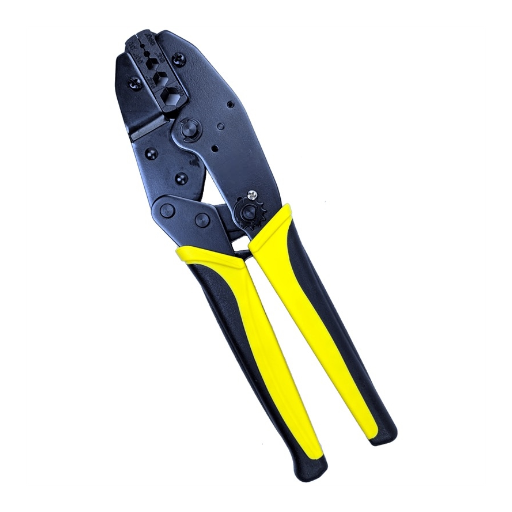
When speaking of the right crimping tool, it’s really vital to take into account the purpose of that very tool and the kind of connector or terminal it is used for. The very first thing that needs to be checked is whether that tool is perfectly compatible with the wire gauge or material. The second step is to assure that it comes with adjustable settings or dies for flexibility. And lastly, the first step is to confirm that it complies with the respective industry approvals and norms for safety and performance, like UL or IEC, for best performance in tough conditions.
Assessing Your Needs: Hobbyist vs. Professional
Differences between hobbyists and professionals are significant; so the kinds of tools needed by each are to be significantly different. The two main issues to hobbyists are price and simplicity. Tools for use only occasionally are cheap and simple and also generally have only one set of dies and are only for certain wire sizes. The makers of these kinds of tools often put their emphasis on simplicity and cost plus at the same time keep good enough performance which is better for such tasks as some light electronics or small projects done at home.
On the flip side, pros need pieces often exposing above-the-norm longevity and the former two characteristics. For the production of top-notch crimping tools, there are many practices employed like the use of interchangeable dies, design with a ratcheting mechanism for the uniform fitting of connectors, and the tool made ergonomic for the technician’s comfort during the long-term tasks. The set of tools presented is carefully crafted to the level of the industry’s demand, and consequently, it ensures that it works flawlessly in harsh cases like the cabling of a vehicle, industrial setups, or communication devices. Also, the tools for professionals are usually checked against various standards and certifications such as ISO 9001 or RoHS besides being tested regularly for safety and quality, thus allowing for the operation of such tools in the same places where the real benchmark is the safety and quality levels.
Understanding Different Types of Crimps
Tips for Selecting the Best Tool for Specific Applications
- 1
Evaluate the Connector Type and Size
Detect the kind and size of connector in use. F-Type Crimps, for example, are the right choice for coaxial cables and they actually boost the signal quality, while Four-Indent Crimps are primarily used with circular terminals in aviation and defense areas. - 2
Analyze the Application Requirements
Please take into account the operating environment and usage conditions of the tool. D-Shape Crimps with closed terminals are the optimal choice for the high-power circuits that demand durability and high robustness. Also, when it comes to messenger applications, the most suitable crimps are the Hexagonal ones. - 3
Inspect Material Compatibility
Ensure that the crimping tool you are using is appropriate for the materials that are being connected. This way, the issues like corrosion or low electrical conductivity that may occur can disassemble the materials and subsequently, collaboration can be lost and even damage can be caused. - 4
Assess the Tool’s Performance Specifications
Please assess the mechanical specifications (force and accuracy) of the crimping tool. For instance, the Four-Indent Crimps give very secure multi-point connections that are very dependable under harsh conditions, and the D-Shape Crimps give an equal distribution of force and are thus suitable for applications requiring higher strength. - 5
Factor in Maintenance and Durability
Check the quality of the tool and what maintenance it needs. The tools that are made robust and are generally used for industrial or military-grade applications often have high-strength steel and well-disposed components that resist wear. - 6
Prioritize Ease of Use and Ergonomics
Pick tools that are operator-friendly and suited to the specific project, especially if it is a repetitive-use one. The human-factors-engineered handles and tools that have got die change mechanism in them can make the work more productive and the operator less tired.
Using Crimping Tools Effectively
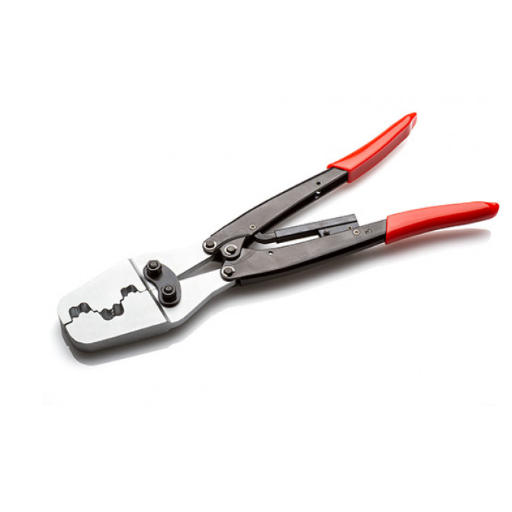
A good practice to make that the crimping tool become useful by the proper way of selecting the correct die size of the specific connector and the wire gauge that is going to be used. Make sure to calibrate the tool as well as that the dies are installed securely. Then the wire is to be inserted into the connector with the assurance that all strands are properly parted and enclosed. The connector is then placed into the crimping tool with the alignment being done with the dies.
The next step is to apply firm, even pressure with the aim of making a secure crimp; it certainly requires the complete compression of the mechanism until the crimping is completed. In the end, the connection has to be checked to ensure a tight and secure fit with no gaps or loose wires clearly visible. For the best result always make sure to keep and respect the manufacturer’s instructions for both tool and connectors.
Step-by-Step Guide to Wire Crimping
- Step 1: Selecting the Appropriate Tools and Materials
Start by selecting the right crimping tool and connector for the job. Ideal results need the use of different tools for different wire gauges and connector types. Refer to your project specifications to check the compatibility. The use of incorrect tools may result in poor connection or wire damage. - Step 2: Preparing the Wire
Separate the insulation from the wire with the help of a wire stripper being careful and keeping in mind that the length of the exposed conductor needs to be equal to the one mentioned for the connection. Do not cut the wire or harm its internal strands, as these will cause a loss of both electrical conductance and mechanical strength. - Step 3: Insertion of the Wire into the Connector
Push the wire’s stripped part into the connector’s barrel. The wire fibers should not be all over the place, and the conductor piece should be closely sitting in the connector and completely through the barrel up to the barrel’s end. - Step 4: Crimping Process
Put the connector in the assigned terminal of the crimping tool. Have the connector well oriented to avoid non-uniform pressure. Squeeze the handles of the tool to the point where the crimp is now effectively done. For a lot of modern crimpers, a ratcheting mechanism is available for the sake of consistent pressure. - Step 5: Inspection and Quality Checks
The crimped connections inspection should confirm the cable is securely held inside with no conductor wiring left uncovered outside the connector’s barrel and there is no crimped gap visible. Ways to test, such as the pull test or the electrical continuity test, can validate the connection’s mechanical and electrical reliability. - Step 6: Protection and Final Preparations
In the event that it is necessary, employ heat shrink tubing or insulating sleeves in order to shield the connection from external elements. Good insulation helps a lot in making the connection retarded and also avoids short circuits.
Tips for Achieving Strong Connections
- ✓
Select the Appropriate Connector Type
It is crucial to use the right connector for the right application. For instance, the terminals that are used in places with high vibrations should be such that they resist loosening, comparable to the ones that have locking mechanisms or crimp barrels through which there is suitable strain relief. According to the norms of the industry, connectors that are intended for high-current applications should have contact resistance that is not more than 1 milliohm. - ✓
Use High-Quality Tools
Thanks to the use of calibrated crimping tools, the pressure applied during the crimping is uniform, which, in turn, translates to a lower rate of weak or defective connections. Research has it that shoddy crimping as a result of poor tool design can make the failure rates increase by even 30%. - ✓
Match Wire Size to Connector Specification
Always associate the wire gauging with the connector specifications because the use of components that are not matched may lead to lack of contact or the presence of very high resistance. Take the case where the wire gauge is too large; it may be impossible for it to be held firmly. Conversely, wire that is too small can result in weak connections which deteriorate over time. - ✓
Inspect Connections Thoroughly
Always perform a thorough inspection on crimped connections to identify incorrect formation signs like missing strands, deforming barrel of the connector, or uneven crimps. When a crimp is made correctly, it will give an indication of the barrel deformation that is in accordance with the manufacturer’s specifications which is normally done by using mechanical or visual inspection tools. - ✓
Perform Rigorous Testing
Connections validity should always be done through heavy testing. Pull tests aided with electrical continuity tests are the normal testing methods. The mechanical integrity of the connections should be verified to withstand tensile forces ranging from 20 to 50 lb., depending on the connector size and application. For resistance, the values should not exceed 0.1 ohms which are the set performance requirements. - ✓
Ensure Environmental Protection
Connections must be safeguarded against the three major threats like moisture, heat, and contaminants using good insulation materials for example heat shrink tubing that will suit the operating temperature range. The connections should also be protected against harsh environments by using connectors with conformal coatings or stainless steel finishes.
Reference Sources
- WL Gore Stent Crimper Preliminary Proposal
Read the document here - Reliability Optimization in the Cutting Area
Access the paper here - MEMS 411: Medical Clamp
View the document here
Frequently Asked Questions (FAQs)
What is the proper crimp for terminals?
Opting for the appropriate crimping tool and die to fit the size of the wire and the type of terminal at terminals’ ends is the elementary step in establishing the right electrical connection. It is the right tool and die that can get the electric conduction firmly. You can employ manually operated crimping pliers, ratchet crimpers, or hydraulic crimpers provided they are the ones that are made to close the connectors securely over the wire without cutting or making any other kind of damage to the conductor. Crimpers of high quality in combination with connector kits that include the same wire connectors and ferrules minimize the chances of electrical breakdown and provide stable electrical performance.
How do I choose the best crimping tools?
Evaluating the best wire crimp tool will include looking at whether the tools have support not only for a wide range of wire as well as different connector types like ferrules, electrical terminals, and PEX crimping when applicable. Dieless crimpers, manual crimpers, ratchet crimping pliers, and hydraulic crimpers are some of the tools which can charge different types of crimping profiles, so you need to choose a tool that suits the connector kits and terminals that you are likely to use. The right crimping tool could be an interchangeable dies machine or the one with the size of the crimp which you will be using most frequently very reliable.
Are ferrules necessary, and which tools use ferrules most effectively?
It is recommended to use ferrules when connecting wires in order to prevent them from getting damaged and to improve the mechanical and electrical contact. Ferrules are usually utilized in crimping tools with a ferrule crimp die or a tool and die set. Manual crimping tools and crimping pliers with a specific ferrule cavity or ratchet crimpers made for ferrules guarantee uniform compression around the wire. Conductor kits often come with ferrules and the corresponding crimping tool and die, guaranteeing that the tools are planned to work together for the right crimp. Using the right wire and size wire ferrule will certainly avoid electrical failure and give you a reliable electrical connection.
What is the role of a tool and die in achieving a correct crimping result?
The tool and die are responsible for the surfaces that will mate to create the crimped connection. Therefore, it is very important to choose a crimping tool that comes with the appropriate die for the electrical connectors that you need because they make the connection secure. A combination of crimping tools and dies makes the connection possible by applying a particular force that will compress and crimp the cable at the right place and thus helping you to use the crimping pliers, ratchet crimpers, or hydraulic crimpers. Some tools can be common for the same crimp connector types; however, corresponding tools must have the appropriate die set, otherwise, there will be a bad situation for cutting and compressing the electrical wires at the same time.