
The Ultimate Guide to High-Performance Power Saws for Woodworking
Carpentry is a craft that requires accuracy, expertise, and appropriate tools to be consumed in making concepts. And, of all such tools, power saws can be seen as a universal requirement which always makes it possible for both a beginner and an expert to create mild or even very strong realizations. Unfortunately, there are so many different saws, table saws, reciprocating saws, and many more available to every person who wants to perform woodworking that it is almost impossible to select only one for a particular job. This guide seeks to shed some light on the world of the high performing saws specifically, offering you an overview of their roles, uses, and benefits. A person who is experienced with woodworking and wants to redo his or her workshop or a total beginner thinking of starting first project should find this write-up informative and of help in coming up with what to do considering both speed and quality of work.
Section 01
Introduction to Power Saws
Power saws are powerful instruments that are uniquely designed to accurately and rapidly cut through a variety of materials and are extremely useful in woodworking and construction works. Because of their specific features, the power saws are mainly divided into separate categories such as circular saws for straight line cutting, miter saw for angle cutting and jigsaw for drawings which are usually curved and complex. Each of the saws is built with distinct parameters that are directed towards achieving outstanding results for specific operations. In identifying appropriate power saw, it is appropriate to consider the materials that will be cut, the accuracy one needs to achieve and the skills of the operator. One should be able to define the operational dimensions of power saws for their better applications in design, construction and carpentry.
What is a Power Saw?
A power saw is a mechanical cutting tool used for increasing the versatility of cutting with the assurance of speed and accuracy. A power saw is constructed with such blade – an electric one, a battery-operated or compressed air motor is applied to engage it making operations like cutting of materials like wood, metal, plastic and stone proper. The categories of modern power saws are circular saws, jigsaws, miter saws, reciprocating saws, etc., oriented for various conditions. More sophisticated tools come equipped with adjustment of cutting speed, extra laser levels for precise work, technical safety enhancements and facilities to enable smooth filing. They are also used in construction, furniture, metal working and even restoration in bid to improve and progress the surrounding society. The ability to perform both fine and tough operations is mainly important because power saws represent an essential part of professional and non-professional handiwork applications.
Importance of Power Saws in Woodworking
The importance of power saws in modern woodworking cannot be overemphasized as they are fundamental tools owing to their ability to provide an added level of accuracy, speed, and hence a greater level of productivity. Nowadays more advanced power saws with the help of special blades and stronger motors, are able to cut various types of woods like hardwood, softwood or even engineered materials such as plywood or MDF more neatly than ever.
Power saws such as circular saws, miter saws, and table saws allow the execution of intricate designs, the fashioning of bevel cuts, or the production of complex joinery with a precision that simply cannot be achieved by manual tools. Pushing the boundaries of efficiency, an electricity-driven piece of equipment can notably bring down the completion time of a project without compromising the quality. Also, these tools aid in safe working conditions by means of better dust extraction system designs and safety features like automatic blade stoppage. These innovations strengthen all the reasons why no workshop that is set up both for professionals or enthusiasts would be deemed as complete without a power saw.
Section 02
Types of Power Saws
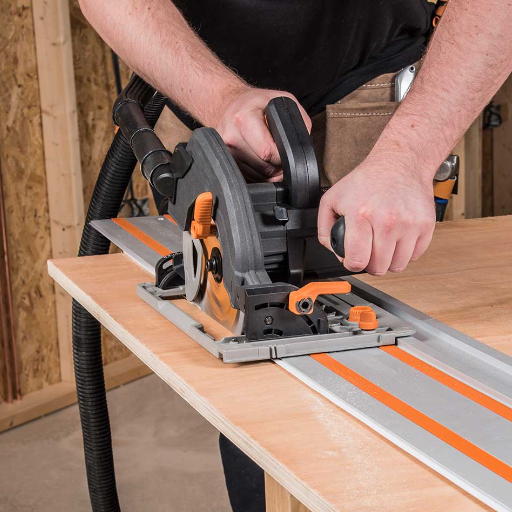
The role and form of electrical saws is identified:
- 01
Circular Saw — The circular saw functions as the most diverse cutting tool with rotating blade incorporated to execute straight piercing through wood, plastics, and metals.
- 02
Miter Saw — Meant for making any angular cuts very accurately and usually recommended for use when on the platforms or likewise the edges of the door.
- 03
Table Saw — Neat and comfortable to use saw, designed to perform the same operation as the bench saw. It is perfect for long, straight rip cuts and repetitive tasks.
- 04
Jigsaw — This saw creates the type of cuts that one would describe as Artistic or sculptural. It is a special tool for creating decorative items because it is capable of making curves and patterns.
- 05
Reciprocating Saw — The reciprocating saw is a type of saw used for cutting through materials and performing demo jobs, featuring a back and forth cutting movement.
- 06
Band Saw — Provides smooth, uniform cuts for cutting curved and complex shapes as well as resawing thicker workpieces.
These various saws have different purposes and functions to ensure efficiency in corresponding fields.
Circular Saw
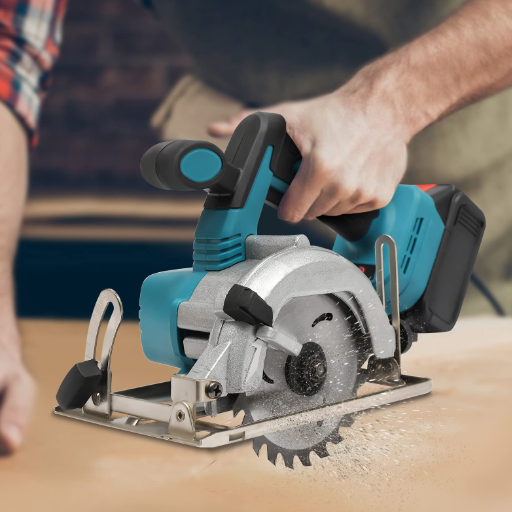
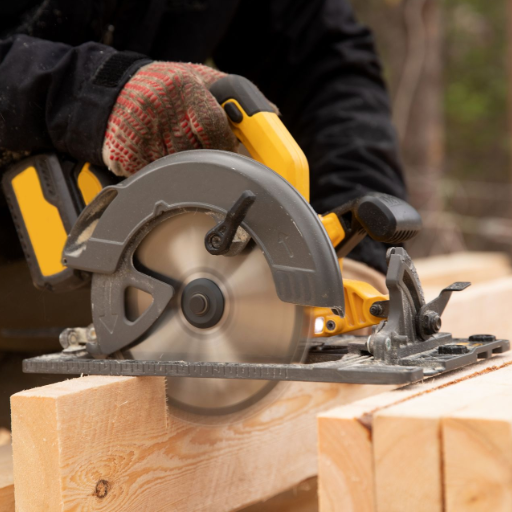
A circular saw is a high-capacity power instrument which consists of a rotating disc blade that is used for doing straight accurate cuts on different materials including wood, metallic and plastic materials. This unique function makes it popular for use in construction, woodworks and do-it-yourself tasks. Currently, circular saws are usually operated by mains power or battery power, which implies that they are lighter and more portable when working. The blade diameter of circular saws typically ranges between 6.5 inches and 10 inches, albeit using the smaller blade for less demanding cutting activities, while the larger one can comfortably cut thicker material sizes. More advanced accessories like tilting controls, lasers, dust extraction make jobs easier and promote meticulous tasks for professionals and even home users. There is the use of special blades in engineering today, making it easier for circular saws to cut even the most difficult tasks like working on a concrete slab or cutting wood accurately and carefully into small pieces.
Table Saw
In the exciting world of woodworking, there is such tool as a table saw that is characterized by its functionality and spectacularity. The appliance strictly specializes on cut of a particular material, which in this case has to be wood. As for the design of the table saw it is easy to come up with cutting which is achieved by the use of the table saw for rip cuts, crosscuts, and tongue & groove joints. Modern table saws incorporate advanced safety mechanisms such as blade guards, anti-kickback pawls, and technologies like flesh-sensing systems that dramatically reduce the risk of injury. Innovations in the design of table saws have moved towards incorporating the aspect of transportation together with limited working space. All designs with a goal of improving the portability of table saws are very efficient for field work, while some boring old cabinet saws are perfect for serious work built all the way, adding more power and sturdiness. Efficiency and accuracy is also improved by digital indicators, the provision of fence rectification in small millimetres and advanced dust management. The performance of all saws is equalized regardless of the respective buildings under consideration.
Miter Saw
Master saw is a key instrument especially for precision determining in the woodworking and carpentry fields. Specifically intended to deliver straight, tilted, and slanted cuts, a tool like this is for applications that require high precision accuracy like framing, crown mouldings, and a whole lot more. The modern examples of this tool also come with enhancements such as laser or LED guide illuminators that make cut lines easy to spot ensuring high construction quality. Such instruments also appear with dual bevel feature as well as a sliding fence, which is perfect if the cutting will be done on a wide material, in this case, the Dual bevel limitation is minimized. Substantial improvements have been made in the context of the design of an engine as they have significantly increased the productivity because it doesn’t produce much sound. In that case the tool is better performing and so is the satisfaction of the tool users. Dust management accessories, which include various collection kits and filters, have nowadays become norm features in many units preventing a cleaner working area for longer life of equipment. Speed regulation in trim saws together with fitting different blades have helped in shaping material without ease particularly when the material is a hard wood or an engineered compound. Consistent focus on the issue of the matter, together with continued innovation, does not make the miter saw outdated in either professional or consumer-based segments of the sector.
Comparing Different Types of Saws
| Saw Type | Primary Use | Material Capability | Precision Level | Portability | Best For |
|---|---|---|---|---|---|
| Miter Saw | Angled and straight cuts | Wood, composites | High | Moderate | Moldings, framing, furniture |
| Table Saw | Long, straight rip cuts | Wood, plywood, soft metals | High | Low | Cabinetry, large wood panels |
| Circular Saw | Straight cuts on the go | Wood, plastics, metals | Medium | High | General-purpose cutting |
| Jigsaw | Curves and intricate designs | Wood, metal, plastic | Medium | High | Detail work, art projects |
| Band Saw | Precise curved or rip cuts | Wood, metal, plastic | High | Low | Resawing, irregular shapes |
| Reciprocating Saw | Demolition and rough cuts | Wood, drywall, metal pipes | Low | High | Demolition, construction |
| Track Saw | Long, precise straight cuts | Wood, composites, MDF | Very High | Moderate | Cabinet installations, flooring |
| Scroll Saw | Intricate and fine detail cuts | Thin wood, plastics, metal | Very High | Low | Fretwork, crafts |
| Chainsaw | Heavy-duty outdoor applications | Timber, trees | Low | High | Lumberjacking, outdoor pruning |
| Tile Saw | Cutting stone and tiles | Ceramic, porcelain, glass | High | Low | Tiling, bathroom renovations |
Section 03
Choosing the Right Power Saw
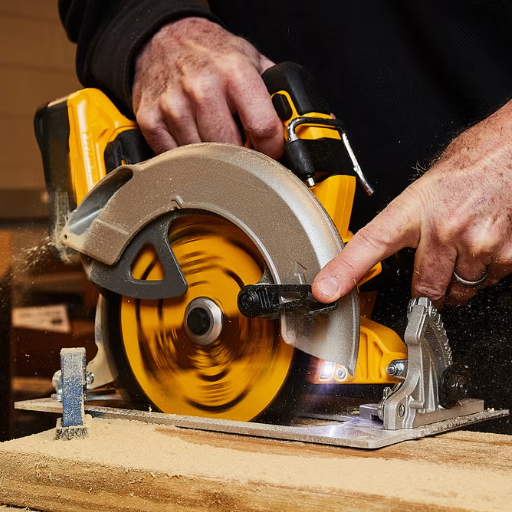
In case you are to acquire a power cutting device, choose carefully by taking into account such criteria as the tasks your project involves, and the materials to be processed. If you plan to cut fibrous or meaty materials, a Power Saw is the most suitable for this job because it can cut with power. If one wants the work for instance perfection on the thin woods and plastics, then they may choose the Scroll Saw. For outdoor use such as cutting timbers or for tree trimming a Chainsaw will serve the client’s expectations. Lastly, individuals do not have to worry about cutting stone, tiles or even glasses in a home renovation because a Tile Saw is the best tool for the job bearing in mind that every job demands precision in fine cuts. To ensure perfect results and to keep in safety, the nature of the material, the cut and the use of the material must be considered.
Factors to Consider in Selection
Different tasks require different types of saws be used indicative of the chosen material and working conditions. For example, the material itself, such as wood, metal, stone or even composite plates, may require a certain type of blade and cutting possibilities of the saw. The thicknesses and densities of materials could also play a role in the amount of energy that it will be required. For instance, it is crucial to use more powerful tools when working with denser materials to achieve satisfactory performance for the blade and avoid heating and wearing out the blade.
Furthermore, the nature of the feet and the direction to be cut, which could be a straight line, curve or inclined/incised cut, is also important. For example, miter saws apply the best angles for very accurate cuts only, and scroll saws optimally fill such precise cuts. Checkout the ergonomics and the security measures, for rules that are related to the anti-vibration technology and quick or fixed cuts stop the blade on cutting equipment and affect the safety of operation stored in user stands with the portable saws. In conclusion, quarter the volume of the saw, since sometimes jobs have a transit component and involve transportation from point to point or performing them in tight spaces. More mild versions with utilities such as laser shows and dust extraction can improve the accuracy of cutting and maintain the workplace fresh all along.
Choosing the Right Saw for Your Projects
When it comes to choosing an appropriate cutting tool for your woodworking needs, it is crucial that you factor in the functional aspects and technical characteristics of every type of saw. For example, miter saws would be perfect for accurate angling since they are a basic tool for carrying out trim work, making cornices, beautiful framing and the like. These types of circular saws usually come equipped with saw blade areas that can change depending on the kind of cut which has to be made. On the contrary, table saws that are renowned for being robust and capable, are excellent at cutting widths of wood board, i.e./ normal or marine plywood, with the same level of accuracy.
Multiple studies performed by distinguished scholars, for example, and the extraordinary teaching resources in the field of advancement automobile engineering have led to the production of more effective and physically durable tools, in which the brushless system surpasses the conventional system almost completely because it has the absence of friction which is the main reason for power enhancement. Yet still, the performances as well as the practicality in reference to corded or cordless models need to take into account some key factors such as run time, amount of power and ergonomics.
Another critical area of concern is the issue of material compatibility. Selecting a blade type that is most suitable for the work might be due to the wood it is best suited for example. Simply put, the great cutting and such clean cuts will only be achieved if the proper tool is used. It is also key to utilize blades with high tooth counts for surface finishing, and conversely, those with low tooth counts are better for intervals where cuts are rip sawing rapidly. Along with the advances in blade coating technologies, high endurance options such as carbide sharpened or polymer materials improved with diamond compounds have emerged.
Specialized Power Saws for Specific Tasks
Customary cutting aptitudes require customarily, customary means that a miter saw resembles a useful device for hooking, thanks to the nature of its usage. On the other side of the coin, table saw is an entirely different tool requiring stability and resourcefulness for larger woodwork projects. Their greatest strength lies in their ability to cut strips of both wood and sheet lumber. Reciprocating saws are indispensable when it comes to destroying, being designed so that they can manage cutting through wood, metal, or chlorinated polyvinylchloride without any issues; In addition, they’re easy to grasp, easy to cut, and easy to move around at the same time. When it comes to more demanding uses, scroll saws perform far better than band saws, due to the fact that they can manage to make extremely minute cuts in the gentlest of materials and, as such, are used for decoration and intricate patterns. On the other hand, when it comes to jobs involving tile, masonry or concrete, the use of a wet saw which has a diamond blade guarantees a much more accurate cut, and minimized material chipping taking the case of when continuous water cooling system is used which greatly circulates hot water and dust. Integration of more recent technologies such as laser technology, other advanced features such as brushless motors and most importantly standard safety measures are enhancing the quality of the functions performed by specialized machines, explaining their high demand in the construction, woodworking and refurbishment of premises.
Section 04
Power Saw Safety Considerations
⚠
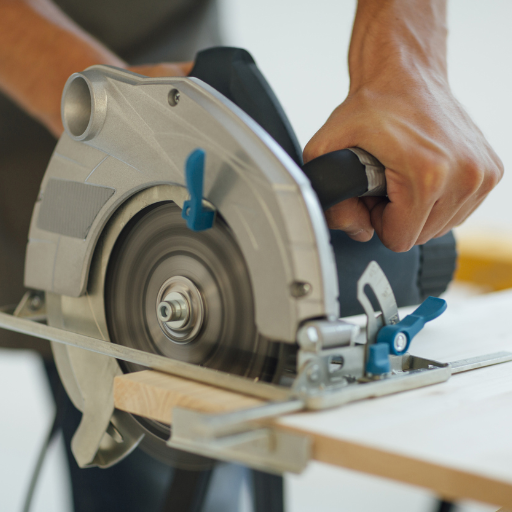
Every safety measure should be taken into consideration when operating a power saw as the risks are present in harming oneself and other people. Please wear appropriate protective equipment such as masks, gloves, ears, and other that has a simple design against a long-term exposure to dust, noise, and other impurities. It is mandatory to inspect the saw before use to check for cracks and missing parts. The material of any edges needs to be hard enough and the blades should be properly fitted. Do not hold the cutter with one hand during operation; always hold it with both hands. Also, do not dress in wide loose clothing or put on jewelry, since it can get caught in the machine. When the procedure is taking place, ensure that adequate space is left for working other than placing obstructions on the cutting area and position your hands well and let them move when cutting. Shut the power off to avoid any possible troubles, for example to carry out maintenance or replace the blade. Inculcation of these habits is very important for them to lower their chances of injuries as well as increase the use of the equipment.
General Safety Tips
1
Wear Appropriate Personal Protective Equipment (PPE)
Occupational Safety and Health Administration (OSHA) figures indicate that nearly 70% of workplace injuries had the potential to be avoided through the right utilization of Personal protective equipment. Common types of these armours include earmuffs, eye shields, work gloves, and safety shoes. These are needed as protective armors for users on construction sites to shield them from damage, noise, and the possibility of being hit or struck by objects.
2
Inspect Equipment Regularly
There is research run by the National Safety Council that reveals that about 25% of equipment-related accidents can be associated with a lack of maintenance. At set intervals, check for frayed cables, damaged components, or obsolescence. Ask for new ones as soon as there is any defect in order to prevent accidents and also help them function optimally.
3
Follow Manufacturer Guidelines
Every single instruction and tag on the product must be honored for the sake of the user. The Consumer Product Safety Commission cites that almost 30% of all accidents in a workshop environment are due to the inappropriate handling of tools. Put in a conscious effort to familiarize yourself with the recommended operational procedures and guidelines in place before usage.
4
Maintain a Clean and Organized Workspace
Disorganized places can be very unsafe and increase the possibilities of falling over and distraction resulting to accidents. Case studies have proved that a clean and organized working environment has a higher productivity of 15% and a lower work injury rate.
5
Use Tools for Their Intended Purpose
It is dangerous to use a tool for an application that it was not meant to handle as it increases the potential for damages and in some instances the tool could injure the user. Workplace data shows that around 8% of all accidents in a year are caused by the improper use of hand tools. Just like the right gloves, there is always the right tool for the job and it should be used.
6
Stay Alert and Avoid Fatigue
Studies have shown that increased fatigue slows down the pace and impairs performance. Through various research in the safety field, it was revealed that human errors due to tiredness have caused almost 13% of related operational accidents. It is also vital to give yourself short intervals and to get enough sleep before coming into contact with machines.
Using a Saw Safely
When one is about to cut using a saw, everyone knows that severe accidents should be expected so safety is usually rated topmost priority. Make it a habit to check whether the saw functions well, the quality of the blades of such sticks, and their setting, as they reverberate in the occurrence of penalties – slack cutting activity and more cases of tool getting impelled back on the wood. Whichever way the material to be cut is oriented, it has to be kept in place in the support or utilise a clamp to hold it down. Also, attention must always be directed on how other protective clothing especially safety glasses, gloves and earplugs are used to limit the exposure to airborne particles, as well as tremors and noises. Being highly skilled while using the tool is very important. Therefore, one needs to be oriented, act on a stable ground and also keep the hands out of the cutting direction. It is not necessary to use a lot of energy since it will interfere with the control of the saw. It has been shown that a large number of hand held tool related injuries can be associated to improper techniques when handling the tool. Also, present day saws come with several protective functions in them like the blade shield and in some instances where air intake gets too high activating a system that shifts off the machine. Operations of such nature, even after performing the intended function, can be exhausting; however, cleaning of the saw and storing it correctly ensures that the tool remains in good condition and does not put people in harm’s way.
Section 05
Maintenance of Power Saws
✦
Cleaning
It is advisable to take out each and every time dust and debris and also clean the made holes and casing with a brush or jet of gas. Doing that will help stopping them from blocking the functioning of the equipment.
◈
Blade Inspection
You should from time to time ascertain the condition of the blades; check for any signs of deformity or roughness, apart from replacement of blunt or bent cutting implements, this is indispensable so as to lessen accidents while working.
◎
Lubrication
Furthermore, apply manufacturer-approved lubrication to the moving parts of the machine in moderation as recommended by the manufacturer for the purpose of efficient and abrasion free services.
⚡
Electrical Components Check
Visually inspect necessary electrical equipment especially cables, plugs and other connections, assess the chance of threads where appropriate. For such instances, replace the damaged components so as to avoid possible shocks or other electrical-related dangers and hazards to the users.
⬛
Storage
The correct method to ensure the safekeeping of the miter saw is to maintain it well in a child’s environment, which is clean and dry, or in a specially designed box meant for storing tools.
Regular Cleaning and Upkeep
It’s important to periodically conduct maintenance on your saw to keep it in top condition and at peak performance levels. To begin the maintenance, one must clean the saw with the use of a soft brush, compressed air or any other suitable means available to surface the sawdust, debris and any residues that might have settled. Hard to reach cleaning surfaces surrounding the blade guards, motor housing and any other vent openings to stop accumulation that can impair operation or cause overheating. While using the blade for cutting purposes, it is essential to apply a cleaning solution so that no resin or pitch is left attached to the edges in order to maintain the best performance of the blade. Thus, its operation will be accommodated without overloading the motor. In addition, always inspect the parts for any signs of wear and tear in the cleaning process and replace them in time to prevent risks while in operation. In the end, for the sides outside of the saw, it is enough to take a slightly damp cloth and clean the sides of all the dust and make sure there is no moisture reaching any of the electrical parts. Aside from the aesthetic appeal of having a clean saw, there is the fact that a clean saw functions better and is safer as well due to lower breakdown risks associated with mechanical or electrical inefficiency.
Sharpening and Blade Replacement
To keep your saw and any other such machines in top working condition, see to it that you properly take care of its blade. To grind out the blade, the first procedure is to remove it from the saw in full accordance with all the safety measures usually outlined by the manufacturers with regard to such machines including removing the source of electrical power. You then grab your diamond file or another tool with a appropriate shape to sharpen the blade. You should use the right approach in terms of technique as described in the blade’s instruction manual to avoid over sharpening while aspects of sharpening.
During routine sharpening check the blade covering for any extraneous wear, missing teeth or any cracks. If the blade is very worn or if it does not work, once sharpened, due to its cutting condition, it must be replaced with a correctly sized, properly made and with correctly configured teeth blade complying with the manufacturer’s manual. In order to prevent lower quality of cutting, subpar mechanical performance or jeopardization of your safety through the cut, it is always detrimental to use a wrong or low quality blade. Moreover, prior to the operation of the saw, always ensure that the blade used will not come out of its place. Scheduled maintenance of the blade is essential since it improves performance while prevent accidents.
Storage and Care
One of the most critical aspects of saw blade maintenance is how they’re stored and taken care of. Blades should be stored in a cool, dry place in order to keep them from getting rusty or tarnished, which would have a direct effect on its durableness. Always make sure and use storage protections, like blade holders, cases, and so forth in case there is any likelihood of the blades coming into contact with metals, or other tools. It is advised to clean the blades periodically with the proper chemicals so that buildup does not clog the teeth with resin, pitch, or other associated garbage. This type of buildup also increases the wear on the saw motor as it makes the cutting less efficient. On top of that, ensure that the blades are inspected for wear and tear, such as poor teeth or bending, which in turn leads to poor cuts or endangers the user. These measures not only increase the life expectancy of the saw blades but also increase the precision of cutting and safeguard the operator’s health when using the equipment.
Section 06
Frequently Asked Questions
Reference Sources
-
Enhancing Woodworking Efficiency with a Multipurpose Wood Processing Machine: From Concept to Application
-
The Commercialization of University and Research Institutes’ Science-Based Innovations