
Selecting Professional Measuring Tools for Precision Engineering
Precision engineering holds that the accuracy and reliability be given priority in any segment hence the significance of the tools of measurement that the engineer or the technician is expected to use. This publication seeks to particularly explore the important principles for the professionals undertaking complex projects to choose and use tools accurately. Starting from the basic understanding of the specifications through the proper alignment of the tools with their intended functions, we will attempt to explain everything you need to know about accuracy, life span and user experience of the tools concerned. Even if you are delving into miniature mechanics or the factory processes that are huge, we will help you judiciously manage various aspects of the performance and effectiveness of your work in the field of engineering.
Section 01
Introduction to Precision Measurement
Precision measurement is the scientific process of determining magnitude and is extremely precise and consistent. Engineering and design benefit immensely from this process because it ensures the components are in compliance with the requirements set and work as intended. The objective is to reduce the old traditional methods of measurement, making ways for well groomed techniques with instruments that are properly adjusted and qualified, and standards that are well defined so as to make measurements that are more accurate. All applications from aerospace engineering to precision optical devices are affected by the accuracy of the measurements made.
Importance of Precision in Engineering
The precision required in applications like engineering has greatly improved with the adoption of advanced technology such as Computer-Aided Design (CAD), Computer-Aided Manufacturing (CAM), and Coordinate Measuring Machines (CMM), and others. These tools are useful primarily in that engineers can design and validate the object with high precision, even to the order of micrometers, and eventually make any minor adjustments to the system for the sake of performance and compatibility. Moreover, sophistication in the sphere of robotics and automation has enabled greater uniformity in manufacturing tasks saving designers from taking or chances and still having to comply with rigidly designed boundaries.
Technologies such as 3D printing and laser-assisted machining are implemented on different machine types and not only enhance precision but also push the limits of designs that traditional methodologies could only wish to work on. Applications of these technologies are especially important in areas such as aviation, bioengineering, and semiconductors, where the slightest flaw can cause a significant performance and safety problem in working principles.
Overview of Measuring Tools
| Measuring Tool | Function | Key Parameters |
|---|---|---|
| Caliper | Measures internal/external dimensions | Resolution, material, range |
| Micrometer | Precise small object measurement | Accuracy, range, thimble type |
| Dial Indicator | Detects small displacements | Graduations, range, mounting type |
| Coordinate Measuring Machine (CMM) | 3D object measurement | Accuracy, probing system, size |
| Laser Distance Meter | Measures distance with light | Accuracy, range, laser class |
| Optical Comparator | Visual comparison of dimensions | Magnification, screen size, light |
| Thermometer | Measures temperature | Accuracy, type (e.g., digital) |
| Force Gauge | Assesses push/pull force | Units, range, peak capture |
| Torque Wrench | Measures applied torque | Accuracy, scale, type |
| Surface Roughness Tester | Evaluates surface texture | Ra range, speed, stylus type |
Who Should Use These Tools?
The use of precision instruments is a must among professionals of various industries. The importance of such devices can be seen more in the work of engineers and quality control experts who are forced by the design standards and target threshold values to use devices such as torque wrenches and the relative roughness tester very professionally. It is possible to cite many cases where in the course of scientific and research activities the thermometers and force gauges, which allow to perform investigations having strictly controlled metrological support, are very actively employed.
Furthermore, workers of factories and manufacturing plants who are engineers or service workers use the machines like an optical profile projector or a coordinate measuring machine to make sure that the detachable parts fulfill all the stated tolerances. Use of these tools is high in sectors such as motorsports, aviation, and medical instruments manufacturing, as well as construction, where safety and functionality are always of vital importance to all.
Section 02
Types of Precision Measuring Tools
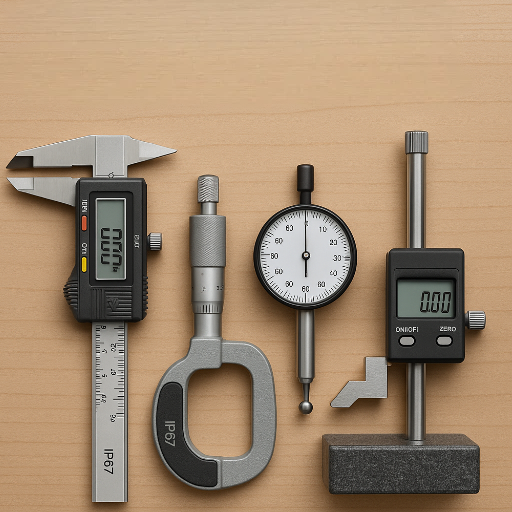
- 01
Calipers
It is a multi-purpose tool used to measure the distance between opposite faces of an object with accuracy. Different types of calipers are available such as vernier calipers, dial calipers, digital calipers, based on the purposes of measurement.
- 02
Micrometers
A micrometer is used for taking accurate measurements of small size dimensions such as thicknesses, diameters, and lengths and is widely used in precision engineering and manufacturing industries.
- 03
Coordinate Measuring Machines (CMMs)
CMMs are more versatile instruments that have been developed to measure the geometry of physical objects. They have probes that can touch and record points on surfaces of objects enabling 3D modeling and advanced dimensional analysis.
- 04
Optical Comparators
Employed widely for precision inspection, optical comparators are two-dimensional measuring devices that project relatively enlarged shadow or silhouette of an object via a lens or other magnifying component, to a screen for analysis and comparison of the part features against available data. They are useful when inspecting a detailed model or small parts.
- 05
Force Gauges
These portable test systems measure the force that an operator or process applies to a part within the allowable 2fm error limits. They are trustworthily applied in both controlled and accelerated testing while studying properties of materials and their quality.
- 06
Thickness Gauges
These concentrates on tools essential measures of part specifications a thickness of only up to that significant area of the specified limits. There are various areas of use, ranging from structured painting jobs, checking the thickness of an insulation layer, and measuring the thickness of steel, to support more than 99% of the surface area.
Calipers: Versatility and Use Cases
Calipers are tools that are used for mechanical precision measurements that are well adapted to a wide range of applications. They are usually used to measure various dimensions including lengths, internal and external diameters, and depths. This feature makes them highly utilized in sectors such as manufacturing, engineering, and scientific investigations. There are many calipers that are available in the market and it also includes the vernier caliper, dial calipher and digital caliper, etc which involved different types of measurement concept which also involves measurement that is required to be made in the part.
An important feature of a digital caliper is its ability to provide high precision and usability thanks to the implementation of a digital display which reduces the chances of any errors from happening solely due to perceivable human factors. These instruments are more specifically needed in certain fields, e.g., aerospace, automotive, or medical devices production operations, with higher percentage of accuracy being in use. Calibration tools are useful for such functions as quality assurance whose job is to guarantee the health and the goal or the function of the object in the structure of the operated systems and structures.
Micrometers: Accuracy in Measurement
In the domain of competent and high-precision measurements, this equipment could be rightfully attributed to the group of ‘micrometers’. More often than not, such measurement technologies are used for work that requires great precision – generally to the nearest one thousandth of an inch (0.001″) or a one-hundredth of a millimeter (0.01mm). The standard micrometer (caliper) is a mechanical measuring instrument equipped with a calibrated screw mechanism for measurement of external, internal and depth dimensions. The appropriate application of these forces in specific high accuracy sectors such as aviation or automotive is necessary when using testing techniques.
Innovative technology in the field of micrometers has led to the development of digital micrometers which are higher in resolution and function with bluetooth. This offers a real-time understanding and monitoring of the processes in such places as the shop floor. Some designs have temperature detectors as well to compensate for changes in the ambient environment. This has further advanced the control of the products on which the micrometers are used as it allows tighter limits for such products to be catered for in the processes of manufacturing. Micrometers are one of the most used devices in modern day engineering because they provide the precision and consistency necessary for technology that is still being developed.
Dial Indicators: Precision Work Simplified
Dial indicators, small and delicate instruments, are widely used in engineering applications to measure small distances accurately without using external power. The major applications of dial indicators include the adjustment of machine axes, the runout of rotors, as well as the dimensional control of a machined part. Dial indicators provide relative motion in a spindle and are calibrated for easy reading. The evolution of the feature in time has led to the dial indicator displaying higher values in black and white and causing wear to the edges.
In particular, such advanced digital measurement tools as digital indicators come with such user-friendly features as, electronic zero setting, statistical process control data output capabilities and increased reliability in terms of the overall durability of the device under the influence of contaminants such as dust or cooling liquids. Essentially, these instruments improve the performance capability of the machines, guaranteeing the repeatable handling of the components and are widely used in the installation of automatic systems presentations, thus increasing the value added at different stages of the delivery processes of an organization. The use of dial instruments in most high-precision applications has led to their continual enhancement in terms of fit and function.
Section 03
Choosing the Right Measuring Tool
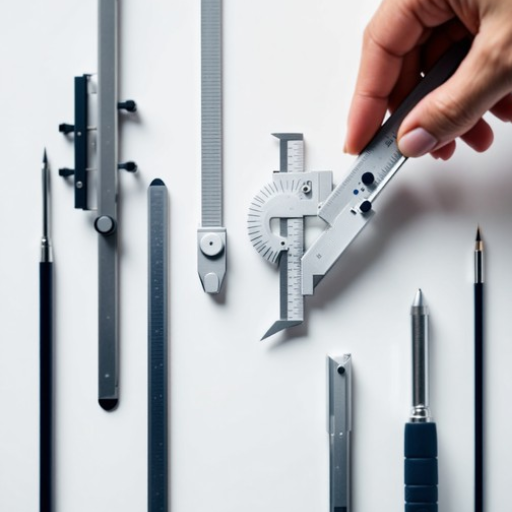
There are three factors to consider when you make a choice of the appropriate measuring instrument: the accuracy and precision of measurement, the conditions in which the measurement takes place, and the nature of the object to be measured. For any work that requires top-notch accuracy use of instruments such as micrometers or electronic calipers will be appropriate owing to their high precision and absence of different values. However, in non-critical cases, tape or yardsticks will be adequate. On the other hand, for any measurement carried out under rigorous conditions, the application of a great concern to use the measuring tool given the harmful effects of weather and other environmental factors is evident.
Factor 01
Accuracy & Precision
Match the instrument resolution to your required measurement tolerance.
Factor 02
Measurement Conditions
Account for environmental factors such as humidity, temperature, and dust.
Factor 03
Nature of the Object
Consider geometry, size, and material properties when selecting a tool.
Factors to Consider: Precision and Ease of Use
Assessing the precision and ease of use of various solutions has to be paralleled with the most recent technological developments rendering both aspects more favorable. An example is laser measurement solutions which render incredibly precise values, in some cases up to a fraction of a millimeter, without necessitating manual operation other than clicking in the first place. Some of those aspects incorporate ease of use by considering the needs of the user at the time; even first-time users need not to fear as the majority of these devices are easy for them to use because the designs are simple and do not weight them allowing for intensive use without getting fatigued.
Besides that, powerful calibration tools guarantee the quality of measurements made over a long period. The above tools can also be more useful with the addition of related technologies like real-time data communication or cloud technology which further reduce the accuracy of appending data and conducting calculations. In selecting the right tool that does work well under different conditions, such as, high humidity and temperature variations in the environment, there is a certain level of faith in the way the selected material renders high output in different sectors.
Calibration: Ensuring Accurate Measurements
Calibration procedures are crucial when considering the proper functioning and accuracy of measuring devices. Routine calibration ensures the devices are utilized within the specificaccuracy limits thus reducing incidences of future errors which may affect total functionality. Modern calibration criteria have instituted a practice whereby every piece of equipment used for the measurements is calibrated through accepted known material-standards-carbon or to that effect. The standards address uncertainties in measurements which makes them clear enough. Automation of calibration, as well as other advanced experts of calibration, improve the time spent on careful oversight of the equipment, and prevent slowdown in the maintenance. These schedules helps in extending the service life of the analysis equipment when they are utilized and compliant with the relevant laws for the industry.
Specialized Tools for Specific Applications
The improvement and use of particular devices aimed at particular purposes have boosted productivity in professionals. This is the case with example thermal cameras, as in the area of predictive maintenance electrical systems are viewed in the safety of heat and defects which have the potential to fail are pre-empted from ever pending. Also wrenches which are affixed with sensors for torque are very essential in the assembly works of moveable parts which are mostly witnessed in the manufacturing setting to minimize risks as well as enhance rigidity.
Some of the equipment that is relevant to the aerospace sector include devices as high precision ultrasonic gauges for taking thickness measurements. These tools assist inspectors to check aircraft parts in detail and reduce the risk of material fatigue in them. This equipment, in the same way, can help the plane with all necessary inspection IT solutions, particularly for round-the-clock monitoring, control, and regulation to enhance productivity as well as undertake work in line with the best regulations.
Section 04
Applications of Measuring Instruments in Precision Engineering
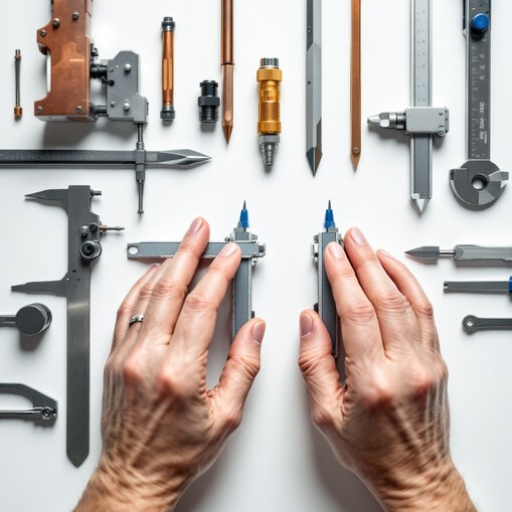
The importance of measuring devices is paramount in the world of precision engineering because they enhance precision in the various processes like manufacturing and quality assurance methods. They are used to verify sizes, dimensions and other characteristics of geometric bodies to a very high degree of accuracy. For instance, coordinate measuring machines (CMMs) serve the purpose of providing geometric accuracy of components while laser scanning provides surfaces measurements especially for complex shapes. In addition, micrometers and calipers are multipurpose tools that are simple and yet repeatedly aimed to accomplish a known task or tasks in the production settings. These devices enable proper follow up to the least deviations of a job’s strict design limits, reduce mistakes, and enhance performance.
Machine Setup: Importance of Accurate Measurements
The ability to measure objects and verify them with precision is instrumental to numerous sectors, as it helps to rapidly position mechanisms and do adjustments. Failure to properly adjust the equipment during the installation or any wrong calibrations can result in a lot of losses ranging from failures to poor work output and wearing out the equipment prematurely. However, with the advent of modern technology, laser alignment equipment and digitized measuring devices have been embraced and currently form part of the equipment used to achieve the very best precision.
One may argue, that for instance the laser equipment does provide live feedback, this feedback enables assessments of angular and positional differences hence enabling immediate rectification. This extent of precision not only ensures respect of given dimensions but also maintains the machines for long and reduces the maintenance periods. Additionally, continual review of the standing calibration also takes into consideration the effects of the environment, especially thermal activity and vibrations, optimizing the manufacturing process further and increasing productivity with regards to good products.
Quality Control: Ensuring Precision Work
The application of upgraded measurement mechanisms into product inspection activities has seen significant changes in the way industry operates. These measuring instruments use the most recent technologies, including the Interferometry and the Coordinate Measuring Machine (CMM), allowing the taking of measurements up to the level of a fraction of a micro meter. One of their key functions is monitoring compliance with design requirements thereby allowing identification of any deviations in the process at an early stage of development and minimizing scrap and rework. High-definition imaging with automated inspection aids guarantees that parts are in conformance with specified limits and at the same time does not halt the production stream. These developments not only play a role in reinforcing strict standards of quality but also in streamlining processes within different sectors.
Engineering Design: Tools in Development
The integration of design aids in engineering has progressed due to enhancements in computer functionality, internet-based approaches and the merging of systems. Today in Computer-Aided Design (CAD) Development Projects, even parametric cad tools are available, which provide flexibility in making changes to the design of the engineers’ work components. Further, the use of simulation software such as Finite Element Analysis (FEA) and Computational Fluid Dyanamics (CFD) helps engineers to predict the stress, the heat and the fluid force and/or the thermal response of a design to various conditions.
These functionalities can be enhanced even more by utilizing machine learning which provides for prognostic and optimization solutions. These tools are uniformly embedded with Product Lifecycle Management (PLM) applications. This meaning that there exists an streamlined a way to follow through each step starting from the concept and ending in the deployment. All these technologies also contribute to a shift toward more effective and sustainable engineering practices.
Section 05
Conclusion: Mastering Precision Measurement
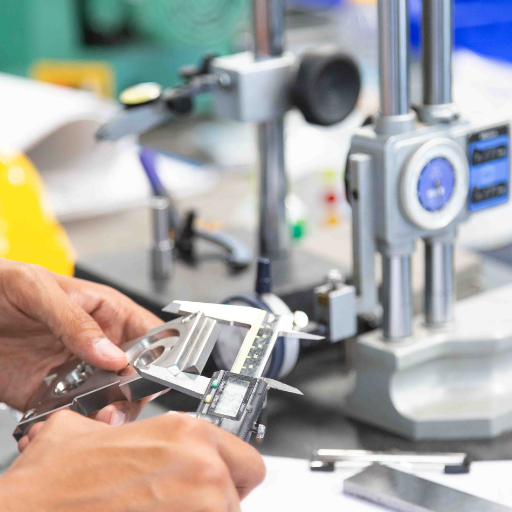
In engineering and scientific fields, precision measurement is very important. To make a mistake is almost out of the question because the measurements must be as accurate and reliable as is possible with the given methods. This is done by utilizing measuring instruments that are already set at the correct accuracy levels, following procedures, and taking advances in the art into account. Standardization and calibration of equipment help in ensuring reproducibility of any work. In addition, tackling these issues is simplified through appropriate skill training, and proper awareness on the methods of measurement. Such complex tasks center on precise measurement, which is a key component of success and innovation especially in industries whose products are both critical and sophisticated.
The Future of Measurement Tools in Engineering
In the engineering subject, the manner in which measurements are carried out in design, analysis, testing, quality control and maintenance tasks has significantly been redefined due to the revolution in digital technologies, automation and data analytics. Integration of the concept of the Internet of Things, IoT in its short form is a considerable trend experienced in measurement systems. Hence, IoT devices are capable of very fast data collection in real-time and seamless data transfer between equipment and central technology systems, thereby causing enhanced accuracy of information and also minimizing mistakes made manually.
Scaling the analysis of measured parameters to unprecedented levels, advancement in artificial intelligence, and big data solutions can, for example, help in the implementation of predictive maintenance. Predictive maintenance refers to analysing the data in order to establish patterns and outliers, and issues, enhancing the efficiency and productivity of the system. Another aspect of interest is the progress made on the manufacturing of handheld equipment and small measuring instruments, which have compact design and advanced features like, for example, those combining laser distance analyzers and 3D scanning.
The new era of Industry 4.0 has given birth to digital twins that generate 3D image of parts and equipment; digital twin is based not on a preliminary drawing but on accurate data shall enable visualizations designing a physical reality that has not been constructed yet. Such developments help engineering to consider some state in the system, design and test a solution virtually before it is placed value and effort in its actual realization. In general, measurement techniques must be constantly improved and equipped with new technologies because engineering structures must function properly and effectively and correspond to the modern demands of industry in this day and age.
Final Thoughts on Selecting the Right Tools
The materials used in the construction processes should be up-to-date so that the project moves efficiently. One major change is that these improvements are now based on statistical data and research, which urges for tools now based on current technology needs and use. A critical number in the sequence of step relates to stock performance, customers’ functional status and material compliance data patterns or trends. Reducing the impact of unnecessary functions is one of the solutions to this problem whilst at the same time allowing room for adjustability which is necessary in view of ever changing industries as well as situations. Having technical and databased resolutions ensures the tools procured are relevant to the present and also into the future.
Reference Sources
- 1
Recent Development of Piezoelectric Fast Tool Servo (FTS) for Precision Machining
- 2
Ultra-Precision Machining: Cutting with Diamond Tools
FAQs
Frequently Asked Questions
What should a machinist consider when selecting precision tools?
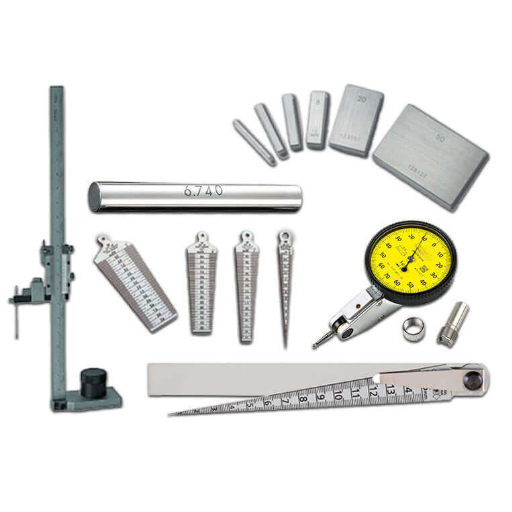
For the trade of the machinist, it is extremely important to possess devices that insure precise readings with adjustable scales which perfectly suit the ongoing construction assignment as a whole. These may include items like calipers and micrometers-test indicator, straight edges for checking positional correctness and flatness of the reference work surface. In the actuation a measuring instrument, then the grade of a precision available is taken into account. Such equipment as rectangular stainless rule or a combination set would be appropriate for such a shop as there are many other ways of obtaining appropriate dimensional accuracy.
How often should I calibrate my measuring instruments for precision engineering?
The frequency of which calibration is needed is crucial, as this depends on factors like the rate of using the tool, conditions under which the device is used, purposes served by it. This is for instance when the items are more often put to use in relation to the rest of the range of use where low dimensions are involved. It goes without saying that instruments that show consistency are used to remove the effect of measurement errors, so keep all calipers and micrometers, external micrometers and precision levels well adjusted. When you calibrate you are also making sure that fondant tools, such as a lever indicator or precision steel square, are able to retain their factory precision for future use in any project.
Which tools are best for precise angular measurements in precision machining?
To ensure correct measurement of angles, other essential measuring tools include an angle gauge, a protractor, and a clinometer for measuring intermediate angles. Measuring tools like auch mitutoyo and fowler protractors and stroke indicators or depth gauges also come in handy in the construction phase of pieces of equipment as they help in achieving perfect measurement alignments. While performing the same operations, the Mitutoyo gauge calibration of the Mitutoyo gauge is also done. The main aim of the creation of these tools is also to solve metric system conversion and the three-dimensional sector of joint angle measurement.
How do I go about choosing the right tool for measuring small dimensions?
Selecting the best tool has its roots in determining the maximum and minimum values needed to be measured and the smallest unit which can be distinguished—an example of calipers and micrometers, outer micrometers for instance, is where precision is required in small dimension and distances. Determine the right tools that can be applicable in the job at hand: where there is need for comparison tests for example, test indicators may be most suited while thread height micrometers maybe utilized for checking threads in parts of engineering such as high accuracy machining.