
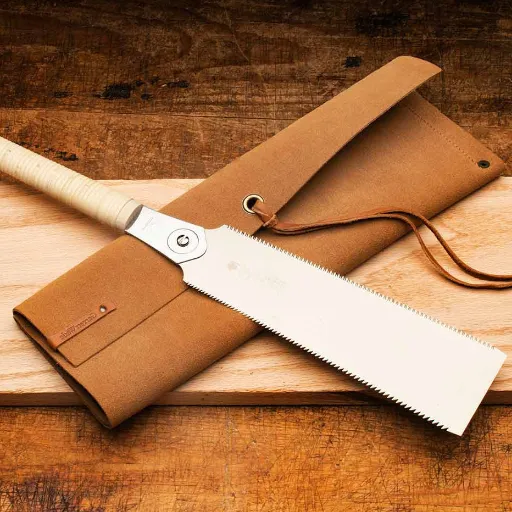
Japanese Hand Saw: A Complete Guide to Choosing and Buying a Japanese Pull Saw
A Japanese hand saw cuts on the pull stroke, not the push stroke. That single difference lets the blade stay thin, the kerf stay narrow, and the cut stay clean. For woodworkers who need precision joinery, smooth trim work, or fine furniture cuts, a Japanese pull saw is often the right choice.
This guide explains how Japanese pull saws work, which type to buy, and what to look for when sourcing them for personal use or resale. If you are comparing saw styles in general, see our guides to hand saw types and the best hand saw for woodworking.
What Is a Japanese Hand Saw?
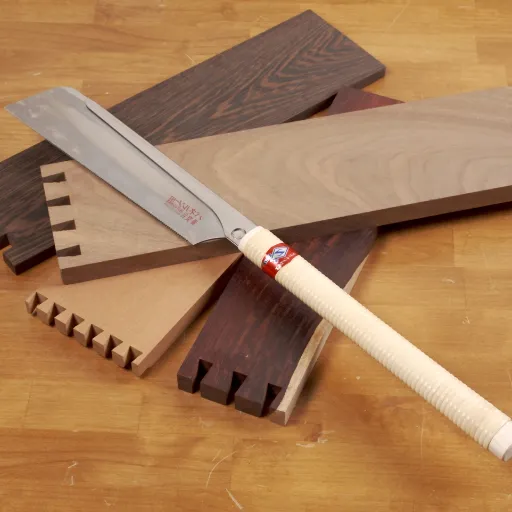
A Japanese hand saw, or nokogiri, is a pull saw. You start the cut on the push stroke and remove material on the pull stroke. Because the blade is in tension during the cut, it can be thinner than a Western push saw without buckling.
The result is a narrow kerf, less material waste, and a smoother finish. Most Japanese hand saws use high-carbon steel blades. Many modern versions have impulse-hardened teeth and replaceable blades, so you keep the handle and swap only the cutting edge.
Key characteristics of a Japanese hand saw:
- Cutting action: Pull stroke
- Blade thickness: ~0.3–0.6 mm
- Kerf: Narrow
- Tooth style: Fine, hardened teeth
- Best for: Precision cuts, joinery, trim, and fine woodworking
Types of Japanese Hand Saws
Japanese saws are specialized by task. The five most common types are Ryoba, Dozuki, Kataba, Kugihiki, and Azebiki.
Ryoba
The Ryoba is a double-edged saw with rip teeth on one side and crosscut teeth on the other. It is the most versatile Japanese hand saw and the best first choice for most woodworkers.
- Best for: General woodworking, dimensioning lumber, rip and crosscut work
- Typical TPI: 9–17
- Blade length: 7–9.5 inches
- Why buy it: One saw handles two cut types, reducing the number of tools needed.
Dozuki
The Dozuki has a stiffening spine and very fine teeth. It is built for precise joinery where accuracy matters more than speed.
- Best for: Dovetails, tenons, fine joinery
- Typical TPI: 20–30
- Blade length: 6–8 inches
- Why buy it: The spine keeps the blade straight and the kerf ultra-thin.
Kataba
The Kataba is a single-edge saw without a spine. It cuts deeper than a Dozuki and works well for larger stock or longer reach.
- Best for: Deep cuts, larger panels, general fine carpentry
- Typical TPI: 9–16
- Blade length: 8–12 inches
- Why buy it: More cutting depth and flexibility than a Dozuki.
Kugihiki
The Kugihiki is a thin, flexible flush-cut saw. It trims dowels, plugs, and tenons flush with the surface without scratching it.
- Best for: Flush cuts, trimming dowels and plugs
- Typical TPI: 17–25
- Blade length: 4–6 inches
- Why buy it: Clean flush cuts with minimal surface damage.
Azebiki
The Azebiki has a short, curved blade designed to start cuts in the middle of a panel.
- Best for: Plunge cuts, grooves, cutouts
- Typical TPI: 17–25
- Blade length: 4–6 inches
- Why buy it: Starts cuts mid-board where other saws cannot.
How to Choose a Japanese Hand Saw
Choosing the right Japanese hand saw depends on the work you do, the materials you cut, and whether you want one versatile saw or several specialized ones.
Match the Saw to the Cut
| Task | Recommended Saw | TPI Range | Blade Length |
|---|---|---|---|
| General woodworking | Ryoba | 9–17 | 7–9.5 in. |
| Dovetails and joinery | Dozuki | 20–30 | 6–8 in. |
| Deep cuts in panels | Kataba | 9–16 | 8–12 in. |
| Trimming dowels flush | Kugihiki | 17–25 | 4–6 in. |
| Starting mid-panel cuts | Azebiki | 17–25 | 4–6 in. |
Choose the Right TPI
TPI, or teeth per inch, controls cut speed and finish.
- Low TPI (9–12): Fast cuts, rougher finish. Good for rip cuts and rough dimensioning.
- Medium TPI (13–17): Balanced speed and smoothness. Good for general crosscuts.
- High TPI (18–30): Slow, smooth cuts. Best for joinery and fine work.
Pick the Right Blade Length
A good rule of thumb is to choose a blade length two to three times the thickness of the material. A longer blade cuts faster but needs more control. A shorter blade offers more precision in tight spaces.
Check Blade Steel and Hardening
Most quality Japanese hand saws use 65Mn or SK5 high-carbon steel. Impulse-hardened teeth stay sharp longer but usually cannot be resharpened. Replaceable blades extend the life of the saw and reduce long-term cost.
Handle Comfort
Traditional Japanese handles are long and straight, made for a light two-handed grip. Modern versions may use wood, bamboo, or composite materials. Choose a handle that feels secure and reduces fatigue during extended use.
Japanese Pull Saw vs Western Push Saw
Understanding how a Japanese pull saw differs from a Western push saw helps you choose the right tool for the job.
| Feature | Japanese Pull Saw | Western Push Saw |
|---|---|---|
| Cutting stroke | Pull | Push |
| Blade thickness | ~0.3–0.6 mm | ~0.9–1.2 mm |
| Kerf width | Narrow | Wider |
| Effort required | Less | More |
| Cutting speed | Slower | Faster |
| Precision | Higher | Moderate |
| Best for | Fine joinery, trim, detail work | Heavy stock, framing, rough cuts |
Use a Japanese pull saw when accuracy and finish quality matter. Use a Western push saw for heavy construction, thick hardwood, or tasks where speed is more important than precision.
How to Use a Japanese Hand Saw
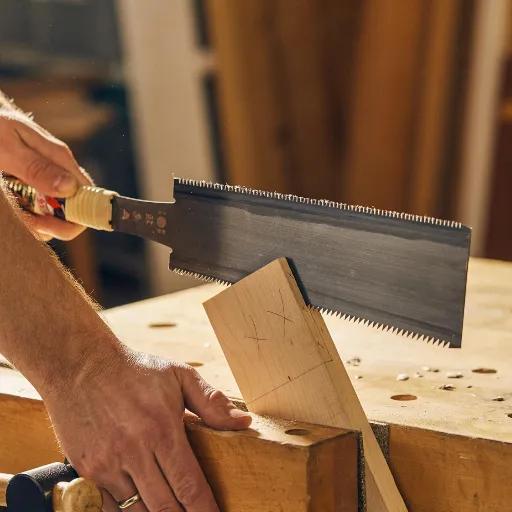
Japanese pull saws are easy to learn but require a different feel than Western saws.
- Start with a light push. Use the first push to create a shallow kerf. Do not try to cut on this stroke.
- Pull smoothly. Let the teeth do the work. Do not force the saw.
- Use your thumb as a fence. Rest your thumb beside the blade to guide the first few strokes.
- Keep the blade straight. Avoid twisting the saw during the pull.
- Support the off-cut. Thin blades can bind if the workpiece flexes.
- Store carefully. Hang the saw or store it flat. Protect the blade from kinks and impacts.
Sourcing Japanese Hand Saws for Retail or OEM
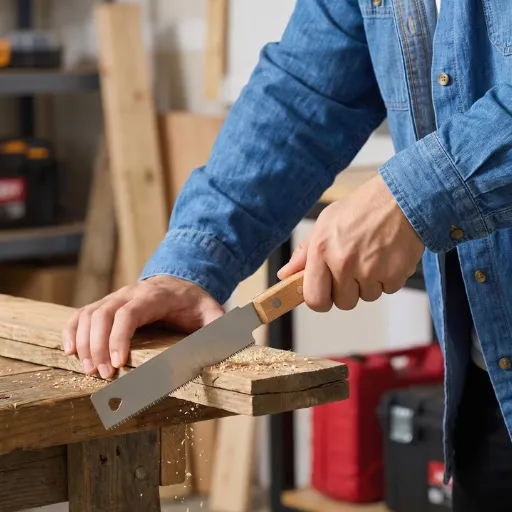
For retailers, distributors, and tool brand owners, Japanese-style pull saws are a strong addition to a hand tool line. They appeal to hobbyist woodworkers, fine-furniture makers, and DIYers who value clean cuts and low physical effort.
Spec Checklist for Bulk Buyers
When sourcing Japanese hand saws from an OEM or ODM supplier, confirm these details:
- Blade steel: 65Mn or SK5 high-carbon steel
- Hardening: Impulse-hardened teeth for longer edge life
- Blade type: Replaceable or fixed blade
- TPI and blade length: Match the product to your target market
- Handle material: Wood, bamboo, or composite
- Tooth set and straightness: Check for consistent set and a straight blade
- Packaging: Retail-ready boxes, branding, and instructions
Common OEM Customizations
- Handle color, material, and logo (laser or silkscreen)
- Blade length and TPI configuration
- Custom packaging and labeling
- MOQ typically ranges from 500 to 2,000 pieces depending on the factory
If you are building a tool brand or expanding your product range, our hand saw manufacturer page explains how Oushike supports OEM and wholesale orders.
Japanese Hand Saw FAQs
What is the best Japanese hand saw for beginners?
A Ryoba is the best Japanese hand saw for beginners. Its double-edge design handles both rip and crosscut tasks, so one saw covers most general woodworking needs.
Can you sharpen a Japanese pull saw?
Most modern Japanese pull saws have impulse-hardened teeth that cannot be resharpened. However, many models use replaceable blades, so you swap the blade instead of sharpening it.
What is the difference between Ryoba and Dozuki?
A Ryoba is a versatile double-edge saw for rip and crosscut work. A Dozuki has a stiff spine and fine teeth for precise joinery like dovetails and tenons.
Are Japanese hand saws better than Western saws?
Japanese hand saws are better for fine, precise work because of their thin blades and narrow kerf. Western saws are better for heavy-duty tasks where speed and blade durability matter more than finish quality.
What TPI should a Japanese hand saw have?
Choose 9–12 TPI for fast rip cuts, 13–17 TPI for general crosscuts, and 18–30 TPI for fine joinery and smooth finishes.
Conclusion
A Japanese hand saw is a practical choice for any woodworker who values precision, clean cuts, and low physical effort. Start with a Ryoba for versatility, add a Dozuki for joinery, and choose a Kataba, Kugihiki, or Azebiki when the task demands it.
For businesses, Japanese pull saws offer a clear market opportunity. With the right specs, steel, and customization, they can become a reliable part of your hand tool lineup. Contact Oushike to discuss OEM, wholesale, or bulk orders for Japanese hand saws.