
Best Tin Snips for HVAC: Aviation Snips Buying Guide
Choosing the best tin snips for HVAC work means balancing cutting power, durability, and control. The right aviation snips reduce hand fatigue, produce cleaner cuts, and help technicians finish ductwork faster. Whether you are cutting straight seams, curved fittings, or intricate notches, understanding the different aviation snips types helps you match the tool to the task.
In this guide, we compare the best aviation snips on the market, explain the differences between left cut, right cut, and straight cut tin snips, and share practical tips for HVAC professionals and procurement teams.
What Are Tin Snips and Aviation Snips?
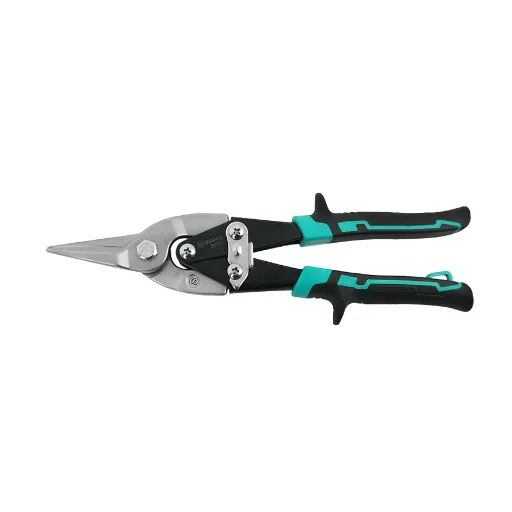
Tin snips are hand tools designed to cut thin sheet metal. They look like heavy-duty scissors, but their blades and leverage systems are built for materials such as aluminum, galvanized steel, and stainless steel. Aviation snips are a specialized type of tin snips that use a compound-action mechanism to multiply hand force. This makes them ideal for repetitive HVAC work where clean cuts and reduced wrist strain matter.
Standard tin snips work well for occasional straight cuts, while aviation snips handle curves, tight angles, and thicker materials with less effort. For professionals who cut metal every day, aviation snips are the better long-term investment.
Aviation Snips Types: Left Cut, Right Cut, and Straight Cut
One of the most important decisions when buying tin snips is choosing the correct cutting direction. Aviation snips are color-coded by direction, which makes it easy to grab the right tool on a busy jobsite.
| Aviation Snips Type | Handle Color | Blade Direction | Best For | Typical Use |
|---|---|---|---|---|
| Left Cut Tin Snips | Red | Angled left | Cuts that curve left or counterclockwise | Left-hand curves, circles turning left |
| Right Cut Tin Snips | Green | Angled right | Cuts that curve right or clockwise | Right-hand curves, circles turning right |
| Straight Cut Tin Snips | Yellow | Straight | Linear cuts and gentle curves | Long straight seams, light curves |
Left Cut Tin Snips
Left cut tin snips remove material from the left side of the blade as you cut. They are designed for making left-hand curves and counterclockwise circles. When you hold the snips in your right hand, the waste metal curls up on the left, keeping your cut line clear.
These are essential when working with fittings that turn left or when cutting curved sections of ductwork. Many HVAC technicians keep a pair of red-handled left cut tin snips in their tool bag alongside green and yellow models.
Right Cut Tin Snips
Right cut tin snips work the opposite way. They remove material from the right side and are built for right-hand curves and clockwise circles. Green-handled right cut tin snips are the most common starting point for right-handed users because they feel natural for straight and curved cuts.
If you only buy one pair of aviation snips, many professionals choose right cut tin snips first. However, having both left and right cut options gives you cleaner results on complex layouts.
Straight Cut Tin Snips
Straight cut tin snips have blades that remain aligned for linear cuts. They are the best choice for long, straight seams on ductwork and sheet metal panels. While they can handle gentle curves, they are not designed for tight circles.
Yellow-handled straight cut tin snips are often used as the starting tool for rough cuts before switching to left or right cut snips for detail work.
How to Choose the Best Tin Snips for HVAC
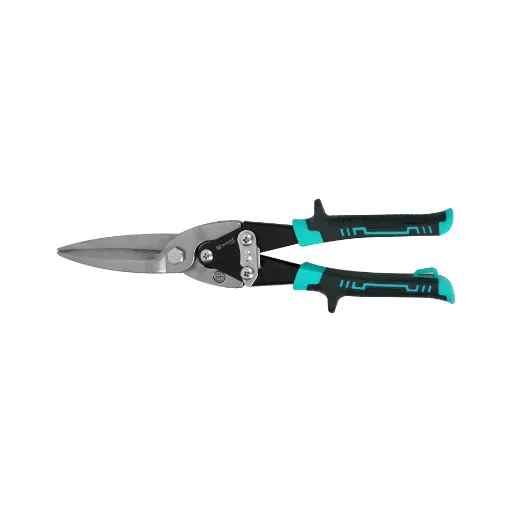
Several factors determine which tin snips for HVAC work best for your application. Here are the key points to evaluate before buying.
Blade Material and Durability
Look for blades made from chrome-vanadium steel, forged alloy steel, or bi-metal construction. These materials hold an edge longer and resist chipping when cutting harder metals. Heat-treated blades add hardness, while nickel or titanium coatings help prevent rust in humid environments.
For professional use, avoid thin or poorly hardened blades. They dull quickly and can leave ragged edges that require extra finishing time.
Cutting Capacity
Cutting capacity tells you the maximum thickness a snip can handle. Most aviation snips cut 18-gauge cold-rolled steel or 22-gauge stainless steel. Heavy-duty models, sometimes called bulldog snips, can cut up to 16-gauge steel or thicker.
Always match the tool to the material gauge. Cutting metal that is too thick damages the blades and creates unsafe cutting conditions.
Handle Design and Ergonomics
Ergonomic handles reduce fatigue during long work sessions. Features to look for include non-slip grips, spring-loaded returns, and cushioned inserts. Offset handles keep your knuckles above the metal surface, which improves clearance and visibility in tight spaces.
Spring-loaded aviation snips open automatically after each cut, speeding up repetitive work and reducing hand strain.
Cutting Direction and Job Type
The shape of your typical cuts should guide your choice. Buy left-cut tin snips for left curves, right-cut tin snips for right curves, and straight-cut tin snips for long seams. Many HVAC professionals purchase a three-piece set to cover every situation.
Build Quality and Pivot Design
A strong pivot bolt and smooth action indicate better build quality. Some models use adjustable pivot bolts that let you tighten the blades as they wear. For industrial use, forged construction and reinforced pivot points extend tool life.
Best Aviation Snips for HVAC Professionals
The following models consistently rank among the best aviation snips for HVAC work. We selected them based on blade quality, cutting capacity, ergonomics, and real-world reliability.
| Model | Best For | Blade Material | Capacity | Key Feature |
|---|---|---|---|---|
| Midwest Aviation Snips MWT-6716S | Best overall offset snips | Forged alloy steel | Up to 18-gauge steel | Offset design for knuckle clearance |
| Wiss MetalMaster M3R | Best for thick layered materials | Forged steel | Up to 18-gauge steel | Compound leverage, ergonomic grips |
| Klein Tools 2102 | Best for tight HVAC spaces | Hardened steel | Up to 18-gauge steel | Offset blade, easy action |
| Craftsman 9-94873 | Best value three-piece set | Forged alloy steel | Up to 18-gauge steel | Straight, left, and right cut included |
| Malco AV1 Aviation Snips | Best for clean curved cuts | Hardened alloy steel | Up to 20-gauge steel | Precision ground blades |
| Stanley FatMax 14-563 | Best for heavy-duty use | Chrome-vanadium steel | Up to 18-gauge steel | Serrated blades for slip-resistant cutting |
Midwest Aviation Snips MWT-6716S
Midwest snips are known for hot-drop forged blades and long-lasting edges. The offset design keeps hands above the cutting plane, which is useful when working with larger ducts. The pivot bolt technology reduces effort, and the forged alloy steel construction handles aluminum, steel, and stainless steel cleanly.
These are a strong choice for HVAC contractors who need reliable performance over thousands of cuts.
Wiss MetalMaster M3R
The Wiss MetalMaster M3R is built for smooth cuts through thick or layered materials. Its compound leverage system multiplies hand force, making it easier to cut 18-gauge steel without excessive pressure. The ergonomic handles reduce fatigue, and the blade design minimizes material distortion.
This model works well for technicians who frequently cut heavier gauge materials or double-layered duct sections.
Klein Tools 2102 Offset Snips
Klein Tools 2102 offset snips feature hardened steel blades and a compact offset head. They are especially useful in tight HVAC spaces where standard snips limit visibility. The cutting action is smooth, and the grips provide solid control.
For installers working in cramped attics or mechanical rooms, this model offers better access than many standard designs.
Craftsman 9-94873 Three-Piece Set
The Craftsman three-piece set includes straight cut, left cut, and right cut tin snips in one package. This gives HVAC professionals full coverage for common cutting tasks at a lower total cost than buying each pair separately. The forged alloy steel construction is rated for 18-gauge steel, and the slip-resistant grips improve control.
This set is a practical starting point for new technicians or shops that want to equip multiple workers.
Malco AV1 Aviation Snips
Malco AV1 aviation snips are designed for clean, precise curved cuts. The precision-ground blades reduce friction, which helps produce smooth edges with less filing afterward. They are slightly lighter than heavy-duty models, making them comfortable for detail work.
These are a good match for fabrication tasks where finish quality matters.
Stanley FatMax 14-563
The Stanley FatMax aviation snips use chrome-vanadium steel blades with a serrated edge. The serrations grip the metal as you cut, reducing slippage on harder materials. This model is built for demanding jobsites and holds up well under heavy use.
For contractors cutting stainless steel or reinforced sheet metal, the FatMax offers extra cutting confidence.
Left Cut vs Right Cut vs Straight Cut: Which Should You Buy?
If you are building a professional toolkit, start with a three-piece set that includes left cut, right cut, and straight cut tin snips. This covers straight seams, left curves, right curves, and circles in both directions.
| Scenario | Recommended Snip Type | Why |
|---|---|---|
| Cutting long straight duct seams | Straight cut tin snips | Clean, straight blade path |
| Making left-hand or counterclockwise curves | Left cut tin snips | Waste stays clear of cut line |
| Making right-hand or clockwise curves | Right cut tin snips | Natural cutting motion for right-handed users |
| General HVAC service work | Three-piece aviation snips set | Flexibility for any cut direction |
| Heavy gauge or stainless steel | Heavy-duty bulldog snips | Higher leverage and stronger blades |
For most HVAC professionals, a three-piece aviation snips set is the most efficient investment. It eliminates the need to force the wrong tool into a cut, which saves time and reduces hand strain.
How to Use Tin Snips Effectively
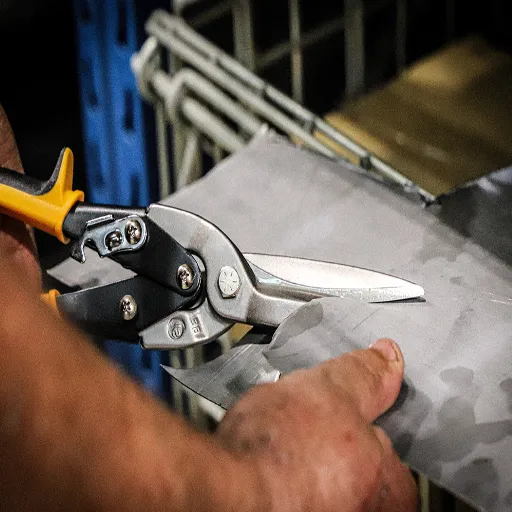
Proper technique extends tool life and improves cut quality. Follow these steps for consistent results.
- Select the correct snip for the cut direction and material thickness.
- Mark a clear cutting line on the metal surface.
- Clamp the sheet firmly to prevent movement.
- Grip the handles securely and guide the material with your other hand.
- Make long, smooth strokes instead of short, choppy cuts.
- Open the blades fully between cuts to avoid binding.
- File or deburr sharp edges after cutting.
Techniques for Straight Cuts
For straight cuts, secure the sheet flat with clamps. Align the blades perpendicular to the marked line and start from the edge. Apply steady, moderate pressure. Too much force distorts the metal, while too little leaves incomplete cuts. Hold the waste material aside so it does not curl into the blade path.
Techniques for Curved Cuts
Curved cuts require the correct cutting direction. Use left-cut tin snips for left curves and right-cut tin snips for right curves. Make several small cuts rather than trying to force the blade around a tight radius. A small starter hole can help when cutting inside corners or tight notches.
Cutting in Tight Spaces
Offset snips keep your hands above the workpiece, which improves sightlines and clearance. Clamp the metal firmly, keep the blade aligned with your mark, and cut slowly to maintain control. In very tight areas, alternate between left cut and right cut snips to avoid overreaching.
Maintaining Your Tin Snips
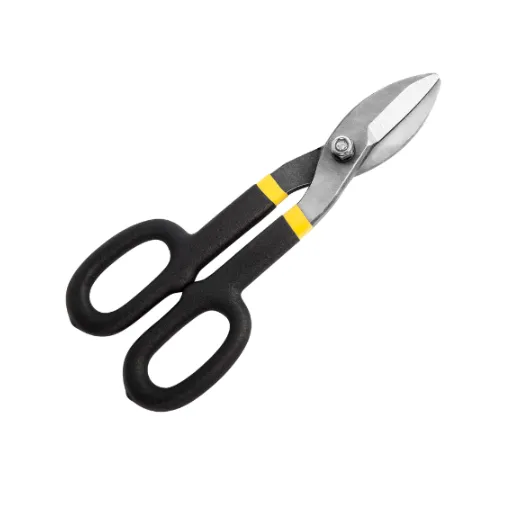
Regular maintenance keeps aviation snips cutting cleanly and extends their service life.
- Clean blades after each use to remove metal shavings and residue.
- Dry the blades thoroughly to prevent rust.
- Lubricate the pivot joint when it feels stiff or noisy.
- Inspect edges for nicks or dullness.
- Sharpen with a fine file or stone, following the original bevel.
- Store in a dry place with blade covers when available.
Bi-metal blades may require manufacturer-specific sharpening guidance. Replace blades when they no longer hold an edge after sharpening.
Tin Snips vs Aviation Snips: Key Differences
Many buyers wonder whether they need standard tin snips or aviation snips. The answer depends on how often and what type of metal you cut.
| Feature | Standard Tin Snips | Aviation Snips |
|---|---|---|
| Leverage | Single pivot | Compound action |
| Best for | Occasional straight cuts | Frequent curves and heavy use |
| Cutting capacity | Lighter gauges | Up to 18-gauge steel |
| Handle design | Simple grips | Ergonomic, spring-loaded |
| Directional options | Limited | Left cut, right cut, straight cut |
For HVAC professionals, aviation snips are the better choice. The compound action, ergonomic design, and directional options make them more efficient for daily ductwork.
Reference Sources
- CBT.edu, What Tools Should an HVAC Technician Have at Their Disposal
- RSI.edu, Understanding The HVAC Technician Career
- Alfred State College, Building Construction Student Required Tool List
Frequently Asked Questions (FAQs)
What are aviation snips, and how do they differ from HVAC tin snips?
Aviation snips are compound-action metal-cutting shears designed for precision and reduced hand fatigue. HVAC tin snips is a broader term that includes aviation snips, straight cut snips, and offset snips used for ductwork. Aviation snips typically offer better ergonomics and directional control.
How do I choose the best tin snips for HVAC work?
Match the tool to the metal gauge, cut direction, and frequency of use. For most HVAC work, choose a three-piece aviation snips set with left cut, right cut, and straight cut options. Look for chrome-vanadium or forged alloy blades, ergonomic handles, and a cutting capacity of at least 18-gauge steel.
What is the difference between left cut and right cut tin snips?
Left cut tin snips remove material from the left side and are used for left-hand or counterclockwise curves. Right cut tin snips remove material from the right side and are used for right-hand or clockwise curves. The handle colors make them easy to identify: red for left cut and green for right cut.
Are compound-action tin snips worth the extra cost?
For frequent or heavy-gauge cutting, compound-action tin snips are worth the investment. The compound mechanism increases cutting force and reduces hand strain, which improves productivity and comfort during long work sessions.
Can I use straight cut tin snips for curves?
Straight cut tin snips can handle gentle curves, but they are not designed for tight circles. For curved work, use left-cut or right-cut tin snips depending on the direction of the curve.
How should I maintain and sharpen tin snips to prolong their life?
Clean the blades after each use, oil the pivot, and store them in a dry place. Sharpen carefully with a fine file, following the original bevel. Replace or recondition blades when they no longer hold a sharp edge.
Conclusion
The best tin snips for HVAC work combine durable blades, ergonomic handles, and the right cutting direction for each task. For most professionals, a three-piece aviation snips set with left cut, right cut, and straight cut tin snips provides the flexibility needed for ductwork, fittings, and sheet metal fabrication.
When choosing aviation snips, focus on blade material, cutting capacity, and handle design. Reliable tools reduce fatigue, improve cut quality, and help your team finish jobs faster. For businesses looking to source professional-grade tin snips at factory-direct pricing, Shanghai Oushike Hardware Tools Co., Ltd offers customizable OEM/ODM solutions and stable supply for distributors, brand owners, and contractors worldwide.