
Cordless Nut Runner Buying Guide: Battery Power for Industrial Assembly
A cordless nut runner is a battery-powered torque tool that delivers the same ±1-3% accuracy as a corded electric model, but with full freedom of movement. It is the right choice when your operators work across multiple stations, serve remote job sites, or simply need to escape the tangle of cords and air hoses.
Yet many buyers hesitate. They worry about battery life, replacement cost, and charging downtime. These concerns are valid, but they are also manageable with the right setup. When Marcus, a floor manager at an appliance plant in Ohio, switched his final assembly station from corded to cordless nut runners, his operators gained twenty minutes per shift that had previously been lost untangling cords and waiting for shared power outlets. The batteries outlasted the shift, and the accuracy stayed within spec.
This guide explains how cordless nut runners work, what battery specs actually matter, and how to calculate whether cordless makes financial sense for your line.
Key Takeaways
- Cordless nut runners match corded electric accuracy at ±1-3% while eliminating cord and hose constraints.
- Modern lithium-ion platforms deliver 200-500 cycles per charge, with fast chargers refilling batteries in 30-60 minutes.
- Total cost is highest upfront due to batteries and chargers, but mobility savings often justify the investment.
- Cordless excels on mobile assembly lines, field service, mixed production, and clean room environments.
- Smart cordless models integrate with MES systems for full torque traceability without workstation tether.
What Is a Cordless Nut Runner?
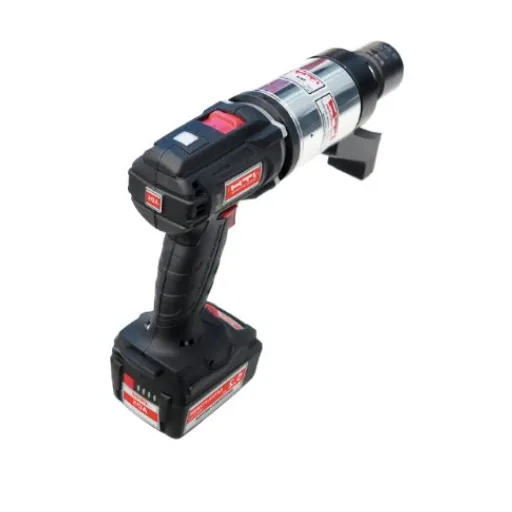
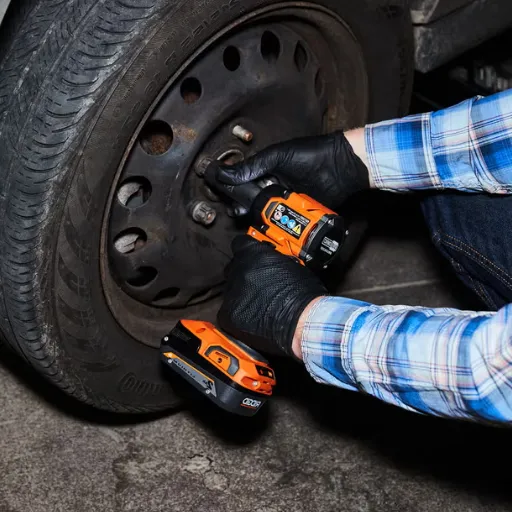
A cordless nut runner is a torque-controlled fastening tool powered by a rechargeable battery pack. It uses a brushless motor and electronic transducer to measure and control torque in real time, shutting off automatically when the target value is reached. For a broader view of how this tool type fits into the full nut runner family, see our guide to the types of nut runners.
Unlike pneumatic tools that need compressed air, or corded electric tools that need mains power, a cordless nut runner carries its own energy supply. That changes where and how it can be used.
How Cordless Nut Runners Work
Understanding the internal mechanics helps you evaluate specs and spot marketing claims that do not hold up.
Brushless Motor Technology
Cordless nut runners use brushless DC motors instead of traditional brushed designs. Brushes create friction, heat, and wear. Removing them increases efficiency from roughly 75% to 85-90%. That means more runtime from the same battery and less motor heat during continuous use. The motor drives a planetary gearbox that multiplies torque before delivering it to the drive square.
Electronic Control System
A strain gauge transducer sits at the output drive and measures torque in real time. The controller compares this reading to the programmed target and cuts power the instant the target is reached. This closed-loop system is what delivers the ±1-3% accuracy that meets the ISO 5393 standard for rotating tools with threaded fasteners.
Some models also measure rotation angle for torque-plus-angle strategies, a common requirement in automotive assembly.
Battery Management System
The battery is not just a fuel tank. A battery management system monitors cell temperature, voltage balance, and charge state. If a cell overheats or drops below safe voltage, the BMS shuts down the pack to prevent damage. This is why industrial-grade battery platforms last 500-1,000 charge cycles, while consumer-grade packs often fail after 200.
Battery Platforms and Specifications
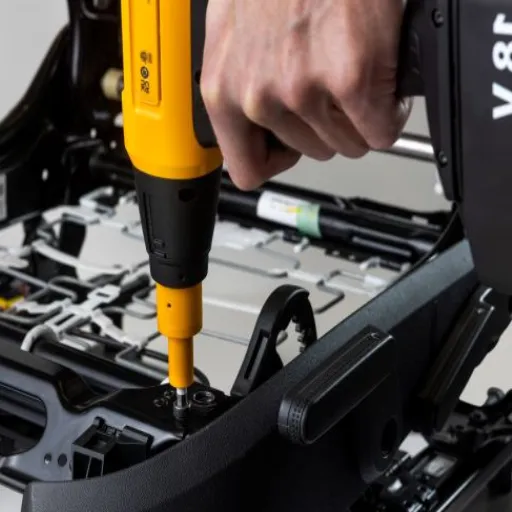
Not all batteries are equal. These are the specs that determine whether a cordless nut runner will survive your shift.
Voltage Ranges
Industrial cordless nut runners typically use 18V to 36V platforms. Higher voltage delivers more power for high-torque applications. Lower voltage platforms are lighter and more compact but limited to lower torque ranges. Most assembly lines standardize on one voltage across their cordless fleet, so batteries are interchangeable.
Battery Capacity and Runtime
Capacity is measured in amp-hours. A 4.0 Ah battery stores twice the energy of a 2.0 Ah pack. Runtime depends on torque demand, joint count, and duty cycle. A technician running 50 Nm joints on a brake caliper line might complete 400 cycles on a single 4.0 Ah battery. The same battery might only deliver 150 cycles at 200 Nm on a heavy machinery line.
For detailed torque ranges by application, see our guide to nut runner torque ranges.
Charging Infrastructure
Fast chargers refill an empty battery in 30-60 minutes. Standard chargers take 90-120 minutes. A professional setup uses a rotation strategy: two batteries per tool, one in the tool and one on the charger. Multi-bay charging stations support fleets of ten or more tools from a single wall unit. For high-volume lines, this infrastructure is non-negotiable.
Cordless vs Corded vs Pneumatic: A Practical Comparison
| Feature | Cordless | Corded Electric | Pneumatic |
|---|---|---|---|
| Torque Accuracy | ±1-3% | ±1-3% | ±3-8% |
| Mobility | Full | Cord-limited | Hose-limited |
| Runtime | Battery-dependent | Unlimited | Unlimited |
| Noise Level | 70-80 dB | 70-80 dB | 90-100 dB |
| Data Logging | Standard | Standard | Rare |
| Upfront Cost | High | Medium-High | Low |
| 5-Year TCO | Medium-High | Low | Moderate |
| Best For | Mobile, mixed, remote | Fixed stations | High-volume air lines |
Cordless wins where flexibility matters. Corded wins where cost and unlimited runtime matter. Pneumatic wins where speed and existing air infrastructure matter. For a deeper cost comparison between electric and pneumatic, read our electric vs pneumatic nut runner comparison.
Best Applications for Cordless Nut Runners
Cordless is not the answer for every job. It is the answer for jobs where the operator or the work moves.
Mobile Assembly Stations
When an operator moves between three work cells in a single shift, dragging a cord or hose is impractical. Cordless nut runners let the operator carry one tool to every station. A German automotive supplier adopted this approach for their mixed-model line and reduced tool changeover time by 40%.
Field Service and Maintenance
Technicians working on wind turbines, mining equipment, or construction machinery rarely have access to mains power or compressed air. A cordless nut runner in a service kit eliminates the need for generators or portable compressors. One battery platform can often power multiple tool types, reducing the weight the technician carries.
Mixed Production Lines
Lines that build multiple products in small batches need flexibility. Fixture layouts change. Operator positions shift. Cordless tools adapt to these changes without rewiring or re-plumbing the station.
Clean Room and Sensitive Environments
Pneumatic tools vent exhaust air that can carry oil mist from the compressor. Cordless tools produce no exhaust. In electronics assembly, medical device manufacturing, and food processing equipment assembly, this cleanliness advantage is often decisive.
For industry-specific guidance, see our breakdown of nut runner applications by industry.
Smart Features and Industry 4.0 Integration
Modern cordless nut runners are connected devices. They log torque, angle, and time stamp for every fastener. This data travels via Wi-Fi or Bluetooth to Manufacturing Execution Systems or Programmable Logic Controllers.
The value is traceability. If a quality issue surfaces in the field, the manufacturer can trace it to the exact tool, operator, and torque curve. Leading assembly tool manufacturers like Atlas Copco have built entire ecosystems around this capability, integrating cordless tools with factory-wide quality systems.
This was once only possible with corded tools tethered to a workstation. Battery-powered smart tools have broken that limitation.
Total Cost of Ownership: The Real Numbers
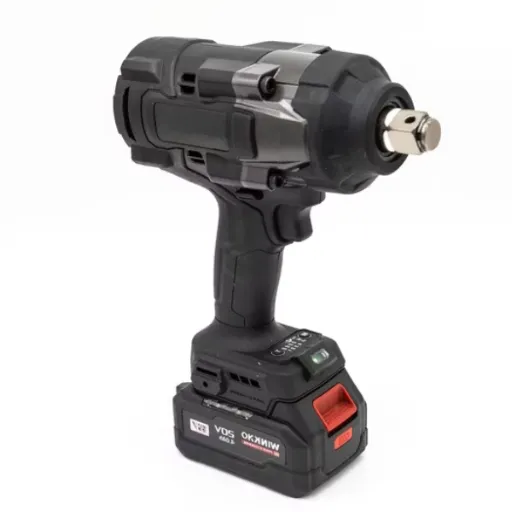
The sticker shock of cordless tools is real. A cordless nut runner might cost $3,000. Add two batteries at $400 each and a fast charger at $300, and the initial outlay hits $4,100. A comparable corded electric model might cost $2,500 with no extras. A pneumatic tool might cost $1,200.
But the upfront cost is not the total cost.
Over five years, the corded tool costs less because it has no batteries to replace. The pneumatic tool costs more in compressed air energy than most buyers realize. The cordless tool requires one to two battery replacements at $400 each.
The hidden factor is labor mobility. When a technician no longer spends ten minutes per shift managing cords, that time returns to production. Across twenty operators and 250 shifts per year, those ten minutes add up to over 800 hours of recovered labor. At $35 per hour, that is $28,000 in annual productivity gain. The battery cost becomes irrelevant.
How to Choose the Right Cordless Nut Runner
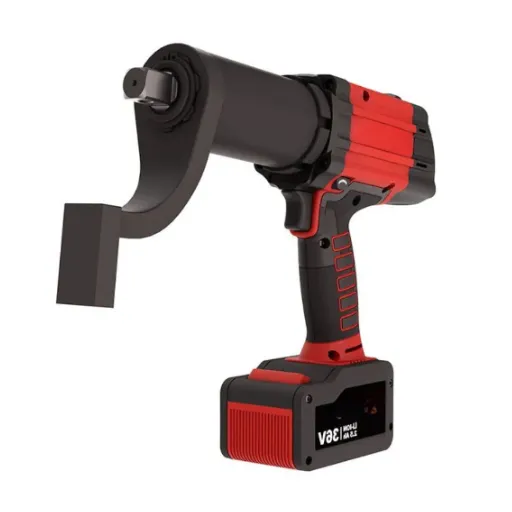
Use this five-step framework to specify the right tool.
Step 1: Define Your Torque Requirement
Start with the joint spec. A cordless nut runner for electronics assembly might only need 5-20 Nm. One for truck wheel hubs might need 300-500 Nm. Match the tool to the torque, not the other way around.
Step 2: Calculate Runtime Need
Count the joints per shift and estimate torque per joint. A 4.0 Ah battery at 18V stores roughly 72 watt-hours. Divide by the average energy per tightening cycle to estimate cycles per charge. If the result is below your shift requirement, plan for a mid-shift battery swap or a larger capacity pack.
Step 3: Select Battery Platform
If your facility already uses cordless drills, drivers, or other assembly tools, choose a nut runner on the same battery platform. Interchangeability reduces inventory cost and simplifies charging infrastructure.
Step 4: Verify Smart Feature Needs
If your customer requires torque traceability or your quality system mandates data logging, confirm the tool supports MES integration and exports data in a format your system can consume.
Step 5: Plan Charging Infrastructure
For a fleet of ten tools, you need at least ten batteries and four to six chargers. A multi-bay charging station is more space-efficient than individual chargers. Budget for this infrastructure in your total project cost.
For a broader selection framework that goes beyond cordless, read our guide on how to choose the right nut runner.
Conclusion
The cordless nut runner has moved from a convenience tool to a serious option for precision assembly. Battery technology, brushless motor efficiency, and smart connectivity have closed the performance gap with corded electric models. The remaining question is not whether cordless is accurate enough. It is whether the mobility gains justify the battery management investment for your specific application.
If your operators move, your layout changes, or your power sources are unreliable, cordless is likely the right choice. Calculate your runtime, plan your charging infrastructure, and factor battery replacement into your five-year budget. The math usually favors cordless once labor mobility is included.
If you need help specifying cordless nut runners for your product line, or if you want to explore factory-direct sourcing and OEM customization for battery-powered torque tools, contact our team. We also recommend reading our complete nut runner guide for a broader overview of nut runner technology, applications, and sourcing strategies. For brand owners interested in private-label cordless assembly tools, see our guide to OEM nut runner solutions.