
Hand Saw Types: A Complete Guide for Woodworkers and Buyers
Hand saw types fall into four main groups: saws that cut across the grain, saws that cut with the grain, saws for curves and detail work, and saws designed for other materials like metal or drywall. Picking the right type saves time, reduces waste, and gives a cleaner cut.
You reach for the saw closest to you and start cutting. Five minutes later, the blade binds, the edge splinters, and you realize you grabbed the wrong tool. That mistake is common, and it’s expensive in wasted material and rework. Whether you’re stocking a workshop or a store shelf, knowing the main hand saw types helps you match the tool to the cut.
This guide breaks down each type, explains what it does best, and shows you how to choose. For a deeper look at buying the right saw, see our best hand saw buying guide. For project-specific picks, our guide to the best hand saw for woodworking breaks down the top use cases.
Key Takeaways
- Crosscut saws cut across the grain; rip saws cut with the grain. Using the wrong one causes drift and tear-out.
- Backsaws, dovetail saws, and tenon saws handle precision joinery because their stiff spine keeps the blade straight.
- Coping saws and fret saws manage curves and interior cutouts that other saws can’t reach.
- Japanese pull saws cut on the pull stroke, giving a thinner kerf and smoother finish for fine work.
- For buyers, a catalog should cover rough cutting, finish work, joinery, and detail cuts to serve the full market.
How Hand Saws Are Categorized
Most hand saw types are sorted by three things: the direction of the cut, the fineness of the teeth, and the action of the saw.
Cut direction. A crosscut saw severs wood fibers across the grain. A rip saw plows through fibers along the grain. Match the saw to the cut direction or the saw will fight the wood.
Tooth count (TPI). Lower TPI removes material faster and leaves a rougher surface. Higher TPI cuts slower and smoother. Rough carpentry might use 7 to 8 TPI; fine joinery can run 15 to 20 TPI or more.
Action. Western saws usually cut on the push stroke. Japanese pull saws cut on the pull stroke, which lets the blade stay thinner and more flexible without buckling.
Crosscut and Rip Saws
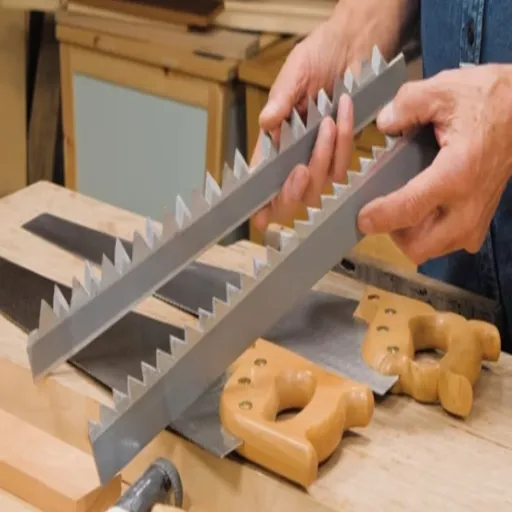
These are the workhorses of general carpentry and woodworking.
Crosscut Saw / Panel Saw
A crosscut saw cuts across the grain with angled, knife-like teeth. It is the most common hand saw type in hardware stores because it handles boards, trim, and dimensional lumber cleanly. For most users, this is the first saw to own. Typical specs: 8 to 12 TPI, 14 to 26-inch blade, high-carbon or induction-hardened steel.
Rip Saw
A rip saw cuts with the grain using larger, chisel-shaped teeth. It removes material fast but leaves a rougher edge. It is the right choice for ripping boards lengthwise or breaking down stock before finer work. Typical specs: 4 to 7 TPI, 20 to 26-inch blade.
Universal Saw
A universal saw is a compromise. It can handle both crosscuts and rips adequately without excelling at either. It is a practical, low-cost option for occasional users and entry-level retail lines.
Joinery Saws
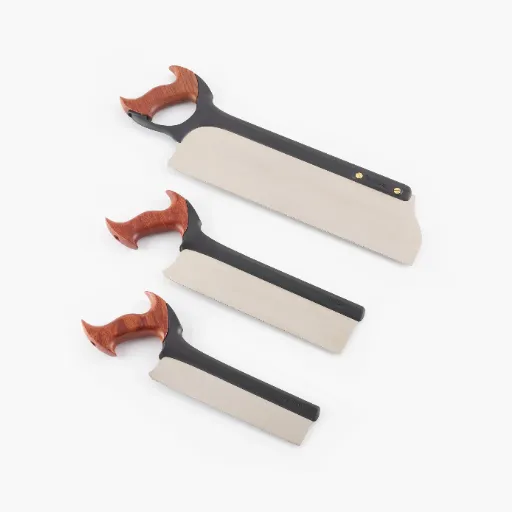
Joinery saws need stiffness and accuracy. Their defining feature is a spine or reinforced back that keeps the blade from flexing during precise cuts.
Backsaw
A backsaw has a stiff metal or brass spine along the top of the blade. The spine limits cutting depth but keeps every stroke straight. Backsaws are used for miters, tenons, and other joints where accuracy matters.
Tenon Saw
A tenon saw is a larger backsaw, usually 12 to 16 inches, with 10 to 14 TPI. It is built for cutting tenon cheeks and shoulders in furniture and door frames.
Dovetail Saw
A dovetail saw is a smaller backsaw with fine teeth, often 14 to 20 TPI. It is the go-to tool for dovetail joints in drawers and cabinets because the thin kerf and fine teeth produce clean, accurate cuts.
Gents Saw
A gents saw is a compact, pistol-grip joinery saw. It is useful for small detail work and tight spaces where a full-sized backsaw is awkward.
Curves and Detail Saws
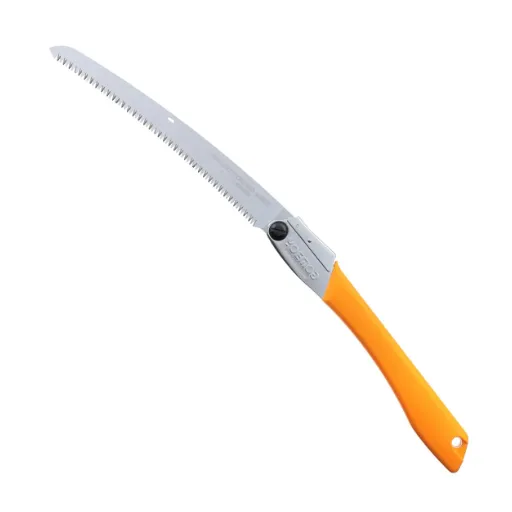
Straight blades can’t handle every shape. These saws are built for curves, cutouts, and decorative work.
Coping Saw
A coping saw holds a thin, replaceable blade under tension in a U-shaped frame. The blade can be rotated, making it ideal for coping joints, curves, and interior cutouts. You can even thread the blade through a drilled hole to cut inside a shape. Typical specs: 15 to 24 TPI, 6 to 7-inch blade.
Fret Saw
A fret saw is similar to a coping saw but has a deeper frame and a finer blade. It is used for tight scrollwork and marquetry where the coping saw’s frame would get in the way.
Keyhole / Compass Saw
A keyhole saw has a tapered blade that starts cuts in the middle of a board. It is useful for cutting holes, notches, and small openings in wood or drywall.
Japanese Pull Saws
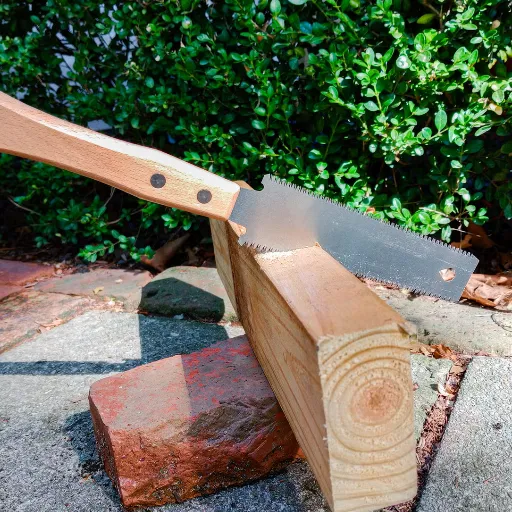
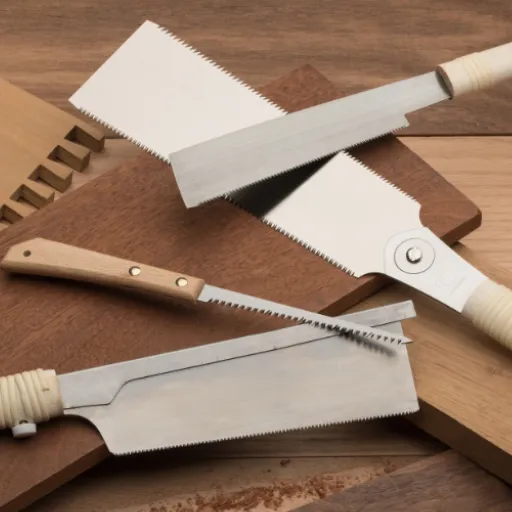
Japanese pull saws are a category of their own because of the pull action and thin blade. They excel at fine, controlled cuts with minimal waste.
- Ryoba: double-edged, with rip teeth on one side and crosscut teeth on the other. The best all-rounder.
- Dozuki: spine-backed with very fine teeth for precision joinery.
- Kataba: single-edged, no spine, for deeper cuts.
- Kugihiki: flexible flush-cut saw for trimming dowels and plugs.
For a full breakdown, read our guide to the Japanese pull saw.
Specialty and Other-Material Saws
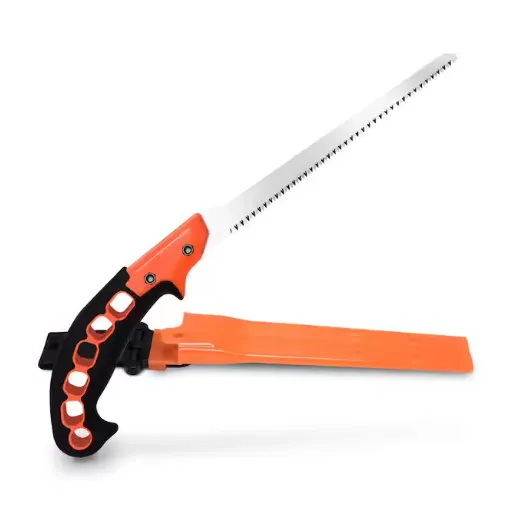
Some hand saw types are built for materials other than wood, or for very specific tasks.
Flush Cut Saw
A flush cut saw trims dowels, plugs, and tenons flush with the surrounding surface. Its flexible blade has little or no tooth set, so it cuts close without scratching the workpiece.
Veneer Saw
A veneer saw has a fine, double-edged blade with no set. It cuts thin veneers cleanly without splintering, usually against a straightedge.
Hacksaw
A hacksaw uses a tensioned fine-tooth blade in a U-frame. It is made for metal, plastic, and pipe, not wood. Typical specs: 18 to 32 TPI, replaceable blade.
Bow / Pruning Saw
A bow saw or pruning saw has a coarse blade in a tensioned frame. It is built for green wood, branches, and outdoor rough cutting, not fine woodworking.
Jab / Drywall Saw
A jab saw has a sharp tip for punching through drywall or plasterboard. It is used for outlet holes, vents, and other plunge cuts in wallboard.
First-Fix vs. Second-Fix Hand Saws
In the UK and European trade, carpenters split work into first fix and second fix. The same split applies to hand saws.
| Stage | Typical Work | TPI | Blade Length | Characteristics |
|---|---|---|---|---|
| First fix | Floor joists, studs, roof timbers | 7 to 8 | 20 to 22 in. | Aggressive, fast, rougher finish |
| Second fix | Skirting, architrave, doors, trim | 11 to 14 | 14 to 18 in. | Fine, clean, less tear-out |
First-fix saws move fast through structural work. Second-fix saws give the clean edges that trim and molding demand. For buyers selling into EU or UK markets, stocking both stages broadens your appeal.
Building a hand saw line? Our team can recommend the right mix of first-fix, second-fix, and specialty saws for your market. Talk to us about your needs and we’ll map out an assortment.
Hand Saw Type Selector
Use this table to match a task to the right saw.
| Task | Recommended Saw | TPI Range | Skill Level | Price Tier |
|---|---|---|---|---|
| Cutting boards to length | Crosscut/panel saw | 8 to 12 | Beginner | $ |
| Ripping boards lengthwise | Rip saw | 4 to 7 | Beginner | $ |
| Dovetails and fine joinery | Dovetail saw / Dozuki | 14 to 30 | Intermediate | $$ |
| Tenons and general joinery | Tenon saw / backsaw | 10 to 14 | Intermediate | $$ |
| Curves and coping | Coping saw | 15 to 24 | Beginner | $ |
| Intricate scrollwork | Fret saw | 20+ | Advanced | $ |
| Flush trimming dowels | Flush cut saw / Kugihiki | 17 to 25 | Beginner | $ |
| Precision general cuts | Japanese pull saw (Ryoba) | 9 to 17 | Beginner to intermediate | $$ |
| Metal or plastic | Hacksaw | 18 to 32 | Beginner | $ |
| Outdoor rough cuts | Bow/pruning saw | 4 to 8 | Beginner | $ |
| Drywall/plasterboard | Jab/drywall saw | 6 to 10 | Beginner | $ |
How to Choose Hand Saw Types for Your Catalog
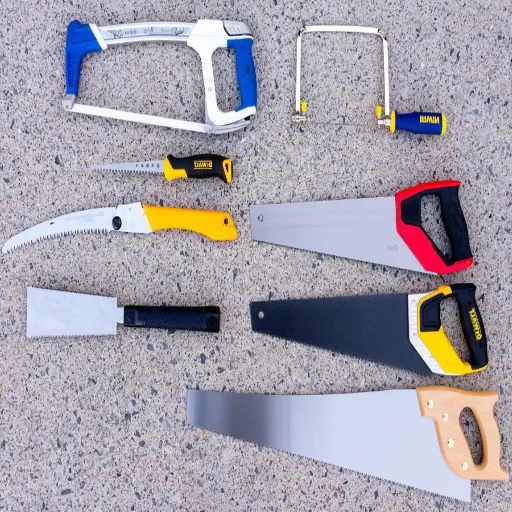
For distributors and brand owners, the goal is a balanced line. A strong hand saw catalog covers four needs: rough cutting, finish work, joinery, and detail cuts. If you only stock general panel saws, you miss the precision market. If you only stock specialty saws, you miss everyday volume.
Volume SKUs: crosscut panel saws, universal saws, and first-fix saws for construction buyers.
Premium SKUs: Japanese pull saws, dovetail saws, and backsaws for woodworking and hobbyist buyers.
Add-on SKUs: coping saws, flush cut saws, and hacksaw blades to raise average basket value.
When sourcing, confirm the steel grade, typically 65Mn or SK5 for woodworking blades, the hardening method, and handle quality.
A quick story. Sofia, a tool buyer for an online hardware store, reorganized her hand saw category by task instead of by brand. She grouped crosscut, rip, dovetail, coping, and Japanese pull saws with short “best for” labels. Within two months, her hand saw conversion rate rose, and returns dropped because customers could find the right type faster.
Keeping Hand Saws in Good Condition
Even the right saw performs poorly if it is dull or damaged. Store saws flat or hang them to prevent blade kinks. Clean the blade after use, especially after cutting resinous woods. For saws with resharpenable teeth, learn the basics of hand saw sharpening to extend service life. For induction-hardened blades, replace the blade or the entire saw when it dulls.
For a step-by-step cutting technique, our guide on how to use a hand saw covers starting cuts, tracking a line, and finishing cleanly.
Hand Saw Types FAQs
What are the main types of hand saws?
The main types are crosscut saws, rip saws, backsaws, dovetail saws, coping saws, fret saws, Japanese pull saws, hacksaws, and specialty saws like flush cut and drywall saws.
What is the difference between a crosscut and rip saw?
A crosscut saw cuts across the grain with angled teeth for a clean edge. A rip saw cuts with the grain using chisel-shaped teeth that remove material fast but leave a rougher surface.
What TPI should a hand saw have?
For rough cutting, 4 to 7 TPI works well. For general woodworking, 8 to 12 TPI is standard. For fine joinery and detail, 14 to 20 TPI or higher gives the cleanest finish.
What is a first-fix hand saw?
A first-fix hand saw is used for structural carpentry like joists and studs. It has a longer blade and fewer TPI, typically 7 to 8, for fast, aggressive cuts.
Which hand saw is best for beginners?
A crosscut panel saw or a universal saw is the best choice for beginners. It is versatile, easy to control, and affordable. A Ryoba Japanese pull saw is also a good starter for woodworkers who want clean, precise cuts.
When should I use a Japanese pull saw instead of a Western saw?
Use a Japanese pull saw for fine joinery, thin kerfs, and smooth finishes. Use a Western push saw for heavy stock removal, framing, and rough carpentry. We compare the two in our article on hand saw vs circular saw and power-tool alternatives.
Conclusion: Match the Saw to the Cut
Hand saw types exist because no single blade handles every cut well. Crosscut saws and rip saws cover the basics. Backsaws and dovetail saws deliver precision. Coping saws and fret saws manage curves. Japanese pull saws give fine control with less waste. Specialty saws handle metal, green wood, and drywall.
For buyers, the opportunity is to offer a curated mix that matches how customers actually work. Stock the types that cover rough cutting, finish work, joinery, and detail, and make it easy for shoppers to choose by task.
If you’re building or expanding a hand saw line, Shanghai Oushike Hardware Tools Co., Ltd. can help with factory-direct pricing, OEM and ODM customization, and flexible order quantities. Browse our hand saw range or contact our team to discuss your requirements.