
Best Needle Nose Pliers For Electricians: Top Picks & Buying Guide
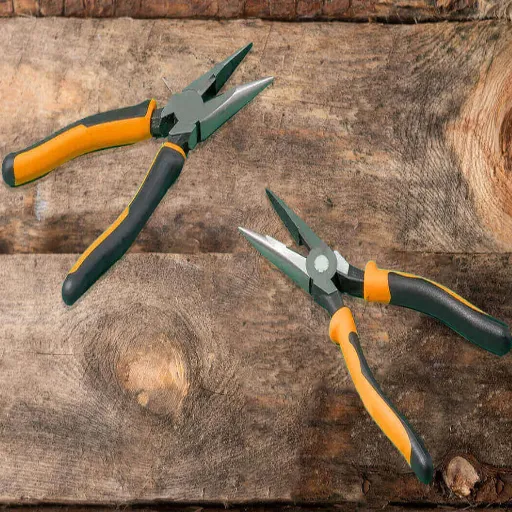
The best needle nose pliers for electricians in 2026 are the Klein Tools D203-7 for all-around panel work, the Klein Tools D203-8-INS for insulated live-work safety, and the KNIPEX 25 01 160 for premium precision. Electricians reach for these tools daily to bend wire loops, hold small connections, and reach into cramped junction boxes, so a reliable pair protects both work quality and hands. This guide breaks down the top picks, the buying criteria that matter for electrical work, and what to look for when sourcing electrician-grade pliers for resale.
At Shanghai Oushike Hardware Tools, we manufacture professional pliers and a complete hand tools range for distributors, wholesalers, and brand owners. Whether you need a standard electrician line for stock or a fully customized private-label product, the details below will help you buy with confidence.
Key Takeaways
- The Klein Tools D203-7 and D203-8 are the most common all-rounder picks for electricians, with induction-hardened cutters and slim heads for tight panels.
- For live-circuit work, choose insulated pliers rated to 1,000V and certified to IEC 60900; the Klein D203-8-INS is a leading option.
- Electricians most often use 7-8 inch (160-200 mm) needle nose pliers, balancing reach and control in confined spaces.
- Material matters: chrome-vanadium or hardened steel holds its edge and keeps jaw tips aligned through heavy use.
- For distributors, a balanced line covers straight, insulated, and multifunction SKUs in the 160-200 mm size range, with certification documents available for buyers.
Best Needle Nose Pliers for Electricians at a Glance
If you need a quick answer before the detail, this table summarizes the picks covered below. Each model is matched to a clear electrical task so you can choose by priority.
| Pick | Best For | Length | Material | Insulated? | Approx. Price |
|---|---|---|---|---|---|
| Klein Tools D203-7 | Overall panel work | 7 in. | Hardened steel | No | $12-$15 |
| Klein Tools D203-8 | Extra reach, deeper enclosures | 8 in. | Hardened steel | No | $15-$20 |
| Klein Tools D203-8-INS | Live-circuit safety | 8 in. | Hardened steel, dual-layer | Yes (1000V) | $30-$40 |
| Edward Tools Pro Insulated | Budget insulated | 8 in. | CRV steel | Yes (1000V) | $20-$25 |
| KNIPEX 25 01 160 | Premium precision | 6.3 in. | Vanadium electric steel | No | $25-$35 |
| Klein Tools J207-8CR | Multifunction strip/crimp/cut | 8 in. | Hardened steel | No | $30-$40 |
| IRWIN VISE-GRIP Long Nose | Budget and value | 6.5 in. | Nickel-chromium steel | No | $10-$15 |
For a broader look at the full plier family, our complete needle nose pliers guide covers every type, size, and sourcing detail.
Why Needle Nose Pliers Matter for Electricians
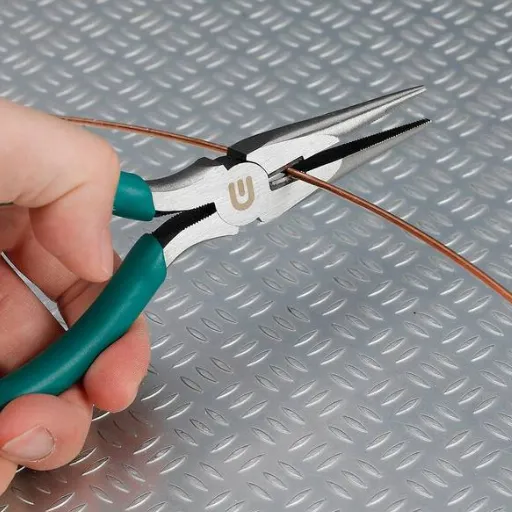
Needle nose pliers earn their place in every electrician’s tool bag because electrical work is full of tight spaces and fine wires. The long, tapered jaws reach into junction boxes, panels, and conduit fittings where standard pliers simply will not fit. Electricians use them to bend wire into loops for terminals, hold small nuts and screws, pull stranded wire through crowded fittings, and shape hooks for device connections.
Think about a typical outlet box. You have limited depth, several conductors, and maybe a box that is already crowded with wires. A slim-nose plier is the tool that lets you form a clean loop on a copper wire and set it under a screw terminal without nicking the conductor or disturbing the wires beside it. That kind of control matters because a damaged wire can overheat later and cause a safety issue at the service location.
The tool is also a quiet workhorse. An electrician might use a needle nose pair dozens of times in a single day, from pulling fish tape through a panel to trimming a wire tail after a splice. Because the tool is used so often, a comfortable grip and reliable cutting edge reduce fatigue over a long shift.
Needle nose pliers do not replace the other pliers in the bag. Lineman’s pliers handle heavy gripping and twisting, while diagonal cutters make clean flush cuts on wire. The needle nose pair fills the precision gap between them, handling the fine work that heavier tools cannot. A professional keeps all three within reach.
How to Choose Needle Nose Pliers for Electrical Work
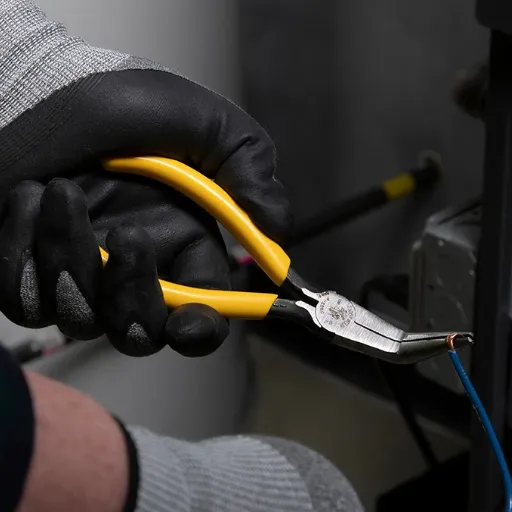
Choosing the right pair comes down to six practical factors. Understanding each one makes the decision straightforward, whether you are buying one tool for your own bag or a full line for resale.
Insulated vs. Non-Insulated: The Safety Decision
The first and most important decision is whether you need insulated pliers. For work on or near live circuits, choose tools rated to 1,000V and certified to standards such as IEC 60900. These tools are tested at 10,000V in the factory and use multi-layer insulation, often shown as two-color handles, to signal their rating. A pair like the Klein Tools D203-8-INS carries this rating and is a leading choice for electricians who work live.
For most installation work on de-energized circuits, a non-insulated pair is fine and often more affordable. The key rule is simple: never assume a circuit is dead, and never use a non-insulated tool on live wiring. Even with insulated tools, de-energize the circuit first whenever you can. Our insulated pliers guide goes deeper into VDE, IEC 60900, and how to verify certification.
Size and Reach: What Size Do Electricians Use?
Electricians most often use 7-8 inch (160-200 mm) needle nose pliers. This range gives enough reach to access panels and boxes while staying compact enough to carry in a tool pouch. Shorter models give more control in the tightest spots, while longer models reach deeper enclosures but add weight and are harder to maneuver.
| Size | Best For | Typical Use |
|---|---|---|
| 130-140 mm | Fine electronics work | Circuit boards, delicate terminals |
| 160-200 mm | Electricians, most electrical work | Panels, junction boxes, general wiring |
| 210-250 mm | Industrial and heavy duty | Larger enclosures, more leverage |
For the complete dimension breakdown across every size, see our needle nose pliers sizes guide.
Material and Cutting Edges
The steel and its treatment determine how long the tool stays accurate. Chrome-vanadium (Cr-V) steel and hardened high-carbon steel are the standards for professional pliers. Heat treatment brings the working surfaces to a hardness around HRC 50-60, which resists wear and keeps the jaw tips aligned through thousands of cycles.
The cutting edges matter just as much. Induction-hardened cutting edges stay sharp longer and cut copper and aluminum wire cleanly without fraying. Some models add a second cutting edge or a crimping zone near the pivot, which extends the tool’s usefulness without adding weight to the bag.
Jaw Design and Tip Precision
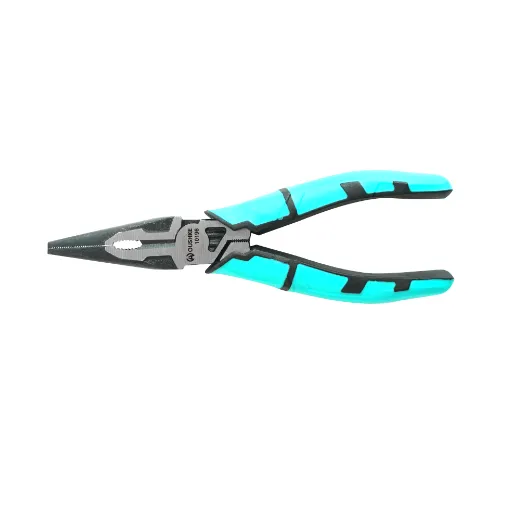
For electrical work, look for slim jaws that meet cleanly with no gap at the tips. Misaligned jaws are the most common quality complaint on budget tools, and they let small parts slip at exactly the wrong moment. Knurled or serrated jaws provide a secure grip for wrapping and looping wire, while a slim head improves access to confined panels.
Multifunction vs. Single-Function
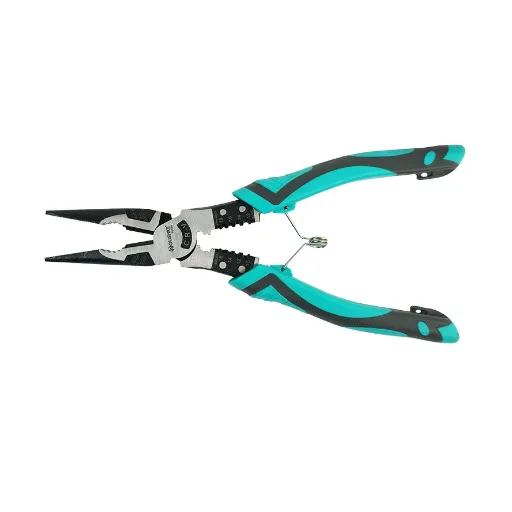
Some electricians prefer a multifunction tool that combines needle nose pliers with a wire stripper, crimper, and cutter. The Klein Tools J207-8CR is a good example, handling stripping, crimping, looping, and screw shearing in one tool. A multifunction pair reduces the number of tools you carry, which is valuable on a crowded jobsite.
The trade-off is that dedicated tools often do each job slightly better. Many professionals pair a standard needle nose plier with a separate wire stripper for electricians, using the plier for grip and the stripper for clean insulation removal. Consider the balance between convenience and specialty when choosing.
Handle Ergonomics
Because electricians use these tools all day, handle comfort matters. Look for cushioned, non-slip grips that reduce hand fatigue during repetitive work. Spring-loaded designs reopen the jaws automatically after each squeeze, which saves effort on long wiring runs. The handle length also affects leverage, so a slightly longer handle gives more cutting force with less hand pressure.
Best Needle Nose Pliers for Electricians by Category
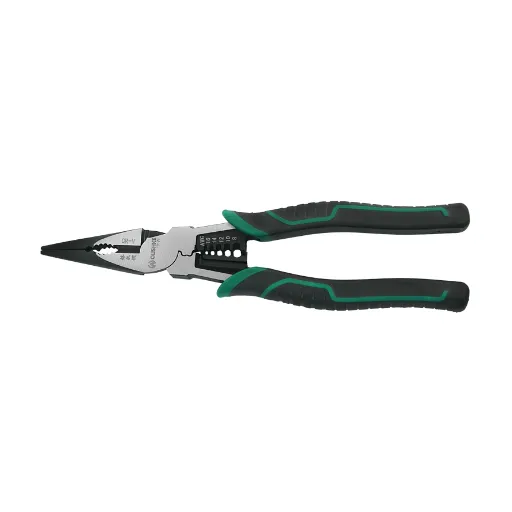
The market offers strong options at every price point. These picks are organized by electrical task so you can match the tool to the work.
Best Overall: Klein Tools D203-7
The Klein Tools D203-7 is the benchmark for general electrical work. Its induction-hardened cutting knives stay sharp, the knurled jaws grip wire loops securely, and the slim head reaches into confined panels and conduit fittings. At 7 inches, it balances reach and control, and it is light enough to carry daily. For most electricians, this is the pair to reach for first.
Best Insulated for Live Work: Klein Tools D203-8-INS
When the job involves energized circuits, the D203-8-INS is the safe choice. It carries a 1,000V rating, is tested beyond IEC 60900 and ASTM F1505 standards, and uses dual-layer orange-over-white insulation with integral guards. The insulation color scheme makes the rating obvious at a glance, which is a useful safety habit on the job. Keep an insulated pair dedicated to live work and treat it as an investment in safety.
Best Budget and Value: IRWIN VISE-GRIP Long Nose
For a dependable tool at a low price, the IRWIN VISE-GRIP Long Nose with wire cutter delivers. It is built from nickel-chromium steel with a ProTouch grip, and the induction-hardened cutting edge trims wire cleanly. It is a solid option for apprentices, maintenance crews, or any line that needs to hit a price point without losing performance.
Best Multifunction for Wiring: Klein Tools J207-8CR
The J207-8CR is the pick when you want one tool to cover multiple tasks. It strips 10-18 AWG solid and 12-20 AWG stranded wire, crimps terminals, loops wire for screw connections, and shears 6-32 and 8-32 screws. It is built in the USA and suits telecom and residential electrical work well. Distributors often find this SKU earns consistent repeat demand from electrician customers.
Best Premium and Professional: KNIPEX 25 01 160
For electricians who want the finest precision, the KNIPEX 25 01 160 is the professional-grade option. Its vanadium electric steel is forged and oil-hardened, the cutting edges are induction-hardened to about 61 HRC, and the multi-component grip reduces hand pressure. At 160 mm it is compact and ideal for fine bending and routing wires in crowded cabinets. Note that this model is not insulated for live work, so it belongs on de-energized circuits.
Best for Tight Spaces and Extra Reach: Klein Tools D203-8
The D203-8 adds length and leverage when you need to reach deeper into an enclosure. Its extended handles provide extra reach, and the heavier construction gives more cutting power for larger wire. It is a strong companion to a shorter model, covering jobs where the extra length makes the difference. This tool is not insulated, so use it on de-energized circuits.
Insulated vs. Non-Insulated Comparison Table
Here is a side-by-side view of the main safety and cost differences between the two categories.
| Factor | Non-Insulated Pliers | Insulated Pliers (1000V) |
|---|---|---|
| Best For | De-energized circuits, general work | Live-circuit work and testing |
| Safety Rating | None | VDE / IEC 60900, tested at 10,000V |
| Handle Design | Standard grips | Dual-layer, color-coded insulation |
| Typical Price | $10-$20 | $20-$50 |
| Recommendation | Daily general-use pair | Dedicated live-work pair |
The decision is not either-or. Most electricians carry both, using the insulated pair only for live work and the non-insulated pair for daily tasks. This keeps the insulated handles intact and the safety rating reliable when it matters most.
What Size Needle Nose Pliers Do Electricians Use?
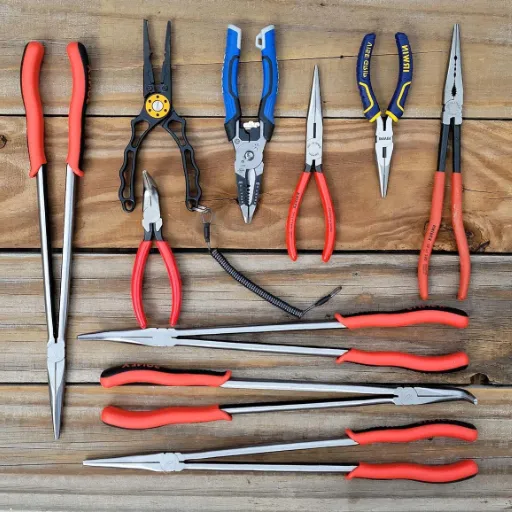
Electricians most often use 7-8 inch (160-200 mm) needle nose pliers. This size range gives enough reach to access panels, junction boxes, and conduit fittings while remaining compact enough for a tool pouch. Shorter models improve control in the tightest spaces, while longer models reach deeper enclosures but add weight and reduce maneuverability.
For most residential and commercial electrical work, a 7-inch pair like the Klein D203-7 is the practical sweet spot. An 8-inch pair such as the Klein D203-8 adds reach for deeper panels and is a common second purchase. Electricians rarely need tools beyond 200 mm for standard installation work, since larger sizes become harder to position in confined boxes.
VDE, IEC 60900, and 1000V Safety: A Quick Summary
Insulated pliers are certified to international standards that confirm they can be used safely on live circuits. The two standards you will see most often are VDE and IEC 60900. Tools carrying these ratings are individually tested at 10,000V and approved for working voltages up to 1,000V AC.
The important detail is the gap between test voltage and working voltage. The 10,000V factory test gives a wide safety margin over the 1,000V working rating, which protects the user if the tool touches a live conductor. Look for the two-color insulation and the certification marking printed on the handle, and verify the certificate when sourcing in bulk. Our insulated pliers guide explains these standards in full and how to confirm a supplier’s claims.
Building an Electrician Pliers Line: Guidance for Distributors
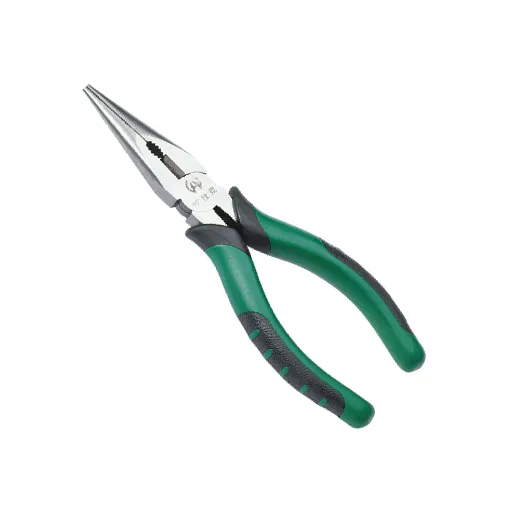
If you supply electrical contractors or retail electrician customers, the right product line builds repeat orders and margins. Based on how electricians actually buy, a balanced pliers assortment should include three SKU families.
First, stock a core straight needle nose plier in the 160-200 mm range as the everyday seller. Second, add an insulated 1000V model to serve the safety-conscious segment, since electricians who work live will pay a premium for certification. Third, consider a multifunction option such as a strip-crimp-cut plier for customers who want fewer tools in the bag.
Beyond the mix, buyers want proof of quality. Certification documents for insulated tools, material hardness data, and consistent jaw alignment are the factors that protect your reputation and reduce returns. When sourcing in bulk, ask for sample inspection and certification copies before committing to a large order.
Shanghai Oushike Hardware Tools supplies exactly this kind of electrician-grade plier line, factory-direct with OEM and custom options for your own brand. Our wholesale pliers guide walks through assortment planning, MOQ, and import logistics in more detail. Ready to compare specifications or request samples for your product line? Contact our team to discuss your requirements.
Best Needle Nose Pliers for Electricians: FAQs
What needle nose pliers do electricians use?
Electricians use needle nose pliers with slim, tapered jaws for bending wire loops, holding small connections, and reaching into junction boxes and panels. Popular models include the Klein Tools D203-7 and D203-8 for general work and insulated options such as the Klein D203-8-INS for live circuits.
Are needle nose pliers insulated?
Not all of them. Some models are insulated and rated to 1,000V, while others have only plastic-dipped handles that offer no electrical protection. Insulated models are certified to standards such as VDE and IEC 60900 and are marked with two-color handles. Check the rating before using any plier on a live circuit.
What size needle nose pliers do electricians use?
Electricians most often use 7-8 inch (160-200 mm) needle nose pliers. This range balances reach for panels and junction boxes with control in confined spaces. Larger sizes add leverage but are harder to position in tight enclosures.
What is the best needle nose pliers for electrical work?
The Klein Tools D203-7 is widely considered the best all-around needle nose plier for electrical work, thanks to its induction-hardened cutters, knurled jaws, and slim head. For live-circuit work, the insulated Klein D203-8-INS is the recommended pick.
Klein vs. KNIPEX for electrical work, which is better?
Both brands make excellent tools. Klein Tools offers proven value, USA-made options, and models purpose-built for electricians, such as the D203-7 and D203-8-INS. KNIPEX offers premium precision with induction-hardened edges and multi-component grips, but its standard long nose models are not insulated. Choose by budget, insulation needs, and brand preference.
Can you use needle nose pliers on live wires?
You should only use insulated pliers rated to 1,000V on live wires, and even then, de-energize the circuit first whenever possible. Non-insulated pliers with plastic handles are not designed for live work. Follow local electrical safety rules and use a voltage tester before touching any conductor.
Needle nose or diagonal cutters for wire?
Use needle nose pliers for gripping, bending, and positioning wire, and use diagonal cutters for clean flush cuts. The two tools complement each other: needle nose pliers handle precision work in tight spaces, while diagonal cutters make a clean cut with less force.
Conclusion
The best needle nose pliers for electricians match the tool to the task. For all-around panel work, the Klein Tools D203-7 is the proven pick. For live-circuit safety, choose an insulated 1000V model like the Klein D203-8-INS. For premium precision, the KNIPEX 25 01 160 stands out. Most electricians use a 160-200 mm pair, keeping both an insulated and a non-insulated option in the bag.
Beyond the tools themselves, quality and certification protect your work and your business. Whether you are equipping a crew or building a resale line, choose pliers with hardened steel, aligned jaws, and documented certifications.
Shanghai Oushike Hardware Tools manufactures professional-grade pliers and hand tools factory-direct, with full OEM, ODM, and private-label support for distributors and brand owners. Request a quote today to discuss your electrician-grade plier line and reliable supply.