
Insulated Pliers: VDE, IEC 60900 & 1000V Safety Guide
Insulated pliers are safety-rated hand tools tested to 10,000V at the factory and rated for live work up to 1,000V AC and 1,500V DC. They are the only pliers you should trust near energized circuits, and genuine compliance depends on certification marks, not the color of the handle.
“Insulated” is not a feature description. It is a certification. A plier with a rubber grip is comfortable to hold. An insulated plier is built, tested, and marked to stop electrical shock. Too many buyers discover the difference the hard way, on a live panel with no margin for error. This guide explains what insulated pliers really are, which standards matter, when they are legally required, how to spot a fake, and how to source compliant tools for your team or your product line.
Key Takeaways
- Insulated pliers are individually tested at 10,000V and rated for 1,000V AC / 1,500V DC live work under IEC 60900.
- VDE is a German certification body, not a standard; IEC 60900 is the actual benchmark and ASTM F1505 covers North America.
- OSHA 1910.335 and NFPA 70E require insulated tools when working near exposed energized conductors above 50V.
- Cushion-grip and plastic-coated pliers provide zero electrical protection, no matter how thick the rubber looks.
- Verify genuine 1000V pliers by checking for the double-triangle symbol, laser-etched markings, and a seamless insulation bond.
What Are Insulated Pliers?
Insulated pliers are standard plier designs wrapped in a certified dielectric coating that blocks electrical current. Each tool is tested individually at the factory at 10,000 volts, ten times the working rating, to earn approval for use up to 1,000V AC and 1,500V DC. The certification mark, usually a double-triangle symbol with “1000V,” is permanently stamped on the handle.
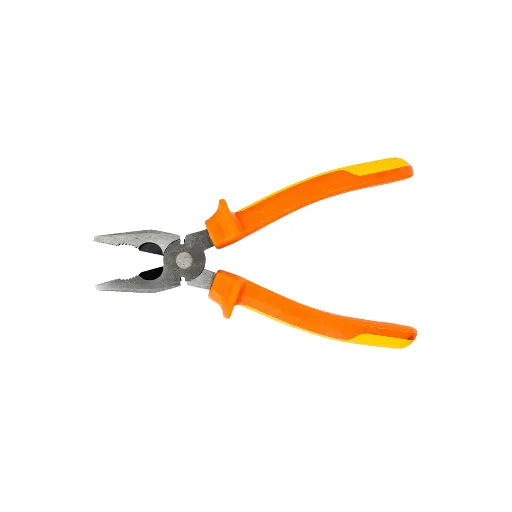
The design matters as much as the test. Genuine insulated pliers use two-layer or multi-component insulation bonded directly to the steel shank, with a pronounced slip guard near the jaws to keep your hand from sliding onto exposed metal. Many use a color-coded warning layer: if the outer coating gets nicked and a brighter inner color shows through, the tool must be retired immediately.
Here is the part that confuses most buyers. A plier with a soft grip or a thick rubber sleeve is not automatically insulated. “Cushion grip,” “comfort grip,” and “plastic coated” all describe ergonomics, not electrical safety. High voltage can travel along the steel core and jump through thin handle plastic to your hand. Only tools that have passed certified insulation testing and carry the required markings count as insulated pliers.
Want to see how insulated pliers fit into a full professional tool line? Our needle nose pliers guide covers the complete family, from standard models to VDE-certified options.
The Standards Explained: VDE, IEC 60900, and ASTM F1505
Three terms dominate every conversation about insulated tools, and most articles use them interchangeably. They are not the same thing. Understanding the difference is the first step to buying with confidence.
What Is IEC 60900?
IEC 60900 is the international standard for insulated hand tools used in live working up to 1,000V AC and 1,500V DC. It defines the construction, testing, and marking requirements that make a tool genuinely safe around live parts. The current fourth edition, published in 2018, added a third “hybrid” tool category alongside fully insulated and insulating tools. Tools that meet it are individually tested at 10,000V and must pass water immersion, cold impact, adhesion, flame, and pressure tests before they ship.
What Is VDE Certification?
VDE stands for Verband der Elektrotechnik, Elektronik und Informationstechnik, a German testing and certification body. It is not a standard. VDE is one of several independent organizations that test tools against the IEC 60900 standard and certify compliance. A VDE mark is strong third-party verification, but a tool certified by any accredited body to IEC 60900 is equally safe. This matters when you compare suppliers, because “VDE certified” and “IEC 60900 compliant” should point to the same level of protection.
ASTM F1505 and NFPA 70E (North America)
In North America, the enforcement path is different. ASTM F1505 is the test standard for insulated hand tools, and NFPA 70E is the workplace electrical safety standard that tells you when to use them. If you buy for the US or Canadian market, look for ASTM F1505 compliance and the same 1,000V rating.
VDE vs IEC 60900 vs ASTM F1505
| Standard / Body | What It Is | Mark to Look For |
|---|---|---|
| VDE | German testing and certification body | VDE-GS test mark |
| IEC 60900 | International tool construction and test standard | Double-triangle 1000V symbol |
| ASTM F1505 | North American tool test standard | 1000V rating, ASTM reference |
| NFPA 70E | Workplace electrical safety standard | Requirements, not a product mark |
Are Insulated Pliers Required for Electrical Work?
Yes, in specific situations. OSHA 29 CFR 1910.335(a)(2)(i) requires employees to use insulated tools when working near exposed energized conductors or circuit parts where contact is possible. NFPA 70E goes further and requires insulated tools whenever a qualified worker operates inside the restricted approach boundary of energized equipment, which applies to work on or near circuits above 50 volts.
Think about what that means on a real jobsite. Every time a technician opens a live panel, replaces a breaker, troubleshoots a 480V motor control center, or works in a battery bank, insulated hand tools from our electrical tools range are the expected standard. They are not a replacement for proper lockout/tagout or de-energizing. They are secondary protection for the moments when a circuit you believed was off turns out to be live.
Take the example of a maintenance crew we know in the Midwest. After a near-miss in a 480V MCC where a mislabeled breaker fed voltage to a supposedly dead circuit, the crew lead standardized every technician on certified insulated pliers and screwdrivers. That one policy change cost less than a single afternoon of downtime, and it removed the riskiest variable from their daily routine.
This is the same reasoning that drives the wider category. A recent Fluke survey found that 91% of electrical workers consider insulated hand tools critical when working on electrical equipment. The global insulated tools market reflects that demand, projected to grow from about US$3.4 billion in 2024 to roughly US$5.8 billion by 2035.
Types of Insulated Pliers (and Which to Stock)
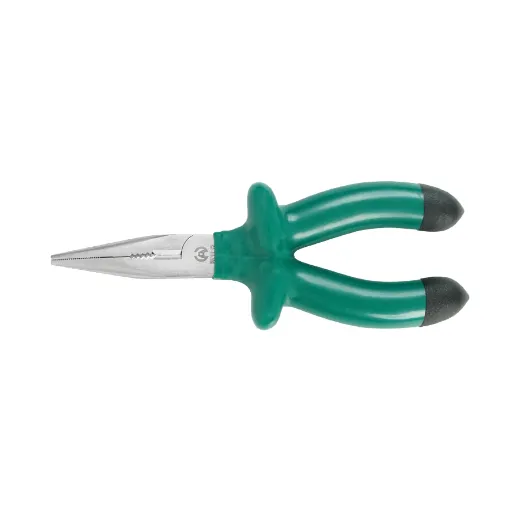
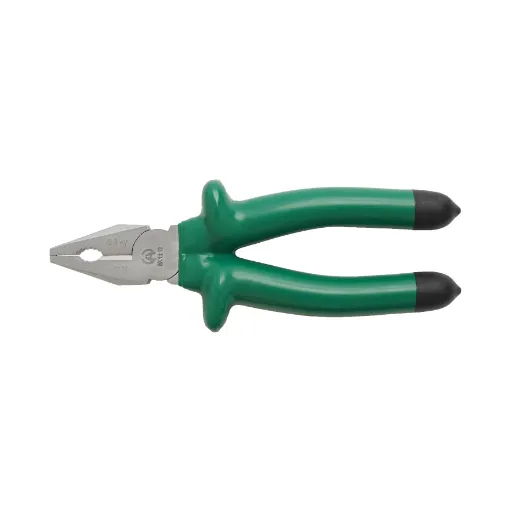
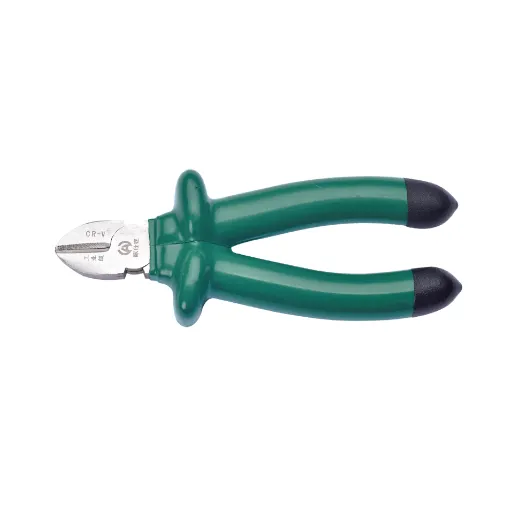
Insulated pliers come in the same core designs as standard pliers, each built for a specific job across our pliers range. The most common set for electricians includes three tools: combination pliers, long nose pliers, and diagonal cutters. Together they cover gripping, bending, precision work, and wire cutting.
- Combination pliers (160-200mm): the general workhorse for gripping, bending, twisting, and cutting.
- Long nose pliers (160-200mm): insulated needle nose pliers for reaching into junction boxes and tight panels, built on the classic needle nose design.
- Diagonal cutters (145-180mm): clean wire and cable cuts, including hardened steel wire on better models.
- Lineman’s pliers: heavy-duty gripping and cutting with aggressive serrated jaws.
- Water pump / multigrip pliers: adjust to grip fittings and large round stock.
If you are deciding which insulated pliers to stock for electrician customers, the practical starting point is a three-piece insulated pliers set, then add lineman’s and water pump pliers for broader coverage. Our guide to the best needle nose pliers for electricians walks through the exact models and sizes that electricians reach for most, which is a useful reference when building your inventory mix.
Interested in building an insulated tool line for your market? Get a quote for Oushike’s insulated pliers range and VDE tool sets, with full certification documentation.
Insulated Pliers vs Regular Pliers: What’s the Difference?
The table below summarizes the practical difference. It comes down to testing, marking, and certification, not appearance.
| Factor | Insulated Pliers | Regular Pliers |
|---|---|---|
| Voltage rating | 1,000V AC / 1,500V DC | None |
| Factory test | 10,000V individual test | None |
| Certification mark | Double-triangle 1000V symbol | None |
| Standards | IEC 60900, ASTM F1505 | None |
| Slip guard | Yes, molded collar | Usually no |
| Inspection | Before each use | Routine only |
| Typical cost | 2-5x standard | Baseline |
A quick visual test works in most cases. If a plier has no certification mark, no standard reference, and no slip guard, it is not an insulated plier no matter how comfortable the grip feels.
How to Verify Genuine VDE / IEC 60900 Insulated Pliers
Counterfeit and unverified “insulated” tools are a real problem, especially in budget imports and online marketplaces. Use this checklist before you buy or stock any VDE pliers or 1000V insulated pliers:
- Check for the double-triangle 1000V symbol on every handle, not just the case.
- Confirm the IEC 60900 or ASTM F1505 reference, manufacturer name, and model or year.
- Run a finger over the markings. Genuine tools use laser etching or stamping with raised edges. Ink-printed marks that smudge are a red flag.
- Inspect the seam where insulation meets steel. It should be smooth with no gaps, bubbles, or exposed metal.
- Confirm a pronounced slip guard near the jaws.
- Look for a two-layer wear indicator. Visible inner color means the tool must be retired.
- Ask the supplier for the certification number or Declaration of Conformity.
For a buyer sourcing in volume, documentation matters as much as the tool. A compliant factory can provide individual 10,000V test certificates, lot traceability, and third-party inspection reports from SGS, TUV, or Bureau Veritas at AQL 2.5. If a supplier cannot produce these, treat the certification claim with suspicion.
Buying insulated pliers in bulk? Our guide to sourcing needle nose pliers from a manufacturer explains how to evaluate a factory, verify certification documentation, and set up an OEM order with confidence.
Caring for Insulated Pliers: Inspection, Storage & Retesting
Insulation degrades with use, so a maintenance routine keeps your tools safe and compliant.
- Inspect before every use. Check for cracks, chips, nicks, contamination, and any spot where the inner warning color shows.
- Schedule an annual inspection. ASTM F1505 recommends a visual examination by a trained person each year.
- Retest only when required. There is no blanket legal requirement for periodic dielectric retesting of insulated hand tools. Retest at 10kV for 10 seconds when a customer or regulation requires it, or when you doubt the insulation after a visual check.
- Store them properly. Keep insulated tools clean, dry, and separated from general shop tools in dedicated sleeves or bags. Avoid heat, UV exposure, and impacts.
One practical habit: never mix insulated and non-insulated pliers in the same drawer or tool bag. They look alike at a glance, and grabbing the wrong tool on a live circuit is the mistake you cannot afford. If you need a refresher on safe technique, our how to use needle nose pliers guide covers proper grip and handling for precision plier work.
Sourcing Insulated Pliers: What to Verify with Your Supplier
If you are a distributor, importer, or private-label brand owner, the sourcing decision comes down to one question: does the factory actually produce certified insulated tools, or does it stamp a logo on a generic plier? Here is what to check.
Most certified VDE insulated pliers production in China is concentrated in Jiangsu (Nantong, Suzhou, Zhangjiagang) and Zhejiang (Ningbo, Yongkang), where export-focused factories hold IEC 60900 and VDE-GS or TUV certifications and ship from Ningbo or Shanghai. That geography matters for lead times and compliance.
Confirm four things before you commit to an order:
- Certification. Request the Declaration of Conformity and sample individual test certificates before production.
- Testing. Confirm each tool is tested at 10,000V, not batch-sampled only, and that documentation is available per lot.
- MOQ and lead time. Certified OEM tool runs vary widely, from small pilot orders around 100 to 500 pieces up to full container volumes at 1,000-plus pieces. Production typically runs 7 to 40 days depending on quantity and customization.
- OEM scope. Verify custom logo, handle color, and packaging options so you can build a differentiated branded line rather than resell a commodity.
This is where factory-direct sourcing pays off. Working directly with a manufacturer gives you control over certification documentation, batch consistency, and private-label customization. If you are importing hand tools for the first time, our hand tool import guide walks through the logistics, documents, and compliance steps.
At Shanghai Oushike Hardware Tools, we combine factory-direct pricing with full custom OEM and ODM support, flexible MOQs, and multi-stage quality control that includes insulation adhesion checks and final product testing. If you are building an insulated tool line, we can help you source combination, long nose, diagonal, and complete VDE sets with the documentation your market requires.
Insulated Pliers FAQs
What does 1000V insulated mean?
It means the tool is rated for work on circuits up to 1,000V AC and 1,500V DC, backed by an individual 10,000V factory test. The rating only applies if the tool carries the required certification marks.
Is VDE a legal requirement?
No. VDE is a voluntary certification mark from a German testing body, not a legal requirement. The legal and safety benchmark is the IEC 60900 standard, and as Maun Industries explains, VDE simply certifies compliance with it.
Are insulated pliers required for electrical work?
OSHA and NFPA 70E require insulated tools when working near exposed energized conductors above 50V, such as inside the restricted approach boundary of live equipment.
What is the difference between insulated and insulated-rated tools?
The terms are used interchangeably. Both mean the tool has passed insulation testing and carries a voltage rating. A plain tool with a rubber grip is neither.
Can I use regular pliers on live circuits?
No. Regular pliers provide no certified electrical protection, and using them on live circuits violates workplace safety standards and puts the user at serious risk.
How much do insulated pliers cost?
Insulated pliers typically cost two to five times more than standard pliers because of the testing and manufacturing steps involved. A three-piece VDE set is the most cost-effective way to build a starter kit.
Conclusion
Insulated pliers are a certification, not a style choice. They are individually tested at 10,000V, rated for 1,000V AC and 1,500V DC work, and legally expected whenever someone works near energized equipment. The path to buying them safely is straightforward: understand the standards, know when they are required, verify the markings, and source from a factory that can prove compliance with documentation.
Whether you are equipping a crew or building a private-label product line, the same rule applies. Trust the marks, not the marketing. Genuine insulated pliers carry the double-triangle 1000V symbol, pass individual high-voltage testing, and come with certification paperwork you can verify.
Ready to source certified insulated pliers for your business? Contact Oushike for a quote, request our insulated pliers catalog, or ask about custom VDE tool sets with your own branding. We supply factory-direct tools with full certification support to distributors, brand owners, and importers worldwide.