
Grease Fitting Types: 9 Industrial Varieties Compared
A small fitting failure can shut down a production line. Different grease fitting types solve different access, pressure, and corrosion challenges. Matching the fitting to the application matters as much as choosing the right grease. Whether you maintain trucks, run a food-processing line, or source fittings for resale, understanding the nine main grease fitting types helps you avoid leaks, stripped threads, and premature bearing wear.
At Shanghai Oushike Hardware Tools Co., Ltd., we supply lubrication fittings, grease guns, and couplers to distributors, OEMs, and maintenance teams worldwide. This guide explains each grease fitting type, compares common thread standards, and shows how to choose the right component for your industry. For the broader picture, see our complete guide to grease gun fittings.
What Is a Grease Fitting?
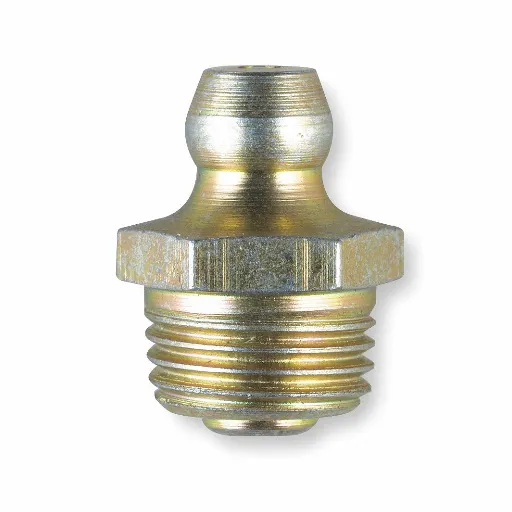
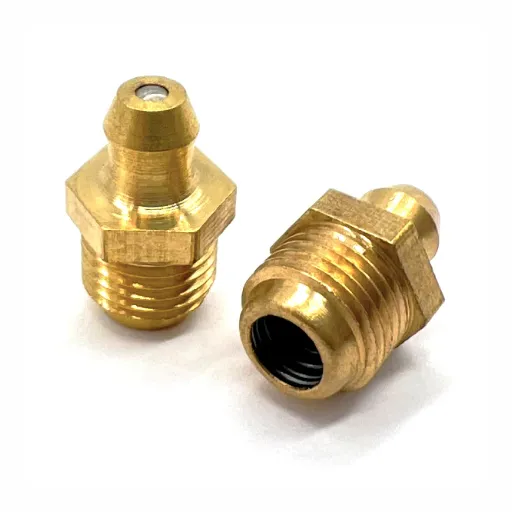
A grease fitting, often called a grease nipple or Zerk fitting, is a small threaded valve used in bearing lubrication. It lets lubricant enter a bearing or joint while keeping contaminants out. A spring-loaded ball inside the head seals the port until a grease gun coupler presses it open. Once pressure drops, the ball returns to its seat and excess grease stays trapped in the cavity.
The three main parts are:
- Head: the top profile that mates with the coupler (straight, angled, button head, flush, etc.)
- Body/shank: the threaded section that installs into the equipment port
- Check valve: the internal ball and spring that controls flow and prevents back-pressure leaks
Head shape and thread standard vary. Using the wrong fitting can cause a poor seal, coupler damage, or grease bypass. Knowing the basic grease fitting types helps you match thread standard and head shape to the application. The sections below explain how to identify each type and when to use it.
The 9 Grease Fitting Types Explained
Most industrial equipment uses one of nine common designs. The right choice depends on access angle, available space, pressure rating, and environmental exposure.
| Type | Head Shape | Typical Angle | Best For | Key Feature |
|---|---|---|---|---|
| Straight | Cylindrical | 0° | Open, easy-access points | Simplest profile, highest pressure tolerance |
| 45° angle | Cylindrical | 45° | Tight spaces where a straight line is awkward | Angled body for partial offset |
| 90° angle | Cylindrical | 90° | Confined areas, recessed bearings | Right-angle body for flush access |
| Button head | Large flat button | 0° or angled | High-volume, low-pressure applications | Wide head for four-jaw couplers |
| Flush | Recessed hex | 0° | Enclosed housings, gearboxes | Sits below the surface, protected from impact |
| Drive type | Cylindrical | 0° | Thin-walled or cast housings | Installed by hammering, no threading needed |
| Hydraulic | Cylindrical, heavy-duty | 0°, 45°, 90° | High-pressure hydraulic systems | Reinforced body for extreme pressure |
| Metric | Cylindrical | 0°, 45°, 90° | European and Asian OEM equipment | Metric threads (M6, M8, M10, etc.) |
| Stainless steel | Varies | 0°, 45°, 90° | Marine, food, chemical, outdoor use | Corrosion-resistant material |
Straight Grease Fittings
Straight fittings are the most common grease fitting type. The head sits in line with the shank. This makes them ideal for open, easy-to-reach points on motors, pumps, and conveyors. They handle the highest pressure ratings of the standard family and accept the widest range of couplers.
45° and 90° Angle Fittings
When a bearing sits behind a frame, guard, or wheel hub, an angled body lets the operator attach the grease gun without forcing the hose. Forty-five-degree fittings work well for partial offsets. Ninety-degree fittings handle fully recessed ports. Both come in standard and hydraulic-duty versions.
Button Head Fitting
A button head fitting has a broad, flat top that a four-jaw coupler grips. Button heads are designed for high-volume, low-to-medium pressure greasing where fast flow matters more than extreme pressure. Common applications include construction equipment, agricultural machinery, and large bearings.
Flush Grease Fitting
A flush grease fitting sits below the surrounding surface so the head does not protrude. This protects it from impact and contamination in gearboxes, enclosed drives, and high-vibration environments. Installation requires a hex key, and removal can be more difficult than protruding styles.
Drive-Type Grease Fitting
A drive-type grease fitting has a serrated or knurled shank that is pressed into a drilled hole. It is used when the housing is too thin to tap a thread, or when a temporary lubrication point is needed. A light hammer tap seats the shank, and the interference fit holds it in place.
Hydraulic Grease Fitting
A hydraulic grease fitting is built for the high-pressure lubrication systems found in heavy mining, oil and gas, and large mobile equipment. It has a thicker body and a stronger check valve than standard fittings. Some hydraulic grease fittings also use a larger head diameter to match heavy-duty couplers.
Metric Grease Fitting
A metric grease fitting uses ISO or DIN thread forms such as M6×1, M8×1, and M10×1. It is standard on equipment from European and Asian manufacturers, including many German, Japanese, and Korean automotive and machine-tool brands. Mixing a metric fitting into an NPT port, or vice versa, will damage threads and cause leaks.
Stainless Steel Grease Fitting
A stainless steel grease fitting resists rust, chemicals, and saltwater. This makes it the preferred choice for marine, food processing, pharmaceutical, and outdoor infrastructure. Stainless steel grease fittings cost more than carbon steel or zinc-plated versions, but they last far longer in corrosive environments.
Grease Fitting Types: Pressure Ratings and Performance
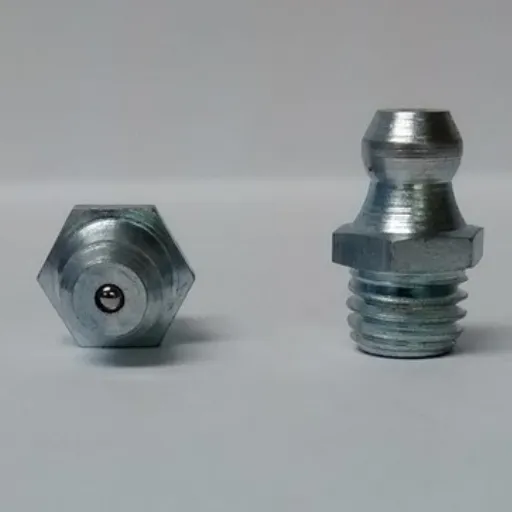
Pressure rating is often the deciding factor between two otherwise similar grease fitting types. Standard straight, angle, and drive fittings typically handle working pressures from 4,500 to 6,000 psi. Some designs are rated higher. Button head fittings are intentionally rated lower because their large head is optimized for flow volume rather than extreme pressure. Hydraulic grease fittings are built for the highest operating pressures. They are common in mining shovels, draglines, and mobile hydraulic cylinders.
When selecting a fitting, match the pressure rating to the grease gun output, not just the equipment operating pressure. A high-output grease gun can exceed the rating of a standard fitting and cause blow-off or seal damage. If the system requires frequent greasing under high pressure, specify a hydraulic-grade fitting and a matched heavy-duty coupler from the start.
Grease Fitting Thread Standards Compared
Thread mismatch is one of the most common causes of fitting failure. A Zerk fitting with NPT threads will not seal in a metric port, and a metric fitting will damage an NPT port. The table below compares the four standards you are most likely to see in the field.
| Standard | Thread Form | Common Sizes | Typical Origin | Notes |
|---|---|---|---|---|
| NPT | Tapered | 1/8″-27, 1/4″-18 | North America | Self-sealing taper; do not mix with parallel threads |
| BSPT | Tapered | R1/8, R1/4 | UK/Commonwealth | Compatible with many NPT ports but not identical |
| UNF/UNF | Parallel/fine | 1/4″-28, 5/16″-24 | North America, older machinery | Fine pitch; common on automotive and aircraft components |
| Metric parallel | Parallel | M6×1, M8×1, M10×1 | Europe, Asia, most modern global OEM | Straight thread; may need a sealing washer |
Always check the equipment manual before ordering. If the original fitting is missing, a thread gauge or pitch gauge is the fastest way to confirm the standard and thread pitch. A tapered NPT fitting threaded into a metric parallel port will leak even if it seems to tighten.
Coupler Compatibility by Fitting Type
A grease fitting only works well if the coupler matches the head. The wrong pairing causes slip-off, grease spray, and damaged heads.
| Fitting Type | Recommended Coupler | Why It Fits |
|---|---|---|
| Straight, 45°, 90° standard | Standard hydraulic coupler | Four jaws grip the cylindrical head |
| Button head fitting | Button-head / four-jaw coupler | Wide jaws seat under the flat button |
| Flush | Needle-nose or slim profile | Reaches below the surrounding surface |
| Hydraulic heavy-duty | Heavy-duty hydraulic coupler | Handles higher pressure and larger head diameter |
If your maintenance team works on mixed equipment, a multi-coupler grease gun or quick-change coupler set reduces downtime. For standard couplers, see our grease gun coupler guide.
Fitting Materials: Steel, Brass, and Stainless Steel
Material choice affects corrosion resistance, pressure rating, and cost.
- Carbon steel with zinc plating: the most common choice for general industrial use. It offers good strength and moderate corrosion resistance at low cost.
- Brass: naturally corrosion-resistant and easy to machine. Brass fittings work well in marine, plumbing, and low-pressure applications where galvanic compatibility matters.
- Stainless steel: the best choice for food processing, chemicals, saltwater, and outdoor exposure. It maintains pressure rating and resists seizure.
Stainless steel and brass both resist corrosion, but they behave differently when paired with other metals. Brass is compatible with most steel and cast-iron housings and is less likely to gall than stainless steel. Stainless steel is preferred for aluminum or painted housings where galvanic corrosion is a concern. However, it should be paired with a compatible anti-seize compound on initial installation to prevent thread seizure.
For food-grade or coastal environments, stainless steel grease fittings are usually worth the higher unit cost. They reduce replacement frequency and contamination risk.
Choosing the Right Grease Fitting Type by Industry
Different industries prioritize access, pressure, material, and thread form in different ways. The right grease fitting types for your application depend on contamination exposure, vibration, and OEM specification. Use the matrix below as a starting point.
| Industry | Recommended Fitting Types | Key Considerations |
|---|---|---|
| Agriculture | Straight, 45°, 90°, button head | Dust, vibration, mixed equipment brands |
| Automotive | Straight, 90°, metric, flush | Tight spaces, OEM metric threads |
| Construction/Mining | Hydraulic, button head, straight | High pressure, impact, heavy contamination |
| Food & Marine | Stainless steel, straight, 90° | Corrosion resistance, washdown exposure |
| Manufacturing | Straight, 45°, 90°, flush | Precision access, enclosed gearboxes |
| Maintenance shops | Mixed inventory of standard and metric | Need thread gauge and multi-coupler tools |
Metric grease fittings are standard on most German, Japanese, and Korean OEM equipment. Examples include Bosch Rexroth, SKF, and many Toyota and Hyundai machine-tool lines. North American automotive, agricultural, and heavy-equipment brands more commonly use NPT or UNF threads. If you support mixed fleets, keeping both standards in stock prevents downtime caused by a single missing fitting size.
How to Identify a Grease Fitting Type in the Field
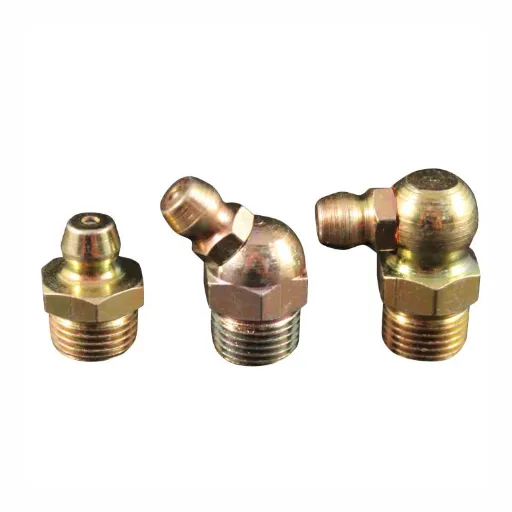
When the original fitting is worn, broken, or missing, follow these steps to order the correct replacement.
- Measure the head shape. Straight, angled, button, and flush profiles are easy to distinguish by eye.
- Check the thread standard. Use a thread gauge to determine NPT, BSPT, UNF, or metric.
- Measure the shank diameter and length. Match both to the port depth and wall thickness.
- Note the equipment manufacturer. European and Asian brands are more likely to use metric fittings; North American brands often use NPT.
- Consider the environment. Corrosive or washdown environments call for stainless steel or brass.
For more identification help, see our grease fitting sizes guide and metric grease fittings guide.
Installation Torque Reference
Installation torque matters as much as identification. The table below shows typical torque ranges by thread size. Always follow the equipment manual when it specifies a different value.
| Thread Size | Torque (N·m) | Torque (lb·ft) |
|---|---|---|
| M6×1 | 7–10 | 5–7 |
| M8×1 | 10–15 | 7–11 |
| 1/8″-27 NPT | 10–15 | 7–11 |
| 1/4″-28 UNF | 8–12 | 6–9 |
Over-tightening can strip fine threads or crack the fitting body. Under-tightening leads to leaks. Always use a torque wrench on critical equipment, and use thread sealant only when the equipment manual calls for it.
Common Grease Fitting Type Failures and How to Prevent Them
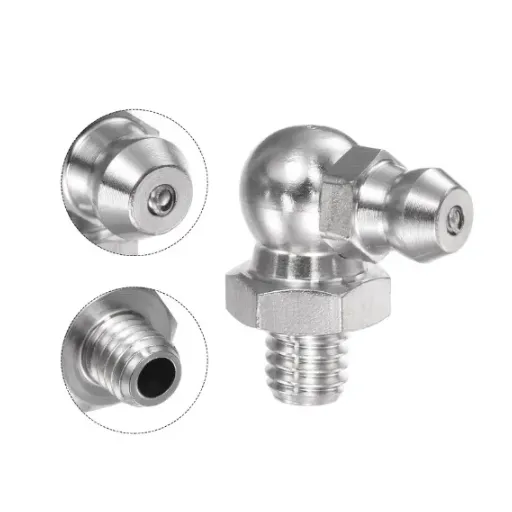
Even the correct grease fitting type can fail if it is installed or maintained improperly. Good leak prevention starts with correct thread match, proper torque, and the right coupler.
- Cross-threading: forcing a tapered fitting into a parallel port, or a metric fitting into an imperial port, strips the threads. For example, threading an NPT fitting into a metric parallel hole may feel tight at first, but the mismatched pitch creates a leak path within hours. Always verify the thread standard first. Learn how to install and replace Zerk fittings correctly to avoid this problem.
- Blow-off: excessive grease pressure can eject a fitting if the coupler seal is poor or the check valve is stuck. This often happens when a high-output grease gun is used on a standard-duty fitting. Use a coupler matched to the head and relieve pressure before disconnecting.
- Seized ball: dried grease or contamination can lock the check valve. Clean the head before greasing and replace fittings that no longer accept lubricant. Our guide on grease nipple not accepting grease covers this in detail.
- Broken head: over-tightening or impact from debris can snap the head. Use proper installation torque and protect protruding fittings in high-traffic areas.
- Galvanic corrosion: pairing a dissimilar metal fitting with an aluminum or stainless steel housing can accelerate corrosion. Match materials when possible.
Sourcing Grease Fitting Types for Your Business
For distributors, OEMs, and maintenance contractors, sourcing the right fittings at scale is as important as choosing the right type. A reliable supplier should offer:
- Thread and head variety: NPT, BSPT, UNF, and metric in straight, angled, button head, flush, and hydraulic styles
- Material options: carbon steel, zinc-plated steel, brass, and stainless steel
- Quality control: consistent thread accuracy, ball-and-spring function, and surface finish
- Custom manufacturing: special shank lengths, laser marking, bulk packaging, and OEM branding
At Shanghai Oushike Hardware Tools Co., Ltd., we supply a broad range of grease fittings and related lubrication hardware. We support B2B buyers with factory-direct pricing, flexible minimum order quantities, and export documentation. If you need help matching a fitting type to a machine specification, contact our team for technical support and a quote. For OEM buyers, we also offer custom grease fittings with private labeling and tailored packaging.
Grease Fitting Types FAQs
What are the most common grease fitting types?
The most common types are straight, 45° angle, 90° angle, button head, flush, drive type, hydraulic, metric, and stainless steel. Each is designed for different access angles, pressure levels, and environmental conditions.
How do I know which grease fitting type to use?
Match the head shape to the access angle, the thread standard to the equipment port, and the material to the environment. A straight fitting works for open points, while a 90° or flush fitting works in tight spaces. Metric fittings are standard on most European and Asian OEM equipment.
Are Zerk fittings and grease fittings the same?
Yes. “Zerk fitting” is a common name for the standard spring-loaded grease fitting originally developed by the Zerk company. “Grease nipple” is another common term, especially outside North America.
What is the difference between NPT and metric grease fittings?
NPT fittings use tapered threads and are common on North American equipment. Metric fittings use straight, parallel threads and are common on European and Asian equipment. The two standards are not interchangeable.
When should I use stainless steel grease fittings?
Use stainless steel in corrosive environments such as marine, food processing, chemical exposure, and outdoor infrastructure. They resist rust and last longer than zinc-plated steel in harsh conditions.
What coupler fits a button head fitting?
A button head fitting requires a button-head or four-jaw coupler with a wide gripping surface. A standard hydraulic coupler will not seal properly on a button head and can slip off under pressure.
Can a grease fitting type affect bearing life?
Yes. The wrong type can lead to poor lubrication flow, leaks, or contamination ingress. A flush fitting in a dirty environment may stay cleaner than a protruding fitting, while a straight fitting often delivers the highest pressure reliably.
Conclusion: Choose the Right Grease Fitting Type for Your Equipment
Understanding grease fitting types is the first step to keeping bearings, joints, and machinery running longer. Straight, angled, button head, flush, drive, hydraulic, metric, and stainless steel fittings each solve a specific access, pressure, or corrosion problem. Match the thread standard to the port, the coupler to the head, and the material to the environment. Doing so reduces leaks, stripped threads, and premature wear. For help turning this knowledge into a purchase decision, read our guide on how to choose grease gun fittings.
For B2B buyers who need dependable grease fittings in bulk, working with a manufacturer that understands thread standards, material grades, and custom requirements is the most reliable way to protect your equipment and your customers. If you are ready to source grease fitting types for your next project, contact Shanghai Oushike Hardware Tools Co., Ltd. to discuss specifications, pricing, and OEM options.