
Grease Gun Fittings: The Complete Guide for Industrial Buyers and Distributors
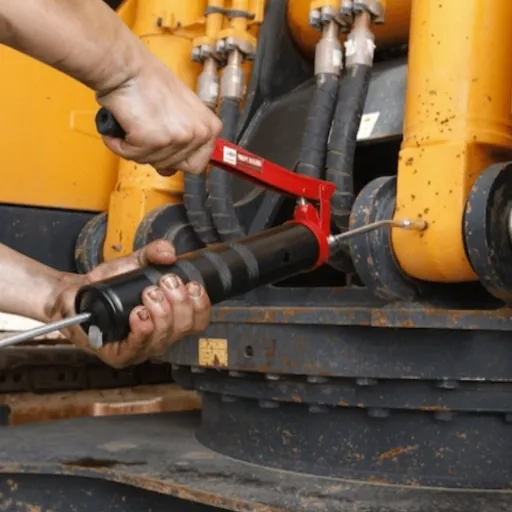
Grease gun fittings are permanently installed metal connectors through which grease is injected into necessary areas like joints, bearings, and moving parts by means of a grease gun. They comprise a spring-actuated ball check valve that remains closed until opened by the force of the coupler, directing the grease to its target.
It not only wastes time. A wrong fitting can also spoil the bearing, soil the machine, or even cause the production to stop, which is undesirable. Unsurprisingly, any tool brands and distributors need to know about grease gun fittings if they wish to build a brand that will have repeat customers.
The document describes the various variants of grease fitting devices while addressing the importance of different thread dimensions and materials, and the methods of ordering them from a reputable manufacturer. So if you are simply replenishing the shelves or creating a private label tool company, you can be assured of finding all the necessary technical and procurement guidance to carry out the activities in question effectively.
Key Takeaways
- There is a total of seven common grease gun fittings, although most industries use the Zerk (common), the button head, and the flush types.
- Imperial threads (1/4″-28 UNF, 1/8 inches NPT) and metric threads (M6x1, M8x1.25 according to DIN 71412) are incompatible. The use of the incorrect one will destroy the threads, causing leakage of oil.
- Normal duty handles are made of carbon steel, while corrosion-resistant ones use 304 or 316 stainless steel. For certain suitably fragile chemical conditions, brass is appropriate.
- A standard carbon steel grease nipple costs $0.01-$0.03 over volumes, while extremely high-quality (OEM) nipples could get to $0.50+ per piece or more.
- Within China, Zhuji in Zhejiang province remains the epicenter of grease fitting manufacturing, with factory pricing on offer and customized OEM production beginning 1,000 units at a time.
What Are Grease Gun Fittings and How Do They Work?
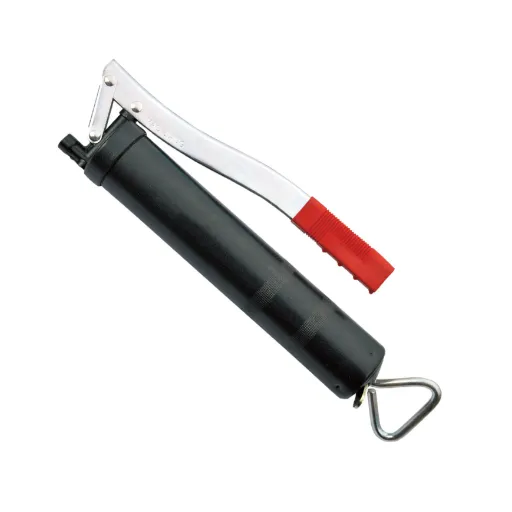
A grease gun fitting (also known as a grease nipple or Zerk fitting) is a level metal part that is threaded and carried on the machine for controlled lubrication. The fitting has a spring-loaded ball bearing sitting against a seat to ensure a tight seal. When a grease gun coupler interfaces with the ball bearing and becomes pressurized, the ball is depressed, and grease flows via the channel to the bearing or joint. Once the pressure is released, the spring will drive the ball back into position, thus preventing leaks and keeping out contaminants.
Often scorned by the future, this simple mechanism has somehow stuck around since improved in 1929 by Oscar U. Zerk. Nowadays, “Zerk fitting” is commonplace in the U. S., while “grease nipple” is the British English (and many international markets) term of choice. For great insight into the story of Zerk fittings and understanding the historical context, their variations, and how to choose one, take a brief tour of our dedicated guide on what Zerk fittings are.
Key terminology every buyer must know about:
- Ball check valve: Located inside the fitting, working the spring-actuated sealing mechanism.
- Thread form: The thread arrangements in the fitting design that arise in straight UNF, tapered NPT, or the metric screw pattern that matches the fittings on the tool.
- Pressure rating: The criterion details the PSI range that a fitting will be subjected to in an application; typically, from 5,000 to 10,000 PSI for normal operating pressure, but as high as 20,000 PSI in the case of high-pressure ratings.
- Drive type: This is an exception, given that quick grease fittings can be driven into pre-drilled holes. These fittings do not involve any threading but only breaking the metal.
Marcus Chen made a grave mistake in installing blockade fittings for 1/4″ on a customer’s pump cart when he thought all such fittings are the same, perhaps 1/4″-20 is really the same as 1/4″-28 UNF Zerks, or the two codes are so nearly alike that they go unnoticed under relative loads. Only three days of the tilling season were wasted due to stripped threads and endlessly leaking seals. The 200 order turned into a 200 order before a four-and-a-half-grand warranty claim now. Marcus now checks the standard of thread from every supplier before placing his orders.
Types of Grease Fittings and Their Applications
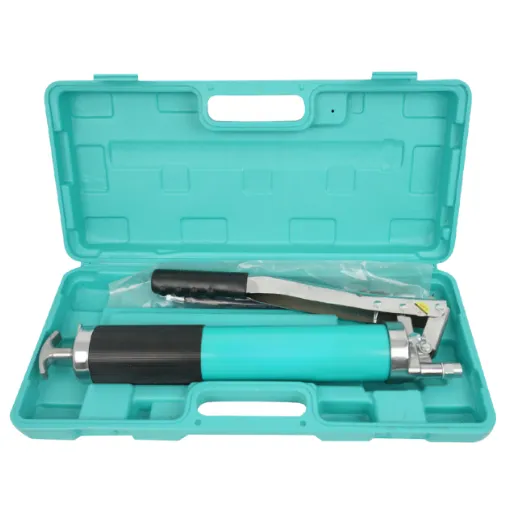
Data on the many types of grease fittings helps in matching specific ones to designated jobs, keeping in mind the type that suits the pressure, clearance, or conditions provided.
Standard (Zerk) Fittings
Standard fittings or Zerk fittings are the most commonly used fittings in automotive, agricultural, and general industrial equipment. They have a small round head with a center passage for grease injection. Standard fittings withstand normal pressures that will be up to 10,000 PSI and are designed to be generally matched with standard hydraulic couplers. Their abbreviation makes for the best application prospect with limited clearance.
Button Head Fittings
Buttonhead grease nipples come with a broad, flat, convex head designed for high-pressure, high-volume operational environments. Due to their higher mass design and robust construction, these are fitting for all mining equipment, heavy construction machinery, and industrial presses. A dedicated buttonhead coupler is required because of the wider profile of the button head. In harsh environments, these usually outlast normal fittings because they can take on continuous greasing cycles that would harm smaller fittings.
Flush-Type Fittings
Flush-type fittings are located recessed into the equipment surface to protect the fitting from damage and contamination. These are commonly seen on compact machinery, off-road vehicles and all types of equipment where prevailing fittings can be sheared off by the debris or by making heavy contact. Flush fittings necessitate an exclusive flush coupler or adapter for access.
Angled Fittings (45° and 90°)
The angled grease fittings can provide a way to access tight spaces where a straight fitting will not let the grease gun pass. The 45° and 90° angles provide a way to grease components that are obscured from sight inside assemblies, behind guards, or inside cramped engine compartments. If using angled fittings, ensure they are oriented facing the right bender path within the equipment’s built-in access.
Drive-Type and Self-Tapping Fittings
Drive-type fittings are installed by pressing or hammering them into a prepared hole, where knurls or barbs on the body bite into the surrounding material. Self-tapping fittings cut their own threads during installation. Both types work well on soft materials such as aluminum or cast iron housings and for temporary or field repairs where tapping gear is neither available nor practical. They are discouraged for use in high-vibration applications where the safety of a threaded fitting is very handy.
High-Pressure Fittings
High-pressure greasing coupled fittings are created for hydraulic systems, presses, and heavy industry, where the grease pressures are so huge that conventional ratings fail. Such types of fittings are tougher in bodies as well. Their ball check valves are thicker and have got stronger seals. They are crucial in steel mills, mining operations, and large-scale manufacturing, where equipment failure can cost them $1000 per hour.
Pin-Type Fittings
Pin-type coupler fittings require a slotted ball, or slot, in place of the central ball. A pin-type coupler is in the slotted ball for an assured mechanical lock during greasing. One more style of these fittings consists of a case design; however, the typical ones have a body construction. Pin-type coupler fittings are somewhat outmoded; however, they still inhabit the domain of legacy equipment, notably in particular agricultural or marine applications.
| Fitting Type | Best For | Pressure Range | Coupler Required |
|---|---|---|---|
| Standard (Zerk) | General industrial, automotive | Up to 10,000 PSI | Standard hydraulic |
| Button Head | Heavy machinery, mining | Up to 20,000 PSI | Button head coupler |
| Flush | Compact equipment, off-road | Up to 10,000 PSI | Flush adapter |
| Angled (45°/90°) | Tight spaces, recessed joints | Up to 10,000 PSI | Standard or angled extension |
| Drive-Type | Soft materials, field repairs | Up to 6,000 PSI | Standard hydraulic |
| High-Pressure | Hydraulic presses, steel mills | 10,000-20,000+ PSI | Heavy-duty hydraulic |
| Pin-Type | Legacy equipment | Up to 8,000 PSI | Pin-type coupler |
For a more detailed breakdown of each fitting type, including application-specific recommendations, read our types of grease fittings guide.
Grease Fitting Thread Sizes and Standards
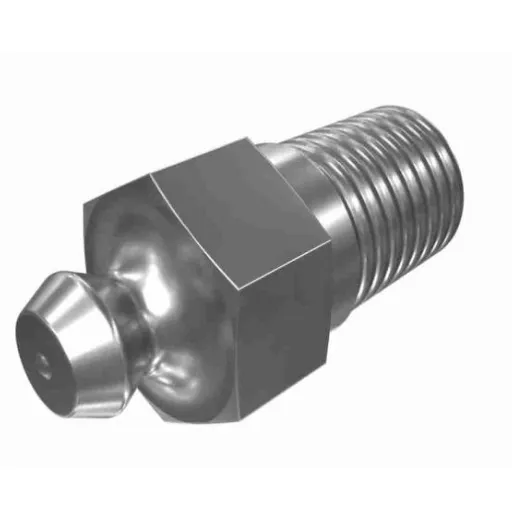
Thread compatibility is the single most common source of grease gun fitting installation failures. Using the wrong thread standard damages equipment, creates leaks, and can render a warranty void.
Imperial Thread Standards
The most common imperial thread for grease fittings in North America is 1/4″-28 UNF (Unified National Fine), defined by the SAE J534 standard. This is a straight thread, not tapered. The fitting seals via the ball check valve and a captive copper or fiber washer, not via thread interference.
Other imperial sizes include:
- 1/8″-27 NPTF: Tapered pipe thread used in some hydraulic and pneumatic applications
- 5/16″-24 UNF: Found on larger industrial equipment and some agricultural machinery
- 10-32 UNF: Used on compact equipment and precision instruments
- 1/4″-20 UNC: Coarse thread, rarely used for grease fittings but occasionally found on custom equipment
Metric Thread Standards
Metric grease fittings follow DIN 71412 (German standard) and ISO 3799 (international standard). Common metric sizes include:
- M6 x 1.0: The most common metric size, equivalent in application to 1/4″-28 UNF
- M8 x 1.25: Used on larger European and Asian industrial equipment
- M10 x 1.0: Found on heavy machinery and some construction equipment
How to Identify Thread Type
When substituting a fitting with an unknown definition, apply a thread gauge or use a caliper to measure:
- Outer diameter of the threaded portion
- Threads per inch (imperial) or pitch in millimeters (metric)
- Thread form (straight vs. tapered)
When the old fitting is still in its perfect state, create a comparison through the reference materials obtained through various catalog listings. With the new fitting, nothing will fit perfectly if it has a slightly different thread or pitch. If the fitting is cross-threaded, the equipment is essentially out of commission.
| Thread Size | Standard | Common Equipment | Region |
|---|---|---|---|
| 1/4″-28 UNF | SAE J534 | Automotive, industrial machinery | North America |
| 1/8″-27 NPTF | ANSI/ASME | Hydraulic systems, plumbing | North America |
| M6 x 1.0 | DIN 71412 | European machinery, motorcycles | Europe/Asia |
| M8 x 1.25 | DIN 71412 | Heavy equipment, trucks | Europe/Asia |
| 5/16″-24 UNF | SAE J534 | Agricultural equipment | North America |
For a complete cross-reference of metric and imperial thread sizes, including measurement guides, see our grease fitting sizes guide. If you need help choosing between metric and imperial standards for your equipment line, our metric vs imperial grease fittings comparison covers regional requirements and interchangeability.
Material Selection for Different Environments
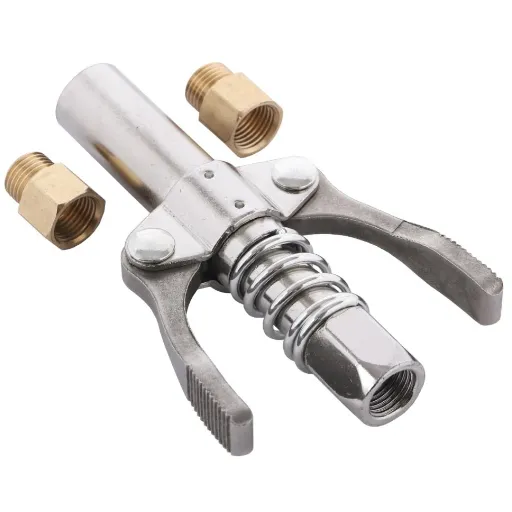
The material of a grease fitting determines its resistance to corrosion, pressure, temperature, and chemical exposure. Choosing the wrong material leads to premature failure, contamination of the lubrication system, and costly equipment downtime.
Zinc-Plated Carbon Steel
The typical material for most grease gun fittings is zinc-plated carbon steel. It provides good strength, acceptable corrosion resistance in normal indoor atmospheres, and is cost-effective. With volume sizes of standard carbon steel grease nipples, the lowest prices start from $0.01-$0.03 per piece.
Carbon steel is useful for:
- General industrial machinery under dry or moderately humid conditions
- Automotive applications where moderate exposure to road dirt and moisture is expected
- Construction machinery that is always in excellent condition and is kept in a fully covered environment
It has low resistance toward marine environments, most chemical processing facilities, and other food-grade applications where the presence of any rust is totally unacceptable.
Stainless Steel (304 and 316)
Made of stainless steel, a grease fitting is extremely resistant to corrosion and offers some durability. Type 304 stainless steel has excellent resistance to common atmospheric corrosion and to many chemicals, and corrodes slowly. Type 316 pitted corrosion, which is the choice in marine, coastal, and chemical processing applications due to the added molybdenum.
OEM Stainless steel loner piece selling price in the general range from $. 09 to $. 50+ pieces, featuring specifications of buyer, volumes ordered, and requirements for surface finish–but an investment will be worth it for something that lasts in an aggressive environment for a long time.
Stainless steel is the right choice for:
- Marine and offshore equipment exposed to saltwater spray
- Food processing and pharmaceutical machinery, where hygiene is critical
- Chemical plants and wastewater treatment facilities
- Outdoor equipment in coastal or high-humidity climates
Brass
Brass grease fittings possess good anti-corrosion resistance, unprecedented machinability, and compatibility with some chemicals that are detrimental to steel. Brass is softer than steel and is easy to install in fine threads; however, this same property makes it rather prone to physical damage.
Brass is preferred for:
- Plumbing and water treatment equipment
- Applications requiring non-sparking properties
- Equipment where galvanic corrosion between dissimilar metals is a concern
| Material | Corrosion Resistance | Pressure Rating | Typical Cost (at volume) | Best Environment |
|---|---|---|---|---|
| Zinc-plated carbon steel | Moderate | Up to 10,000 PSI | 0.01−0.03 | Dry to moderate humidity |
| Stainless steel 304 | High | Up to 10,000 PSI | 0.09−0.20 | Industrial, chemical |
| Stainless steel 316 | Very high | Up to 10,000 PSI | 0.15−0.50+ | Marine, coastal, food-grade |
| Brass | Good (chemical) | Up to 8,000 PSI | 0.05−0.15 | Plumbing, non-sparking |
Grease Gun Couplers and Accessories
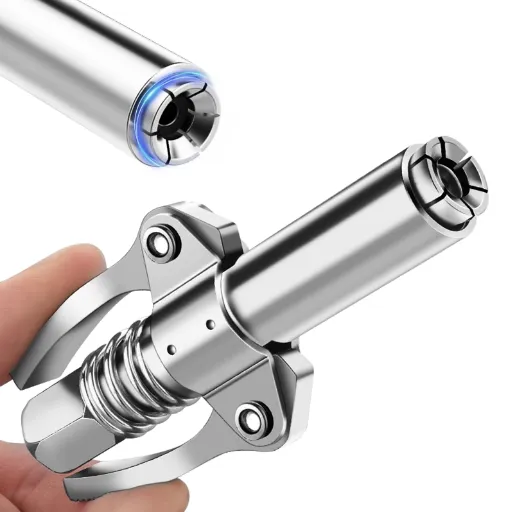
A grease nipple enjoys its item till a coupling connects to it. Get the coupling wrong, and that spells leaks, squandered grease and, calling safety into question, even grease injection injuries.
Standard Hydraulic Couplers
The first choice to consider will be the standard hydraulic couplers for Zerk fittings, which would have a 4-jaw grip that clamps around the fitting head when the coupler sleeve is pushed down. A good coupler creates a leak-proof connection at up to 10,000 psi pressure. Look for couplers with hardened steel jaws and replaceable rubber seals.
Button Head Couplers
The button head coupler was designed with the intention of fitting a larger surface area on the button head fitting. This spreads the pressure across the head of the broad fitting, ensuring any damage is minimized when carrying out high-volume greasing. Never use a standard fitting on a button head fitting. The seal will fail, and the fitting head can be damaged.
Flush Fitting Adapters
Flush fitting adapters extend the reach of a standard coupler to attach to deep recessed fittings. Some of the designs have a magnetic or threaded collar to hold the adapters in place during greasing. When dealing with equipment that has deeply recessed fittings, a flush fitting kit with multiple adapter lengths should definitely be considered.
Needle Nozzles and Angle Adapters
Needle nozzles accurately dispense a thin jet of grease, useful for U-joints, sealed bearings, and homes where a standard coupler will not fit. Angle adapters (45 and 90 degrees) elongate the grease gun’s effective reach around any obstacles. Such items are often attached by maintenance men on highly complicated machines but short on room to move.
Hose Assemblies and Extensions
Flexible hoses provide a firm link between the grease gun and the coupler. The technician can hold the grease gun in the most comfortable position while directing the coupler into a hard-to-reach place, in addition to using all the advantages of an extra-rigid extension for deep sets of the fittings. Be sure to find the ID of the hose, either in the catalog or in the production data of the manufacturer so that both the diameter and the pressure rating meet or exceed the recommended rating for the particular model of grease gun.
| Coupler Type | Fits Fitting Type | Pressure Rating | Best Application |
|---|---|---|---|
| Standard hydraulic | Zerk (standard) | Up to 10,000 PSI | General maintenance |
| Button head | Button head | Up to 20,000 PSI | Heavy machinery |
| Flush adapter | Flush-type | Up to 10,000 PSI | Recessed fittings |
| Needle nozzle | Zerk (with adapter) | Up to 6,000 PSI | U-joints, sealed bearings |
| Pin-type | Pin-type | Up to 8,000 PSI | Legacy equipment |
For detailed coupler compatibility, pressure ratings, and accessory selection advice, read our grease gun couplers guide.
How to Choose the Right Grease Fitting for Your Application
Selecting the correct grease gun fitting requires matching four key factors: the fitting type, the thread standard, the material, and the pressure rating to the specific equipment and operating environment.
Step 1: Identify the Application Requirements
Start by understanding what the fitting needs to do. Is this for routine maintenance on a fleet of delivery trucks, or for continuous lubrication on a steel mill conveyor system? High-vibration environments demand threaded fittings with lock washers. High-pressure systems need button head or reinforced high-pressure fittings. For pressure ratings, coupler selection, and industrial use cases above 10,000 PSI, see our high-pressure grease fittings guide. Compact machinery may require flush or angled fittings to prevent physical damage.
Step 2: Match the Thread Standard
Check the equipment manual or measure the existing fitting to determine whether it uses imperial or metric threads. For replacement orders, always cross-reference the old part number against a thread identification chart. When sourcing new equipment manufacturing, confirm the tapped hole specifications with the equipment designer before ordering fittings.
Step 3: Select the Material Based on Environment
Match material with working conditions:
- Indoor industrial environments with some moisture: Zinc-plated carbon steel
- Outdoor coastal or marine elements: Stainless 316
- Chemical environment, food-grade requirements: Stainless 304 or brass
- Budget-conscientious, very high volume applications: Zinc-plated carbon steel
Step 4: Verify Pressure and Grease Compatibility
Check that the fitting has a pressure rating exceeding the maximum performance of the guns it will be used with grease. The standard fittings rated 10,000 PSI will suffice for everything but pneumatic and manual grease guns. The electric grease gun and hydraulic systems use 20,000 PSI or higher-rated fittings meant for high pressures.
Also, check the compatibility of greases. Some synthetic greases include additives that degrade certain sealing materials. If there’s an indication in the equipment that the grease should be NLGI-specified for a certain base oil type, it is good to make sure the fitting has internal seals with which it would be compatible.
When maintenance switched over from carbon steel to 316 stainless steel grease gun fittings for the sugar mill equipment in the Brazilian sugar processing plant, eventually, for the harvest equipment, this led to a reduction from changing fittings every quarter year down to only once annually. The cost front-end, which amounted to an increase of nearly 400%, would be paid out after only eight months without any downtime and with much lower labor input.
For a step-by-step decision framework covering application matching, material selection, and coupler compatibility, see our How to Choose Grease Gun Fittings guide.
Need help selecting the right fittings for your equipment line? Contact us with your specifications and we will recommend the optimal type, material, and thread standard for your application.
Sourcing Grease Fittings from Manufacturers
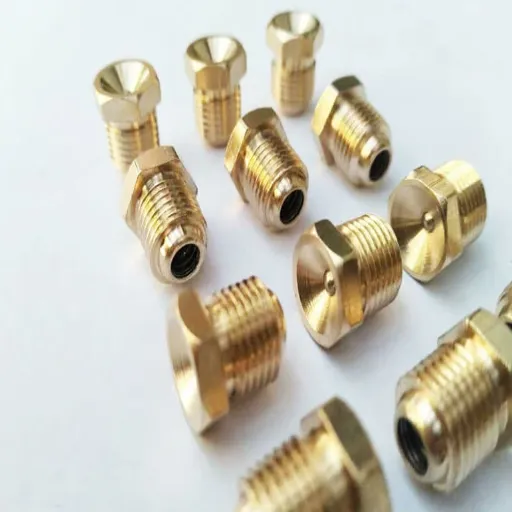
For distributors, brand owners, and procurement managers, understanding how grease gun fittings are manufactured and sourced is as important as understanding the products themselves. Factory-direct sourcing reduces costs, improves quality control, and enables customization that resellers need to differentiate their brands. According to Future Market Insights, the global grease gun market is projected to reach $3.24 billion by 2035, while GM Insights notes the fittings and accessories segment continues to expand as industrial maintenance standards rise worldwide.
Key Manufacturing Regions
It is in three major manufacturing clusters that national production of grease fittings has been concentrated:
Zhuji, Zhejiang Province, is the largest and most specialized grease fitting manufacturing hub in all of China, with hundreds of factories producing everything from standard carbon steel Zerks to the manufacture of precision stainless steel for exports. The location of this place has to do with the concentration of suppliers, as it needs to be located in the same area as all these needs, thus enhancing faster prototyping for custom orders production in the region.
Ningbo, Zhejiang Province, enjoys an overall larger industrial base, which has particularly strong competencies in machining stainless steel and brass, and a good reputation in the southern market. The majority of companies serve higher-end markets with superior quality systems and experience in exporting documentation.
Dongguan, Guangdong Province, focuses on precision manufacturing for automotive and electronics applications. Fittings from this region often feature tighter tolerances and more consistent surface finishes.
Quality Standards and Certifications
But please, grease fitting manufacturers who are first dependable in business, as proven by:
- ISO 9001: Certification of a quality management system
- SAE J534: USA Standard for Grease Fittings (If serving US markets)
- DIN 71412: ISO `International Standards Organization’-A German standard: grease sockets for metric dimensions (If serving European markets).
- RoHS: Restriction of Hazardous Materials (for European Union compliance)
- REACH: Registration, Evaluation, Authorization, and restriction of Chemicals (for EU compliance)
Every time you order a bulk, be ready to request original certification materials and third-party test reports. This is because a factory that is unable to offer these documents is a supplier you should not deal with.
Factory Audit Checklist
Before finalizing a new supply of grease fittings, check the following:
- Equipment testing thread gauge accuracy (thread gauges, optical comparators)
- Capability to verify material (spectrometry for checking alloy)
- Hydraulic pressure testers for pressure test stations
- Inspection for surface finish (plating thickness gauges)
- Quality control of packing and tagging
- Export documentation history (commercial invoices, packing lists, certificates of origin)
Pricing and MOQ Transparency
Pricing for the standard carbon steel grease nipples ranges anywhere between $0.01 and $0.03 each in quantities of 10,000 units or more. While stainless steel 304 fittings would cost $0.09 to $0.20 each, based on the same application volumes. Modification to nonstandard threading or material types or personal branding may cause a slight increase in costs; however, the quote will remain very competitive but stands clearly against the branded Western suppliers.
Minimum order quantities vary by factory and customization level:
- Standard off-the-shelf fittings: 1,000-5,000 pieces
- Custom threading or sizing: 3,000-10,000 pieces
- Full OEM with private labeling: 5,000-20,000 pieces
Ready to source grease fittings directly from the factory? Request a quote with your specifications, target volume, and delivery requirements. We provide transparent pricing and flexible MOQs to support distributors at every growth stage. For a factory evaluation checklist and certification requirements, read our guide on how to choose a grease fitting manufacturer.
OEM and Custom Grease Fittings
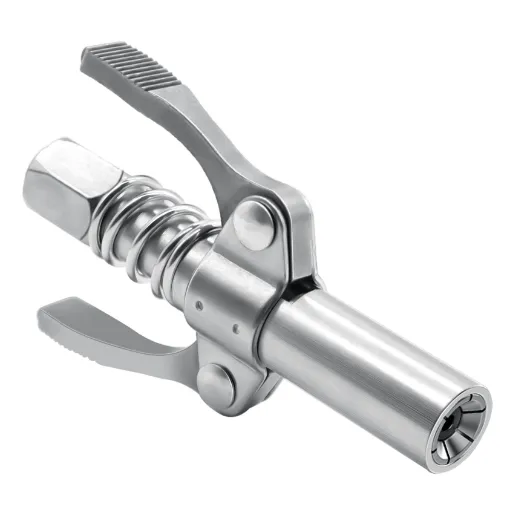
Brand owners and big distributors who can go to their design specs, product-specific requirements, or branding objectives may not use a standard off-the-shelf grease gun fitting. Custom and OEM production present opportunities to stand out in the marketplace, improve margins, and create brand loyalty.
Custom Threading and Sizing
OEM customers may request thread types that are not part of normal shank lengths or heads with custom properties to match their own design layouts in their equipment. This machining work with CNC-cutting requires special tools so that almost entirely hard custom mob call kinds of fittings have larger MOQs than standard parts.
Private Labeling and Packaging
Private-labeled grease fittings permit the brand proprietors to sell professional-grade products under their own mark. Numerous customization options include:
- Laser etching or stamping of logos on the heads of the fittings
- Custom color plating (zinc yellow, zinc black, and nickel)
- Branded packaging (blister packs, bulk packaging, retail hang cards)
- Information sheet and specifications in the buyer’s many languages.
MOQ Flexibility for Brand Owners
At Shanghai Oushike, we assist brand holders with small quantity minimum orders starting at 5,000 parts produced under private-label standard devices. For customized design, the procedures usually demand 10,000-20,000 tool fluencies, relying heavily upon the complications of the tools used. For submission purposes, sample orders are specifically limited to 50-200 pieces. These samples either validate or test the product before large-scale investments.
Lead Times and Export Compliance
Standard grease fitting orders from our manufacturing partners typically ship within 15-25 days. Custom OEM orders require 30-45 days for tooling, first-article approval, and production. We handle all export documentation, including commercial invoices, packing lists, certificates of origin, and relevant compliance certificates (RoHS, REACH, material certifications).
When a German tool distributor approached us in 2024, they were reselling a well-known brand’s grease fittings at thin margins. We developed a private-label line with their branding, custom yellow zinc plating, and German-language packaging. Their gross margin on grease fittings improved from 18% to 42% within the first year. The product quality matched the brand they previously sold, but the factory-direct pricing and custom branding gave them control over their market positioning. For a deeper look at private-label options, MOQs, and lead times, see our OEM grease fittings manufacturing guide.
Quality Control in Grease Fitting Manufacturing
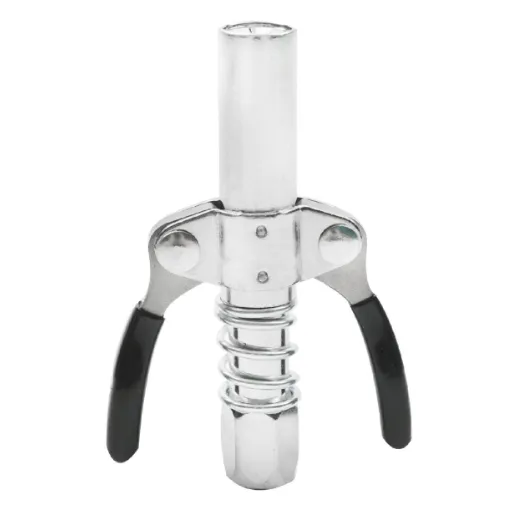
Bleak quality that divides expert-grade coupler fittings and commodities that soon fail. Understanding how manufacturers can ensure quality allows buyers to judge the capabilities of suppliers and select the most appropriate specifications.
Thread Accuracy and Tolerance Testing
Thread accuracy is a non-compromising thing in correct assembly and seal integrity within the fittings. The well-known manufacturers will be using thread gauges (GO/NO-GO gauges) to audit the thread dimensions at every production lot, verifying their adherence to the required specifications. Most of the orders for high-tolerant threads also necessitate an optical comparator or CMM for an individual, detailed verification of the thread profile.
Material Verification
In most cases, manufacturers verify the composition of raw materials. This occurs through OES optical emission spectrometry or an XRF X-Ray Fluorescence method. This guarantees that 304 stainless steel has the correct percentage of Cr 18 and Ni 8, or that the carbon steel is submitted according to the grade explained. A material certificate should be produced for every batch.
Pressure Testing and Ball Check Valve Function
Every production batch goes through grade pressure testing to make sure the ball check valves seal and release properly at the correct pressure threshold. Pressure tests typically involve pressurization of the chamber with hydraulic pressure monitoring for leaks, followed by a test for the return of the ball to its seat, and to see if it seals at all after the pressure is relieved.
Surface Finish and Plating Quality
The amount of plating on a plated fitting is directly linked to the resistance to corrosion. Eddy current plating thickness gauges, or x-ray fluorescence plating gauges, are used during the production process to ensure that the zinc or nickel coating remains within the specifications. Adhesion testing by tape or bend test is an acceptable method by which it may be confirmed that the plating will not flake off upon installation or during service.
Troubleshooting Common Grease Fitting Problems
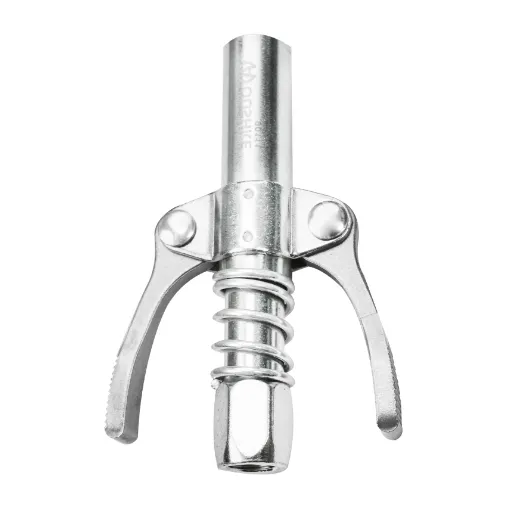
Even quality grease gun fittings can develop problems in service. Understanding the causes and solutions reduces equipment downtime and maintenance costs.
Fitting Not Accepting Grease
Most of the time, a nipple that doesn’t accept grease comes down to one of four main factors:
Clogged fitting: A clogged blockage may include old, hard grease, dirt, and any other form of debris that has gotten into the grease gun’s connections. Solution: Replace the fittings. By using large amounts of pressure, you will put the risk of leaking oil by damaging its seals.
Air lock: Many times, air bubbles may become the culprit behind grease not going into the bearings. Solution: Loosen up the grease pump a bit and start working it in slowly to let off the air pressure.
Incorrect coupler: A regular coupler with a flush or button head gives absolute usage. Solution: Get the correct coupler as indicated by the type of connection.
Broken ball check valve: The ball within the check valve system has gone bad by getting corroded or worn, causing the ball to get stuck. Fix: Replace the fitting.
Leaking After Greasing
Grease leaking from a fitting after disconnecting the gun indicates:
- Over-greasing that has overwhelmed the equipment seal
- Worn or damaged ball check valve that no longer seals
- Incorrect grease type with incompatible base oil
Cross-Threaded or Damaged Fittings
Cross-threading occurs when a fitting is initiated at an angle or forced into incompatible threads. Signs of damage will most often be visible as the threads become distorted or stripped. It is best to start the fittings by hand and tighten up with a wrench. Replacement is compulsory, however, if cross-threading does take place. Additionally, a re-tap must be considered and carried out in the same equipment hole.
Corrosion and Wear
First signs of visible rust, pitting, or deformation imply that the fitting material is not compatible with its environment. Corrective action involves replacing carbon steel fittings with stainless steel in the case of corrosive environments. Regular inspection schedules can detect failing fittings before their causing equipment failure.
| Problem | Likely Cause | Solution |
|---|---|---|
| Fittings won’t accept grease | Clogged, air lock, wrong coupler | Replace the fitting, bleed air, and verify the coupler |
| Leaking after greasing | Over-greased, worn ball, wrong grease type | Clean excess, replace fitting, verify grease spec |
| Cross-threaded installation | Mismatched threads or forced installation | Replace fitting, re-tap hole |
| Visible corrosion | Material incompatible with the environment | Upgrade to stainless steel or brass |
| Fitting spins freely | Stripped threads in the equipment | Re-tap hole or use a thread repair insert |
For step-by-step troubleshooting, including pressure testing and replacement guidance, read our grease fitting troubleshooting guide.
Frequently Asked Questions
What is the most common grease fitting thread size?
For imperial applications, the most common standard would be 1/4-inch-28 UNF (Unified National Fine), while in the case of metric applications, it would be M6 x 1.0 according to industry standards.
Are Zerk fittings and grease nipples the same thing?
Yes, Zerk fitting is the common North American term, where grease nipple is the English and international term. They both point to the same type of grease fitting.
Can I use a standard grease gun coupler on all fitting types?
No. Zerk fittings are button-head (flush-mounted) or pin-type fittings on hydraulic couplers. The coupler is always selected per the fitting.
How often should grease fittings be replaced?
In standard industrial settings, well-designed grease fittings can last the equipment’s life that they are associated with. Corroded or physically damaged fittings, or those failing to seal during greasing, should be replaced in kind.
Are stainless steel grease fittings worth the extra cost?
Zinc-coated carbon steel is satisfactory for average indoor purposes. For marine, coastal, chemical or food-grade applications, the use of high-quality stainless steel 304 or 316 becomes indispensable and can be seen as an excellent investment for the extended service life.
What is the minimum order quantity for custom grease fittings?
Standard private-label fittings typically call for an order of 5,000+ pieces. Custom designs, which have to be produced through new tooling, will require an order of 10,000-20,000 pieces based on the complexity.
How do I tell if a fitting is metric or imperial?
When measuring the OD (outer diameter), one must take into consideration the pitch of the thread. Metric fittings follow pitch in millimeters (M6 x 1.0, e.g., signifies an O. D. of 6 mm and a pitch of 1.0), whereas imperial fittings are threaded per pitch (1/4″-28, e.g., signifies an O. D. of 1/4 inch and 28 threads per inch).
Conclusion
The little elements known as grease gun fittings can make all the difference to the health of your equipment. Selecting the right kind, thread size, material, and pressure rating is crucial in seeing that lubrication feeds the critical parts without leakages, contamination, or accelerated failure.
Five Key Takeaways for Buyers and Distributors:
- Appropriateness in the fitting type with the application environment and clearance requirements
- Threads have to match exactly; imperial and metric are not interchangeable
- Material selection should be based on the anticorrosive needs more than anything else.
- In proper conjunction with the fitting type, select a coupler for safe and effective greasing.
- Purchase from factories with accredited quality systems and clear pricing.
The factory-direct sourcing from specialized manufacturing clusters in China offers great advantages regarding costs and customization flexibilities to distributors seeking to build inventory or brand owners intending to produce private-label product lines. Grease nipples made of carbon steel standardly cost anything between $0.01 to $0.03 per piece at the bulk level, while the opportunity to share a private label exists for OEM ranges as well.
Contact Shanghai Oushike Hardware Tools Co., Ltd. to discuss your grease fitting requirements, request samples, or receive a customized quote for standard, bulk, or OEM orders. Our team supports distributors and brand owners with flexible MOQs, consistent quality control, and reliable delivery schedules.