
How to Choose a Nut Runner: A Step-by-Step Selection Framework for Industrial Buyers
To choose a nut runner, start with your fastener’s torque requirement, then match the power source, design configuration, data needs, ergonomics, and total cost of ownership to your application. The bolt you are fastening should dictate the tool, not the other way around.
A nut runner that is 50 Nm short of your spec will leave fasteners loose. One that is 50 Nm over will strip threads or crack castings. And a tool with the wrong duty cycle will overheat halfway through your shift. The global nut runner market is valued at over USD 1.25 billion, and demand is growing at 6.8% annually. Yet most buyers still choose based on brand familiarity or sticker price rather than a structured framework.
You are probably reading this because you need to specify tools for a new assembly line, replace outdated equipment, or source inventory for resale. You already know that precision fastening matters. What you need is a practical system for matching torque, power, design, and data capability to your exact application. This guide gives you that system.
Here is what you will learn. Six factors that determine the right nut runner for your operation. A bolt-size-to-torque reference table that most competitors omit. A step-by-step selection framework you can use for RFQs and purchase orders. And a realistic look at the total cost of ownership, so you do not overpay for precision you do not need.
Key Takeaways
- Start with torque requirement, not power source. The bolt dictates the tool.
- Electric nut runners deliver ±1-3% accuracy. Pneumatic models achieve ±3-4%. Choose precision based on application risk, not habit.
- Initial tool cost is only 20-30% of total cost of ownership over five years. Energy, maintenance, and downtime matter more.
- Cordless nut runners are the fastest-growing segment for mobile and mixed-line applications.
- Factory-direct sourcing gives you torque customization, voltage options, and better pricing for OEM and distributor orders.
Why Nut Runner Selection Directly Impacts Your Bottom Line
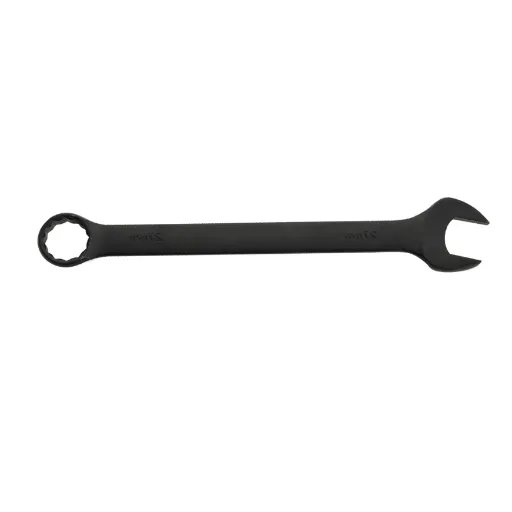
The wrong choice costs more than the tool itself. Under-tightened fasteners lead to warranty claims and field failures. Over-tightened bolts strip threads, crack housings, and create scrap. A tool rated for 500 cycles per day will fail within weeks if you run 5,000. The hidden costs add up fast.
When Marcus, a production engineer at a German automotive supplier, replaced his team’s aging pneumatic tools with electric nut runners matched to his M10 chassis bolts, he cut defect rates by 30% in the first quarter. The new tools logged torque and angle data for every fastener, which meant his quality team could trace every joint back to the exact tool and operator. That traceability eliminated warranty disputes.
The right tool improves efficiency in three ways. Consistent torque reduces defects and rework. Data logging supports traceability for audits and warranty claims. Proper ergonomics reduces operator fatigue, which means fewer errors and less turnover on your line.
Factor 1: Define Your Torque Requirements First
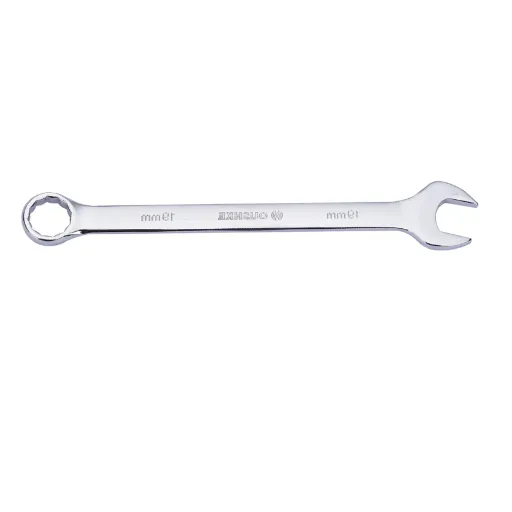
Most selection guides start with a power source. That is backwards. The bolt you are fastening should dictate the tool. Start by calculating the torque your application demands.
Standard Torque Values by Bolt Size
Use this reference table as a starting point for common steel fasteners with standard friction conditions.
| Bolt Size | Property Class 8.8 (Nm) | Property Class 10.9 (Nm) | Property Class 12.9 (Nm) |
|---|---|---|---|
| M6 | 10-12 | 14-17 | 17-20 |
| M8 | 25-30 | 35-42 | 42-50 |
| M10 | 49-59 | 69-83 | 83-100 |
| M12 | 86-103 | 120-144 | 144-173 |
| M16 | 210-252 | 295-354 | 354-425 |
| M20 | 410-492 | 580-696 | 696-835 |
| M24 | 710-852 | 1,000-1,200 | 1,200-1,440 |
| M30 | 1,430-1,716 | 2,020-2,424 | 2,424-2,909 |
These values assume dry steel threads. Lubricated threads, stainless steel, or aluminum require adjusted torque. For detailed torque specifications and adjustment factors, see our guide to nut runner torque ranges.
Accuracy Class: How Tight Is Tight Enough?
Not every joint needs laboratory-grade precision. Match accuracy to risk.
Programmable electric nut runners typically achieve ±1-3% accuracy. Pneumatic models run ±3-4%. For general assembly with non-critical joints, ±3-4% is sufficient. For safety-critical applications like brake calipers, steering assemblies, or turbine blades, ±1-2% is worth the investment.
The ISO 5393 standard defines test methods for rotating tools with threaded fasteners. When accuracy matters, verify that your supplier tests to this standard and provides calibration certificates.
If you are deciding between torque-controlled and impact tools, read our comparison of nut runner vs impact wrench to understand the difference.
Factor 2: Match the Power Source to Your Environment
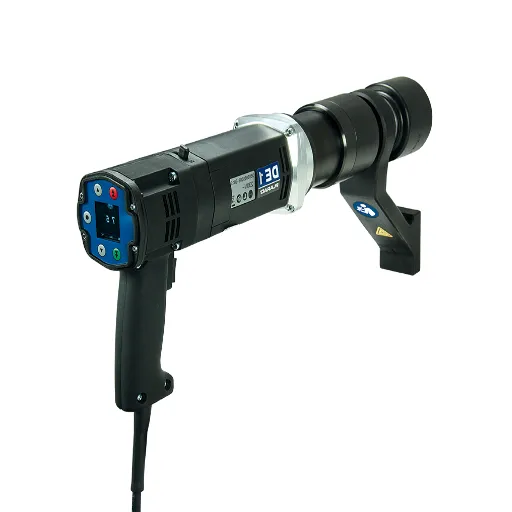
Once you know your torque requirement, choose the power source that fits your facility, budget, and operating conditions.
Electric (Corded) Nut Runners
Electric models are best for fixed stations where precision and data matter. They connect to a DC controller that manages torque, angle, and speed profiles. Brushless motor designs deliver consistent output with minimal maintenance.
You will need electrical infrastructure at each station. Controllers typically run on 110V or 220V, depending on your region. If you are sourcing export markets, confirm voltage compatibility before ordering. Factory-direct manufacturers can customize voltage for your target regions.
Pneumatic Nut Runners
Pneumatic tools excel in continuous-duty environments and hazardous locations where sparks are a concern. They run on compressed air, which means no electrical cords at the workstation.
The tradeoff is accuracy and energy cost. According to Atlas Copco, compressed air systems are only 10-20% efficient. Electric tools use 7-8 times less energy for equivalent output. If your facility already has robust compressed air infrastructure, pneumatic may make sense. If you are building new, electric is usually cheaper to operate over five years.
For a detailed cost comparison, read our electric vs pneumatic nut runner comparison.
Cordless and Battery Nut Runners
Battery-powered models are the fastest-growing segment in the nut runner market. They combine mobility with growing precision as battery and brushless motor technology improve.
Cordless works well for mixed lines, remote locations, and maintenance tasks where air lines and power cords create trip hazards. When a wind turbine service team in Denmark switched to cordless nut runners with interchangeable batteries, they eliminated the need to drag air hoses up 80-meter towers. Downtime between battery swaps dropped to under 60 seconds. For a deeper dive into battery platform selection and runtime planning, see our cordless nut runner buyer’s guide.
Consider battery platform consistency across your fleet. Buying into a single battery ecosystem reduces charger clutter and simplifies inventory.
Hydraulic Nut Runners
For ultra-high torque above 10,000 Nm, hydraulic nut runners are the standard. They dominate structural steel, heavy machinery, and shipbuilding applications where bolt sizes exceed M36.
To see which industries favor which power source, explore our breakdown of nut runner applications by industry.
Factor 3: Select the Right Design Configuration
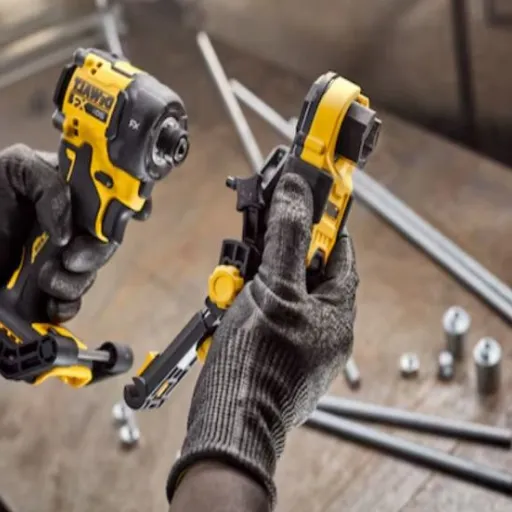
Torque and power source narrow the field. Design configuration determines whether the tool fits your workspace.
Pistol Grip Nut Runners
Pistol grip is the default for general assembly. The handle sits perpendicular to the drive axis, which feels natural for overhead work and repetitive tasks. Most operators learn on pistol grip tools, so training time is minimal.
Angle Head Nut Runners
When clearance is tight, angle head designs get into spaces pistol grips cannot. The drive sits at 90 degrees to the motor body. Automotive underbody assembly, appliance manufacturing, and electronics enclosures often need this configuration.
Inline Nut Runners
Inline tools extend straight from the drive axis. They work well for fixed spindles and straight-line access points. Inline designs also tend to be lighter, which reduces fatigue during extended use.
Fixed vs Handheld
Handheld tools give operators flexibility. Fixtured spindles bolt into automation cells and deliver consistent cycle times without human variation. If your line runs the same fastener in the same position thousands of times per day, fixtured is worth evaluating. For mixed models and frequent changeovers, handheld keeps you agile.
For a deeper look at each design, see our breakdown of the types of nut runners.
Factor 4: Evaluate Data and Traceability Needs
Modern manufacturing runs on data. The question is how much you need.
Basic Torque Control
Stall-type or mechanical shut-off tools stop when they hit a preset torque. This is enough for simple assembly, where traceability is not required. The cost is lower, and the tool is simpler to maintain.
Torque and Angle Monitoring
For safety-critical joints, torque alone is not enough. Angle-controlled tightening measures how far the fastener rotates after the seating point. This catches stripped threads, cross-threading, and galled fasteners that torque-only tools miss.
Industry 4.0 Readiness
Smart nut runners connect to Manufacturing Execution Systems (MES) and PLCs for real-time monitoring. They export torque curves, OK/NOK results, and statistical process control data. If your customers or auditors demand full traceability, this capability is non-negotiable.
Factor 5: Consider Ergonomics and Operator Safety
A tool that beats up your operators will cost you in turnover, errors, and safety claims.
Hand-Arm Vibration (HAV)
Pneumatic tools generate significantly more vibration than electric models. European Directive 2002/44/EC sets daily exposure limits. If your operators run nut runners for multiple hours per shift, prioritize low-vibration electric or cordless options.
Reaction Force Management
High-torque nut runners create reaction forces that strain wrists and arms. External reaction arms absorb this force against a solid surface. Some modern electric designs use internal absorption systems that reduce operator strain without extra hardware.
Weight and Noise
Operator fatigue builds over a shift. A tool that weighs 200 grams more than necessary becomes noticeable after 500 cycles. Noise matters too. Pneumatic tools typically run at 95-105 dB. Electric models operate closer to 75-85 dB. In facilities with strict noise limits, electric may be the only practical choice.
For a full safety breakdown, read our guide to nut runner safety and ergonomics.
Factor 6: Calculate Total Cost of Ownership
Sticker price is a fraction of the real cost. Over five years, the initial purchase price represents only 20-30% of the total cost of ownership.
Infrastructure Costs
Electric tools need controllers and wiring. Pneumatic tools need compressors, dryers, filters, and distribution lines. If your facility already has compressed air, pneumatic infrastructure is sunk cost. If not, installing air lines for a new line adds thousands to the project.
Maintenance and Calibration
ISO 6789 recommends torque tool calibration every 12 months or 5,000 cycles, whichever comes first. Calibration costs vary by region and tool complexity. Programmable electric tools with transducers cost more to calibrate than simple stall-type pneumatics. Factor this into your budget.
Spare parts availability matters too. A tool with no local support creates downtime while you wait for overseas shipping. When evaluating suppliers, ask about spare parts lead times and whether they stock common wear items in your region.
Energy Consumption
Electricity is cheaper than compressed air for equivalent output. Over five years, the energy savings from switching a station from pneumatic to electric can cover a significant portion of the tool cost. For a detailed TCO analysis with actual numbers, see our complete nut runner guide.
The 5-Step Selection Framework: From Spec to Purchase
Here is how to put the six factors into practice.
Step 1: Document your fastener specs. Record bolt size, grade, material, and target torque. Use the table in Factor 1 as your starting point.
Step 2: Map your production environment. Is the station fixed or mobile? Are there noise limits? Is the atmosphere hazardous? Does the operator work overhead or in tight spaces?
Step 3: Define your data requirements. Do you need basic torque control, or full traceability with MES integration? This decision alone narrows the field by half.
Step 4: Match power source and design. Use your torque range, environment, and data needs to select electric, pneumatic, cordless, or hydraulic. Then choose pistol, angle, or inline based on access.
Step 5: Validate TCO and supplier capability. Build a five-year cost projection. Confirm spare parts availability. Ask for torque accuracy testing and certification before you commit.
Nut Runner Selection Checklist
Before you send an RFQ or place an order, confirm each item below.
- Target torque calculated for each fastener size and grade
- Accuracy class matched to application risk
- Power source selected based on torque range and environment
- Design configuration confirmed for workspace access
- Data and traceability needs defined
- Ergonomic limits reviewed (vibration, weight, noise)
- Five-year TCO estimated, including energy and maintenance
- Spare parts availability and lead times confirmed
- Calibration schedule and cost understood
- Voltage and regional certifications verified for export
Sourcing Considerations for Distributors and Brand Owners
If you are buying nut runners for resale or building your own tool brand, sourcing strategy is as important as tool selection.
Factory-Direct Advantages
Buying direct from the manufacturer eliminates intermediary markups. It also gives you direct access to engineering teams for customization. A Brazilian distributor we work with improved margins from 18% to 42% by switching from a trading company to factory-direct sourcing with consistent quality control.
OEM Customization Options
Factory-direct manufacturers can customize torque ranges, voltage (110V for North America, 220V for Europe), reaction arm geometry, and branding. If you are building a private label tool line, this flexibility lets you differentiate without investing in manufacturing infrastructure.
MOQ and Lead Time Planning
Start with sample orders to validate torque accuracy and durability. Once specs are confirmed, scale to production volume. Reliable manufacturers offer flexible Minimum Order Quantities that grow with your business. Ask about sample policies before you commit to large volumes.
For a complete guide to OEM nut runner manufacturing, see our article on OEM nut runner manufacturing.
Common Selection Mistakes to Avoid
Even experienced buyers make these errors.
Choosing based on sticker price alone. The cheapest tool often costs the most over five years. Energy, calibration, downtime, and premature replacement add up fast.
Ignoring infrastructure requirements. A pneumatic tool looks affordable until you factor in compressor upgrades, air line installation, and energy costs.
Overlooking the duty cycle. A tool rated for light assembly will overheat and fail in heavy production. Match the duty cycle to your actual volume.
Mismatching accuracy to the application. Paying for ±1% precision on non-critical joints wastes budget. Settling for ±3% on safety-critical joints risks liability.
Forgetting about maintenance access. A tool with no local spare parts support becomes an expensive paperweight when it breaks. Confirm parts availability before you buy.
Conclusion
Learning how to choose a nut runner comes down to six factors. Torque requirement. Power source. Design configuration. Data needs. Ergonomics. Total cost of ownership. Start with the bolt, not the brand. Match accuracy to risk. Calculate the real five-year cost. And verify that your supplier can support you with spare parts and service after the sale.
The right nut runner improves quality, reduces cost, and protects your operators. The wrong one creates defects, downtime, and budget overruns.
If you need factory-direct nut runner solutions, custom torque specifications, or OEM manufacturing support, contact our team. We help distributors and brand owners specify the right tools, customize voltage and torque ranges for their markets, and scale from sample orders to full production volumes.
Ready to select the right nut runner for your application? Download our printable selection checklist or request a sample for torque validation.