
M6 Screw Size: Dimensions, Thread Pitch & Tool Chart
An M6 screw has a nominal thread diameter of 6 mm and a standard coarse thread pitch of 1.0 mm. Most M6 screws are driven with a 5 mm Allen key (socket cap) or a 10 mm wrench or socket (hex head and hex nut), and they thread into holes drilled with a 5.0 mm tap drill. This guide covers every M6 screw size and dimension you need, the tools that fit each head type, and how to source M6 screws and fastening tools for a distributor product line.
Key Takeaways
- M6 means 6 mm thread diameter with a 1.0 mm coarse pitch; fine threads M6 x 0.75 and extra-fine M6 x 0.5 are used where vibration resistance matters.
- A standard M6 socket head cap screw (DIN 912 / ISO 4762) needs a 5 mm Allen key; button head, countersunk, and low head M6 variants use 4 mm, and M6 set screws use 3 mm.
- M6 hex bolts and hex nuts use a 10 mm wrench or socket, one of the most common sizes in any metric tool kit.
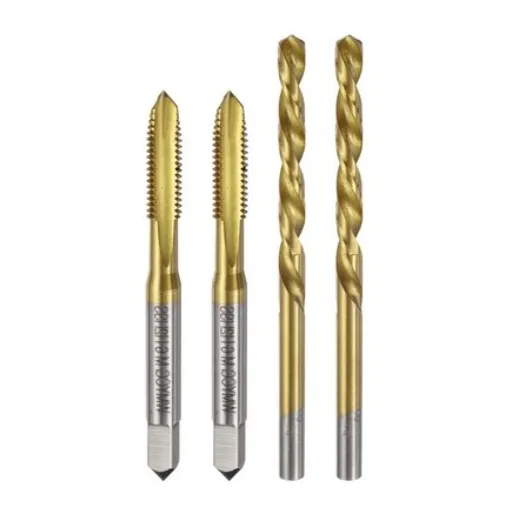
- For tapping an M6 thread, use a 5.0 mm drill bit; for clearance holes, choose 6.4 mm (close), 6.6 mm (normal), or 7.0 mm (free) fit per ISO 273.
- M6 (6.0 mm, 1.0 mm pitch) is close to but NOT interchangeable with 1/4-20 UNC (6.35 mm, 20 TPI); forcing one into the other cross-threads and can permanently damage the part.
What Size Is an M6 Screw?
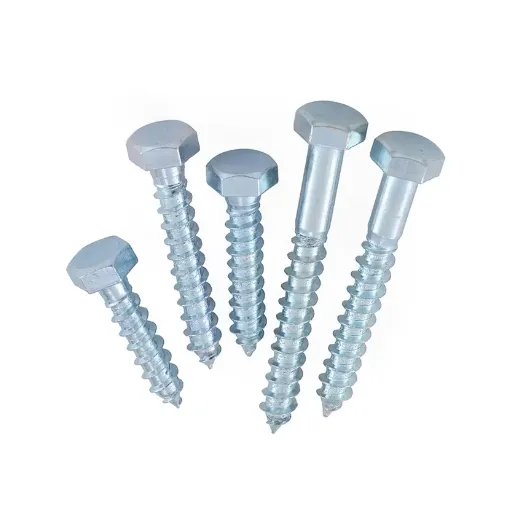
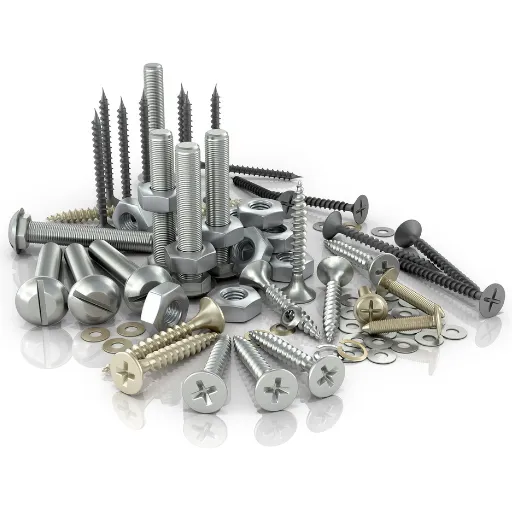
M6 is a metric screw size with a nominal thread diameter of 6 mm and a coarse thread pitch of 1.0 mm. You write it as M6 x 1.0, and the actual outside diameter of the threaded portion measures 6.0 mm at its maximum. That compact 6 mm size makes M6 one of the most widely used screws in the world, found in furniture, electronics, automotive brackets, machinery guards, and 3D-printed and CNC assemblies.
The M6 screw size is part of the ISO metric screw thread system, which applies to screws, bolts, and nuts across every major market except the United States, where inch-based Unified threads still dominate. Because metric fasteners are standardized, an M6 screw from one manufacturer fits an M6 nut or threaded hole from any other, as long as the pitch matches.
M6 screws are typically available in lengths from about 6 mm up to 100 mm, with the most common lengths being 10, 12, 16, 20, 25, 30, 35, and 40 mm. The length is measured from under the head to the end of the screw for most head styles. Countersunk head screws are the exception, because their head sits flush, so you measure the full length including the head. Our how to measure screw size guide walks through both methods in detail.
M6 Screw Dimensions at a Glance
When someone asks for the M6 screw size, they usually mean the dimensions that tell you whether a screw will fit: thread diameter, pitch, length, and the drive size. Here are the core numbers for M6 coarse thread.
| M6 dimension | Value |
|---|---|
| Nominal thread diameter (d) | 6.0 mm |
| Coarse thread pitch | 1.0 mm |
| Fine thread pitch | 0.75 mm |
| Extra-fine thread pitch | 0.5 mm |
| Pitch diameter | about 5.35 mm |
| Typical lengths | 6-100 mm |
| Standard | ISO metric thread (DIN / ISO) |
Two M6 screws can look identical and still not fit each other if the pitch differs. An M6 x 1.0 coarse screw will not thread cleanly into an M6 x 0.75 fine nut. For a full list of diameters, pitches, and drill sizes across M3 to M24, bookmark our metric screw size chart.
What Does the M6 Designation Mean?
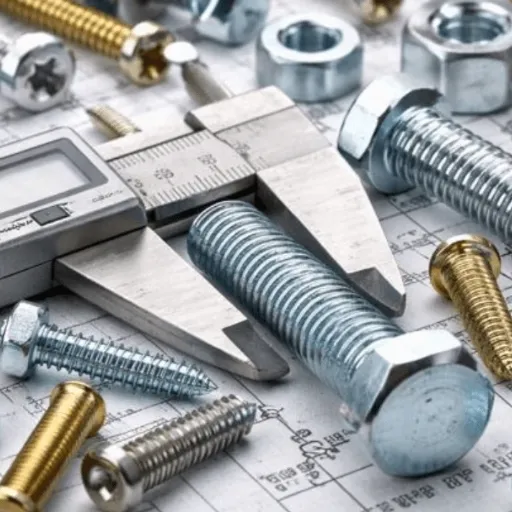
Metric screw callouts pack several facts into a short string. Take M6 x 1.0 x 20:
- M stands for metric thread.
- 6 is the nominal thread diameter in millimeters, 6 mm.
- 1.0 is the thread pitch, the distance between thread crests, also in millimeters.
- 20 is the length in millimeters, measured from under the head to the end.
If the pitch is omitted, the screw uses the standard coarse pitch for that diameter, so “M6” means M6 x 1.0. When you see M6 x 0.75 or M6 x 0.5, the finer pitch is specified because it is not the default.
The M-series sizing scales upward in a fixed progression, M2, M3, M4, M5, M6, M8, M10, M12, and so on. Each step up increases the diameter, the strength, and typically the tool size required. M6 sits right in the middle of the most common range, big enough for real holding strength but small enough for compact products. To see how M6 compares with M8 and the rest of the metric sizes, plus how to choose the right diameter for an application, read our metric screw sizes guide.
M6 Thread Pitch: Coarse vs. Fine
Thread pitch is the distance between threads, and for M6 you can choose between three pitches.
| M6 pitch | Type | Common use |
|---|---|---|
| M6 x 1.0 | Coarse (standard) | General-purpose; most stock M6 screws |
| M6 x 0.75 | Fine | Vibration-prone assemblies, thin-wall parts |
| M6 x 0.5 | Extra-fine | Precision adjustment, very thin materials |
Coarse threads are stronger in tension, cut faster, and resist stripping in softer materials, which is why they are the default. Fine threads have a smaller helix angle, so they resist loosening under vibration and allow finer adjustment. The trade-off is that fine threads strip more easily if you over-torque them, and they need slightly different tapping drills. Our M6 thread pitch guide explains coarse versus fine in full and includes a pitch chart for M3 through M12.
M6 Screw Head Types and Head Sizes
The thread dimensions of an M6 are always the same, but the head style changes the drive tool and the head’s physical size. These are the M6 head types you will encounter most.
| M6 head style | Standard | Head diameter | Head height | Drive |
|---|---|---|---|---|
| Socket head cap screw | DIN 912 / ISO 4762 | 10.0 mm | 6.0 mm | 5 mm hex (Allen) |
| Low head socket cap | DIN 7984 | 10.0 mm | 4.0 mm | 4 mm hex |
| Button head | ISO 7380 | 10.5 mm | 3.3-4.0 mm | 4 mm hex |
| Countersunk (flat) head | DIN 7991 / ISO 10642 | about 10.6 mm | flush | 4 mm hex |
| Hex head bolt | DIN 933 / ISO 4017 | 10 mm across flats | 4.0 mm | 10 mm wrench |
| Hex head nut | DIN 934 / ISO 4032 | 10 mm across flats | 5.0 mm | 10 mm wrench |
| Set screw (grub) | DIN 916 / ISO 4029 | body diameter | small head | 3 mm hex |
Socket head cap screws are the workhorse of machinery because they take a strong hex drive and a low-profile head. Button heads suit thin panels and visible surfaces, countersunk heads give a flush finish, and hex heads are turned with a wrench or socket rather than a driver bit. Set screws hold parts in place without a head sticking out.
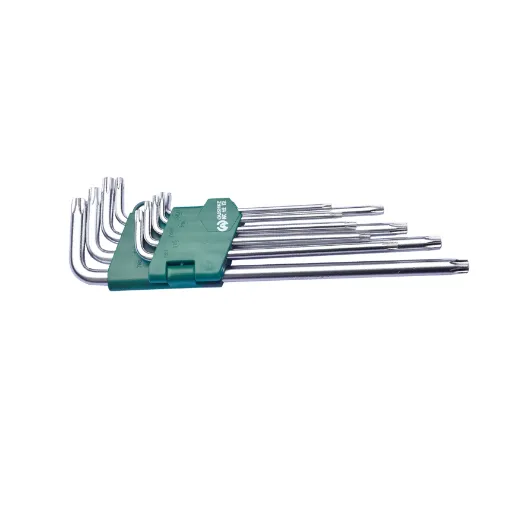
Each of these M6 head styles also exists in different drive systems, including Phillips, slotted, and Torx. Torx screwdrivers give a strong, cam-out-resistant grip that is popular on M6 fasteners in automotive and high-vibration work. For a full breakdown of the socket cap family and how drive types affect your tooling and assembly speed, see our types of M6 socket head cap screws guide.
Fastening Tools You Need for M6 Screws
Here is where this guide stands apart from most fastener reference pages. The screw size is only half the question. The other half is which tool actually turns it. Below is the M6 screw-to-tool map, the sizes every mechanic, assembler, and distributor should stock.
| M6 fastener | Drive tool | Tool size |
|---|---|---|
| Socket head cap screw | Allen (hex) key | 5 mm |
| Button / flat / low head socket screw | Allen (hex) key | 4 mm |
| M6 set screw | Allen (hex) key | 3 mm |
| Hex head bolt | Combination wrench or socket | 10 mm |
| M6 hex nut | Combination wrench or socket | 10 mm |
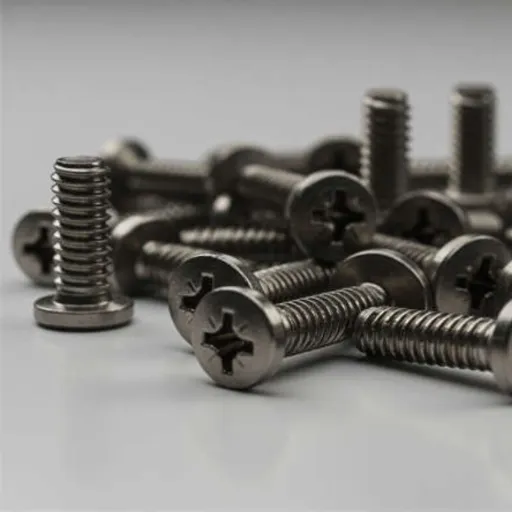
| Pan head machine screw (Phillips) | Phillips screwdriver / bit | PH2 |
| Pan head machine screw (slotted) | Flat screwdriver / bit | 4-6 mm blade |
| Hexalobular (Torx) drive M6 | Torx driver / bit | T30 |
The 5 mm Allen key for socket head cap screws is the single most important size in this list. The 10 mm wrench or socket covers M6 hex bolts and nuts and is one of the most commonly used sizes in any metric tool set. If you supply tools for a workshop, these two sizes alone will cover the majority of M6 fasteners in service.
Socket sizes are worth a note. A 10 mm socket with a 1/4-inch or 3/8-inch drive is standard for M6. When space is tight around the bolt head, a deep socket or a thin-wall socket reaches where a regular socket will not. Our M6 hex key, wrench and socket sizes guide has the complete M6 tool map across every head type, and our Allen wrench sizes chart covers hex keys for the whole M-series. For the full lineup of open-end, box-end, and socket tools, browse our types of wrenches reference and our screwdriver range.
Here is what happens when the tool size is wrong. In February 2026, a maintenance team at a small packaging plant was rebuilding a conveyor guard that used M6 socket cap screws. The technician grabbed a 4 mm Allen key that was lying next to the kit instead of the correct 5 mm. It slipped, rounded the socket in three screws, and the guard had to be drilled out to remove them. The fix took two hours and a replacement pack of screws. A 5 mm key is a two-dollar tool; the rounded screws cost far more in downtime. When a fastener fights your tool, stop and check the size before you damage it.
Drill Sizes for M6: Tap Drill & Clearance Holes
Drilling the right hole before you install an M6 screw separates a clean assembly from a stripped thread. You need two different hole sizes depending on the job.
Tapping holes. When you cut threads into the hole with a tap, use the tap drill size. For M6 x 1.0 coarse, the standard tap drill is 5.0 mm, which produces roughly 75% thread engagement. For fine threads, use 5.2 mm for M6 x 0.75 and 5.5 mm for M6 x 0.5.
| M6 thread | Tap drill |
|---|---|
| M6 x 1.0 coarse | 5.0 mm |
| M6 x 1.0 (lighter, 65-70%) | 5.1 mm |
| M6 x 0.75 fine | 5.2 mm |
| M6 x 0.5 extra-fine | 5.5 mm |
Clearance holes. When the screw passes through a hole and threads into something behind it, drill a clearance hole. The ISO 273 standard defines three fits:
| ISO 273 fit | Clearance hole for M6 |
|---|---|
| Close fit | 6.4 mm |
| Normal / medium fit | 6.6 mm |
| Free fit | 7.0 mm |
Use 6.6 mm as your default for a clearance hole. Choose 6.4 mm when alignment is critical and the screw needs less play, and 7.0 mm when the parts need room to shift or the hole is punched rather than drilled. Material matters too. Soft materials like plastic and aluminum grip harder, so a slightly larger pilot hole or a formed thread can reduce stripping. The M6 drill size guide covers tapping and clearance for blind and through holes in detail. For reference tables that span the full metric range, Engineers Edge publishes the ISO metric tap and drill sizes, and TR Fastenings maintains an authoritative tapping and clearance hole chart.
M6 Torque Specifications
An M6 thread is small enough that over-torquing strips it quickly. Recommended tightening torque depends on the property class of the steel. The table below gives general reference values for dry threads.
| M6 property class | Approx. tightening torque (dry) |
|---|---|
| 8.8 | 9-12 Nm |
| 10.9 | 14-17 Nm |
| 12.9 | 18-22 Nm |
| A2-70 / A4-80 stainless | 7-9 Nm |
Two rules apply across every value. First, lubricated threads need roughly 20-25% less torque than dry ones. Second, always follow the equipment manufacturer’s specification when one is given. When an M6 strips, it is almost always from over-torque, and in aluminum or plastic parts the safe value can be far lower than the steel maximum.
A torque wrench is the reliable way to hit these numbers on critical joints. For the recommended torque by grade and application, plus guidance on dry versus lubricated fastening, see our M6 torque specifications guide. Accu also publishes a detailed high tensile fastener tightening torque reference for metric screws.
M6 Bolt vs. Screw: What’s the Difference?
People use “M6 screw” and “M6 bolt” loosely, but the two are not the same thing. The practical distinction is how they are tightened.
- A bolt is normally turned by wrenching its head or a nut, so it has an external hex head or a matching nut. An M6 hex bolt is tightened with a 10 mm wrench.
- A screw is normally driven through a head that you turn with a screwdriver or hex key, such as an M6 socket head cap screw driven with a 5 mm Allen key.
The same M6 thread can be supplied as either. A hex head bolt works where you need high clamping force with a wrench, while a socket cap screw suits compact spaces and cleaner looks. There is a grey area in the middle, which is why the distinction confuses even experienced buyers. Our bolt vs screw guide settles the definitions and explains how the difference affects what you order and how you assemble.
M6 Screw Grades, Materials & Strength Classes
The number stamped on an M6 screw head, like 8.8, tells you its strength. The first digit is the tensile strength in hundreds of megapascals, and the second digit is the ratio of yield strength to tensile strength.
| Strength class | Tensile strength | Common use |
|---|---|---|
| 4.8 | about 400 MPa | Low-stress general fastening |
| 8.8 | about 800 MPa | Standard high-tensile; the common default |
| 10.9 | about 1000 MPa | Automotive and machinery |
| 12.9 | about 1200 MPa | Highest-strength alloy steel |
| A2-70 (stainless 304) | about 700 MPa | Corrosion-resistant indoor |
| A4-80 (stainless 316) | about 800 MPa | Marine and chemical exposure |
For most applications, an 8.8 M6 is the sensible default: strong, available, and economical. Step up to 10.9 or 12.9 when the joint is load-bearing and you need the extra clamp force, and switch to stainless A2 or A4 when corrosion matters more than ultimate strength. Surface finishes also play a role, zinc plating for basic corrosion resistance, black oxide for a low-friction dark finish, and Dacromet for salt-heavy environments.
Choosing the right M6 screw grade affects both performance and cost, especially when you buy in volume. Our screw strength classes guide explains each grade, material, and finish and when to use them.
M6 vs. 1/4 Inch: The Interchangeability Warning
This is the M6 mistake that damages the most equipment. M6 and 1/4-20 UNC screws look nearly identical at a glance, but they are not interchangeable.
| Dimension | M6 (metric) | 1/4-20 UNC (inch) |
|---|---|---|
| Major diameter | 6.0 mm | 6.35 mm |
| Thread pitch | 1.0 mm | 1.27 mm (20 TPI) |
| Standard | ISO metric | Unified Coarse |
| Typical use | Global metric products | Camera tripods, US hardware |
The diameters differ by 0.35 mm and the pitch differs by 0.27 mm. If you force an M6 screw into a 1/4-20 hole, the threads will engage for the first turn, then climb over each other and gall. Within a few turns the metal seizes, and in aluminum parts the threads are often destroyed beyond repair. This happens constantly with camera tripods, where the mount is 1/4-20, and with mixed metric and imperial furniture kits.
In late 2025, a videographer named Priya snapped a camera mount on a new tripod. The tripod shipped with a metric M6 screw in the accessory kit, but the mount was a 1/4-20 UNC thread. It turned easily for the first rotation and then locked up. She forced it, and the aluminum thread in the plate stripped out completely. The repair cost her $180, and the lesson cost her an afternoon of footage. The fix is simple: never force a fastener that fights you, and keep M6 and 1/4-inch screws in separate labeled containers.
If you mix metric and imperial hardware in your shop or product line, our M6 vs 1/4 inch comparison explains the full metric-to-imperial conversion and how to avoid cross-threading.
How to Measure an M6 Screw
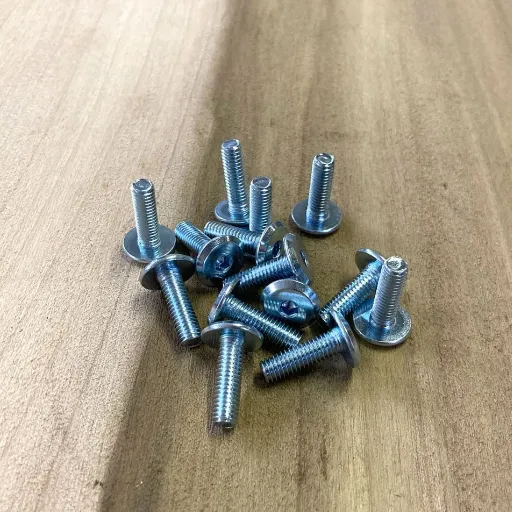
If you are not sure a screw is actually M6, three measurements confirm it: diameter, pitch, and length.
- Measure the diameter. Use a caliper across the outside of the threads. An M6 reads about 6.0 mm (a minimum of roughly 5.8 mm is normal).
- Check the pitch. Use a thread pitch gauge. If the gauge marked 1.0 mm fits cleanly, it is M6 x 1.0 coarse. If 0.75 mm fits, it is a fine thread.
- Measure the length. Measure from under the head to the end for most M6 screws. For countersunk head screws, measure the full length including the head.
A digital caliper and a thread pitch gauge are the two tools that make this fast and error-free. McMaster-Carr has an authoritative how to measure screw size reference if you want the official method, and our how to measure screw size guide covers measuring bolts, reading stamped callouts, and using printable size charts step by step.
Sourcing M6 Screws & Fastening Tools for Distributors
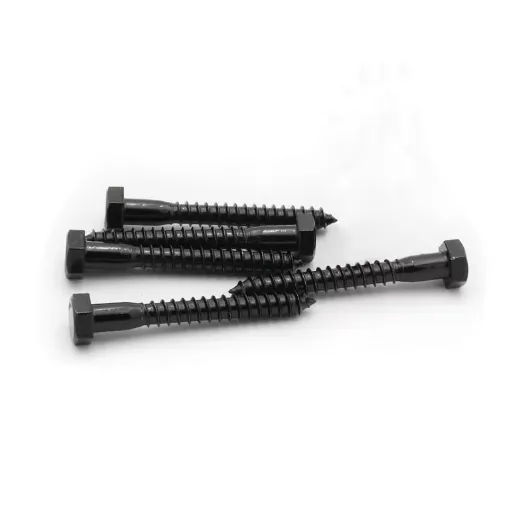
M6 fasteners are a high-volume, repeat-purchase category, which makes them attractive to distributors and hardware sellers. Externally threaded fasteners such as screws and bolts make up the largest product segment of the global fasteners market, which was valued at roughly US$93 billion in 2025 and is projected to grow steadily through the next decade (GII Research). The practical opportunity is not just screws alone. It is selling screws and the tools that drive them as one coordinated fastening line.
When a customer buys M6 socket cap screws, they also need 5 mm Allen keys. When they buy M6 hex bolts, they need 10 mm wrenches and sockets. Stocking the fasteners and the driver tools together raises order value, solves a real buyer problem, and turns a commodity SKU into a fuller product line.
Shanghai Oushike Hardware Tools Co., Ltd. manufactures professional hand tools, including hex keys, wrenches, sockets, screwdrivers, and driver bits. As a direct factory, we combine factory-direct pricing with flexible MOQs, so you can start with a test order and scale as demand grows. Our OEM and private label services let you brand both the tools and the packaging as your own, which protects your margin better than reselling a generic import. And because we handle the tool side of the line, you can pair it with screws from a trusted fastener partner, or ask us about sourcing a complete fastening package for your catalog.
Before you place a bulk M6 screw order, verify the supplier’s ISO 9001 quality system, confirm the property class and material you need, and request samples with material reports. Our M6 screw manufacturer guide covers supplier verification, MOQs, and lead times for wholesale and OEM fasteners. For the broader picture of moving tools and hardware across borders, read our hand tool import guide and our custom hand tools overview.
When Ana expanded her hardware e-commerce store in 2024, she started by reselling M6 hex bolts alone. Average order value was $18 and competitors undercut her on price every week. In the spring of 2025 she added a private label fastening kit, M6 socket cap screws bundled with 5 mm hex keys and a 10 mm socket, sold under her own brand. Order value jumped to $41, returns dropped, and her margin nearly doubled because nobody could price-match a branded bundle sourced factory-direct. The screws were the draw; the tools were the margin.
Get a bulk quote for M6 fastening tools or contact our team to discuss bundling screws and driver tools into your catalog. You can also learn more about Shanghai Oushike Hardware Tools and our manufacturing capabilities.
M6 Screw FAQ
What size is an M6 screw?
An M6 screw has a nominal thread diameter of 6 mm and a standard coarse pitch of 1.0 mm. The actual measured diameter is about 6.0 mm, and common lengths run from 6 mm to 100 mm.
What size Allen key fits an M6 socket head cap screw?
A 5 mm Allen key fits a standard M6 socket head cap screw. M6 button head, flat head, and low head socket screws use a 4 mm Allen key, and M6 set screws use 3 mm.
What size wrench fits an M6 bolt or nut?
An M6 hex bolt head and an M6 hex nut both use a 10 mm wrench or socket, measured across the flats.
What size drill bit do I use to tap an M6 thread?
Use a 5.0 mm drill bit to tap an M6 x 1.0 coarse thread. For an M6 x 0.75 fine thread use 5.2 mm, and for M6 x 0.5 use 5.5 mm.
Is M6 the same as 1/4 inch?
No. M6 is 6.0 mm with a 1.0 mm pitch, while 1/4-20 UNC is 6.35 mm with a 1.27 mm pitch. They look similar but are not interchangeable and will cross-thread if forced together.
What pitch is an M6 screw?
An M6 coarse thread has a 1.0 mm pitch. Fine threads are available at 0.75 mm and extra-fine at 0.5 mm.
What torque should I use for an M6 bolt?
For an M6 bolt, roughly 9-12 Nm for class 8.8 and 14-17 Nm for class 10.9, with dry threads. Reduce these values by about 20-25% if the threads are lubricated, and always follow the manufacturer’s spec when available.
Is M6 bigger than M8?
No. M8 is larger, with an 8 mm diameter. M6 is the size below M8 in the metric progression, so an M8 screw needs larger tools and a larger clearance hole.
Conclusion
The M6 screw size comes down to a handful of numbers you can memorize in minutes: 6 mm diameter, 1.0 mm pitch, 5 mm Allen key for socket caps, 10 mm wrench for hex heads and nuts, 5.0 mm tap drill, and a 6.6 mm clearance hole. Match the pitch to the thread, match the tool to the head, and never confuse M6 with 1/4 inch.
For distributors and hardware sellers, M6 fasteners are a dependable volume category, and the real opportunity is bundling them with the driver tools customers need. From hex keys and sockets to screwdrivers and bits, Shanghai Oushike Hardware Tools can supply the tool side of a complete fastening line with factory-direct pricing, flexible MOQs, and full private label support.
Keep this guide handy for the dimensions, and explore the linked articles whenever you need the deep dive on a specific size, tool, or material. When you are ready to build your fastening product line, request a quote and our team will help you plan it from a single screw size up to a full catalog.