
Needle Nose Pliers: Uses, Types & Sourcing Guide
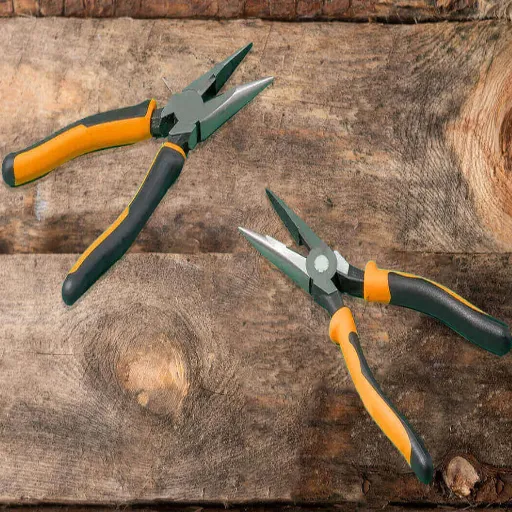
Needle nose pliers are long, tapered-jaw hand tools built to grip, bend, cut, and position small wires, fasteners, and components in tight spaces where standard pliers cannot reach. Electricians, electronics technicians, jewelers, and mechanics rely on them daily for precision work, and distributors stock them across every hand tool category for good reason. This guide explains what these pliers do, how the main types and sizes differ, and what to look for when sourcing them in bulk or under your own brand.
At Shanghai Oushike Hardware Tools, we manufacture professional-grade pliers and a full hand tools range for industrial, commercial, and wholesale buyers. Whether you need a standard line for resale, insulated tools for electrical markets, or a fully customized private-label product, the details below will help you buy with confidence.
Key Takeaways
- Needle nose pliers are precision tools defined by slim, sharply tapered jaws for gripping, bending, and cutting small components in tight spaces.
- The two main families, straight and long nose, differ in jaw shape and tip strength, so each suits different trades.
- Eight common types, including bent, insulated, round, and miniature, cover electrical, electronics, jewelry, and automotive work.
- Sizes range from 130 mm for delicate work to 250 mm for heavy-duty reach; electricians typically choose 160-200 mm.
- For B2B buyers, certification depth (VDE, IEC 60900), material hardness (HRC 50+), and OEM flexibility are the factors that protect margins and build a reliable product line.
What Are Needle Nose Pliers?
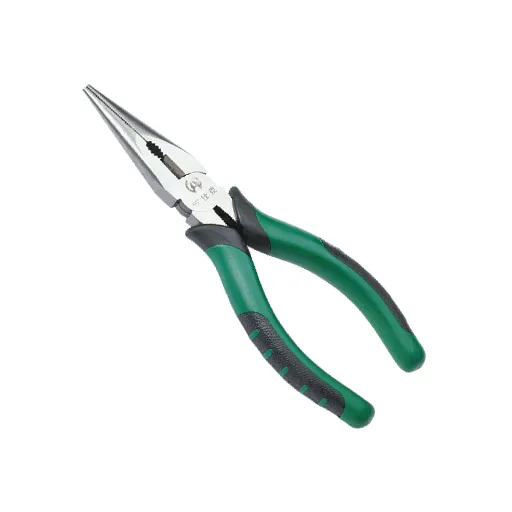
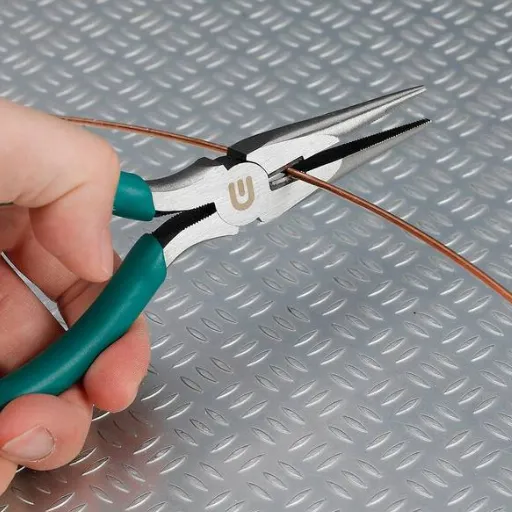
Needle nose pliers are hand tools with long, narrow jaws that taper to a fine point, designed to grip, bend, and cut small objects in confined spaces. The shape gives users precision control that standard pliers cannot offer, which is why the tool appears in electrical panels, circuit boards, jewelry benches, and engine bays.
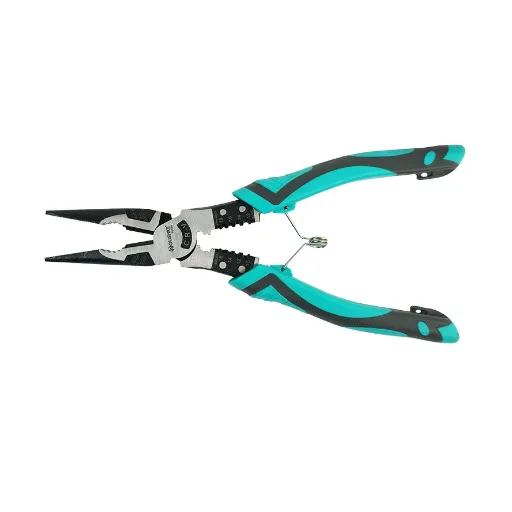
Most professional models are made from hardened steel or chrome-vanadium (Cr-V) steel. Heat treatment brings the working surfaces to a hardness of HRC 50 or higher, which resists wear and keeps the tips aligned through thousands of cycles. Many models also include a built-in wire cutter near the pivot joint, so one tool can grip, bend, and cut without swapping tools.
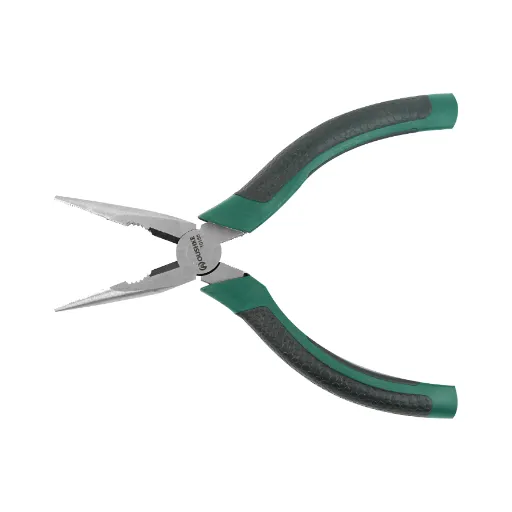
The core parts are simple: two pivoted jaws, a joint, and insulated handles. Jaw design and handle material drive most of the difference between models, and both matter when you buy for a specific trade or market.
Needle Nose vs. Long Nose Pliers
The terms are often used interchangeably, but they are not identical. The distinction comes down to jaw shape and tip strength.
| Feature | Needle Nose Pliers | Long Nose Pliers |
|---|---|---|
| Jaw Shape | Slim, sharply tapered | Longer, slightly broader |
| Tip Size | Fine, pointed | Blunter, stronger |
| Best For | Electronics, jewelry, precision work | Electrical work, mechanical repair |
| Strength | Lower torque, higher precision | Higher torque, general use |
| Typical Length | 130-200 mm | 160-250 mm |
Slim tapered jaws excel at delicate tasks. Long nose pliers have a sturdier profile for heavier gripping and general electrical or mechanical work. If you are choosing between the two for a product line, most distributors carry both because they serve different customers. Our guide to needle nose vs long nose pliers breaks down the comparison in more detail.
Types of Needle Nose Pliers
Different jaw shapes, lengths, and handle designs make each type suitable for specific tasks. The table below summarizes the most common styles.
| Type | Jaw Design | Best Application | Handle Notes |
|---|---|---|---|
| Standard | Straight, tapered jaws | General precision tasks, holding small parts | Standard or ergonomic grips |
| Long | Extended jaws | Deep access in panels and engine bays | Longer handles for extra reach |
| Bent (45 deg or 90 deg) | Angled jaws | Work around obstacles, automotive, machinery | Improves visibility in tight spots |
| Round | Smooth, conical jaws | Forming loops and curves in wire | Common in jewelry making |
| Chain | Flat inner jaws, rounded outer profile | Gripping small parts without marring soft metals | Popular for wire wrapping |
| Flat | Wide, flat jaws | Gripping flat or rectangular materials, straightening wire | Useful in craft and electrical work |
| Insulated | Standard or long jaws with coated handles | Live electrical work | VDE or IEC 60900 rated required |
| Miniature | Compact, fine-tipped jaws | Electronics repair, watchmaking, model building | Better control for tiny components |
Bent Nose Pliers
Angled jaws, usually 45 degrees or 90 degrees, let a user reach around obstructions without contorting the wrist. These are common in automotive work for hose clamps, spring clips, and recessed fasteners, which is why they earn a spot in any automotive tools lineup. For distributors, adding one angled SKU to the pliers lineup covers a use case that straight-jaw models miss. See our complete guide to bent nose pliers for types and buying guidance.
Insulated and Miniature Variants
Insulated pliers carry a coated handle rated for live electrical work, while miniature versions offer fine tips for electronics. Both serve specialized markets with higher price points and clearer safety requirements. Precision pliers with ESD-safe tips round out this segment for electronics and watchmaking buyers. They belong in a balanced assortment, which we cover in our pliers range and the broader different types of pliers overview.
Common Uses of Needle Nose Pliers
These pliers are used across many industries because they combine precision with control. The table below maps the main applications to recommended types.
| Industry | Typical Task | Recommended Type |
|---|---|---|
| Electrical work | Bending wires, positioning conductors, reaching into junction boxes | Standard, long, or insulated |
| Electronics repair | Handling small components, adjusting connectors, routing delicate wiring | Miniature or standard |
| Jewelry making | Bending wire, opening jump rings, shaping soft metals | Round, chain, or flat jewelry pliers |
| Automotive repair | Retrieving fasteners, routing wires, gripping clips and connectors | Long or bent nose |
| Aerospace and manufacturing | Precision work with sensitive materials and small parts | Standard or long with smooth jaws |
| General maintenance | Repairing appliances, fishing dropped screws, detail work | Standard or long |
For electricians, the choice of model and certification matters more than in any other trade. Our picks in best needle nose pliers for electricians explain what to stock for professional electrical customers, while wire strippers for electricians cover the prep work. For electronics work, fine-tipped and ESD-safe models are covered in precision pliers.
Jewelry suppliers will find the type comparisons they need in jewelry making pliers. In that segment, jewelry pliers with round, chain, or flat noses cover most bench work.
When Marco, an electrician in Madrid, opened a junction box during a panel upgrade, he found a bundle of stiff conductors wedged behind a steel rail. A standard pair of electrical tools was too bulky, so he reached for a 180 mm long-nose model with a fine tip. He bent each conductor into place without nicking the insulation, finished the connection in minutes, and closed the box. That single tool turned a frustrating repair into routine work, which is exactly why professionals keep a tapered-nose pair within reach.
Step-by-step technique, including grip, jaw positioning, and bending wire, is covered in how to use needle nose pliers.
Needle Nose Pliers Sizes and Dimensions
Length and jaw dimensions determine how a pair performs in different tasks. The table below shows common size ranges and typical use cases.
| Overall Length | Jaw Length (approx.) | Best For | Common User |
|---|---|---|---|
| 130-140 mm (5-5.5 in) | 25-35 mm | Fine electronics, jewelry, model work | Technicians, jewelers |
| 150-160 mm (6-6.3 in) | 35-45 mm | General electrical and repair work | Electricians, mechanics |
| 180-200 mm (7-8 in) | 45-55 mm | Deep reach, larger fasteners, industrial use | Automotive, industrial |
| 210-250 mm (8-10 in) | 55-70 mm | Heavy-duty mechanical and electrical tasks | Industrial maintenance |
Shorter models offer more control for detail work. Longer versions, including 180-200 mm long nose pliers, provide better reach in deep or confined spaces. Most electricians prefer 160-200 mm models, which balance reach with control inside junction boxes. When sourcing for resale, offer a range of lengths so your customers can match the tool to the job. Our complete needle nose pliers sizes guide includes full dimension details.
How to Choose the Right Pliers
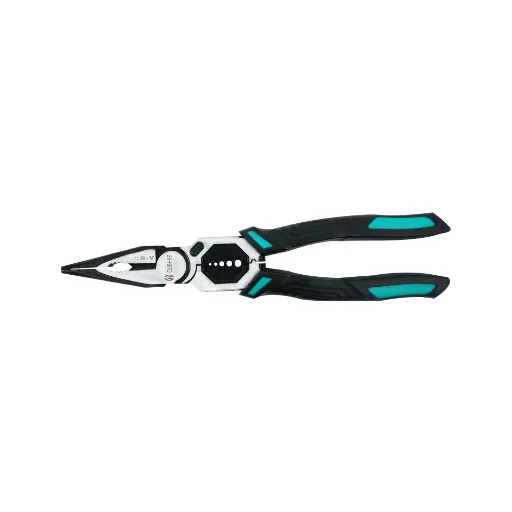
When sourcing these tools for resale or professional use, focus on quality factors that affect performance, safety, and durability.
Material and Hardness
High-quality models are made from chrome-vanadium steel, high-carbon steel, or alloy steel. Heat treatment and hardness ratings of HRC 50 or higher indicate better durability and resistance to wear. Chrome plating or phosphate finishes add corrosion resistance, which matters for humid or outdoor markets.
Chrome-vanadium steel offers a strong balance of toughness and edge retention. High-carbon steel can be hardened further but may need better corrosion protection. Alloy steels can be tuned for properties such as springiness or impact resistance.
Jaw Precision and Tip Alignment
The jaws should align evenly when closed. Gaps or misalignment reduce gripping strength and can damage delicate workpieces. Sample testing for jaw alignment is essential before placing bulk orders. Check that the tips meet cleanly and that the pivot operates smoothly without excessive play.
Handle Design and Insulation
Ergonomic, non-slip handles reduce hand fatigue during extended use. For electrical applications, choose VDE-rated or IEC 60900 compliant insulated handles. Dual-material grips with rubber or thermoplastic coatings improve comfort and control. Handle color can also support branding or safety color-coding for your product line. We explain the standards in our insulated pliers guide.
Integrated Cutters
Many models include a wire cutter near the pivot. Check the cutter’s rated capacity to ensure it matches the wire gauges your customers use. Some heavy-duty models can cut harder wires, while precision cutters are limited to softer materials. For heavier cutting tasks, pair these pliers with dedicated cable cutters. For angled trimming and flush cuts, diagonal cutters are the companion tool most electricians keep beside a tapered-nose pair. Not all tapered-nose pliers include cutters, so confirm this feature if your market expects it.
Certifications
Professional buyers often look for ANSI, ISO, or VDE certification. These standards indicate consistent quality and safety compliance. If your target market includes electricians, insulated pliers with VDE or IEC 60900 certification are often required by workplace safety rules.
What is IEC 60900? IEC 60900 is the international safety standard for insulated hand tools used on or near live electrical circuits at up to 1,000V AC and 1,500V DC. Tools carrying the double-triangle 1000V symbol are factory-tested at 10,000V, ten times the working voltage, before approval.
VDE is a German certification body that independently verifies compliance with IEC 60900. In North America, ASTM F1505 and NFPA 70E set similar expectations for insulated tools. When sourcing insulated pliers, ask the supplier for the certification documents and the test voltage rating, not just a colored handle.
Why Quality Matters for Bulk Buyers
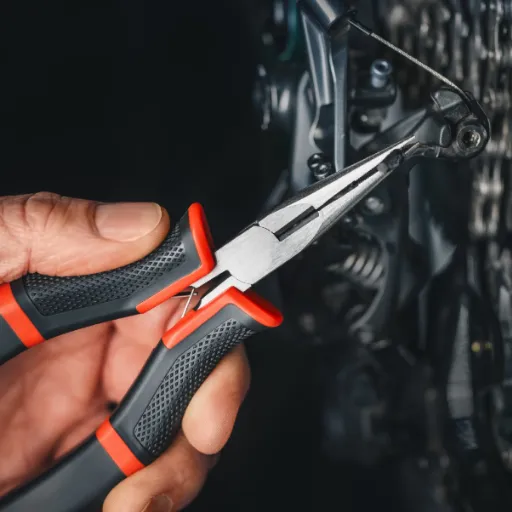
Low-quality pliers create problems for end users and returns for distributors. Common failures include bent tips, loose pivots, cracked handles, and misaligned jaws. These issues damage your reputation and increase warranty costs.
Rosa runs a hardware distribution business in Guadalajara. Last year, she bought a low-cost batch of pliers to test margin on a new line. Within a month, customers returned over a hundred pairs with tips that crossed during use and cutters that dulled after a few wires. The returns cost her more than the savings, and she lost two retail accounts in the process. When she switched to a supplier with documented hardness tests and jaw-alignment checks, the return rate dropped to under one percent and her reorder rate tripled.
Sourcing from a manufacturer with strict quality control reduces these risks. Look for suppliers who test hardness, check jaw alignment, inspect cutting edges, and validate insulated ratings. A reliable supplier also provides consistent lead times and clear communication about specifications.
Customization and OEM Options
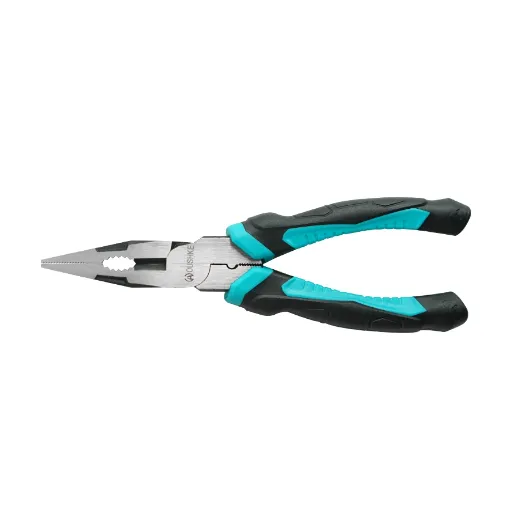
Many distributors and brand owners want products that stand out in their market. Common customization options include:
- Handle color and material: match your brand or meet regional preferences
- Logo stamping or laser marking: add your brand to the tool body
- Packaging design: blister packs, tool rolls, or branded boxes
- Finish type: chrome, nickel, phosphate, or black oxide
- Size range: build a set that covers your target trades
Clear specifications and sample approvals help avoid mismatches during mass production. A good OEM partner will guide you through material choices, handle designs, and certification requirements.
Diego started a private-label tool brand with two SKUs of pliers and a simple logo stamped on the handle. His factory partner managed the material spec, the packaging, and the compliance paperwork. Eighteen months later, he expanded to a full line of hand tools under his own name. The process for launching a custom pliers line, including factory evaluation and quality checks, is detailed in our guide to needle nose pliers manufacturer sourcing. You can also explore OEM hand tool customization options and our manufacturing capabilities.
Safety Tips for Using Pliers
Even simple hand tools can cause injury if used incorrectly. Share these guidelines with your team or customers.
- Choose the right type and size for the task.
- Use insulated pliers when working on or near live electrical circuits.
- Inspect the insulation on insulated models before each use and stop using the tool if it is cracked, nicked, or damaged.
- Wear safety glasses when cutting wire to protect against flying pieces.
- Do not use pliers as a hammer or pry bar.
- Apply force gradually to avoid slipping or damaging the workpiece.
- Inspect pliers regularly for cracked handles, worn jaws, or loose pivot joints.
For a deeper look at the safety standards that apply, see our insulated pliers safety guide and the electrical tools range.
Maintenance and Care
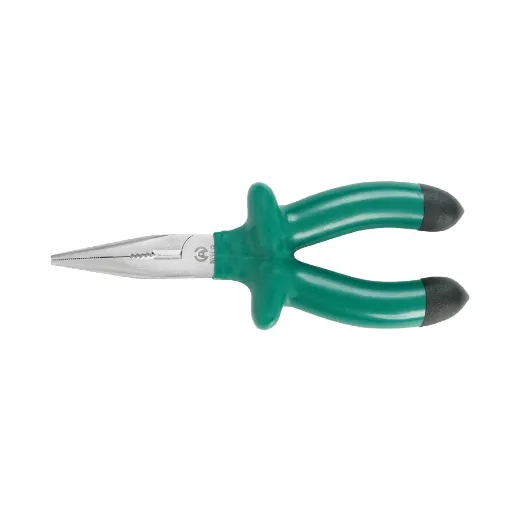
Proper care extends tool life and keeps these pliers performing reliably.
- Clean the jaws and pivot after each use to remove debris and moisture.
- Apply a drop of light oil to the pivot joint periodically.
- Store pliers in a dry toolbox or cabinet to prevent rust.
- Check jaw alignment and cutting edges for wear.
- Replace pliers if the handles are cracked or the jaws no longer close evenly.
Regular maintenance matters for professional users who rely on consistent grip. For more hands-on techniques and common mistakes, see our step-by-step technique guide.
Procurement Guide for Bulk Buyers
Use this table when sourcing pliers for resale, rental fleets, or professional tool kits.
| Sourcing Factor | What to Check | Why It Matters |
|---|---|---|
| Target market | Electrical, electronics, jewelry, automotive, general industrial | Determines which types, sizes, and certifications you need |
| Jaw types | Straight, long, bent, round, chain, flat | Different trades need different jaw shapes |
| Material | Chrome-vanadium or high-carbon steel, HRC 50+ | Affects durability and pricing |
| Handles | Standard, ergonomic, or VDE-rated insulated | Safety compliance and user comfort |
| Cutter capacity | Rated wire gauge | Must match your customers’ typical work |
| Finish | Chrome, nickel, or phosphate | Corrosion resistance for humid or outdoor markets |
| Certifications | ANSI, ISO, VDE, IEC 60900 | Required for professional and regulated markets |
| Customization | Packaging, labeling, OEM, color | Helps differentiate your product line |
| Sample testing | Jaw alignment, grip comfort, cutting performance | Reduces quality risks before mass production |
| Logistics | Lead time, MOQ, quality control process | Affects inventory planning and cash flow |
The global hand tools market was valued at roughly USD 25.6 billion in 2025 and is projected to grow at a compound annual rate of about 3.8 percent through 2034, according to Straits Research. Pliers are a staple category within that market, which makes assortment planning and reliable sourcing a real competitive advantage.
When you plan a bulk order, confirm the FOB port, lead time, MOQ, and inspection process before you commit. Distributors who buy factory-direct avoid middlemen and protect their margins. Our wholesale pliers guide covers assortment planning, margin analysis, and import logistics for distributors and retailers. For a broader view of bringing tools in from China, see our guide to importing hand tools.
Ready to compare specifications or request samples for your product line? Contact our team for a bulk quote or to discuss custom specifications.
Frequently Asked Questions
What are needle nose pliers mainly used for?
They are mainly used for gripping, bending, and cutting small wires and components in tight spaces. Common applications include electrical work, electronics repair, jewelry making, and automotive maintenance.
Are needle nose pliers and long nose pliers the same?
Not exactly. Needle nose pliers have slimmer, more sharply tapered jaws for precision work. Long nose pliers have a sturdier, longer profile for general gripping and electrical tasks.
Can these pliers cut wire?
Yes. Many models include a built-in wire cutter near the pivot joint. The cutter is designed for soft wires and small cables within its rated capacity.
What material is best?
Chrome-vanadium steel and high-carbon steel are the most common materials for professional pliers. Heat-treated steel with a hardness rating of HRC 50 or higher offers the best durability.
Why choose insulated pliers?
Insulated models protect users from electric shock when working on or near live circuits. Look for VDE or IEC 60900 certification for safety compliance.
What size should electricians use?
Most electricians prefer 160-200 mm models. Shorter 130-140 mm models are common for electronics, while 210-250 mm models suit heavy-duty industrial work.
How do I check jaw quality before buying in bulk?
Request samples and inspect tip alignment, pivot smoothness, and handle attachment. Test the cutter on the rated wire gauge. A reliable supplier will provide hardness test reports and certification documents on request.
What is the difference between needle nose and chain nose pliers?
Needle nose pliers have sharply tapered tips for precise gripping. Chain nose pliers have flat inner jaws with a rounded outer profile, making them gentler on soft metals, which is why jewelers prefer them for wire wrapping. Both are staple jewelry pliers in a standard jewelry making kit.
Conclusion
Needle nose pliers, long nose pliers, and bent nose pliers are essential precision tools for electrical, electronics, jewelry, automotive, and manufacturing work. Choosing the right type depends on the application, jaw shape, material, handle design, and required safety ratings.
For B2B buyers, stocking a range of tapered-nose pliers, including standard, long-nose, bent-nose, insulated, and miniature options, helps you serve a wider customer base. Sizes from 130 mm to 250 mm, certifications that match your target markets, and OEM customization all protect your margins and strengthen your product line.
Shanghai Oushike Hardware Tools supplies durable, factory-direct pliers for distributors, tool brands, and professional buyers worldwide. With flexible OEM/ODM services and strict quality control, we help you build a reliable tool line that meets your customers’ expectations. Contact our team to discuss bulk orders, OEM customization, or custom specifications.